
Pruning
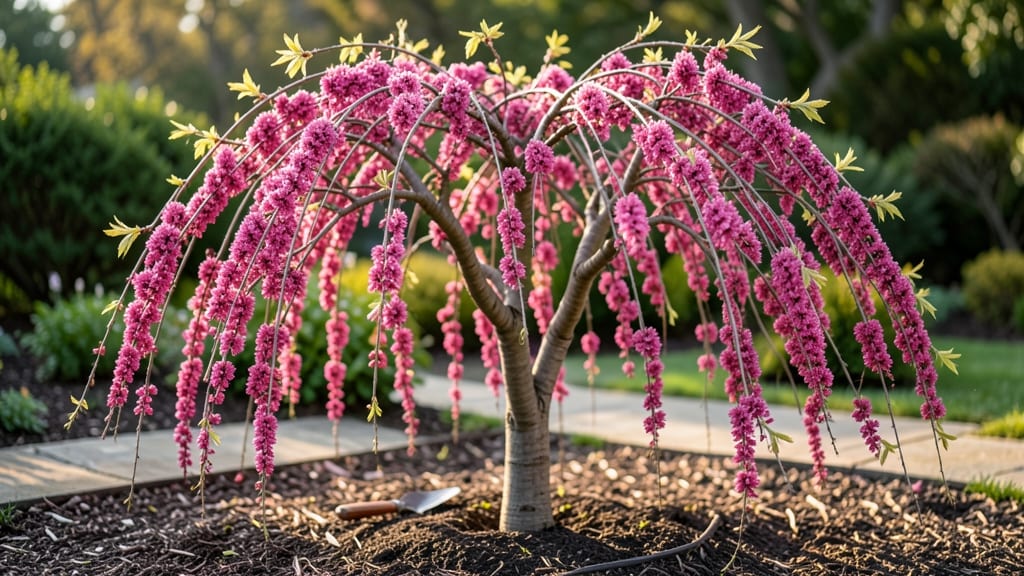
The weeping red bud tree (Cercis canadensis) transforms your yard into a springtime masterpiece with its cascading pink blooms. ✨ I’ve pruned mine every late winter for years, and the difference in vibrant spring color is nothing short of dramatic—it’s the secret to keeping this stunner looking its best.
This tree thrives in full sun to partial shade and well-draining soil, making it adaptable for most landscapes. Whether planted in the ground or a large container, it rewards you with 3-4 weeks of showstopping flowers each spring.
The key? Pruning in late winter—just before buds swell—to shape the weeping habit and encourage dense blooms.
After pruning, you’ll see fresh, dark green foliage emerge by early spring, followed by those iconic pink blossoms. The tree’s graceful, arching branches create a stunning focal point, and it handles urban environments better than many ornamentals.
Just watch for aphids or powdery mildew—both are easy to manage with proper care.
Perfect for small yards, patios, or as a specimen plant, this tree combines beauty with low-maintenance charm. With the right pruning timing, you’ll have a bloom-filled spring that neighbors will envy. Ready to shape yours?
📚 In This Guide
- What you need
- Instructions
- Tips and common mistakes
- Wrapping up and next steps
What you need
- ● Pruning shears: Bypass pruners (for cuts under ½ inch thick) – one pair (look for sharp, stainless-steel blades).
- ● Loppers: For branches ½ to 2 inches thick – one pair (with a long handle for reach).
- ● Pruning saw: For thick branches (2+ inches) – one (bow saw or folding pruning saw).
- ● Gloves: Heavy-duty gardening gloves (cut-resistant) – one pair (to protect from thorns and sap).
- ● Disinfectant: 70% isopropyl alcohol or a 10% bleach solution – small bottle (to sterilize tools between cuts).
- ○ Rubbing alcohol wipes: For quick tool cleaning – pack of 50+ (optional but handy!).
- ○ Pruning sealant: Tree wound paint (optional) – small jar (only needed for large cuts > 2 inches).
- ● Ladder or step stool: Sturdy, extendable – one (if tree is over 6 feet tall).
- ● Trash bags: Heavy-duty (20-gallon) – 2-3 bags (for debris disposal).
- ● Sharpie or marker: Permanent – one (to label cuts if needed for future reference).
- ● Weather check: Prune on a dry, cool day (avoid frost or extreme heat).
- ● Safety glasses: Protective goggles – one pair (to shield eyes from debris).
- ● Long sleeves/pants: Wear closed-toe shoes and long clothing to avoid scratches.
- ● Extension cord (if using tools): For electric pruners – one (if not battery-powered).
- ○ Notebook & pen: Optional – one (to sketch pruning plan or notes).
- ● ✨ Sharpen your tools: Dull blades tear bark—use a file or sharpening stone beforehand.
- ● 🌡️ Check the tree’s health: Prune only dead, diseased, or crossing branches in late winter (avoid heavy pruning now—save it for post-bloom!).
- ● 🎯 Gather inspiration: Snap photos of your tree’s structure before pruning to guide your cuts.
Step-by-step guide to late-winter pruning for weeping red bud trees
Here's how to refresh your tree's structure while maximizing next season's stunning blooms.
🌿 Step 1: Time Your Pruning for Optimal Growth
Prune your weeping red bud (Cercis canadensis 'Lavender Twist') during late winter, specifically 4-6 weeks before your last frost date. This timing allows the tree to push fresh growth before spring blooms emerge. Look for dormant branches—they'll be leafless and easier to assess without the distraction of foliage.
I always check the weather forecast and aim for a mild, dry day between 40-50°F. Pruning on a cold or windy day stresses the tree, while warm temperatures encourage rapid healing. If you miss this window, wait until early spring before buds swell, but avoid pruning after buds open.
✂️ Step 2: Remove Dead, Diseased, or Crossing Branches First
Start with sanitation pruning—cut out any dead, broken, or diseased branches using clean, sharp pruners. These branches won’t produce blooms and can harbor pests. Look for dark, brittle wood or branches with peeling bark—these are clear candidates for removal.
Next, identify crossing or rubbing branches—these create wounds and compete for energy. Use your pruners to make clean cuts at a 45-degree angle, just outside the branch collar (the swollen area where the branch meets the trunk). Avoid leaving stubs, as they invite decay. If a branch is larger than ½ inch thick, use loppers for a smoother cut.
🌱 Step 3: Thin the Canopy for Better Airflow and Light
Weeping red buds thrive with open, airy canopies that allow sunlight to reach inner branches. Focus on selective thinning—remove 10-20% of the total branches to improve light penetration. Prioritize branches growing straight upward or too close to the ground, as these reduce the tree’s elegant weeping form.
To thin, cut branches back to their point of origin (where they branch from a larger limb). Avoid "heading back" (cutting mid-branch), as this encourages dense, bushy growth. Step back frequently to visualize the tree’s shape—your goal is to preserve the graceful, cascading silhouette while improving structural integrity.
☀️ Step 4: Shape for Balance and Encourage Blooms
Now, refine the tree’s form by lightly shaping the outer branches. Weeping red buds naturally grow in a weeping or arching habit, so avoid heavy pruning—this can reduce next year’s vibrant pink-purple blooms. Instead, shorten only the tips of overly long branches by no more than ⅓ of their length to encourage bushier growth.
Pay special attention to the tree’s center. If branches are too dense, selectively remove a few to prevent fungal issues and improve airflow. Use your fingers to gently bend flexible branches—if they snap back, they’re healthy; if they stay bent, they’re dead and should be pruned. Finish by removing any suckers (shoots growing from the base or trunk) to redirect energy to the canopy.
💧 Step 5: Clean Up and Apply Post-Pruning Care
After pruning, sterilize your tools with rubbing alcohol to prevent spreading disease. Collect and dispose of pruned branches immediately—never leave them on the ground, as they can harbor pests. If your tree is in a drought-prone area, water deeply to help it recover, but avoid overwatering, which can stress fresh cuts.
Apply a layer of mulch (2-3 inches) around the base, keeping it 6 inches away from the trunk to prevent rot. This insulates roots and retains moisture. In 3-4 weeks, you’ll see new growth buds forming—this confirms your pruning was successful. If you notice oozing sap from cuts, it’s normal and will seal within a few weeks.
Tips & tricks for perfect late-winter weeping red bud pruning
Real talk: Pruning this elegant tree properly makes all the difference for next spring's showstopping blooms.
Timing is Everything: That 4-6 week window before last frost isn't arbitrary—it's when the tree's dormant state allows clean cuts that heal quickly. I've learned the hard way that pruning too early leaves cuts vulnerable to winter cold, while waiting too long risks damaging bud development. Check your local frost date and mark your calendar now! The tree's leafless state makes it easier to spot structural issues without foliage distraction.
Tool Prep Prevents Problems: Sterilizing your pruners with rubbing alcohol between cuts isn't just about hygiene—it's about protecting your tree's health. I keep a small bottle in my pruning kit and wipe tools after every 3-4 cuts, especially when dealing with diseased branches. For branches thicker than ½ inch, switch to loppers immediately—they give you better leverage and cleaner cuts that heal faster. Clean cuts at a 45-degree angle outside the branch collar prevent water pooling that leads to rot.
Visual Cues for Healthy Branches: When deciding which branches to keep, use this simple test: Gently bend flexible branches—if they snap back, they're healthy and should stay. If they remain bent or break easily, they're dead and should be removed. For the 10-20% thinning target in Step 3, focus on branches growing upward or too close to the ground first. These are the ones that disrupt the tree's natural weeping silhouette while also blocking light from reaching inner branches.
Post-Pruning Care Matters: That 2-3 inch layer of mulch isn't just decorative—it's insulation for your tree's roots during the crucial recovery period. Keep it 6 inches away from the trunk to prevent rot, and water deeply only if your area is drought-prone. The 3-4 week window for new growth buds to appear is your confirmation that the pruning worked. If you notice oozing sap from cuts, don't panic—it's normal and will seal naturally within a few weeks.
Pro Tips for Weeping Red Bud Tree
- Real talk: Pruning this elegant tree properly makes all the difference for next spring's showstopping blooms.
- Timing is Everything: That 4-6 week window before last frost isn't arbitrary—it's when the tree's dormant state allows clean cuts that heal quickly.
- Tool Prep Prevents Problems: Sterilizing your pruners with rubbing alcohol between cuts isn't just about hygiene—it's about protecting your tree's health.
Frequently asked questions
Got questions about your weeping red bud tree? You’re not alone! Here are answers to the most common queries to help you prune with confidence and set the stage for stunning spring blooms.
When is the best time to prune a weeping red bud tree?
The ideal window is late winter to early spring (just before buds swell but before new growth starts). This timing ensures you remove dead wood while preserving next year’s blooms. Avoid pruning in fall—it can stimulate tender new growth that may freeze in winter.
How much can I trim back my weeping red bud tree?
Light to moderate pruning is key! Remove no more than 25-30% of the canopy in one season. Focus on shaping, thinning dense areas, and cutting back last year’s growth to encourage vibrant new blooms. Over-pruning can stress the tree and reduce flowering.
What should I do if my weeping red bud tree isn’t blooming?
Check these first:
- Age: Young trees (under 3 years) may not bloom yet.
- Pruning timing: Late winter/early spring cuts are critical.
- Sunlight: Ensure it gets 6+ hours of sun daily.
- Health: Yellowing leaves or sparse branches could signal pests/disease.
If issues persist, test soil pH (ideal: 6.0–7.0) and fertilize lightly in early spring.
Can I prune a weeping red bud tree after it blooms?
Yes, but minimize heavy cuts after flowering. Light pruning to remove spent blooms or shape can be done in early summer, but avoid major structural cuts—this can reduce next year’s flower production.
Are there alternatives to weeping red bud trees for small spaces?
If space is tight, consider these low-maintenance, compact bloomers:
- Dwarf Fothergilla (Fothergilla gardenii) – Fragrant spring blooms, 3–5 ft tall.
- Japanese Quince (Chaenomeles speciosa) – Thornless varieties, 4–6 ft, early spring flowers.
- Columnar Redbud (Cercis canadensis ‘Covey’) – Narrow habit, 10–12 ft tall.
All thrive in similar conditions but with less sprawling growth!
Wrapping up and next steps
The weeping red bud tree is a stunning addition to any landscape, and with the right late-winter pruning, you’ll unlock its full potential for vibrant spring blooms and healthy growth. 🌸 By following these steps—cleaning up, shaping, and encouraging airflow—you’re not just maintaining the tree; you’re nurturing its beauty for years to come.
Ready to transform your yard? Grab your tools, step outside, and give your weeping red bud the care it deserves. Start small, stay consistent, and watch your tree thrive with show-stopping color and grace!