
Pruning
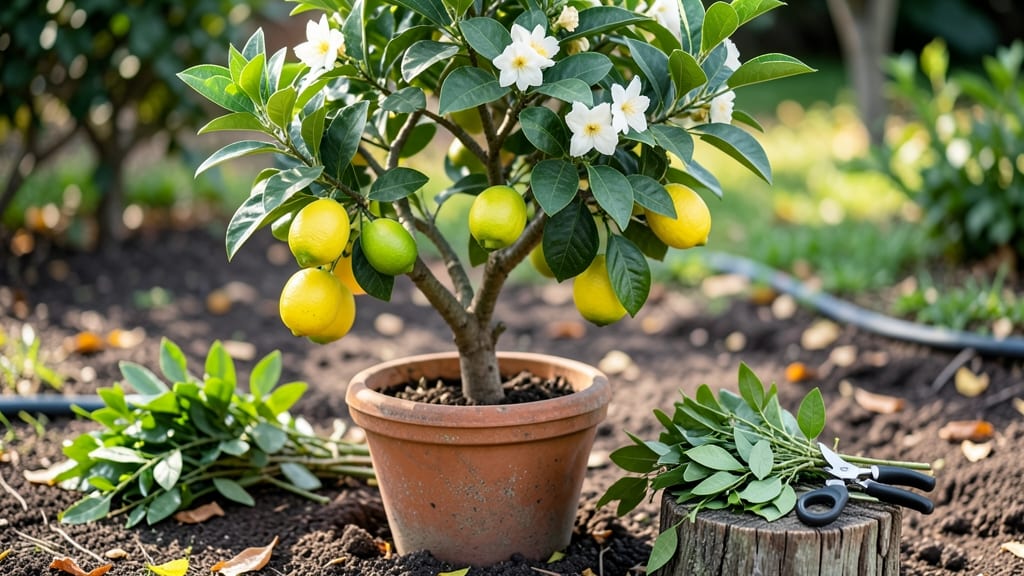
Cutting back your lemon tree in late winter isn’t just about shaping—it’s about survival in the Pacific Northwest’s damp, cool climate. I’ve learned the hard way that skipping this step means fewer lemons and more fungal issues by summer.
The key is timing: prune after the last frost when the tree’s dormant, but before new growth starts.
You’ll need sharp bypass pruners, rubbing alcohol for sterilizing cuts, and a ladder if your tree stands taller than your reach. Focus first on removing dead, diseased, or crossing branches—these are the ones choking your tree’s potential.
Then, thin out the canopy to let light and air circulate, which keeps fruit production strong and reduces humidity-related problems.
What you’ll end up with is a tree that looks like it belongs in a Mediterranean grove, not a rainy backyard. The branches will be open enough to catch sunlight all day, and the new growth you’ll see by spring will be vigorous and disease-resistant.
Plus, those lemons? They’ll be bigger, sweeter, and ready to harvest by late summer.
This method works for both container-grown and in-ground lemon trees, though container trees need slightly less aggressive pruning. The Pacific Northwest’s unique climate means we have to be extra careful—too much pruning stresses the tree, while too little leaves it vulnerable to rot.
Let’s get those branches trimmed the right way.
📚 In This Guide
- What you need
- Instructions
- Tips and common mistakes
- Wrapping up and next steps
What you need
- ● Bypass pruners – Sharp, clean bypass pruners (7-9" blade length) for cutting branches up to ½ inch thick. Sterilize with rubbing alcohol before and after use!
- ● Loppers – Heavy-duty loppers (18-24" blade) for branches ½ to 1½ inches thick. Look for ergonomic grips—PNW winters can make pruning a workout!
- ● Pruning saw – A curved-tooth pruning saw for thicker branches (1½+ inches). Replace blades if dull to avoid tearing wood.
- ● Garden gloves – Thick, cut-resistant gloves (leather or Kevlar) to protect from thorns and splinters.
- ● Disinfectant – 70% isopropyl alcohol or a 10% bleach solution (1 part bleach to 9 parts water) to sterilize tools and prevent disease.
- ○ Sharpie or pruning sealant – A permanent marker (for labeling cuts) or pruning wax to seal large wounds (optional but helpful for PNW’s damp climate).
- ● Buckets or bags – Two 5-gallon buckets (one for small trimmings, one for larger debris) or heavy-duty trash bags for cleanup.
- ● Ladder or step stool – A stable, 6-foot ladder (with non-slip feet) or a foldable step stool for reaching higher branches safely.
- ● Thermal layers – Dress in moisture-wicking base layers, a waterproof jacket, and gloves—PNW winters can be brisk even in late winter!
- ● Hand warmers – Disposable or rechargeable hand warmers for extra comfort during long sessions.
- ● Hot drink of choice – A thermos of coffee, tea, or hot cider to keep your hands warm and morale high!
- ● ✨ Check the forecast: Aim for a dry day (40°F+) to avoid soggy soil or frostbite risk.
- ● 🔪 Sharpen your tools: Dull blades crush wood, making wounds more prone to disease—file or replace blades if needed.
- ● 🌡️ Time it right: Prune before bud break (late Feb–early March in PNW) to encourage vigorous spring growth.
How to prune your lemon tree for Pacific Northwest resilience
Here's the straightforward approach I've used for years to keep lemon trees thriving in wet, cool climates.
Time Your Pruning for Maximum Recovery
Wait until after your last hard frost but before new growth begins—typically late February to early March in the Pacific Northwest. This timing lets the tree heal before spring's active growth period. You'll know it's ready when buds swell slightly but haven't yet burst open. Pruning too early risks exposing tender wood to late frosts, while waiting too long removes energy the tree needs for flowering.
If you missed the window, don't worry—just avoid pruning during active growth periods (spring through early fall). The tree will still recover, though you might sacrifice some flowering for that season. I've pruned in early summer before and still gotten fruit, but yields were noticeably smaller.
Assess and Remove Problem Branches First
Start by identifying branches that cross or rub against each other—these create wounds where disease can enter. Also remove any dead, diseased, or broken branches using clean, sharp pruning shears. You'll spot these easily: dead wood feels hollow when tapped, while diseased branches often have dark spots or oozing sap. Cut these back to healthy wood, making your cuts just outside the branch collar where it meets the trunk.
Next, remove any branches growing straight upward ("water sprouts") or those growing toward the center of the tree. These compete for energy and block light from reaching inner branches. I like to step back frequently to visualize the tree's shape—this helps me see which branches are truly necessary for structure and fruit production. Remember, you're aiming for an open vase shape that allows sunlight to penetrate to the center.
Thin the Canopy for Better Airflow
Focus on thinning rather than just cutting back—this means removing entire branches back to their origin rather than just trimming the ends. Start at the outer edges and work your way inward. Your goal is to improve airflow and sunlight penetration, which dramatically reduces fungal diseases common in the Pacific Northwest's damp climate. Aim to remove about 20-25% of the tree's total foliage—this might sound aggressive, but it's essential for long-term health.
Look for branches that are too close together and remove the weaker of the two. You'll know which is weaker by its thinner diameter and lighter green leaves. Also remove any branches that are smaller than a pencil in diameter unless they're essential for structure. These small branches use energy the tree could better spend on fruit production and larger structural branches. After each cut, step back and reassess the tree's balance—you want a symmetrical shape that maintains the tree's natural form.
Shape for Pacific Northwest Conditions
In our region's cooler climate, lemon trees benefit from a slightly lower, more compact shape than those in warmer areas. This helps protect blossoms from late frosts and makes fruit easier to harvest. Focus on creating a strong central leader (main upward branch) and well-spaced scaffold branches. These scaffold branches should be about 6-12 inches apart vertically and spaced evenly around the trunk.
To encourage a more compact growth habit, make your cuts just above an outward-facing bud. This directs new growth outward rather than straight up. Avoid cutting back into old wood—you'll know you've gone too far when you see the wood's color change from light green to brown. If you do cut into old wood, the tree may not produce new growth from that cut, leaving an unsightly stub. For larger branches over ½ inch in diameter, make your cut about ¼ inch above a bud and at a slight angle to prevent water from pooling.
Tips & tricks for perfect late-winter lemon tree pruning
These practical insights will help you prune with confidence and set your lemon tree up for success in our region's unique climate.
The Timing Factor: If you're unsure about when your last hard frost occurred, check with your local agricultural extension office—they track frost dates by zip code. I've learned the hard way that even a light frost after pruning can damage new growth. For container-grown lemon trees, you can safely prune a week earlier than the recommended late February window since they're more protected from ground-level cold.
Branch Identification Tricks: When assessing branches in Step 2, use the "finger test" for dead wood—tap branches firmly with your knuckles. Healthy branches will sound solid, while hollow sounds indicate dead wood. For diseased branches, look for dark, sunken spots or oozing sap. Remember, it's better to remove a healthy-looking branch than to leave a diseased one—diseases can spread quickly in our damp climate.
Pruning Technique for Beginners: If you're new to pruning, practice on a small branch first to get comfortable with your tools. Make your cuts at a 45-degree angle just above an outward-facing bud—this creates a natural shield that protects the cut from water pooling. For larger branches over ½ inch in diameter, use three small cuts to avoid tearing the bark: first undercut, then top cut, and finally a clean cut through the remaining hinge.
Pacific Northwest-Specific Care: After pruning, give your tree a light application of copper fungicide spray to prevent common fungal diseases like citrus leaf miner. Our region's high humidity creates ideal conditions for these pests. Also, consider mulching around the base with wood chips to help retain moisture and regulate soil temperature during our cool springs.
Pro Tips for Cutting Back Lemon Tree
- These practical insights will help you prune with confidence and set your lemon tree up for success in our region's unique climate.
- The Timing Factor: If you're unsure about when your last hard frost occurred, check with your local agricultural extension office—they track frost dates by zip code.
- Branch Identification Tricks: When assessing branches in Step 2, use the "finger test" for dead wood—tap branches firmly with your knuckles.
Frequently asked questions
Got questions about pruning your lemon tree in the Pacific Northwest? You’re not alone! Here are answers to the most common concerns—so you can tackle late-winter trimming with confidence.
When is the exact best time to cut back a lemon tree in the PNW?
The ideal window is late winter (February–March), after the last frost but before new growth starts. In the PNW’s cooler climate, aim for after the coldest stretch—typically mid-February to early March. Avoid pruning in fall or early winter, as wounds take longer to heal in damp, chilly conditions.
How much can I cut back without killing my lemon tree?
For mature trees, you can safely remove up to 25–30% of the foliage in one session. Focus on dead, crossing, or overcrowded branches first. If your tree is young or struggling, limit cuts to 10–15% to avoid stress. Pro tip: Never remove more than a third of the canopy in a single year—gradual pruning keeps your tree healthy!
Will pruning reduce my lemon harvest?
Not if done correctly! Pruning actually boosts fruit production by improving air circulation and sunlight penetration. However, heavy cuts in flowering season (spring) may temporarily reduce yield. Late-winter pruning, as recommended here, sets the stage for a bigger, healthier harvest later. Patience pays off!
What if I prune too late—will my lemon tree survive PNW rains?
Pruning too late (April+) can stress your tree, leaving wounds vulnerable to fungal diseases in the PNW’s wet springs. If you miss the window, wait until late summer (August–September) for a second round—but avoid heavy cuts. Seal larger pruning wounds with pruning sealant to protect against moisture.
Can I use the cuttings from my lemon tree?
Lemon tree cuttings root well in water or soil. Choose 4–6 inch healthy shoots with at least 2–3 leaves, and dip the cut end in rooting hormone for best results. Place in a bright, indirect spot (like a sunny windowsill) and keep soil moist. Just remember—new trees won’t bear fruit for 3–5 years!
Wrapping up and next steps
Cutting back your lemon tree in late winter isn’t just about shaping—it’s about revitalizing it for the Pacific Northwest’s unique climate. With the right tools, timing, and technique, you’ll encourage healthier growth, better fruit production, and resilience against wet winters. You’ve got this! 🌱
Now that you’re armed with knowledge, grab those pruners and start pruning! Monitor your tree’s progress over the seasons, and don’t hesitate to adjust your approach as needed. Happy pruning—your lemon tree (and future harvests) will thank you!