Pruning
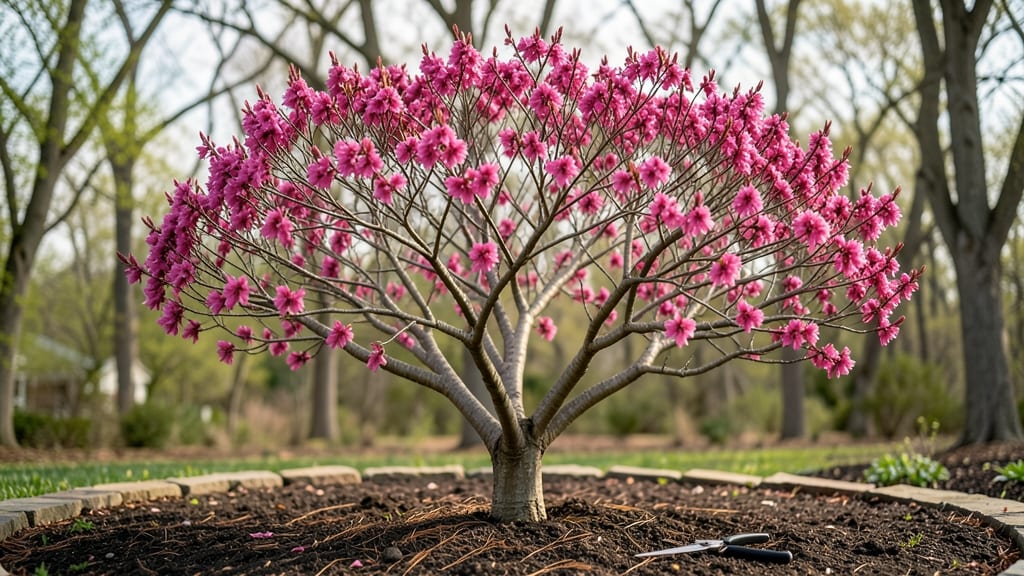
The Avondale Redbud tree bursts into pink-purple glory each spring, but late-winter pruning unlocks its full potential—especially in the Pacific Northwest’s damp, mild climate.
I’ve pruned mine for three years now, and the difference is striking: thicker branches, more abundant blooms, and a shape that frames my garden like a living painting. The key? Timing, sharp tools, and knowing exactly where to cut to encourage that signature cascading habit.
You’ll need hand pruners, loppers, and gloves—plus a clear day when temperatures hover above freezing but before buds swell. Most gardeners skip pruning redbuds, but this one variety thrives with a little direction. Start by removing dead or crossing branches first, then shape the canopy to open it up.
The Avondale’s natural weeping form makes it perfect for small spaces, but pruning keeps it from becoming too sprawling.
What you’ll end up with is a tree that blooms earlier and more prolifically than unpruned specimens, with foliage that turns golden-yellow in fall. The branches fill in denser, too, so you’re not left with that "airy" look some redbuds develop.
Plus, you’re preventing future woody growth that can block those stunning flowers. Think of it as a reset button before spring’s big show.
This method works for both young trees and mature specimens, though younger ones respond best to annual pruning. If you’re in a wetter PNW microclimate, aim to prune just before the rainy season peaks—clean cuts heal faster in drier conditions.
Ready to transform your redbud into the star of your garden? Let’s get those shears sharpened.
📚 In This Guide
- What you need
- Instructions
- Tips and common mistakes
- Wrapping up and next steps
What you need
- ● Pruning shears – Bypass-style, sharp, and sterilized (for clean cuts). Example: Felco F-2 or similar (1 pair).
- ● Loppers – For thicker branches (up to 2-inch diameter). Example: Corona 44015 (1 pair).
- ● Pruning saw – For branches too thick for loppers (2+ inches). Example: Fiskars X7 (1 saw).
- ● Gloves – Garden-grade with cut-resistant palms (e.g., Mechanix Wear 3000 series).
- ● Disinfectant – 70% isopropyl alcohol or bleach solution (1 part bleach to 9 parts water) (small bottle or spray).
- ● Heavy-duty trash bags – For collecting pruned branches (5–10 gallon size, 2–3 bags).
- ● Ladder – Extension ladder (20–24 ft) if tree exceeds 8 feet (rent or borrow if needed).
- ● Safety gear – Safety glasses and long sleeves/pants (to avoid scratches or sap irritation).
- ○ Pruning sealant – Optional for large cuts (>1-inch diameter) to prevent disease (e.g., Tanglefoot Tree Wound Pruning Seal).
- ● Marking spray – Bright paint (e.g., pink or yellow) to mark cuts for later reference.
- ● Knee pads – If pruning low branches or working on the ground.
- ● Tree wrap – For young or newly pruned trees to protect from sun scorch (e.g., Tanglefoot Tree Wrap).
- ● Camera or phone – To document before/after progress (because progress pics = gardening wins!).
Step-by-Step guide to pruning your Avondale redbud tree
Here's how to revive your Pacific Northwest redbud with precision cuts that boost spring blooms.
Time Your Pruning for Late Winter
Prune your Avondale redbud in late winter—specifically, between mid-February and early March in the Pacific Northwest. This timing ensures you cut back before new growth begins, but after the worst winter cold has passed. You'll know it's the right moment when buds begin to swell slightly but haven't yet burst open. Avoid pruning in fall, as late-season cuts leave wounds vulnerable to fungal infections common in damp Pacific Northwest winters.
If you miss the window, don't panic—you can still prune in early spring before leaves emerge. Just be prepared for slightly less vigorous blooming that season. The key is to never prune when the tree is actively growing, as this stresses the plant and invites pests.
Assess the Tree for Dead or Weak Wood
Start by examining your redbud from all angles. Look for branches that are completely devoid of leaves for two consecutive years, cracks or splits in the bark, or branches that rub against each other. These are your first targets. Dead wood won't regenerate and only takes energy from healthy growth. Use your fingers to gently scratch the bark—if it's dry and crumbly underneath, it's dead.
Next, identify crossing branches or those growing inward at sharp angles. These compete for space and sunlight, creating weak points where storms or heavy snow can break them. You'll also spot water sprouts—fast-growing, vertical shoots that appear after pruning or damage. These saplings drain energy from the tree and should be removed entirely at the base.
Make Clean Cuts at the Right Angle
Use sharp, bypass pruners to make cuts just above a bud or branch collar—the swollen area where the branch meets the trunk. Angle your cut at 45 degrees, sloping away from the bud. This directs water runoff away from the wound, reducing rot risk. Never leave stubs; they invite disease and weaken the tree's structure.
For larger branches over ½ inch thick, switch to a pruning saw with a fine-toothed blade. Saw cuts should be smooth, not jagged. After cutting, sterilize your tools with rubbing alcohol to prevent spreading fungal spores between branches. If you're unsure about a cut, step back and visualize how it affects the tree's balance—never remove more than 25% of the canopy in one season.
Thin the Canopy for Better Airflow
Focus on thinning out rather than just cutting back. Remove branches that grow straight up or downward, as these create dense clusters where moisture lingers. Aim to open the center of the tree by 10-20% to improve airflow—a critical factor in the Pacific Northwest's humid climate. You'll see the difference immediately: sunlight will reach the inner branches, encouraging stronger growth and more vibrant spring blooms.
Pay special attention to the lower branches. While redbuds naturally lose these over time, you can accelerate the process by pruning them back to the trunk. This creates a cleaner silhouette and makes future maintenance easier. Just avoid removing more than one-third of the lower branches in a single year to prevent shocking the tree.
Clean Up and Monitor for Recovery
After pruning, gather all debris and dispose of it in the trash—not your compost pile. Diseased wood can harbor pathogens that survive composting. Sterilize your tools again with rubbing alcohol before storing them. Water the base of the tree deeply to help it recover, but avoid soaking the fresh cuts, as excess moisture promotes rot.
In the weeks following pruning, watch for new growth at the cut sites. Healthy buds should swell within 2-4 weeks and begin leafing out by early spring. If you notice oozing sap from cuts, it's normal and will stop as the tree seals the wounds. However, if you see blackened or mushy areas, it's a sign of infection—apply copper fungicide immediately to prevent spread.
Tips & tricks for pruning your Avondale redbud tree
These practical insights will help you prune with confidence and ensure your Pacific Northwest redbud thrives for years to come.
Timing is Everything: The mid-February to early March window in Step 1 is crucial because it aligns with the tree's natural dormancy period. If you're unsure about the exact timing, check for slightly swollen buds—this is your cue that winter's worst is behind us. In the Pacific Northwest's damp climate, pruning too early can expose fresh cuts to fungal spores lurking in wet winter conditions, while waiting too long risks stressing the tree as new growth begins. I've seen redbuds bloom more vigorously when pruned during this precise window.
Equipment Check: Sharp tools make all the difference in Step 3. Before you start, test your pruners by making a clean cut through a small branch—if it crushes rather than slices, your blades need sharpening. For branches over ½ inch thick, a pruning saw with fine teeth will prevent tearing the bark. I keep a small bottle of rubbing alcohol in my tool bag specifically for this step; sterilizing between cuts prevents spreading any potential infections from diseased branches to healthy ones.
Visual Cues for Healthy Cuts: When making your 45-degree angled cuts in Step 3, look for the branch collar—the swollen area where the branch meets the trunk. This is your guidepost; the cut should be just above this collar, never flush with it. You'll know you're doing it right when the cut surface looks smooth and the branch falls away cleanly. I've made the mistake of leaving stubs before, and those little nubs become perfect entry points for disease in our rainy climate.
Canopy Balance Matters: In Step 4, remember that thinning out creates more impact than just cutting back. Aim to open the center by 10-20%—this isn't about removing branches randomly, but strategically removing those growing straight up or downward that block sunlight from reaching inner branches. I've seen redbuds with dense canopies struggle with fungal issues in our humid summers because moisture can't circulate properly. Think of it like giving your tree a spa day—better airflow means fewer problems down the road.
Pro Tips for Avondale Redbud Tree
- These practical insights will help you prune with confidence and ensure your Pacific Northwest redbud thrives for years to come.
- Timing is Everything: The mid-February to early March window in Step 1 is crucial because it aligns with the tree's natural dormancy period.
- Equipment Check: Sharp tools make all the difference in Step 3.
Frequently asked questions
about pruning your Avondale Redbud Tree in the Pacific Northwest’s late-winter climate—because even pros need a little guidance!When is the exact best time to prune my Avondale Redbud?
The ideal window is late winter (February–early March) after the worst cold snaps but before buds swell. In the PNW, aim for mid-February when temps hover above freezing. Pruning too early risks frost damage; too late delays spring blooms. Check local frost dates for precision!
Can I prune my Avondale Redbud in early spring?
Yes, but with caution! Early spring pruning (March–April) is possible if you miss late winter, but you’ll sacrifice blooms for that season. Focus on structural shaping and remove only dead/diseased wood. Avoid heavy cuts—buds form on old wood, and aggressive pruning may reduce next year’s vibrant pink flowers.
What if it rains during pruning? Should I reschedule?
Rain doesn’t ruin pruning, but wet wood is trickier to cut and heals slower. Prune during dry, calm conditions (even if slightly chilly). If rain’s forecasted, wait 24–48 hours for the ground to dry. Wet tools can spread disease, so sanitize blades before and after!
My Avondale Redbud isn’t blooming well—did I prune too much?
Over-pruning is the #1 culprit! Avondale Redbuds bloom on old wood, so limit cuts to 15–20% of the canopy. If blooms are sparse, focus on removing only dead, crossing, or weak branches. Next year, prune lightly to restore balance. Patience pays off—these trees reward careful maintenance with dramatic spring displays!
Are there alternatives to pruning if my tree looks messy?
If pruning feels overwhelming, try selective thinning to improve airflow and light penetration. Remove only the worst offenders (dead wood, dense clusters) and let the tree’s natural shape guide you. For a low-maintenance look, skip heavy pruning and focus on removing diseased branches annually. Mulching and proper watering also boost tree health!
Wrapping up and next steps
The Avondale Redbud Tree is a stunning addition to Pacific Northwest gardens, and with the right late-winter pruning, you’ll set it up for vibrant blooms and lush growth all season. 🌸 By following the steps outlined—cleaning tools, shaping strategically, and timing your cuts—you’re not just maintaining its beauty but also ensuring its long-term health.
Ready to give your tree the care it deserves? Grab your pruners and start your pruning project today—your garden (and future spring blooms!) will thank you. Happy pruning! ✂️