Pruning
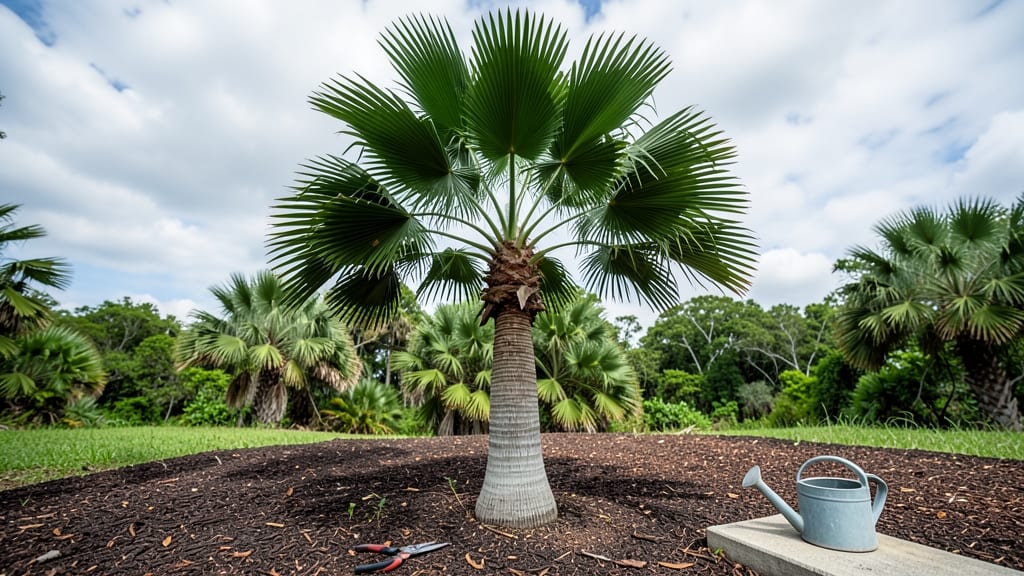
A huge palm tree can become a storm-resistant statement piece with the right pruning approach—one that keeps its grandeur while making it safer for your property.
I learned this the hard way after a windstorm snapped a neighbor’s palm like a twig, but the right cuts transform these giants into resilient, elegant anchors for any landscape.
The key is minimal stress cuts—targeting only dead fronds, crossing branches, and weak growth points while preserving the tree’s natural shape. You’ll need sharp pruners, a sturdy ladder (or an arborist’s help for taller palms), and a clear day to avoid stressing the tree further.
Most palms need pruning once or twice a year, depending on how fast they grow.
What you’ll end up with is a palm that stands tall, even in high winds, while still looking lush and intentional. The canopy becomes stormproof without sacrificing its tropical beauty, and you avoid the unsightly "broomstick" look of over-pruned palms. Plus, your property stays safer during storms.
This method works for Canary Island date palms, Mexican fan palms, or even towering coconut palms—just adjust the timing based on your climate. Whether you’re pruning for safety, aesthetics, or both, the goal is a palm that’s both striking and sturdy. Let’s get those fronds trimmed the right way.
📚 In This Guide
- What you need
- Instructions
- Tips and common mistakes
- Wrapping up and next steps
What you need
- ● Pruning saw: A high-quality, sharp 24-inch or 36-inch pruning saw (e.g., Felco F-2 or similar) for clean cuts through thick fronds.
- ● Ladder or lift: A stable, extendable ladder (24+ ft) or a cherry picker for tall palms (30+ ft). Never stand on the trunk!
- ● Heavy-duty gloves: Cut-resistant gloves (e.g., Mechanix or similar) to protect hands from jagged fronds and sap.
- ● Safety goggles & ear protection: Sharp debris and loud cuts demand 100% eye/ear coverage.
- ● Disposable pruning shears: Small bypass pruners (for fine-tuning frond removal).
- ● Rope or harness system: A secure 3/4-inch nylon rope or a full-body harness (for lifts over 20 ft).
- ● Heavy-duty trash bags (20+ gallon): For hauling fronds—wet fronds are HEAVY!
- ● First-aid kit: Include palm-sap neutralizer (e.g., vinegar-soaked cloth) for irritated skin.
- ○ Marking spray (optional but helpful): Fluorescent spray to tag dead/diseased fronds for easy identification.
- ● Pole saw: For high-reach trimming without a ladder (e.g., 12-18 ft extendable pole).
- ● Saw sharpener: Keep your blade razor-sharp for minimal tear.
- ● Disinfectant (70% isopropyl alcohol): Wipe tools between cuts to prevent fungal spread.
- ● Work buddy: A second person to spot you or assist with heavy fronds.
- ● Palm fertilizer (post-prune): Slow-release 10-10-10 NPK to boost recovery.
Step-by-Step instructions for pruning large palm trees safely
Here's the method I trust for keeping massive palms storm-resistant without harming their health.
Assess the Canopy and Plan Your Cuts
Start by examining the palm from all sides, looking for dead fronds, weak branches, or fronds growing at odd angles. These are your targets—never prune healthy, green fronds unless they're obstructing walkways or power lines. I mark each cut spot with a small piece of colored tape so I don't accidentally remove too much. Remember, palms only have one growing point at the top, so removing too many fronds stresses the tree.
Focus on fronds that are completely brown and dry, or those hanging at a 45-degree angle or more. These are dead or dying and won't recover. Avoid cutting fronds that are still green or only partially brown—they're still photosynthesizing and supporting the tree. If you're unsure, wait until the next storm season to reassess.
Gather Tools and Safety Gear
You'll need a sharp pruning saw (never use a dull blade—it crushes fibers and causes more damage), heavy-duty gloves, safety goggles, and sturdy climbing gear if the palm is over 20 feet tall. I always wear long sleeves and pants to protect against scratches from the fronds' sharp edges. For palms taller than 30 feet, hire a professional arborist—this isn't a DIY job.
Set up a stable ladder or scaffolding on firm, level ground. If the ground is uneven, the ladder can slip, and that's a fast way to end up on the ground with a 50-pound frond on your head. Test the ladder's stability by pushing it gently before climbing. Keep tools within easy reach to avoid unnecessary movement while working.
Remove Dead Fronds at the Base
Start by cutting each dead frond at its base, where it meets the trunk. Use a smooth, upward sawing motion to avoid tearing the trunk's fibers. If the frond is very large, cut it into 3-foot sections to make handling easier. Never yank or pull fronds—this can strip bark and expose the tree to disease. Work your way around the palm evenly to maintain balance.
After removing a frond, inspect the cut area. If you see green tissue at the base, leave it—this means the frond isn't fully dead yet. Only cut fronds that are completely brown and dry from the base. If you're unsure, wait a few weeks and check again. Over-pruning weakens the palm and can lead to long-term decline.
Thin the Canopy for Storm Resistance
Now focus on the inner crown of the palm, where fronds overlap. These are the ones that can tear in high winds or accumulate heavy rain. Use your pruning saw to trim the tips of these fronds, reducing their length by about one-third. This lightens the load without removing too much leaf surface area, which the palm needs for photosynthesis.
Look for crossing or rubbing fronds—these create weak points where storms can tear the palm apart. Carefully separate them by hand if possible, or trim the offending sections. Avoid cutting into the central growing bud at the top of the palm, as this will kill the tree. If you accidentally nick it, the palm won't recover.
Clean Up and Monitor Recovery
After pruning, remove all debris from the base of the palm and surrounding area. Leaving old fronds on the ground can attract pests or fungi that may harm the tree. I also spray the trunk and cuts with a copper fungicide as a preventative measure—palms are prone to fungal infections after pruning. Water the base of the palm deeply to help it recover from the stress.
Watch the palm over the next 4-6 weeks for signs of stress, like yellowing fronds or oozing sap at the cuts. If you see these, the palm is struggling to recover, and you may have removed too much. In future prunings, be more conservative. Healthy palms will produce new fronds within 3-6 months, signaling that the pruning was successful.
Tips & tricks for pruning large palm trees safely
Real talk: Pruning a massive palm tree isn't just about cutting fronds—it's about understanding the tree's health and storm resilience. Here's what I've learned after working with these giants for years.
Visual Cues for Dead Fronds: In Step 1, when assessing which fronds to remove, look for a clear color difference between the brown, dry fronds and the green ones. The dead fronds should feel brittle and crumble easily when rubbed between your fingers. If you're still unsure, bend the frond gently—if it snaps cleanly, it's dead. This simple test saves you from making mistakes that could stress the tree.
Tool Sharpness Matters: The instructions emphasize using a sharp pruning saw, and I can't stress this enough. A dull blade tears fibers in the trunk and creates jagged cuts that invite disease. Before you start, sharpen your saw or invest in a new one—it makes all the difference. I always carry a small file with me to touch up the blade between cuts on large palms.
Storm-Proofing Strategy: When thinning the canopy in Step 4, focus on reducing the weight of the inner fronds by about one-third. This is where most storm damage happens—heavy, overlapping fronds act like sails in high winds. Think of it like trimming your hair for a windy day: you want to reduce drag while keeping enough leaf surface for photosynthesis.
Recovery Monitoring: The 4-6 week recovery period mentioned in Step 5 is your best friend. During this time, keep an eye out for new growth at the top of the palm. If you see fresh, healthy fronds emerging within 3-6 months, you've pruned correctly. If not, you may have been too aggressive—next time, remove even fewer fronds.
Pro Tips for Huge Palm Tree
- Real talk: Pruning a massive palm tree isn't just about cutting fronds—it's about understanding the tree's health and...
- Visual Cues for Dead Fronds: In Step 1, when assessing which fronds to remove, look for a clear color difference betw...
- Tool Sharpness Matters: The instructions emphasize using a sharp pruning saw, and I can't stress this enough. A dull ...
Frequently asked questions
Got questions about pruning a huge palm tree?
You’re not alone—these giants require careful handling! Below are answers to the most common concerns, from timing to safety, so you can tackle the job with confidence.
When is the best time to prune a palm tree after a storm?
Wait until after the storm season (typically late winter or early spring) to prune. Storm-damaged fronds can be removed immediately for safety, but avoid heavy pruning during active growth periods. This minimizes stress and reduces disease risks. Always check local regulations—some areas restrict pruning during certain months.
How do I safely prune a huge palm tree without hurting myself?
Safety first! Wear gloves, eye protection, and sturdy boots—palm fronds have razor-sharp edges. Use a harness and lift system if climbing, or hire a professional for trees over 30 feet tall. Never prune in wet conditions (slip hazard!) and keep bystanders at a distance. A pole saw with a long handle can help avoid climbing entirely.
Can I prune a palm tree too much? What are the signs?
Yes! Over-pruning weakens the tree, leading to yellowing fronds, stunted growth, or even death in severe cases. Never remove more than 1/3 of the fronds at once. Healthy palms retain old fronds for nutrients—only trim dead, damaged, or hanging fronds. If you see brown streaks in the trunk or excessive sap, you’ve likely pruned too aggressively.
Is it cheaper to DIY or hire a professional for a huge palm tree?
DIY saves money, but professionals are worth it for large palms (50+ feet). Costs vary: DIY tools (pole saw, ladder, gloves) run $50–$200, while pros charge $300–$1,000+ depending on height and complexity. Factor in time, risk, and equipment wear. If the tree is near power lines or structurally compromised, always hire a certified arborist.
What should I do with the pruned palm fronds?
Don’t toss them! Mulch them around non-palm plants (they decompose slowly), use as windbreaks, or compost them (shred first). Avoid piling fronds near the palm’s base—this can trap moisture and cause rot. Some municipalities offer bulk waste pickup for large prunings, so check local services. Pro tip: Freeze fronds for 48 hours before composting to kill pests!
My palm tree has a split trunk—can pruning fix it?
Pruning won’t repair a split trunk, but it can reduce stress to slow further damage. Focus on removing dead or heavy fronds to lighten the load. If the split is deep or widening, consult an arborist—bracing or cabling may be needed. Unfortunately, severely split palms often require removal for safety. Prevention tip: Prune regularly to avoid overloading the trunk!
Wrapping up and next steps
Pruning your huge palm tree doesn’t have to be intimidating—with the right tools, timing, and techniques, you can create a stormproof canopy while keeping stress cuts to a minimum. 🌴✨ Remember, patience and precision are key, so take your time and prioritize safety above all else.
Ready to tackle your palm tree like a pro? Grab your gear, mark your calendar for the best pruning season, and start with small, confident cuts. Your tree—and your peace of mind—will thank you!