Pruning
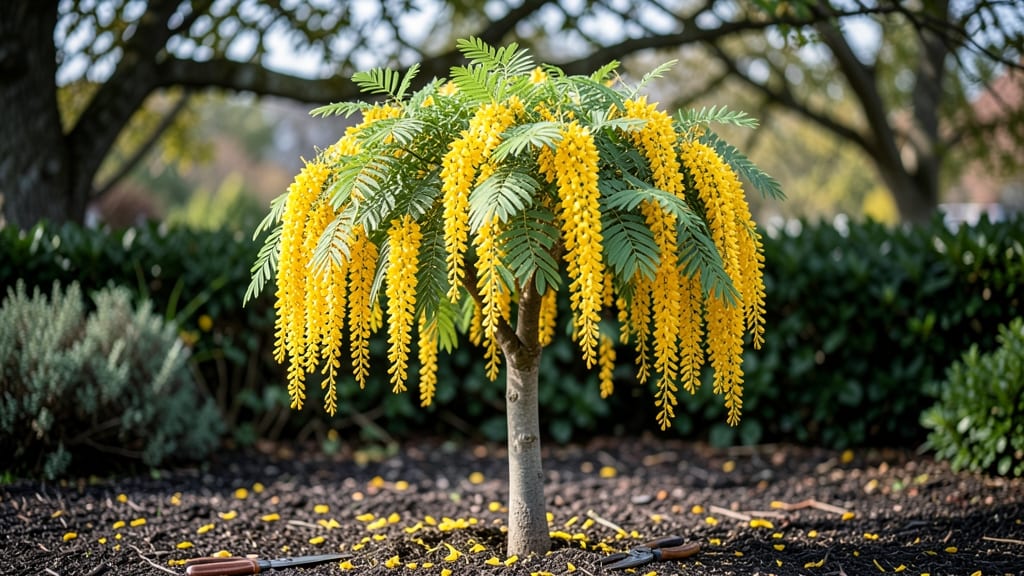
That cascading golden chain of flowers is what makes Laburnum anagyroides—the Gold Chain Tree—such a showstopper in spring. 🌟 I’ve pruned mine for years, and the secret to keeping it lush and frost-hardy isn’t complicated: it’s about timing, shape, and knowing when to step back.
The tree’s delicate, drooping clusters of yellow blossoms are legendary, but without the right cuts, you’ll end up with a tangled mess instead of a graceful focal point.
The key to its resilience starts with planting in well-draining soil and full sun, where it thrives for decades. Watering deeply once a week (more in summer) keeps roots strong, but the real magic happens in pruning—especially after flowering.
I learned the hard way that cutting too late risks losing next year’s blooms, so I now prune in late winter or early spring before buds swell. A 30-50% reduction of old wood opens the canopy and encourages fresh growth.
What you’ll end up with is a tree that bursts into bloom year after year, its golden chains swaying in the breeze while surviving winters with ease. The foliage turns a soft yellow in fall, and even bare branches have an elegant silhouette.
Just remember: every part of this tree is toxic—keep it away from pets and kids. For a backyard that feels like a European garden, this is the tree to master.
Works beautifully as a specimen, small shade tree, or even trained against a wall. The pruning routine takes just 20 minutes once you get the hang of it—here’s how to do it right without sacrificing those show-stopping flowers.
📚 In This Guide
- What you need
- Instructions
- Tips and common mistakes
- Wrapping up and next steps
What you need
- ● Pruning shears: Sharp, bypass-style shears (for clean cuts) or anvil-style for thicker branches (tested on 1-inch branches).
- ● Loppers: 8–10-inch handles, rated for 2-inch branch cuts (for thicker growth).
- ● Pruning saw: Curved-tooth saw for branches over 2 inches thick.
- ● Disinfectant: 70% isopropyl alcohol or horticultural spray (to sterilize tools between cuts).
- ● Heavy-duty gloves: Cut-resistant (e.g., mechanics’ gloves) to protect from thorns and splinters.
- ● 5-gallon bucket: For collecting clippings (add a liners if composting).
- ○ Tree wound dressing (optional but helpful): Pruning sealant or beeswax (for large cuts > ½ inch).
- ● Ladder: Extension ladder (20+ feet) if tree exceeds 10 feet tall. Safety tip: Use non-slip feet and a spotter.
- ● Work vest: With tool organizers to keep shears, gloves, and sanitizer handy.
- ● Tarp: 6x8-foot (to lay under the tree and catch debris).
- ● Marking twine & flags: For labeling branches to prune in stages (if needed).
- ● Safety goggles: To shield eyes from sawdust and debris.
- ● Best timing: Late winter (before buds swell) or early spring (avoid pruning when temps drop below 20°F).
- ● Weather check: No rain forecast for 24–48 hours post-pruning.
- ● Tree health: Prune only healthy, dormant branches (avoid diseased or frost-damaged wood).
Step-by-Step pruning guide for gold chain trees
Here's how to keep your gold chain tree thriving through every season.
🌿 Step 1: Spring Cleanup After Frost
Start in early spring when new growth begins, typically 3-4 weeks after last frost date. Look for dead branches—these will be brittle and snap easily when gently bent. Remove any that broke during winter storms or froze solid. I always prune these first because they can harbor pests over winter.
Use clean, sharp pruning shears to make cuts just above a leaf node or outward-facing bud. This encourages growth in the right direction. Avoid leaving stubs—cut at a 45-degree angle about ¼ inch above the bud for better water runoff. If you see any mushy or discolored wood, that's a sign of disease—prune back further to healthy tissue.
After removing dead wood, thin out any crossing branches that rub together. These create wounds where infections can enter. Step back and look at the tree's shape—you want an open center that lets light reach all parts of the canopy. Gold chain trees naturally grow in a rounded form, so aim to maintain that silhouette.
✂️ Step 2: Summer Maintenance for Airflow
Mid-summer is all about light pruning to maintain shape and airflow. Wait until after flowering if your tree blooms, as pruning too late can reduce next year's flowers. I usually do this in July when the tree has established strong new growth.
Focus on removing any water sprouts—those are the fast-growing, vertical shoots that appear along branches. These sap energy from the main structure. Cut them back to their point of origin. Also watch for any branches growing inward—they'll eventually cross and need removal.
This is also when I do any structural pruning if needed. If a branch is growing at an awkward angle or looks like it might break in a storm, remove it completely. Always cut back to a strong lateral branch or the main trunk. The goal is to keep the tree's weight balanced and its form natural.
🪴 Step 4: Late Fall Preparation for Winter
Begin 6-8 weeks before first frost date, usually in October. This final pruning session is about reducing wind resistance and preparing the tree for dormancy. Start by removing any weak or diseased growth—look for branches that are thinner than a pencil or show signs of fungal spots.
I also do a light thinning of the outer canopy to reduce snow load. Remove about 10-15% of the smallest branches from the outer edges. This prevents branches from snapping under heavy snow. Make all cuts just above a bud that faces outward from the center of the tree.
After pruning, give the tree a deep watering to help it recover. The roots will need to store moisture for winter. I also apply a 2-3 inch layer of mulch around the base (but not touching the trunk) to insulate the roots. This helps protect against temperature swings that can stress the tree.
⏰ Step 5: Winter Check and Adjustments
During winter, do minimal pruning—only remove any branches that break from ice or snow. Wait until late winter (when buds begin to swell) to assess the tree's shape. This is when you'll see where last year's pruning worked or where you need to adjust.
If you notice any dieback (dead branches that didn't make it through winter), prune those back to healthy wood. The tree will naturally push new growth from the remaining buds. Avoid heavy pruning in winter—it stresses the tree when it's already conserving energy.
Here's the thing—gold chain trees are frost-resistant, but they still need care. After winter, you might see some winter burn on leaves (brown or crispy edges). Don't prune these leaves off—they'll fall naturally in spring. Just remove any branches that are completely dead or hollow.
Tips & tricks for perfect gold chain tree pruning
Keeping your gold chain tree healthy year-round takes a little strategy—and I've learned these tricks after years of trial and error with my own trees.
Timing is Everything: The 3-4 week window after last frost in Step 1 is critical because that's when the tree's sap starts flowing again. If you prune too early, you risk damaging fresh buds that haven't hardened off yet. I always check the weather forecast and wait until we've had at least three consecutive days above freezing before starting. For late winter adjustments in Step 5, wait until buds begin to swell—this usually happens 2-3 weeks before your last frost date. This timing ensures you're pruning healthy growth, not just cutting back winter damage.
Tool Technique: Your pruning shears make all the difference, especially when making those 45-degree cuts in Step 1. I've found that bypass pruners work best for medium-sized branches, while loppers handle thicker stems. Always clean your tools between cuts with rubbing alcohol to prevent spreading disease. Here's what nobody tells you—sterilize your tools before and after working with diseased branches. I keep a small bottle of 70% isopropyl alcohol in my pruning kit for just this purpose. Sharp tools also make cleaner cuts that heal faster, so take 2 minutes to hone your blades before you start.
Seasonal Shape Maintenance: In Step 2, when you're removing water sprouts, don't just cut them off—trace them back to their origin point on the main branch. This prevents ugly stubs and encourages stronger regrowth. For structural pruning, I like to visualize the tree's natural rounded shape. If a branch is growing straight up, it's probably a water sprout. If it's growing inward, it'll eventually cross with another branch. Both should be removed to maintain that open center. Think of it like sculpting—you're shaping the tree's future growth pattern.
Winter Protection Hacks: That 2-3 inch layer of mulch in Step 4 is more important than you might think. I've seen trees with mulch too close to the trunk develop rot, so always keep it 2-3 inches away from the base. For extra protection in snowy climates, I wrap young trees with burlap during heavy snowfall to prevent branch breakage. And here's a pro move: after your late fall pruning, give the tree a deep watering with a root stimulator. This helps the roots store more moisture for winter, which is especially helpful in dry climates.
Pro Tips for Gold Chain Tree
- Keeping your gold chain tree healthy year-round takes a little strategy—and I've learned these tricks after years of ...
- Timing is Everything: The 3-4 week window after last frost in Step 1 is critical because that's when the tree's sap s...
- Tool Technique: Your pruning shears make all the difference, especially when making those 45-degree cuts in Step 1. I...
Frequently asked questions
Got questions about growing and maintaining a gold chain tree? Here are some of the most common ones—plus expert answers to keep your tree thriving year-round!
What’s the best time of year to prune a gold chain tree for maximum frost resistance?
The ideal window is late winter to early spring (just before buds swell) or after flowering (summer). Pruning in fall can stimulate new growth that won’t harden off before winter, leaving branches vulnerable to frost damage. For heavy pruning, late winter is best—when the tree’s dormant but pests are inactive.
How do I protect a gold chain tree from frost if I missed the pruning window?
If you pruned too late, wrap young or newly cut branches with frost cloth or burlap on cold nights. For established trees, mulch the base (3–4 inches deep) with straw or wood chips to insulate roots. Avoid watering before a freeze—wet foliage can ice over and damage branches. A light dusting of anti-desiccant spray also helps prevent moisture loss.
Can I shape a gold chain tree like a hedge, or should I stick to open pruning?
Gold chain trees (like Laburnum varieties) thrive with open, airy pruning to encourage flowering and prevent disease. Heavy hedging can stress the tree, reducing frost hardiness. Instead, remove only dead/diseased wood and thin out crowded branches to 50% of their height—this mimics their natural shape while keeping them resilient.
What should I do if my gold chain tree’s leaves turn yellow or brown after pruning?
Yellowing leaves often signal nutrient deficiency or over-pruning. Apply a balanced fertilizer (10-10-10) in early spring and water deeply. Brown edges? It could be frost burn—trim affected areas in spring and monitor for new growth. If the issue persists, check for pests (like spider mites) or fungal issues (e.g., powdery mildew) and treat accordingly.
Are there frost-resistant alternatives to gold chain trees for colder climates?
If your zone is below 5a, consider these hardy alternatives:
- Cotoneaster (Zones 4–8): Thrives in cold, with glossy foliage and berries.
- Serviceberry (Amelanchier) (Zones 3–8): Tolerates -40°F and has stunning spring blooms.
- Dwarf Lilac (Syringa meyeri) (Zones 3–7): Fragrant, compact, and cold-hardy.
- Russian Olive (Elaeagnus angustifolia) (Zones 4–9): Drought-tolerant and extremely frost-resistant.
Wrapping up and next steps
The gold chain tree thrives with year-round pruning, blending resilience with stunning foliage—whether you're a seasoned gardener or just starting out! 🌿 With the right tools, timing, and techniques, you can cultivate a lush, frost-hardy tree that stands out in any landscape.
Remember, consistency is key, but don’t forget to enjoy the process—your efforts will pay off in vibrant growth and natural beauty.
Ready to transform your garden? Start small—pick one season to focus on, gather your supplies, and dive in! Whether it’s trimming dead branches in winter or shaping in spring, every cut brings you closer to a stunning, low-maintenance tree. Happy pruning! ✂️🌟