Blooming
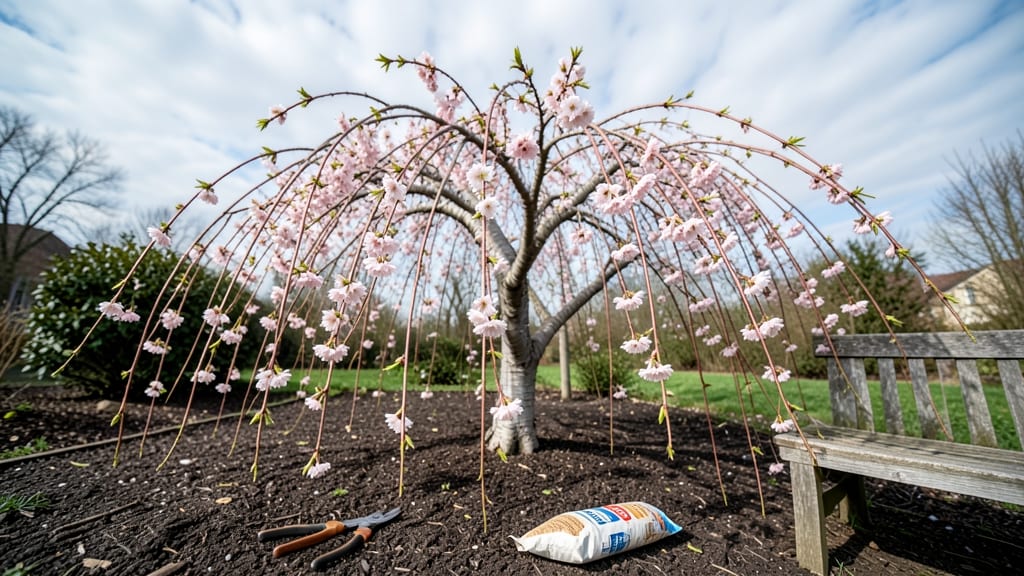
Planting a Cheals weeping cherry blossom tree is like inviting a Pacific Northwest masterpiece into your yard—its graceful, arching branches and delicate spring blossoms create a scene straight out of a postcard. 🌸 I fell in love with this cultivar after seeing one in bloom during a rainy April morning, its petals standing out against the misty backdrop.
The real magic? It thrives in our chilly climate, where many cherries struggle.
This tree needs full sun to partial shade (at least 6 hours of sunlight daily) and well-draining, slightly acidic soil—think of it as a picky but rewarding diva.
The weeping habit means those stunning branches will cascade beautifully, but they need space: plant it 20-25 feet from structures to avoid future headaches. Watering is simple once established, but young trees love deep watering once a week during dry spells.
By late spring, you’ll be rewarded with pale pink, double blooms that perfume the air for weeks, followed by glossy green leaves that turn brilliant red in fall.
Prune lightly after flowering to maintain shape, and watch for canker disease—the tree’s biggest foe—by keeping the area clean and avoiding overhead watering.
Perfect for lawns, parks, or as a standalone specimen, this tree grows 15-20 feet tall with a 20-25 foot spread, making it a statement piece without overwhelming small spaces.
The key to long-term success? Patience—it takes 3-5 years to reach full bloom potential, but every season brings you closer to that dreamy Pacific Northwest spring scene.
📚 In This Guide
- What you need
- Instructions
- Tips and common mistakes
- Wrapping up and next steps
What you need
- ● Cheals Weeping Cherry Blossom Tree (Prunus × yedoensis 'Cheals Weeping'): 1 mature tree (3-5 years old, 6-10 ft tall) or
- ● 1-2 bare-root or container-grown saplings (1-2 ft tall) for transplanting
- ● Planting Site: Full sun (6+ hours/day) or partial shade (morning sun, afternoon shade)
- ● Well-draining soil (amend with compost if needed; PNW clay soil can be tricky!)
- ● Space: 15-20 ft wide and 15-25 ft tall (account for mature spread)
- ● Soil Amendments: 5-10 lbs compost (for nutrient-rich soil)
- ● 2-3 lbs organic mulch (e.g., cedar chips or bark)
- ● Tools: Shovel or spade
- ● Garden gloves
- ● Pruners (sterilized)
- ● Watering can or hose with nozzle
- ● Slow-release fertilizer (e.g., 10-10-10 or organic options like fish emulsion)
- ● Tree stakes and ties (if planting in windy areas)
- ● Mulch volcano guard (to keep mulch away from the trunk)
- ● Soil pH test kit (ideal range: 6.0-7.0; amend with lime or sulfur if needed)
- ● Frost cloth or blanket (for young trees during unexpected late frosts)
Step-by-Step planting guide for Cheals weeping cherry blossom in the Pacific Northwest
Here's how to establish this stunning frost-hardy tree with minimal stress and maximum bloom potential.
🌱 Step 1: Select and Prepare the Planting Site
The Cheals weeping cherry thrives in partial shade to full sun but handles the Pacific Northwest's mix of sun and cloud cover beautifully. Choose a location with at least 6 hours of sunlight daily, protected from harsh afternoon winds that can damage delicate branches. The tree's weeping habit means it will naturally spread outward, so plant it at least 15 feet from structures to allow for its mature width of 12-15 feet.
Test your soil's drainage by digging a 12-inch deep hole—if water pools after 30 minutes, amend with 3-4 inches of organic compost mixed into the native soil. This tree prefers slightly acidic to neutral soil (pH 6.0-7.0). If your soil runs alkaline, add sulfur amendments according to local extension service guidelines. The Pacific Northwest's clay-heavy soils often need this adjustment for optimal root development.
🪴 Step 2: Dig and Amend the Planting Hole
Dig a hole twice as wide as the root ball but no deeper than its container—this prevents root circling, a common issue with container-grown trees. The Cheals weeping cherry's roots are sensitive to compaction, so loosen the sides of the hole with a garden fork. Mix 5 gallons of high-quality compost with the native soil removed from the hole, creating a 50/50 blend that improves both drainage and nutrient availability.
Here's the thing—don't add fertilizer at planting. The tree's roots will be stressed enough from transplant shock, and excess salts can burn them. Instead, create a 12-inch wide planting mound in the center of the hole. This mound prevents root suffocation and encourages downward growth. Water the mound thoroughly before placing the tree in position.
☀️ Step 3: Plant and Stake for Stability
Remove the tree from its container and gently tease the roots outward if they're circling. Position the tree on the mound so the top of the root ball sits 1-2 inches above ground level—this prevents water from pooling at the base. The Cheals weeping cherry's graft union (where the weeping branches meet the trunk) should be at least 6 inches above the final soil line to protect it from potential frost heave.
Backfill with your amended soil mixture, tamping lightly every 2 inches to eliminate air pockets. Create a 4-inch wide watering basin around the base by forming a slight lip with the remaining soil. Install two sturdy stakes on opposite sides of the tree, 6-8 inches from the trunk, and secure with flexible tree ties (never wire, which can girdle the trunk as it grows). The Pacific Northwest's windy conditions make staking essential for the first growing season.
💧 Step 4: Water Deeply and Mulch Properly
Water immediately after planting with 5 gallons of water, soaking the root zone completely. Continue watering every other day for 2 weeks, then taper to once weekly during the first growing season, providing 10 gallons per week during dry spells. The weeping habit means the canopy will spread wide, so deep, infrequent watering encourages strong root development. You'll know you're doing it right when the soil feels moist 6 inches down after watering.
Apply 3 inches of wood chips or bark mulch over the watering basin, keeping it 6 inches away from the trunk to prevent rot. The mulch should cover the entire root zone but not mound against the trunk. In the Pacific Northwest, this mulch layer will also help regulate soil temperatures during our cool, damp winters. Replenish mulch annually in early spring to maintain the 3-inch depth—this protects against frost heave and conserves moisture.
✂️ Step 5: Prune and Protect for First-Year Establishment
Wait until late winter (February) before pruning your Cheals weeping cherry. Remove any dead, damaged, or crossing branches using clean, sharp pruners, making cuts just outside the branch collar. Avoid heavy pruning in the first year—focus on structural shaping rather than flower bud reduction. The weeping habit comes naturally, but you can encourage a more open center by selectively thinning branches that grow inward.
In the Pacific Northwest, late spring frosts can still threaten early blooms. If frost is forecast within 2 weeks of flowering, cover the tree with frost cloth secured loosely over the branches. The Cheals variety is more frost-resistant than other weeping cherries, but young trees benefit from this protection. Once buds begin to swell in early spring, monitor for cherry leaf spot (common in our wet climate) and treat preventively with copper fungicide if needed.
Tips & tricks for perfect Cheals weeping cherry blossom planting
Let me share the insights I've gathered from years of working with Pacific Northwest landscapes—these details make all the difference for your Cheals weeping cherry.
Site Selection Wisdom: The 6 hours of sunlight requirement is non-negotiable for optimal blooming, but here's what nobody tells you—morning sun and afternoon shade actually works better in our climate. Position the tree to catch the gentle morning rays while avoiding harsh afternoon sun that can stress the delicate branches. Also, consider planting near a south-facing wall if you're in a particularly windy area; it creates a microclimate that protects young trees.
Soil Preparation Strategy: That 30-minute water test in Step 1 is your best indicator of drainage issues. If water pools, you're not alone—PNW clay soils often need help. I've found that mixing in 3-4 inches of coconut coir (not just compost) with your organic matter creates better aeration for those sensitive roots. The Cheals variety particularly benefits from this adjustment since it's more prone to root rot than other cherries.
Planting Mound Technique: The 12-inch wide planting mound in Step 2 is a game-changer for preventing root suffocation. I like to create this mound using a combination of your amended soil and perlite mixed at a 3:1 ratio. This gives you the perfect balance of drainage while still providing structural support. When you place the tree on this mound, you'll notice how the roots immediately begin to spread outward rather than circling.
Staking System: For the Pacific Northwest's windy conditions, I've learned that using three stakes instead of two creates a more stable triangle formation. Position the third stake at a 45-degree angle to the other two, about 6 inches from the trunk on the windward side. This triangular configuration prevents the tree from swaying in strong gusts, which is especially important during our winter storms when the tree is still establishing its root system.
Pro Tips for Cheals Weeping Cherry Blossom Tree
- Let me share the insights I've gathered from years of working with Pacific Northwest landscapes—these details make al...
- Site Selection Wisdom: The 6 hours of sunlight requirement is non-negotiable for optimal blooming, but here's what no...
- Soil Preparation Strategy: That 30-minute water test in Step 1 is your best indicator of drainage issues. If water po...
Frequently asked questions
Got questions about the Cheals Weeping Cherry Blossom Tree? You’re not alone! This stunning Pacific Northwest favorite has its quirks—especially when it comes to frost, care, and placement. Here are the answers to the most common queries to help you grow a thriving tree with minimal stress.
How cold can Cheals Weeping Cherry blossoms handle?
The Prunus serrulata ‘Cheals Weeping’ is one of the most frost-hardy weeping cherries, surviving temperatures as low as -20°F (-29°C) once established. Young trees (under 3 years) benefit from winter mulch or burlap wraps to protect tender bark. Pro tip: Plant in full sun—it boosts cold resistance by hardening the wood faster!
When do Cheals Weeping cherries bloom, and how long do the flowers last?
Blooms typically arrive in early to mid-April in the PNW, with peak spectacle lasting 7–10 days. For extended enjoyment, choose a site with morning sun—cooler nights preserve petals longer. Warning: Late frosts (<32°F/0°C) can nip buds, but Cheals’ semi-double flowers are less vulnerable than single-petal varieties.
Can I grow this tree in a small yard or container?
While Cheals Weeping can reach 15–20 feet tall and wide, its weeping habit makes it ideal for small spaces—just allow 8–10 feet of clearance for branches. For containers, use a 24"+ pot with fast-draining soil and prune aggressively to control size. Note: Root-bound trees bloom poorly, so repot every 2–3 years.
Why aren’t my Cheals Weeping cherry blossoms opening this year?
Common culprits include:
- Dormancy stress: Too-wet or too-dry soil delays bud break. Aim for consistently moist (not soggy) soil.
- Nutrient deficiency: Yellow leaves? Fertilize in early spring with balanced 10-10-10 or compost.
- Late frost damage: If buds swell then blacken, prune dead growth post-bloom to encourage new growth.
- Age: Young trees (under 5 years) may bloom lightly—patience pays off!
What’s a good frost-resistant alternative if Cheals Weeping is too high-maintenance?
If you want low-fuss, frost-tolerant blooms, consider:
- Kwanzan Cherry (Prunus serrulata ‘Kwanzan’): Hardy to -15°F (-26°C), disease-resistant, and blooms later (reducing frost risk).
- Westonbirt Weeping Cherry (Prunus subhirtella ‘Westonbirt’): Blooms twice a year (spring + fall) and handles -25°F (-32°C).
- Higan Cherry (Prunus serrulata ‘Higan’):** Dark leaves + pink blossoms; tough as nails in shade or sun.
Wrapping up and next steps
The Cheals Weeping Cherry Blossom Tree is a stunning, frost-hardy gem perfect for Pacific Northwest gardens, offering year-round beauty with its delicate blooms and graceful form. Whether you're a seasoned gardener or a newcomer, its resilience and adaptability make it a rewarding choice—just follow the blueprint for success! 🌸
Ready to transform your outdoor space? Start by marking your planting spot this weekend—soon, you’ll be savoring the magic of this weeping cherry’s seasonal charm.