Pruning
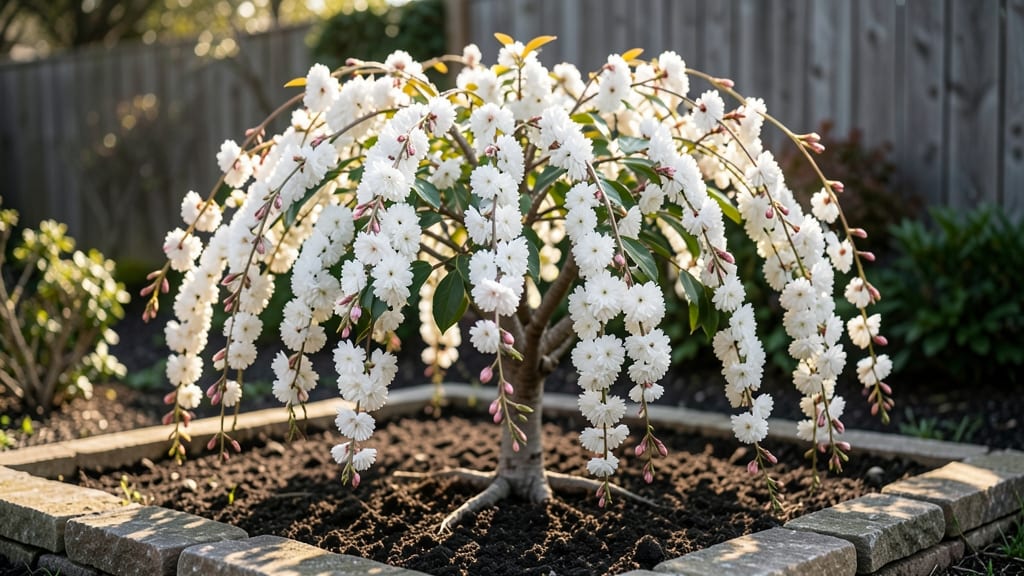
The white fountain weeping cherry tree transforms any Pacific Northwest garden into a dreamy springtime scene with its cascading branches and clouds of white blossoms. I planted mine last spring after years of admiring neighbors' versions—it's the kind of tree that makes passersby pause and smile.
The way its branches arch gracefully toward the ground creates natural seating areas perfect for morning coffee or evening reading spots.
This tree thrives in zones 5-8, making it ideal for our rainy climate, and its frost-resistant nature means you won’t lose those delicate blooms to early cold snaps. The key to keeping it looking its best? Strategic pruning in late winter before new growth appears.
I’ve found that shaping it into a more compact form (about 10-15 feet wide) works beautifully in small yards while still making a statement. The blossoms arrive earlier than standard cherries, giving you weeks of pure white beauty before summer even begins.
Pair it with shade-loving perennials like hostas or ferns at its base, and you’ll create a layered, textured display that stays lush all season. The tree’s cascading habit also makes it perfect for framing patios or walkways—imagine sitting beneath its branches during cherry blossom season.
With the right placement and care, this tree becomes the heart of your garden, offering year-round interest from its graceful silhouette even when not in bloom.
For best results, plant it where it gets full sun to partial shade and well-draining soil—though it’s forgiving once established. The pruning blueprint I’ve developed focuses on maintaining that signature weeping shape while encouraging dense flowering.
Whether you’re designing a new garden or refreshing an old one, this tree delivers effortless elegance that pays dividends in curb appeal and tranquility.
📚 In This Guide
- What you need
- Instructions
- Tips and common mistakes
- Wrapping up and next steps
What you need
- ● Pruning shears: Bypass pruners (sharp, 6–8" blades) for clean cuts on small branches.
- ● Loppers: 18–24" bypass loppers for thicker branches (up to 2" diameter).
- ● Pruning saw: Curved-tooth saw for branches 2–4" thick (avoid tearing bark!).
- ● Disinfectant: 70% isopropyl alcohol or a 10% bleach solution to sterilize tools between cuts.
- ● Gloves: Heavy-duty gardening gloves (cut-resistant for safety).
- ○ Pruning sealant: Optional but helpful for large cuts (e.g., Tanglefoot Tree Wound Pruning Seal).
- ● Ladder or step stool: Sturdy, 6–8' tall (for reaching higher branches safely).
- ● Trash bags: Heavy-duty for collecting pruned branches (10–20 gallon size).
- ● Sharpie or labeling tape: For marking branches to prune (if needed).
- ● Extension pole pruners: For hard-to-reach branches (10–15' reach).
- ● Tree pruning rope: To stabilize branches during heavy cuts.
- ● Work gloves with grip: For extra comfort on longer sessions.
- ● Safety glasses: To protect against debris (especially when using a saw!).
- ● Notebook & pen: To sketch a pruning plan or note observations.
Step-by-Step pruning guide for Pacific Northwest weeping cherry trees
Transform your weeping cherry into a stunning, frost-hardy focal point with these precision techniques.
Time Your Pruning for Optimal Growth
Prune your white fountain weeping cherry during late winter to early spring, ideally between February and March in the Pacific Northwest. This timing ensures you remove dead wood before new growth begins while avoiding late-season pruning that invites disease. The tree's dormant state makes it easier to see the structure clearly—no leaves mean no guesswork about branch health.
Wait until after the worst winter frost but before bud break (when you see tight, swollen buds). Pruning too early risks damaging tender new growth from unexpected cold snaps, while waiting too late stresses the tree as it prepares for spring. A good rule: prune when forsythia bushes begin flowering nearby—this signals your tree is ready.
Remove Dead, Diseased, or Crossing Branches
Start by eliminating dead, diseased, or damaged branches—these are your first targets. Look for branches with brown, brittle wood or peeling bark, and any that show signs of fungal infections (black spots, oozing sap, or unusual growths). Use clean, sharp pruners to make 1/4-inch cuts just outside the branch collar (the swollen area where the branch meets the trunk).
Next, remove crossing or rubbing branches—these create wounds that invite pests and disease. If two branches grow toward each other, the smaller one should go. Always cut back to a bud or lateral branch to encourage healthy regrowth. The goal is to open the canopy for better airflow and sunlight penetration, which is critical for frost resistance.
Shape for Balance and Frost Hardiness
Weeping cherries thrive when their natural weeping habit is preserved, but gentle shaping improves structure. Focus on reducing overcrowding in the lower canopy to prevent snow and ice buildup during winter storms—a major cause of branch breakage. Trim back any long, leggy branches that grow outward excessively, cutting them back to a side branch or bud at a 45-degree angle.
For the upper canopy, aim to create a gradual taper—thinner at the top, denser at the bottom. This helps the tree shed snow more easily and reduces frost damage. Avoid heavy pruning of the central leader (main vertical stem) unless it’s absolutely necessary, as this can weaken the tree’s structural integrity. Step back frequently to check your progress—your goal is a balanced, graceful silhouette that still showcases the tree’s elegant weeping form.
Thin Out for Air Circulation and Light Penetration
Thinning is the most important step for frost resistance and disease prevention. Remove 20-30% of the total branches, focusing on those that block light or airflow from reaching the interior. Start at the outer edges and work inward, selecting branches that are too close together or growing in the wrong direction. Cut them back to a healthy lateral branch or bud, never leaving a stub.
You’ll know you’re doing it right when you can see light filtering through the canopy and feel a breeze moving through the branches. This isn’t just about aesthetics—better airflow reduces humidity inside the tree, which prevents fungal diseases like powdery mildew and black knot. A well-thinned weeping cherry also dries faster after rain, further protecting it from winter woes.
Clean Up and Protect for Winter
After pruning, sterilize your tools with a 10% bleach solution (1 part bleach to 9 parts water) to prevent spreading disease. Remove all clippings and debris from the base of the tree—leaving them behind can harbor pests and fungi. For large branches, shred them and compost them away from the tree to avoid inviting pests.
Apply a 2-3 inch layer of mulch (using the 4 gallons of mulch you’ve prepared) around the drip line (the edge of the tree’s canopy), keeping it 6 inches away from the trunk. This insulates the roots from frost heaving and retains moisture. Water deeply before the first hard frost to ensure the tree enters winter fully hydrated. Finally, consider wrapping the trunk with tree guard (if using) to protect it from rodent damage and sunscald during winter.
Tips & tricks for perfect Pacific Northwest weeping cherry pruning
Mastering the art of pruning your weeping cherry tree transforms it from a delicate specimen into a resilient, frost-proof centerpiece. These precision techniques will ensure your tree thrives for decades.
Timing is Everything: The late winter to early spring window between February and March is non-negotiable for Pacific Northwest climates. This timing aligns with the tree's natural dormancy while avoiding late-season pruning that invites disease. I always check for forsythia blooms as my natural indicator—when those yellow flowers appear, it's time to prune. The tree's dormant state reveals its structure clearly, making it easier to identify dead wood and problematic branches without the distraction of foliage.
Precision Cutting Technique: When removing branches in Step 2, the 1/4-inch cut just outside the branch collar is critical. This precise cut promotes faster healing and prevents disease entry points. I use a sharp bypass pruner and make clean cuts at a 45-degree angle for larger branches. For smaller branches, I cut just above a bud or lateral branch to encourage healthy regrowth. This technique minimizes stress on the tree while maintaining its natural form.
Structural Balance Matters: In Step 3, creating that gradual taper from thinner at the top to denser at the bottom is what makes weeping cherries frost-resistant. I focus on reducing overcrowding in the lower canopy first—this prevents snow and ice accumulation during winter storms. When shaping, I step back frequently to visualize the tree's silhouette. The goal is to preserve the elegant weeping habit while ensuring structural integrity. Remember, the central leader should only be pruned if absolutely necessary to maintain the tree's strength.
Thinning for Health: The 20-30% thinning guideline in Step 4 is your best defense against fungal diseases. I target branches that block light and airflow, working from the outer edges inward. You'll know you're doing it right when you can see light filtering through the canopy. This isn't just about aesthetics—proper thinning creates a microclimate that reduces humidity and prevents powdery mildew. The result is a tree that stays healthier through our wet Pacific Northwest winters.
Pro Tips for White Fountain Weeping Cherry Tree
- Mastering the art of pruning your weeping cherry tree transforms it from a delicate specimen into a resilient, frost-...
- Timing is Everything: The late winter to early spring window between February and March is non-negotiable for Pacific...
- Precision Cutting Technique: When removing branches in Step 2, the 1/4-inch cut just outside the branch collar is cri...
Frequently asked questions
Got questions about your white fountain weeping cherry tree? You’re not alone! Here are some of the most common queries—plus straightforward answers—to keep your tree thriving in the Pacific Northwest’s frosty climate.
How do I prune a weeping cherry tree to encourage more blooms?
Prune after flowering in late spring or early summer to avoid cutting off next year’s blossoms. Focus on removing dead, crossing, or overcrowded branches—never trim more than 25% of the canopy at once. Thin out the center to improve airflow, which reduces disease risk. For weeping varieties, gently shape the branches to maintain their graceful, cascading form.
Is this tree truly frost-resistant? How do I protect it in PNW winters?
Yes! The white fountain weeping cherry (Prunus serrulata ‘White Fountain’) is hardy to USDA Zones 5-8, making it a great fit for the PNW. Still, young trees or harsh winters may need extra care. Mulch heavily (3–4 inches) around the base and water deeply before the ground freezes. Wrap the trunk with tree guard to prevent rodent damage or sunscald in winter.
When is the best time to plant a weeping cherry tree in Washington or Oregon?
Plant in early spring (March–April) or fall (September–October) for optimal root establishment. Avoid planting in summer heat or winter frost, as extreme temps stress young trees. Choose a sunny, well-draining spot—weeping cherries thrive with 6+ hours of sunlight daily and hate soggy soil. Amend heavy clay with compost to improve drainage.
Why are my weeping cherry tree’s branches dying back? Is it pruning-related?
Dying branches could stem from over-pruning, disease (like bacterial canker), or winter burn. If branches are blackened, oozing, or brittle, it’s likely bacterial canker—prune below the damage with sterilized tools and dispose of infected wood. For winter burn, avoid late-season fertilizing and water deeply before frost. If unsure, test for pests or fungal issues with a local extension office.
Can I grow a weeping cherry tree in a container? What’s the best pot size?
Yes, but it’s challenging long-term—these trees grow 15–25 feet tall and need deep roots. If container-grown, use a minimum 24-inch diameter pot with drainage holes and fast-draining soil (like a mix of potting soil and perlite). Move the pot to a protected location in winter and fertilize lightly in spring. Expect slower growth and smaller blooms compared to in-ground planting.
Wrapping up and next steps
The White Fountain Weeping Cherry Tree is a stunning, frost-resistant gem that thrives in the Pacific Northwest’s unique climate—when pruned with care! By mastering the right techniques, timing, and tools, you’ll keep this tree healthy, blooming beautifully, and structurally sound for years to come. 🌸✂️
Now that you’re armed with the knowledge, roll up your sleeves and get pruning! Start with a fresh cup of coffee, grab your tools, and give your tree the love it deserves. Happy gardening—your future blossoms will thank you! 🌿💚