
Pruning
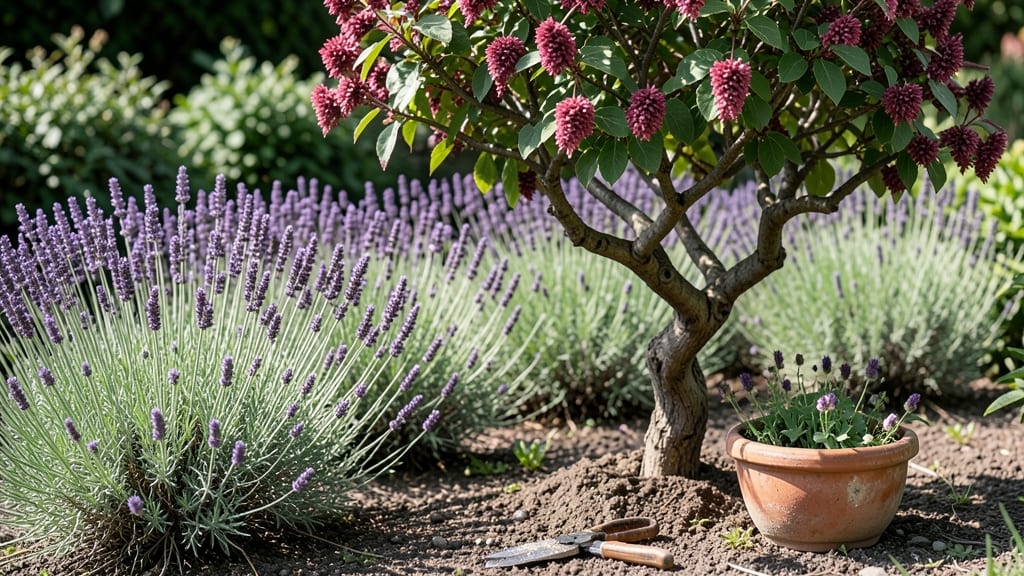
The Lavender Twist redbud tree brings Pacific Northwest gardens to life with its dramatic, twisted branches and soft lavender blooms—perfect for gardeners craving year-round visual drama. 🌿 I fell in love with this cultivar after seeing how it stood out in a foggy Portland garden, its silvery bark and cascading flowers defying winter’s chill.
Unlike its straight-stemmed cousins, this tree’s contorted growth habit turns every season into a show, from spring’s blossoms to autumn’s fiery foliage.
What makes it a game-changer? Its frost resilience means it thrives where other redbuds struggle, while its compact size (20–25 feet tall) fits snugly in mixed borders or as a bold focal point.
Pair it with hellebores for early spring contrast or use it to anchor a small patio—its branches naturally twist toward the sky, creating a living sculpture. The key to showcasing its beauty? Pruning lightly in late winter to maintain its signature shape without sacrificing its structural charm.
Imagine a garden where winter’s gray skies meet a canopy of lavender-hued blossoms in spring, followed by deep purple leaves in fall—this tree delivers that magic.
It’s the kind of plant that makes neighbors pause and ask, “What is that?”—and your answer will be, “The tree that outsmarts our climate.” Ready to make it the centerpiece of your design? Let’s explore how to set it up for success.
Bonus: This tree plays well with others. Underplant it with ferns or astilbes for texture, or let it stand alone as a conversation starter. Whether you’re working with a city lot or a woodland edge, its adaptability ensures it’ll shine.
Now, let’s talk placement and companions—because the best designs start with the right neighbors.
📚 In This Guide
- What you need
- Instructions
- Tips and common mistakes
- Wrapping up and next steps
What you need
- ● Redbud tree sapling (Cercis canadensis) – Choose a healthy, 3-5 ft tall specimen with flexible branches.
- ● Lavender plants (Lavandula spp.) – 3-5 mature, compact varieties (e.g., 'Munstead' or 'Grosso') for intertwining.
- ● Pruning shears or loppers – Sharp, clean tools for precise cuts (sterilize with rubbing alcohol).
- ● Garden twine or soft plant ties – 10-15 ft of biodegradable twine (¼" width) to secure branches.
- ● Balanced fertilizer (10-10-10 or organic) – 1 lb for post-planting nourishment.
- ● Mulch (wood chips or straw) – 2-3 inches to retain moisture and protect roots.
- ● Watering can or hose with gentle nozzle – For consistent hydration.
- ● Gloves (gardening or work gloves) – To protect hands from thorns and rough bark.
- ● Root stimulator gel – Speeds up recovery after pruning.
- ● Pruning sealant – For larger cuts to prevent disease.
- ● Staking system – If your tree needs temporary support.
- ● Decorative stakes or markers – To outline your twist design before planting.
- ● Slow-release plant food tablets – For long-term lavender health.
Step-by-Step guide for planting a redbud lavender twist tree in the Pacific Northwest
Here's how to establish a stunning, frost-hardy canopy that thrives in the region's cool climate.
🌱 Step 1: Select the Perfect Planting Site and Prepare the Soil
Choose a location with partial shade to full sun—this tree handles both but needs morning sun for optimal lavender blooms. The Pacific Northwest's cooler summers mean you won't scorch the foliage like in hotter climates. Test your soil's drainage: if water pools after 6 hours, amend with 2-3 inches of compost mixed into the top 12 inches of soil.
This tree's unique twist habit requires at least 15 feet of horizontal space for full maturity. Avoid planting near sidewalks or driveways where roots could crack pavement. The lavender twist cultivar is more compact than standard redbuds, but its branches will still spread 8-10 feet wide. I always dig a hole twice as wide as the root ball but only as deep—planting too deep suffocates roots.
🪴 Step 2: Plant at the Right Time and Depth for Frost Resilience
Spring is ideal—plant after the last frost when soil temperatures reach 50°F but before summer heat arrives. The Pacific Northwest's winter chill hours (below 45°F) actually help this tree set buds, so don't rush planting in fall. Remove the tree from its container and loosen any circling roots with your fingers—never use a knife, which can damage the cambium layer.
Place the root ball in the hole so the top of the root flare sits 1-2 inches above ground level. Backfill with native soil mixed with 1 part compost, tamping gently as you go. Water deeply until the soil settles—you'll see the hole fill slightly. Mulch with 3 inches of wood chips (not bark) in a 3-foot diameter circle, keeping mulch 6 inches away from the trunk to prevent rot.
☀️ Step 3: Establish Proper Watering and Light for First-Year Growth
Water deeply twice weekly for the first 3 months, then taper to once weekly as the tree establishes roots. The Pacific Northwest's frequent drizzle can create surface moisture while roots stay dry—check by pushing a finger 3 inches deep. If dry, water until moisture reaches 6 inches down. Overwatering in winter can drown roots, so reduce to monthly deep watering once established.
This tree's lavender foliage needs 4-6 hours of morning sun to maintain its striking color. In dense shade, leaves may revert to standard redbud green. If planting near evergreens, prune neighboring branches to allow light penetration. The twist habit develops naturally, but you can gently guide branches with soft ties if they're growing too tightly against the trunk.
✂️ Step 4: Prune for Structure and Frost Protection
Wait until late winter (just before buds swell) to prune—this tree blooms on old wood, so pruning in fall removes next year's flowers. Remove dead, crossing, or inward-growing branches first, then thin to open the center. The twist pattern forms best with minimal pruning—only correct structural issues. Use clean, sharp pruners and seal larger cuts with pruning sealant to prevent disease entry.
In the Pacific Northwest's mild winters, you might see new growth in late fall—protect tender shoots with burlap wraps if temperatures drop below 20°F. This tree handles frost better than most redbuds, but its lavender foliage can scorch if winter sun hits bare branches. A light layer of straw mulch around the base adds extra insulation without smothering roots.
Tips & tricks for perfect redbud lavender twist tree planting
Here's what I learned after planting these stunning trees in the Pacific Northwest—tricks that make all the difference for long-term success.
Soil Drainage Test: The 6-hour drainage test is critical for preventing root rot. I've seen too many trees fail because people assumed their soil drained well. After digging the hole, fill it with water and time how long it takes to drain completely—if it's less than 6 hours, amend with more compost or consider raised beds. The lavender twist cultivar is particularly sensitive to soggy roots, so don't skip this step.
Root Ball Preparation: When loosening circling roots in Step 2, I use my fingers to gently separate them rather than a knife. The cambium layer is delicate—even a small cut can invite disease. Think of it like untangling headphones: patience prevents damage. This simple technique has saved me from replanting failed trees.
Winter Protection Strategy: For the Pacific Northwest's mild winters, I've found that combining burlap wraps with straw mulch creates the best insulation. The burlap protects tender shoots from 20°F drops, while the straw maintains consistent soil temperatures. Apply the straw mulch after the first frost to prevent premature warming that can confuse the tree's dormancy cycle.
Light Management: That 4-6 hours of morning sun is non-negotiable for maintaining lavender foliage. I've noticed that trees planted under evergreens often revert to green leaves by summer. If you can't provide morning sun, consider planting near a south-facing wall that reflects sunlight—this can extend the light exposure by another 2-3 hours without direct sun exposure.
Pro Tips for Redbud Lavender Twist Tree
- Here's what I learned after planting these stunning trees in the Pacific Northwest—tricks that make all the difference for long-term success.
- Soil Drainage Test: The 6-hour drainage test is critical for preventing root rot.
- Root Ball Preparation: When loosening circling roots in Step 2, I use my fingers to gently separate them rather than a knife.
Frequently asked questions
Got questions about the Redbud Lavender Twist Tree? You’re not alone! Here are some of the most common queries—plus straightforward answers—to help you care for your frost-resistant beauty like a pro.
How cold can this tree handle?
The Redbud Lavender Twist Tree is a Pacific Northwest powerhouse, thriving in USDA Zones 5-9. It tolerates brief dips to -20°F (-29°C) once established, making it ideal for frosty mornings and winter storms. Young trees (first 2 years) benefit from light mulch or burlap wraps during extreme cold snaps.
When’s the best time to prune for that signature twist?
Prune late winter to early spring (before buds swell) to shape the Lavender Twist branches. Avoid heavy pruning in fall—it stimulates tender new growth that won’t survive frost. For maintenance, trim dead or crossing branches anytime, but never exceed 25% of the canopy in one season.
Can I grow this tree in containers? (And how big should the pot be?)
Yes! This tree adapts well to large containers (20+ gallons) for patios or urban gardens. Use a well-draining potting mix with 50% organic matter (like compost or coconut coir). Drainage holes are non-negotiable—root rot is the #1 container killer. Repot every 2–3 years and overwinter indoors if temps drop below 10°F (-12°C).
What if my tree’s twist isn’t forming? Troubleshooting tips?
If the Lavender Twist isn’t developing, check these fixes:
- Light pruning: Gently weave young branches into the twist shape (use soft ties if needed).
- Sunlight: Ensure 6+ hours of direct sun—shady spots slow growth and twist formation.
- Nutrients: A balanced fertilizer (10-10-10) in early spring can boost vigor.
- Patience: Twists often emerge by year 3–5—resist heavy pruning too soon!
Are there frost-resistant alternatives with similar color?
If you love the Redbud’s magenta blooms but want options, try:
Tree
Zone Hardiness
Unique Feature
Korean Spice Viburnum
4–8
Pink spring flowers, deep red fall foliage
Serviceberry (Amelanchier)
3–9
White blooms, edible berries, yellow fall color
Dwarf Lilac ‘Munstead’
3–7
Fragrant purple blooms, compact size (6’ tall)
All three handle frost like champs and add seasonal interest!
Wrapping up and next steps
The Redbud Lavender Twist Tree isn’t just a stunning addition to your Pacific Northwest landscape—it’s a resilient, low-maintenance powerhouse that thrives even in frost. With the right pruning techniques, you’ll unlock its full potential, ensuring vibrant blooms, lush foliage, and that signature twist for years to come. 🌿✨
Ready to transform your yard? Grab your tools, follow the steps, and start pruning with confidence! Your future self—and your tree—will thank you. For extra inspiration, explore local PNW gardening communities or tree care workshops to keep learning.