Pruning
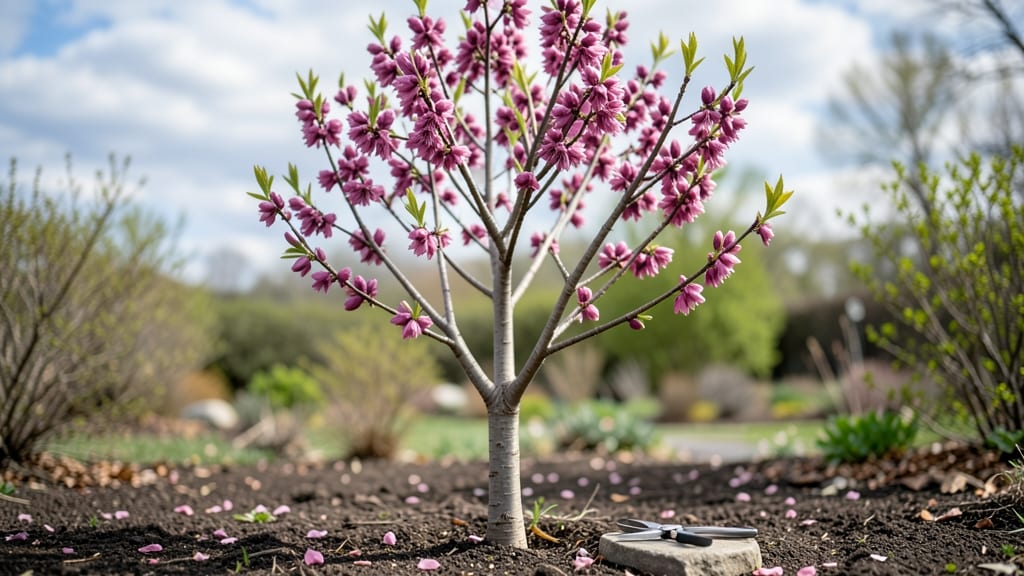
Mastering redbud tree identification is easy—just look for its early spring pink-purple blooms that burst into view before the leaves, offering a breathtaking show against bare branches. 🌸 The heart-shaped leaves and smooth, gray bark make it unmistakable once you know what to look for, especially when compared to similar trees like dogwoods or magnolias.
Redbuds stand out because they bloom earlier than most trees, often in late winter or early spring, and their flowers last just a few weeks before the leaves appear. The leaves themselves are soft, velvety, and heart-shaped, turning a soft yellow in fall.
Bark texture is another clue—young trees have smooth, silvery-gray bark that develops shallow furrows as they age.
Once you’ve identified yours, you’ll want to plant it where its early spring display steals the show. Redbuds thrive in full sun to partial shade and adapt to various soils, making them perfect for small gardens or as a focal point in landscapes.
Their compact size (typically 20–30 feet tall) adds to their charm.
If you’re unsure whether you’ve spotted a redbud, compare it to similar trees: dogwoods have white flowers and opposite branching, while magnolias bloom later with larger, more fragrant flowers. Redbuds are the early spring showstoppers—no contest. Ready to add one to your garden?
📚 In This Guide
- What you need
- Instructions
- Tips and common mistakes
- Wrapping up and next steps
What you need
- ● Field Guide or Identification App: A printed redbud tree guide (e.g., National Audubon Society Field Guide to North American Trees) or
- ● A smartphone app like iNaturalist, PictureThis, or LeafSnap (free or paid versions).
- ● Hand Lens (Magnifying Glass): 10x magnification for inspecting bark texture, leaf veins, and flower details.
- ● Measuring Tape: 10–25 feet (for estimating tree height and trunk diameter).
- ● Notebook & Pen: For recording observations (flower color, leaf shape, bark texture, etc.).
- ● Camera or Smartphone: With a macro mode for close-up shots of flowers, buds, and foliage.
- ○ Gloves (Optional but Recommended): Lightweight gardening gloves to protect hands from thorns or rough bark.
- ● Pruning Shears (Small, 6–8 inch): For safely collecting a small leaf or twig sample (if needed).
- ● Tree Identification Key: A laminated quick-reference card with redbud vs. similar trees (e.g., dogwood or hawthorn).
- ● GPS Device or App: To log tree locations (e.g., Google Maps or Gaia GPS).
- ● Soil pH Test Kit: If you’re assessing the tree’s growing conditions (redbuds thrive in slightly acidic soil).
- ● Binoculars (8x42 or 10x42): For spotting redbuds in wooded areas or tall landscapes.
- ● Tree Pruning Kit: If you plan to maintain or prune the tree post-identification (includes loppers, pruning saw, and disinfectant).
Step-by-Step Guide to identifying redbud trees
Here's how to spot these early spring showstoppers—no botanist degree required.
🌿 Step 1: Look for the Signature Heart-Shaped Leaves
The redbud's most distinctive feature is its heart-shaped leaves, which appear after the flowers. These leaves are 2-4 inches long with smooth edges and a slightly pointed tip. When mature, they turn a rich green, but the real giveaway is their shape—unmistakably heart-like when held up to light.
I always check for this first because it's the easiest way to confirm you're looking at a redbud. Run your fingers along the leaf edge—it should feel smooth, not jagged. If you see smaller leaves on new growth, they'll be even more heart-shaped, almost like a perfect Valentine's card.
Here's the thing—young redbuds may have leaves that look slightly different, but the classic heart shape remains. If you're unsure, compare it to a photo of a redbud leaf. The shape is so unique that once you spot it, you'll recognize it instantly.
☀️ Step 2: Spot the Stunning Early Spring Blooms
Redbud trees burst into bloom in late winter to early spring, often before their leaves appear. The flowers are clusters of pink to lavender blossoms that cover the branches like a soft, velvety blanket. Each cluster is about 1-2 inches long and hangs downward.
This is the moment that matters: these flowers are one of the first signs of spring in many regions. If you see a tree with no leaves but covered in these delicate blooms, you've likely found a redbud. The color can vary—some are almost white, while others are deep magenta—but they're always eye-catching.
Don't skip this (I learned the hard way). If you see a tree with similar flowers but no heart-shaped leaves, it might be a different species like a dogwood. The redbud's flowers are more abundant and less structured than dogwood blooms.
🌱 Step 3: Examine the Bark and Branch Structure
The bark of a mature redbud tree is another key identifier. It's smooth and grayish-brown when young but develops a slightly scaly texture as it ages. The branches are often zigzag or slightly curved, which helps distinguish them from other small trees.
Young redbuds have thin, flexible branches that can bend easily. As they mature, the bark may develop small ridges or furrows, but it never becomes deeply furrowed like an oak. Run your hand along the trunk—if it feels smooth with just a hint of texture, you're likely looking at a redbud.
Real talk: the bark alone won't confirm it, but combined with the flowers and leaves, it's a strong clue. If you're in the woods or a park, look for these three features together: heart-shaped leaves, early spring blooms, and smooth bark.
⏰ Step 4: Check the Tree's Size and Growth Habit
Redbud trees are typically 20-30 feet tall at maturity, with a rounded canopy. They grow at a moderate rate, so you won't see them towering over other trees unless they've been established for years. The branches often spread outward, creating a broad, umbrella-like shape.
Young redbuds may look like shrubs, but they'll eventually develop a single trunk. If you see a small tree with multiple trunks, it might be a multi-stemmed redbud, which is common in younger specimens. Pay attention to how the branches grow—they tend to spread horizontally before turning upward.
Here's where it gets fun: redbuds are often found in woodlands or along forest edges. If you're identifying one in a garden or urban setting, it's likely a cultivated variety. These trees are adaptable and can thrive in a variety of conditions, which is why they're so popular in landscapes.
Tips & tricks for perfect redbud tree identification
Confession: I spent years admiring redbuds without realizing how easy they are to spot once you know what to look for.
Leaf Shape Matters: When checking those 2-4 inch heart-shaped leaves in Step 1, hold them up to sunlight—their translucent quality makes the shape even more obvious. The smooth edges are another dead giveaway. I've seen people mistake them for maple leaves at first glance, but redbud leaves have that distinctive rounded base that maples lack.
Timing is Everything: In Step 2, don't miss the window for those early spring blooms—late winter to early spring is critical. I've seen redbuds bloom as early as February in warmer climates, while northern regions might see them in April. The key is catching them before the leaves appear, when the pink lavender clusters are at their most dramatic. If you're out too late, the leaves will hide the flowers completely.
Bark Texture Clues: For Step 3, focus on that smooth grayish-brown bark—it's one of the most underrated identification features. I learned this the hard way by trying to identify a tree with rough bark that turned out to be a completely different species. The redbud's bark stays relatively smooth even as it ages, developing only slight scaly texture, never the deep furrows of an oak.
Growth Habit Insights: The 20-30 foot mature height mentioned in Step 4 is important, but what's often overlooked is how the branches grow horizontally first before turning upward. This creates that classic umbrella shape. I've seen young redbuds mistaken for shrubs because they look so bushy, but their growth pattern gives them away over time.
Pro Tips for Redbud Tree Identification
- Confession: I spent years admiring redbuds without realizing how easy they are to spot once you know what to look for.
- Leaf Shape Matters: When checking those 2-4 inch heart-shaped leaves in Step 1, hold them up to sunlight—their translucent quality makes the shape even more obvious.
- Timing is Everything: In Step 2, don't miss the window for those early spring blooms—late winter to early spring is critical.
Frequently asked questions
Got questions about spotting, growing, or caring for redbud trees?
Here are some of the most common ones—plus quick, practical answers to help you identify and enjoy these stunning spring stars with confidence!
What does a redbud tree look like when it’s not in bloom?
A redbud’s leaves are the real MVP outside of spring! They’re heart-shaped (hence the nickname "heartleaf tree"), 2–5 inches long, and turn a soft yellow in fall. The bark is smooth and silvery-gray when young, developing shallow furrows as it matures. Look for compound leaves with 7–9 leaflets if you’re unsure—though redbuds typically have single leaves.
How do I tell the difference between a redbud and a dogwood?
Both bloom early, but redbuds have pink-purple clusters of tiny flowers (like a soft, fuzzy cloud), while dogwoods sport showy white or pink bracts (those "petal-like" leaves). Redbuds also have long, slender seed pods in summer, while dogwoods produce berry-like fruits. Pro tip: Redbuds grow wider than tall (20–30 ft wide), while dogwoods are more upright.
When is the best time to plant a redbud tree?
Fall (September–November) is ideal! The cool weather lets roots establish before winter, and spring’s not far off for blooming. If you must plant in spring, do it early (March–April) to avoid heat stress. Avoid planting in summer’s peak heat—redbuds hate soggy roots and wilting. Water deeply once a week for the first year to help it settle in.
Why isn’t my redbud tree blooming?
No flowers? Don’t panic—it’s often a maturity issue. Young redbuds (under 3–5 years) may skip blooms while focusing on growth. Other culprits: over-fertilizing (too much nitrogen = leafy, no flowers), poor sunlight (they need full sun), or stress (drought, pests, or disease). Check for aphids or Japanese beetles (they love redbuds!) and prune dead branches to encourage new growth.
Can I grow a redbud tree in a container?
Dwarf varieties like ‘Alba’ or ‘Forest Pansy’ thrive in large containers (at least 15–20 gallons). Use well-draining soil, a pot with drainage holes, and repot every 2–3 years. Keep it in full sun and water when the top inch of soil feels dry. Just know: Container redbuds may bloom less vigorously than in-ground trees—give them extra care to compensate!
Wrapping up and next steps
Identifying a redbud tree is easier than you think—just look for those iconic heart-shaped pink blooms and its unique peeling bark! Whether you're a gardening enthusiast or simply admiring nature, recognizing this early-spring beauty adds a fun twist to your outdoor adventures. 🌸
Now that you’re equipped with the know-how, why not plant one in your yard or share your newfound expertise with fellow plant lovers? Happy tree hunting—and may your garden bloom with color! 🌿