
Pruning
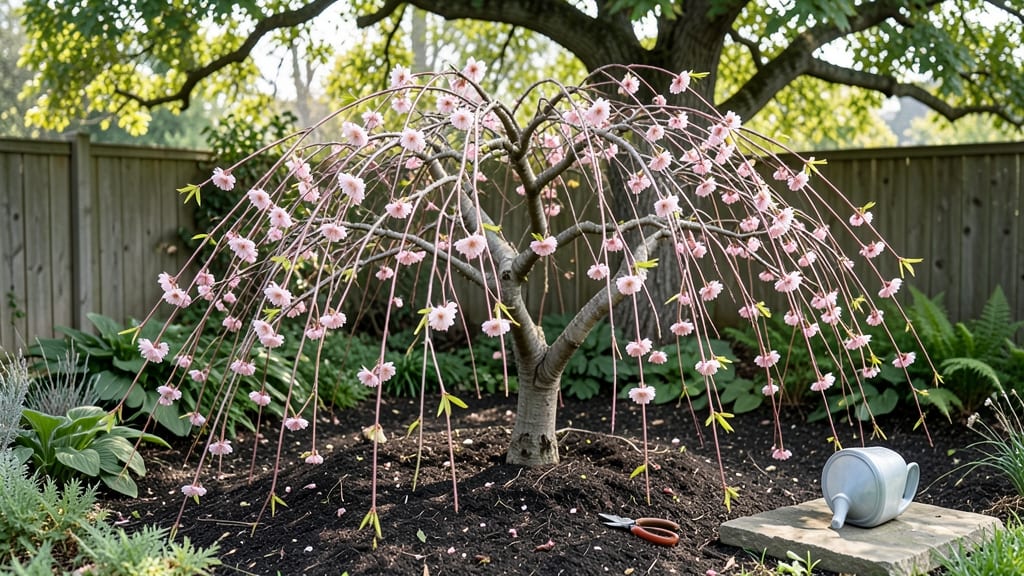
Growing a mini weeping cherry tree transforms any small yard or patio into a living waterfall of delicate pink blooms. 🌸 I learned the hard way that these dwarf varieties need just as much care as their full-sized cousins—except with half the space.
The secret to their graceful shape lies in strategic pruning, which keeps those cascading branches from sagging under their own weight while encouraging lush, uniform growth.
Start by planting in full sun with well-draining soil—these trees reward good placement with vibrant foliage and prolific spring flowers. Water deeply twice a week during the first year, then taper off to once a week once established.
The real magic happens in late winter or early spring when you prune: cut back any leggy branches by one-third and shape the canopy to maintain that elegant weeping silhouette. A light layer of mulch helps retain moisture and protects roots in winter.
With proper care, your tree will burst into clouds of blossoms each spring and maintain its compact form for decades. The branches become heavier as they grow, so regular pruning prevents them from drooping unnaturally.
Place it near a window, on a balcony, or as a focal point in a small garden—its delicate form adds year-round interest, from spring blooms to fall color. For extra drama, train it into a bonsai-style specimen with careful wiring and pruning.
Watch for signs of stress like yellowing leaves or sparse blooms—these often mean too much shade or inconsistent watering. In colder climates, wrap the trunk in burlap for winter protection. The payoff?
A tree that stays small enough for any space but still delivers the drama of a full-sized cherry tree. Start small, and you’ll have a showstopper that grows with your garden.
📚 In This Guide
- What you need
- Instructions
- Tips and common mistakes
- Wrapping up and next steps
What you need
- ● Hand pruners: Sharp, bypass-style pruners (for clean cuts on small branches). Size: 5–7 inches.
- ● Loppers: For thicker branches (up to 1.5 inches in diameter). Size: 18–24 inches.
- ● Gloves: Heavy-duty gardening gloves (to protect from thorns and sharp branches).
- ● Disinfectant: 70% isopropyl alcohol or rubbing alcohol (to sterilize tools between cuts).
- ○ Pruning sealant (optional): Tree wound sealant (for larger cuts over ½ inch in diameter).
- ● Ladder or step stool: If your tree is taller than 6 feet (for safe reach).
- ● Bucket or bag: For collecting pruned branches (to keep your workspace tidy!).
- ● Timing: Prune in late winter or early spring (before buds swell) for best results.
- ● Weather: Choose a dry, overcast day to avoid stressing the tree.
- ● Tools check: Sharpen blades and test tools for smooth operation before you start.
- ● Safety first: Wear closed-toe shoes and avoid working near power lines.
- ● Extension pole pruners: For hard-to-reach branches without a ladder.
- ● Marking spray: To highlight branches to remove (great for planning!).
- ● Tree growth regulator: If you want to slow growth for a denser canopy.
- ● Notebook & pen: To sketch your pruning plan before diving in!
Step-by-step guide to pruning your mini weeping cherry tree
Here's how to keep your dwarf cherry tree's graceful branches tidy and encourage more blossoms.
✂️ Step 1: Prune at the Right Time for Best Results
Wait until late winter or early spring, just before new growth begins. This timing ensures you're not cutting back buds that will bloom later in the season. Look for swollen buds along the branches—these signal the tree is waking up from dormancy. If you prune too early, you risk removing next year's flower buds.
Use sharp, clean pruning shears to make cuts at a 45-degree angle about ¼ inch above a bud or branch. This encourages faster healing and prevents water from pooling on the cut. Avoid pruning during wet weather, as damp conditions can introduce disease through open wounds.
✂️ Step 2: Remove Dead, Diseased, or Crossing Branches First
Start by scanning the tree for any dead, damaged, or diseased branches. Dead branches are brittle and snap easily when bent—these should be removed entirely. Diseased branches often have discolored bark, oozing sap, or unusual spots. Cut these back to healthy wood, making your cuts just outside the branch collar.
Next, look for branches that cross or rub against each other. These create wounds and weak points in the tree. Remove the smaller of the two branches where it meets the trunk or larger branch. This keeps the tree's structure strong and prevents future damage. Real talk: If you're unsure which branch to remove, take the one growing upward—it'll compete less with the tree's natural shape.
✂️ Step 3: Thin Out Overcrowded Branches for Airflow
Weeping cherry trees naturally grow with a cascading habit, but overcrowded branches can block sunlight and airflow. Focus on thinning out branches that grow too close together, especially near the center of the tree. Aim to remove about 20-30% of the tree's total branches to maintain an open, airy canopy.
When thinning, cut branches back to their point of origin or to a strong lateral branch. Avoid leaving stubs—always make clean cuts just outside the branch collar. You'll see the tree's natural shape emerge as you work, with branches spreading evenly and sunlight reaching all parts of the canopy. This step is the moment that matters: a well-thinned tree blooms more beautifully and stays healthier long-term.
✂️ Step 4: Shape the Tree for Compact, Graceful Growth
Now it's time to refine the tree's shape. Weeping cherries grow best when their branches are allowed to cascade naturally, but you can gently guide their growth. Focus on maintaining the tree's height and width by pruning back any branches that grow too upright or outward. Cut these back to encourage more horizontal growth, which enhances the weeping effect.
Pay special attention to the tips of the branches. If they're growing too long or leggy, trim them back by about ¼ to ⅓ of their length. This encourages bushier growth and more blossoms. Don't overdo it—weeping cherries thrive on a light hand. You'll love how the tree fills out over time, with a lush, compact canopy that spills over beautifully.
💧 Step 5: Clean Up and Care for Your Tree After Pruning
Once you've finished pruning, clean up any fallen branches and debris. Sterilize your pruning shears with rubbing alcohol to prevent the spread of disease. Water the tree deeply after pruning to help it recover, especially if you've made larger cuts. The soil should be moist 6 inches deep—check by sticking your finger into the ground.
Apply a balanced, slow-release fertilizer around the base of the tree to give it a nutrient boost for the growing season ahead. Mulch lightly with 2-3 inches of organic mulch, keeping it a few inches away from the trunk to prevent rot. This helps retain moisture and keeps roots cool. Your tree will thank you with vibrant new growth and stunning blossoms next spring.
Tips & tricks for pruning your mini weeping cherry tree
Here's what nobody tells you about keeping your dwarf cherry tree looking its best year after year.
Timing is Everything: Late winter or early spring is the sweet spot for pruning—right when you see those swollen buds starting to plump up. This ensures you're not accidentally snipping off next year's blossoms. I learned this the hard way after pruning too early and missing out on spring blooms. If you're unsure, wait until you can see at least a few buds showing signs of life.
Tool Prep Matters: Your pruning shears should be as sharp as a chef's knife before you start. Dull blades tear bark and create jagged wounds that invite disease. After each cut, wipe your shears with rubbing alcohol to keep them sterile. I keep a small bottle of alcohol in my gardening toolkit specifically for this purpose—it's a game-changer for keeping your tree healthy.
Branch Selection Strategy: When choosing which branches to remove, think about the tree's natural shape. Always remove the smaller of two crossing branches, and never leave stubs—cut cleanly just outside the branch collar. This might seem like a small detail, but it makes a huge difference in how quickly your tree recovers. I use a small magnifying glass to check my cuts when I'm unsure about the angle.
Post-Pruning Care: After you've finished shaping your tree, don't just walk away. Water deeply to help it recover, especially if you've made larger cuts. The soil should be moist about 6 inches down—stick your finger in to check. Then apply that balanced, slow-release fertilizer around the base. This two-step process gives your tree the best chance to bounce back strong and healthy.
Pro Tips for Mini Weeping Cherry Tree
- Here's what nobody tells you about keeping your dwarf cherry tree looking its best year after year.
- Timing is Everything: Late winter or early spring is the sweet spot for pruning—right when you see those swollen buds starting to plump up.
- Tool Prep Matters: Your pruning shears should be as sharp as a chef's knife before you start.
Frequently asked questions
How often should I prune my mini weeping cherry tree?
Prune your mini weeping cherry tree twice a year: late winter/early spring (before buds swell) for structural shaping, and lightly after flowering (summer) to remove dead wood or overgrown branches. Avoid heavy pruning in fall—it can stress the tree.
Can I prune my weeping cherry tree too much?
Yes! Over-pruning—especially cutting more than 25% of the canopy at once—can weaken the tree, reduce flowering, or even harm its health. Mini varieties are delicate; stick to selective trimming to maintain its graceful form without stressing it.
Will pruning my mini weeping cherry tree affect its flowers?
Pruning doesn’t stop flowers, but timing matters! If you prune after the tree blooms (late spring/summer), you’ll preserve next year’s blossoms. Avoid heavy cuts in fall or winter, as this can delay or reduce flowering.
What if my mini weeping cherry tree isn’t growing as expected?
Check these first:
- Light: Needs full sun (6+ hours/day)—shady spots slow growth.
- Water: Keep soil consistently moist (not soggy) but avoid overwatering.
- Soil: Ensure it’s well-draining; amend with compost if needed.
- Pruning: If overgrown, prune gradually over 2–3 years.
Are there smaller alternatives to a mini weeping cherry tree?
If space is tight, consider these ultra-compact options:
All thrive in similar conditions but offer different heights and colors!
Wrapping up and next steps
The mini weeping cherry tree is a stunning addition to any garden, offering delicate blooms and a compact, elegant form—perfect for small spaces! With the right pruning techniques, you’ll keep its canopy lush, encourage vibrant flowers, and maintain its graceful shape for years to come. 🌸
Ready to transform your outdoor space? Grab your tools, follow the steps you’ve learned, and give your weeping cherry tree the care it deserves. Your future blooms will thank you!
Next step: Schedule your first pruning session during early spring or late winter—when the tree is still dormant but just beginning to stir. Happy pruning! ✂️