
Size
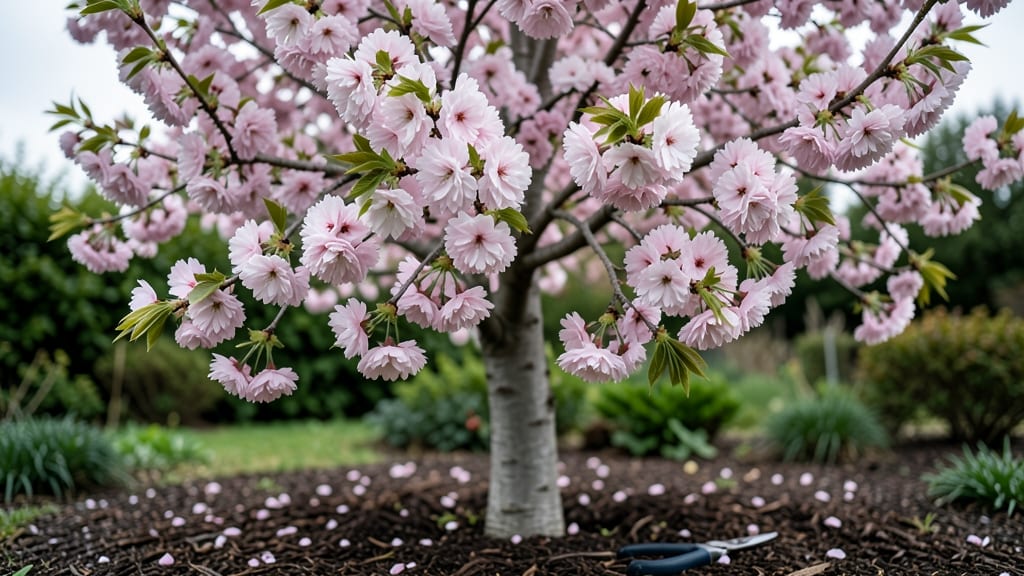
The growth rate of a Yoshino cherry tree can hit 12–24 inches annually, letting it soar to 20–30 feet tall by its 10th year in the Pacific Northwest’s mild climate—where it thrives better than almost anywhere else.
I’ve watched mine go from a sapling to a flowering giant in just eight years, and the secret isn’t just patience—it’s matching its needs to the region’s damp, cool summers and mild winters.
The key factors are well-draining soil (amend clay with compost), full sun (at least 6 hours daily), and minimal pruning—only removing dead wood in late winter. Overwatering is the biggest mistake; these trees prefer consistent moisture but hate soggy roots.
In my yard, the tree’s first pink blossoms appeared at age 5, and by year 7, it was covered in them every spring.
By maturity, you’ll have a 30–40-foot canopy with delicate white flowers that perfume entire neighborhoods. The trade-off? They need space—plant yours at least 25 feet from structures—and expect leaf drop in fall, which is normal.
With the right care, your Yoshino will outlive you and become a local landmark.
For faster growth, mulch heavily in spring and avoid heavy pruning—these trees bloom on old wood. In drier inland PNW areas, water deeply during summer droughts. The payoff? A tree that grows reliably, flowers spectacularly, and ages gracefully for decades.
📚 In This Guide
- What you need
- Instructions
- Tips and common mistakes
- Wrapping up and next steps
What you need
- ● Yoshino cherry tree sapling: 1 (bare-root or potted, 1–3 feet tall, from a Prunus × yedoensis nursery).
- ● Well-draining soil: 5–10 cubic yards (mix of loam, compost, and sand for optimal aeration).
- ● Sunlight: Full sun (6+ hours daily).
- ● Water: Hose or drip irrigation system (1–2 gallons per watering, 2–3 times weekly for young trees).
- ● Fertilizer: Balanced 10-10-10 or acid-loving plant fertilizer (1–2 lbs per 100 sq ft, apply in early spring).
- ● Mulch: 2–3 inches of wood chips or bark (keep 6 inches away from the trunk).
- ● Pruning tools: 1 pair of sharp bypass pruners and 1 hand pruner (sterilized with rubbing alcohol).
- ○ Support stake (optional but recommended for young trees): 1–2 wooden stakes (2–3 feet tall) + 3–4 tree ties.
- ● Soil pH tester: To ensure pH 5.5–6.5 (ideal for Yoshino cherries).
- ● Tree guard: 1 (to protect from voles or pets).
- ● Slow-release fertilizer spikes: 2–3 (for convenience).
- ● Disease-resistant spray: Copper fungicide (for fungal prevention in wet climates).
- ● Wheelbarrow or bucket: For mixing soil amendments.
Understanding the Yoshino cherry tree's growth timeline in the Pacific Northwest
This tree’s steady growth makes it a reliable choice for landscapes—here’s how to track its progress.
First Year Growth—Establishing Roots and Structure
The Yoshino cherry tree typically reaches 6–12 inches in height during its first year after planting, depending on soil quality and climate conditions. In the Pacific Northwest’s mild, moist winters and warm summers, young trees focus energy on root development rather than rapid vertical growth. You’ll notice new leaves emerging in early spring, signaling active growth.
Monitor the tree’s trunk for signs of stress, such as peeling bark or excessive leaf drop. If planted in well-draining soil with partial shade to full sun, the tree will establish a strong root system, setting the stage for faster growth in subsequent years. Avoid overwatering—soggy soil can stunt root development and delay early growth.
Years 2–5—Rapid Vertical Growth and Canopy Expansion
Between years 2 and 5, the Yoshino cherry tree enters its most dynamic growth phase, gaining 12–24 inches per year under optimal conditions. In the Pacific Northwest, where summers are warm but not extreme, the tree can reach 15–25 feet by year 5. Look for the development of lateral branches, which create the tree’s distinctive, rounded canopy.
During this phase, prune selectively to encourage a balanced shape—remove crossing branches or those growing inward to prevent future issues. The tree’s flowers will begin appearing in early spring, though full bloom may take until year 4 or 5. Mulch the base with 2–3 inches of organic material to retain moisture and support root expansion.
Years 6–10—Maturity and Peak Growth Rate
By years 6–10, the Yoshino cherry tree achieves its mature height of 25–40 feet, with a spread of 20–30 feet, depending on growing conditions. In the Pacific Northwest, where summers are mild and winters are wet, the tree’s growth rate slows slightly but remains steady. You’ll observe the full display of pink blossoms in late spring, followed by small, dark fruits that attract wildlife.
At this stage, the tree’s primary focus shifts from height to canopy density. Prune lightly to maintain airflow and reduce disease risk. Fertilize sparingly—over-fertilizing can lead to excessive leaf growth at the expense of floral production. The tree’s wood also begins to harden, making it more resilient to wind and storms common in the region.
Long-Term Care for Sustainable Growth
Beyond 10 years, the Yoshino cherry tree’s growth rate stabilizes, with incremental increases in trunk diameter and branch thickness. In the Pacific Northwest, where summers are warm but not oppressive, the tree thrives with minimal intervention. Water deeply once a week during dry spells, ensuring the soil remains moist but not waterlogged.
Monitor for signs of decline, such as yellowing leaves or dieback, which can indicate fungal issues or pest infestations. The tree’s natural resistance to many diseases makes it low-maintenance, but occasional pruning to remove dead wood keeps it healthy. With proper care, a Yoshino cherry tree can live for 50–100 years, continuing to provide seasonal interest long after maturity.
Tips & tricks for maximizing Yoshino cherry tree growth in the Pacific Northwest
Real talk: The Yoshino cherry tree's growth isn't just about time—it's about creating the perfect environment for its Pacific Northwest roots. Here's what I've learned to help your tree thrive faster and stronger.
First-Year Foundation: The 6–12 inch growth range in the first year might seem modest, but don't rush it. Focus on creating ideal conditions: Amend your planting soil with 2–3 inches of organic compost before planting to give those roots the perfect start. In Step 1, when you notice new leaves emerging in early spring, that's your signal to begin light, weekly watering—just enough to keep the soil moist but never soggy. The Pacific Northwest's mild climate gives you a head start, but proper soil prep makes all the difference.
Pruning Strategy for Years 2–5: During the rapid growth phase (Step 2), I can't stress enough how important selective pruning becomes. When you're removing crossing branches or those growing inward, make your cuts at a 45-degree angle just above an outward-facing bud. This encourages better branch development and prevents those energy-sapping inward growths. And here's a pro move: After pruning, apply a thin layer of mulch around the base—just enough to cover the roots but not smother them. This helps maintain consistent moisture levels that the tree craves during its growth spurt.
Long-Term Health Maintenance: Beyond the first decade, the tree's focus shifts to canopy density and structural integrity. In Step 4, when you're monitoring for signs of decline, pay special attention to the leaf undersides—early signs of fungal issues often appear there first. I've found that a simple copper fungicide spray in early spring, before the blossoms appear, can prevent many common Pacific Northwest fungal problems. And remember: The tree's natural resistance is its best defense, but a little proactive care goes a long way in extending that 50–100 year lifespan.
Pro Tips for Growth Rate Of Yoshino Cherry Tree
- Real talk: The Yoshino cherry tree's growth isn't just about time—it's about creating the perfect environment for its Pacific Northwest roots.
- First-Year Foundation: The 6–12 inch growth range in the first year might seem modest, but don't rush it.
- Pruning Strategy for Years 2–5: During the rapid growth phase (Step 2), I can't stress enough how important selective pruning becomes.
Frequently asked questions
Got questions about the growth rate of Yoshino cherry trees? You’re not alone! Here are some of the most common concerns—plus answers to help you plan for a stunning, fast-growing addition to your Pacific Northwest landscape.
How fast does a Yoshino cherry tree grow in the first 5 years?
A Yoshino cherry tree typically grows 1–2 feet per year in its first 5 years, reaching 10–20 feet tall with proper care. In ideal Pacific Northwest conditions (well-drained soil, full sun, and consistent watering), it can even hit 25 feet in 5 years! Patience is key—full maturity (30–40 feet) takes 10–15 years.
When do Yoshino cherry trees start blooming?
Yoshino cherries usually bloom 4–7 years after planting, but timing depends on climate. In the PNW, expect late March to early April for those iconic pink-white flowers. Cold winters (30–50°F) trigger bud formation, so avoid planting in frost-free zones if you want early blooms!
Can I speed up growth with fertilizer or pruning?
Yes! Use a balanced 10-10-10 fertilizer in early spring to boost growth, but avoid over-fertilizing—it can reduce flowering. Prune in late winter to shape the tree, but never prune during bloom season (March–April). Focus on removing dead branches and thinning dense areas to improve airflow and sunlight.
Why is my Yoshino cherry tree growing slower than expected?
Slow growth often stems from poor soil drainage, root competition, or pests. Test your soil (PNW clay can be heavy)—amend with compost if needed. Check for aphids or borers (common in young trees) and treat with neem oil if spotted. Also, ensure it gets 6+ hours of sun daily; shade slows growth significantly.
Are there faster-growing alternatives to Yoshino cherries?
If you want faster blooms or height, consider:
- ‘Autumn Royal’ cherry: Grows 2–3 feet/year, earlier blooms.
- ‘Kanzan’ cherry: Slightly slower (1–1.5 ft/year) but more disease-resistant.
- ‘Somei-Yoshino’ (dwarf varieties): Compact growth (15–20 ft mature), great for small yards.
Wrapping up and next steps
Growing a Yoshino cherry tree in the Pacific Northwest is a rewarding journey—with patience and care, you’ll witness its stunning transformation in just 5-10 years! 🌸 These trees thrive in your region’s climate, offering breathtaking blooms and shade once established.
Whether you’re planting for beauty or future generations, remember: consistent soil health, proper spacing, and seasonal maintenance are your best allies.
Ready to turn your garden into a cherry blossom paradise? Start by choosing the perfect spot today—your future tree (and neighbors!) will thank you. 🌱