
Pruning
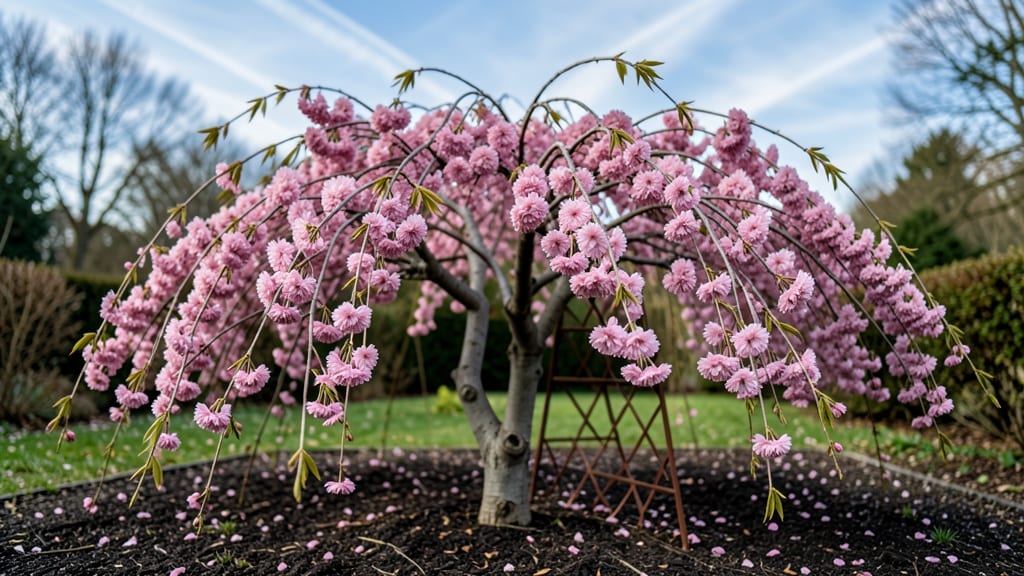
The weeping cherry tree transforms Pacific Northwest gardens into living art installations with cascading pink blooms that feel like springtime all year. 🌸 I planted mine five years ago after seeing one in a neighbor’s yard—now it’s the centerpiece of my landscape, drawing hummingbirds and curious passersby alike.
The secret isn’t just the planting; it’s the year-round care that keeps those delicate branches heavy with blossoms, even in rainy winters.
These trees thrive in well-draining soil with a touch of sand or compost, and they love full sun to partial shade—perfect for the PNW’s mix of bright days and misty afternoons. Watering is key: deep soaks once a week in summer, less in winter, but never soggy roots.
The pruning schedule I’ve perfected (light shaping in late winter, deadwood removal year-round) keeps the tree’s graceful form intact while encouraging more blooms. Most people skip the winter care, but that’s when you set the stage for next spring’s show.
By summer’s end, you’ll have a tree that’s not just beautiful but disease-resistant when cared for properly—no powdery mildew or canker worries here. The scent of blossoms lingers even after they fade, and the fall foliage turns a stunning gold before the branches go bare.
The best part? It grows slowly, so you won’t outpace it in a few years like with fast-growing shrubs. This is a tree that ages with your garden, becoming more majestic each season.
Whether you’re planting a bare-root sapling or shaping an established tree, the PNW’s climate works in your favor if you know the tricks—like mulching heavily in winter to protect roots or choosing a disease-resistant cultivar like ‘Kwanzan.’
Stick with me, and I’ll show you how to keep yours looking like a postcard year after year, no green thumb required.
📚 In This Guide
- What you need
- Instructions
- Tips and common mistakes
- Wrapping up and next steps
What you need
- ● Weeping cherry tree (Prunus serrulata 'Kanzan' or similar) – Choose a 1- to 3-gallon container-grown specimen for best root establishment.
- ● High-quality planting soil – A mix of 50% native soil + 50% compost (avoid heavy clay if your garden drains poorly).
- ● Organic mulch (3–4 inches) – Wood chips or bark to retain moisture and suppress weeds.
- ● Slow-release fertilizer (10-10-10 or balanced) – 1–2 pounds per 100 sq. ft. at planting time.
- ● Watering can or hose with gentle spray nozzle – For deep, slow watering to avoid compacting soil.
- ● Bypass pruners (sharp, 6–8 inch blades) – For clean cuts on ¼-inch to ½-inch branches.
- ● Loppers (long-handled, 20–24 inch) – For ½-inch to 2-inch branches (avoid dull blades!).
- ○ Pruning saw (curved blade) – For 2+ inch thick branches (optional but helpful for mature trees).
- ● Disinfectant (70% isopropyl alcohol or pruning sealant) – Wipe tools between cuts to prevent disease.
- ● Garden gloves (cut-resistant) – Protect your hands from thorns and sap.
- ○ Extension pole (optional) – For reaching high branches safely.
- ● Drip irrigation system or soaker hose – Automates watering for deep root growth (especially in PNW’s wet winters).
- ○ Tree support stake (optional) – Only needed if planting in windy areas (use soft ties to avoid girdling).
- ○ Pest monitoring kit (optional) – Includes a magnifying glass and trap for early detection of aphids or borers.
Step-by-step guide to planting and caring for a weeping cherry tree
Here's how to grow a stunning weeping cherry that thrives in Pacific Northwest's mild climate.
🌱 Step 1: Choose the Perfect Planting Spot
Weeping cherry trees need full sun for at least 6 hours daily—more is better in the PNW's cooler summers. Look for a location with 6-8 feet of clearance overhead and around the trunk for its graceful branches to spread. Avoid low spots where cold air pools, as these trees are sensitive to late frosts.
Test your spot by observing how sunlight moves across it throughout the day. The ideal location gets morning sun and afternoon shade in summer, but still receives plenty of light. If your yard has limited sun, consider a smaller cultivar like 'Stella Compact' that tolerates partial shade better than standard varieties.
🪴 Step 2: Prepare the Planting Hole and Soil
Dig a hole twice as wide as the tree's root ball but only as deep. This encourages roots to spread horizontally rather than settling into a deep, compacted hole. Amend the native soil with 3 inches of compost mixed into the bottom and sides of the hole—this improves drainage without overwhelming the tree's root system.
Gently remove the tree from its container and loosen any circling roots with your fingers. Place it in the hole so the top of the root ball sits 1-2 inches above ground level. This prevents water from pooling around the trunk. Backfill with the amended soil, tamping lightly every 6 inches to eliminate air pockets.
☀️ Step 3: Water Thoroughly and Mulch Properly
After planting, water deeply until the soil is 6-8 inches wet—you'll know when to stop if water pools on the surface. Weeping cherries need consistent moisture, especially in the PNW's dry summer months. Install a 4-inch layer of mulch around the base, keeping it 6 inches away from the trunk to prevent rot.
Use organic mulch like wood chips or bark. This helps retain moisture, regulate soil temperature, and gradually enrich the soil as it breaks down. Check the mulch layer every few months—it should stay 2-3 inches thick as it settles. Avoid inorganic mulches like rocks, which don't improve soil health.
✂️ Step 4: Prune for Shape and Health
Prune your weeping cherry in late winter or early spring before new growth begins. Remove any dead, diseased, or crossing branches first—these are easy to spot as they stand out from the healthy, arching branches. Cut back to the nearest outward-facing bud using clean, sharp pruners.
Shape the tree by selectively thinning branches to maintain its natural weeping form. Never remove more than 25% of the tree's foliage in one season—this prevents stress. After pruning, apply a thin layer of wound dressing to larger cuts to protect the tree from pests and disease.
💧 Step 5: Maintain Year-Round Care
Water your weeping cherry 1-2 times per week during the first growing season, providing 1-2 gallons per week depending on rainfall. Once established, they're drought-tolerant but still appreciate regular watering during dry spells. Fertilize in early spring with a 10-10-10 balanced fertilizer to support new growth.
Monitor for common PNW pests like aphids or scale insects. Treat infestations early with horticultural oil or insecticidal soap. In winter, protect young trees from heavy snow loads by gently brushing snow off branches. With proper care, your weeping cherry will reward you with spring blooms and year-round interest.
Tips & tricks for perfect weeping cherry tree planting
Here's what I've learned after watching these graceful trees thrive in PNW gardens for years.
Sunlight Strategy: That 6-hour minimum of full sun is non-negotiable for weeping cherries, but here's the secret: position your tree to catch morning sunlight first. The PNW's cooler afternoons mean less intense heat stress, so morning sun gives them the energy boost they need. If you're testing spots, use a solar pathfinder in winter when sun angles are lowest—this reveals hidden shade patterns that might surprise you.
Soil Prep Secret: When amending with 3 inches of compost, I like to mix in a handful of mycorrhizal fungi powder with the compost. These beneficial fungi help the tree's roots absorb nutrients more efficiently, especially in the PNW's often acidic soils. It's an optional upgrade that makes a noticeable difference in early growth.
Watering Wisdom: The 6-8 inch deep watering after planting isn't just about initial hydration—it's about settling the soil around the roots. I've seen too many newly planted trees develop air pockets that prevent proper root contact. After watering, gently press down on the soil surface with your hands to eliminate any remaining air gaps.
Pruning Precision: That 25% foliage limit during pruning is crucial, but here's how I remember it: if you're removing more than a few branches in one session, you're probably cutting too much. Think of it like giving your tree a haircut—you want to shape it, not shave it. For larger cuts, I use a 3:1 rule: for every 3 inches of branch diameter, only cut back to a bud that's 1 inch in diameter or larger.
Pro Tips for Weeping Cherry Tree
- Here's what I've learned after watching these graceful trees thrive in PNW gardens for years.
- Sunlight Strategy: That 6-hour minimum of full sun is non-negotiable for weeping cherries, but here's the secret: position your tree to catch morning sunlight first.
- Soil Prep Secret: When amending with 3 inches of compost, I like to mix in a handful of mycorrhizal fungi powder with the compost.
Frequently asked questions
Got questions about keeping your weeping cherry tree (like Prunus serrulata ‘Kanzan’ or Prunus subhirtella ‘Autumnalis’) thriving in the Pacific Northwest? Here are answers to the most common ones—so you can enjoy those dreamy, cascading blooms year-round!
How often should I prune a weeping cherry tree to encourage blooms?
Prune your weeping cherry once a year, in late winter or early spring (before buds swell). Avoid heavy pruning—focus on removing dead, crossing, or overcrowded branches to maintain its graceful shape. Over-pruning can reduce blooms, so keep cuts minimal (no more than 25% of the tree’s canopy).
Will my weeping cherry bloom in winter if I prune at the wrong time?
Yes! Some varieties like Prunus subhirtella ‘Autumnalis’ bloom year-round, but timing matters. Pruning too late (after buds form) can remove next year’s flowers. For spring bloomers (like ‘Kanzan’), prune right after flowering to avoid cutting off blossoms. Winter pruning is safest for most PNW climates.
How do I protect my weeping cherry from Pacific Northwest rain and wind?
The PNW’s damp, windy conditions can stress weeping cherries. Stake young trees to prevent branch breakage, and mulch heavily (3–4 inches) to retain moisture. Choose a sheltered spot (like near a fence or building) to reduce wind damage. Avoid overwatering—well-draining soil prevents root rot in heavy rains.
Can I grow a weeping cherry in a container, or does it need to be planted in the ground?
Weeping cherries prefer ground planting—their sprawling branches and deep roots need space. However, dwarf varieties (like ‘Shirotae’) can thrive in large containers (20+ gallons) with fast-draining mix. Containers dry out quickly, so water daily in summer and move them to protected areas during storms.
Why aren’t my weeping cherry blooms as vibrant as they used to be?
Dull blooms often signal nutrient deficiency, poor pruning, or pest stress. Test soil for low phosphorus (P) or potassium (K)—apply a balanced fertilizer (10-10-10) in early spring. Check for aphids or spider mites (common in PNW). If branches look sparse, thin out dense growth to improve airflow and light penetration.
Wrapping up and next steps
From selecting the perfect weeping cherry tree to mastering pruning techniques, caring for these stunning trees in the Pacific Northwest is both rewarding and manageable. Their delicate blooms and graceful branches bring timeless beauty to any garden—whether you're a seasoned gardener or just starting out. 🌸
Now that you’re equipped with the secrets for year-round success, why not take the next step? Plant your weeping cherry tree this season and watch your garden transform into a serene, blooming oasis. Happy gardening! 🌿