
Pruning
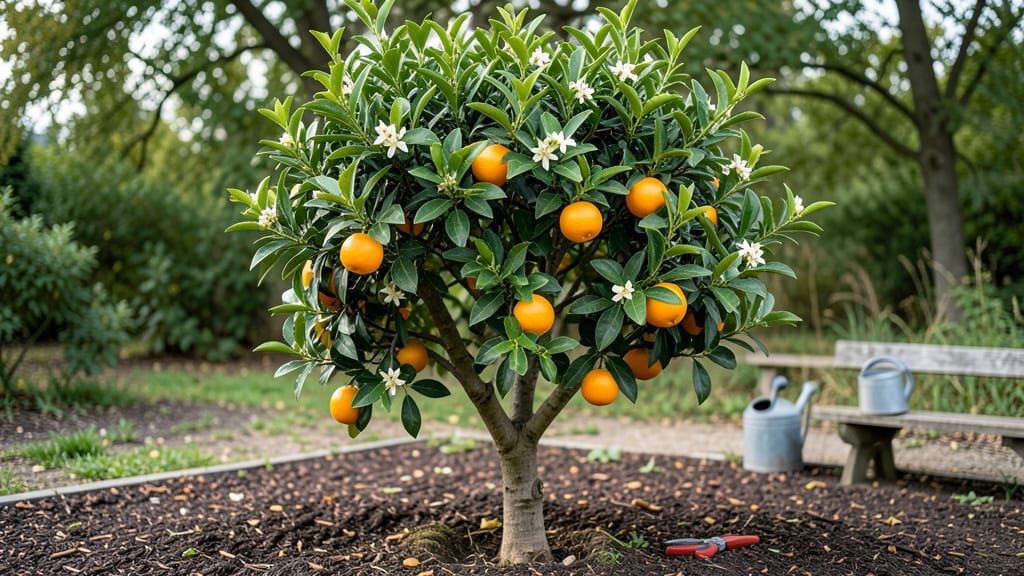
Pruning your Chinese orange tree isn’t just about shaping—it’s about survival when Pacific Northwest winters test your citrus’s limits. 🌿 I’ve learned the hard way that skipping winter prep means frost-damaged branches by spring, but with the right cuts and timing, your tree stays lush and productive year after year.
The key is working in layers: light pruning in late winter to remove dead wood, structured shaping in early summer before heat stress sets in, and protective cuts by late fall to harden branches before frost.
Most gardeners over-prune in winter, but citrus trees store energy differently—you’ll actually encourage new growth by waiting until buds swell in spring.
What you’ll end up with is a tree that not only survives but thrives, with glossy leaves year-round and a compact shape that fits small spaces. The secret’s in the angle of cuts—just above outward-facing buds—and knowing when to stop before stressing the plant.
Even in Zone 8, where frosts sneak in, these techniques keep my tree flowering reliably.
This method works for both Citrus × sinensis (true oranges) and Murraya paniculata (mock orange), though the latter handles cold slightly better. Whether you’re trimming a potted tree on your patio or a mature specimen in the ground, the same principles apply. Let’s get those shears sharpened!
📚 In This Guide
- What you need
- Instructions
- Tips and common mistakes
- Wrapping up and next steps
What you need
- ● Pruning shears: Bypass pruners (sharp, 6–8" blades) for clean cuts on small branches. Quantity: 1 pair.
- ● Loppers: Bypass or anvil type (8–12" handles) for thicker branches (½"–1.5" diameter). Quantity: 1 pair.
- ● Pruning saw: Curved-tooth or folding saw for branches >1.5" thick. Quantity: 1.
- ● Disposable gloves: Nitrile or leather (thick, cut-resistant) to protect hands from thorns and sap. Quantity: 1–2 pairs.
- ● Rubbing alcohol (70%+) or bleach solution: 1 part bleach to 10 parts water for sterilizing tools between cuts. Quantity: Small bottle or spray bottle.
- ○ Pruning sealant (optional but helpful): Tree wound sealant (like Tanglefoot or pruning paste) for large cuts >½" in diameter. Quantity: Small tube.
- ● Heavy-duty trash bags: For collecting pruned branches. Quantity: 2–3 bags.
- ● Ladder or step stool: Sturdy, non-slip (if tree is >6 ft tall). Quantity: 1.
- ● Burlap or frost cloth: Lightweight, breathable (for wrapping young trees or sensitive branches in late fall/winter). Quantity: Enough to cover 80–100% of the canopy.
- ● Tree wrap or trunk guard: Plastic or fabric wrap to protect bark from sun scald and frost cracks. Quantity: 1 roll (2–3" wide).
- ○ Mulch (optional): Wood chips or straw (2–3" layer around the base) to insulate roots in winter. Quantity: 5–10 gallons.
- ● Best timing: Prune in late winter/early spring (Feb–March in PNW) for frost-hardened wood. Avoid heavy pruning in summer or fall—it stresses the tree!
- ● Weather check: Wait for a dry, calm day (humidity <60%) to minimize disease risk.
- ● Tool sharpening: Hone blades before starting—dull tools crush branches, inviting pests. 🔪
- ● Safety first: Wear closed-toe shoes and avoid pruning near power lines!
Step-by-Step guide to pruning your Chinese orange tree for Pacific Northwest resilience
Mastering this citrus tree’s pruning keeps it lush, productive, and frost-tough in rainy climates.
✂️ Step 1: Time Your Cuts for Seasonal Protection
Prune your Chinese orange tree in late winter (just before buds swell) to remove dead or crossing branches. This timing prevents frost damage by allowing fresh growth to harden before cold snaps. Avoid heavy pruning in fall—new growth won’t mature before winter, leaving tender wood vulnerable to freezing.
I always check the weather forecast first. If frost is predicted within 7-10 days after pruning, delay cuts until the threat passes. Your tree’s resilience depends on this timing—don’t rush it. Use sharp, clean pruners to make cuts at a 45-degree angle just above a leaf node or outward-facing bud.
🌿 Step 2: Shape for Airflow and Sunlight Access
Open the tree’s canopy by removing suckers (vigorous shoots at the base) and water sprouts (vertical stems growing from the trunk or branches). These compete for nutrients and disrupt airflow, creating ideal conditions for fungal diseases like citrus blight in PNW’s damp climate. Aim for an open vase shape—this lets sunlight reach inner branches and air circulate freely.
Here’s the thing—citrus trees naturally grow dense, so I never remove more than 25% of foliage in one session. Watch for branches that rub against each other; these are prime candidates for removal to prevent bark damage. Thin out crowded areas first, then lightly trim outer branches to maintain the tree’s natural silhouette.
🌱 Step 3: Prepare for Winter Dormancy
After your late-winter prune, apply a 2-3 inch layer of mulch around the base (but not touching the trunk) to insulate roots. I use straw or wood chips because they break down slowly and retain moisture—critical in PNW’s wet winters. This layer helps regulate soil temperature and protects shallow citrus roots from freezing.
If your tree is young or in a high-risk frost zone, consider wrapping the trunk with burlap or frost cloth during cold snaps. Unwrap it during the day to prevent overheating, and reapply at dusk. You’ll notice new growth emerging stronger in spring if you’ve insulated properly—this is your reward for winter prep.
☀️ Step 4: Summer Maintenance for Frost Hardiness
Lightly trim overly vigorous growth in early summer to encourage bushier, more compact branches. Citrus trees grow fast in PNW’s mild summers, and unchecked growth can lead to weak, frost-sensitive wood. Focus on removing long, leggy shoots that stretch toward the light—these are the first to suffer in winter freezes.
This is the moment that matters: Pinch back new growth by ⅓ to stimulate lateral branching. You’ll see smaller, sturdier stems that can better withstand cold. Avoid heavy pruning now—citrus trees flower on old wood, and summer cuts can reduce next year’s fruit set. Just shape, don’t reshape.
Tips & tricks for perfect Chinese orange tree pruning
These practical strategies will help you master pruning techniques tailored to PNW's unique climate challenges.
Seasonal Timing is Everything: The late winter timing in Step 1 is non-negotiable for frost resilience. I've learned the hard way that pruning too early risks exposing tender new growth to late frosts, while waiting too long can stress the tree before dormancy. Watch for bud swell—when you see those tiny green buds forming, that's your cue. For extra precision, mark your calendar for February 15th as a general guideline for Western Washington, adjusting 1-2 weeks earlier for coastal areas and later for inland zones.
Tool Precision Matters: Using sharp, clean pruners is critical—dull blades crush stems instead of making clean cuts, creating entry points for disease. I always sterilize my tools with rubbing alcohol between cuts, especially when working with multiple branches. The 45-degree angle mentioned in Step 1 isn't just aesthetic; it creates a natural water runoff path that prevents rot. For larger branches over ½ inch thick, I recommend using a pruning saw to avoid tearing the bark.
Visual Pruning Cues: When shaping in Step 2, look for these telltale signs: branches growing inward should be removed first, as they'll eventually cross and rub against others. For water sprouts, focus on those growing straight up from the trunk or main branches—they're energy vampires that never contribute to fruit production. I use a simple "thirds rule" when thinning: remove every third branch in crowded areas to maintain that open vase shape while preserving structural integrity.
Mulch Depth Science: The 2-3 inch layer of mulch in Step 3 is more than just insulation—it's about creating the right microclimate. Too little (<1 inch) won't protect roots, while too much (>4 inches) can suffocate them. I always rake back mulch slightly (about 1 inch) from the trunk to prevent moisture buildup that leads to rot. For young trees, consider adding a layer of gravel or pebbles over the mulch to reflect sunlight and keep roots cooler during summer heatwaves.
Pro Tips for Chinese Orange Tree
- These practical strategies will help you master pruning techniques tailored to PNW's unique climate challenges.
- Seasonal Timing is Everything: The late winter timing in Step 1 is non-negotiable for frost resilience.
- Tool Precision Matters: Using sharp, clean pruners is critical—dull blades crush stems instead of making clean cuts, creating entry points for disease.
Frequently asked questions
Got questions about keeping your Chinese orange tree (or trifoliate orange) thriving in the Pacific Northwest? Here are answers to the most common concerns—from frost prep to pruning pitfalls:
When is the best time to prune my Chinese orange tree for PNW winters?
Prune in late winter or early spring (February–March) before new growth starts. Avoid pruning in fall—it stimulates tender shoots vulnerable to frost. For heavy pruning, do it in stages to reduce stress. If you missed the window, a light trim in summer (after flowering) is better than none!
How do I protect my Chinese orange tree from PNW frosts?
These trees are hardy to Zone 7**, but young trees or severe cold need help. Wrap the trunk with burlap or tree wrap to prevent sunscald. Use row covers or frost cloth for young trees, and mulch heavily (3–4 inches) around the base. Avoid overhead watering before frost—wet leaves freeze easier!
Can I prune my Chinese orange tree in summer? What’s the risk?
Yes, but lightly! Summer pruning (June–August) can stress the tree and reduce fruit production. If you must, remove only dead/diseased branches or shape lightly. Avoid heavy cuts—new growth won’t harden off before winter. Pro tip: Prune after harvest (late fall) for minimal impact.
Will pruning reduce my Chinese orange tree’s fruit yield?
Not if done right! Pruning opens the canopy to sunlight, which increases fruit quality. Over-pruning (cutting >25% of branches) may reduce yield temporarily, but proper structural pruning boosts long-term production. Focus on removing crossing branches and water sprouts—these improve airflow and fruit access.
What if my Chinese orange tree’s branches die after frost? Can I save it?
Check for green cambium under bark—if present, the branch may recover. Prune dead wood back to live tissue (use clean, sharp tools!). If >50% of the tree is dead, it may not recover. For severe damage, fertilize lightly in spring and monitor for new growth. Warning: Avoid heavy pruning until you’re sure of regrowth!
Are there frost-hardy alternatives to Chinese orange trees?
Yes! Try these PNW-friendly citrus relatives:
- Calamondin orange (Zone 9–11, but can be grown in containers and brought indoors in winter).
- Meyer lemon (Zone 9, but dwarf varieties like ‘Improved Meyer’ tolerate brief cold snaps with protection).
- Kumquat (Zone 7–9; ‘Meiwa’ is the hardiest and produces edible fruit!).
Wrapping up and next steps
Mastering the art of pruning your Chinese orange tree in the Pacific Northwest isn’t just about aesthetics—it’s about giving your tree the best shot at thriving through frost, pests, and seasonal shifts. 🌿 By following the right techniques—whether it’s thinning cuts in late winter or light shaping in spring—you’re setting the stage for a healthier, fruit-bearing tree year after year.
Ready to roll up your sleeves? Start small: grab your pruners, review your notes, and take on one section at a time. Before you know it, your Chinese orange tree will be the star of your garden, bursting with citrusy goodness and resilience. Happy pruning!