
Pruning
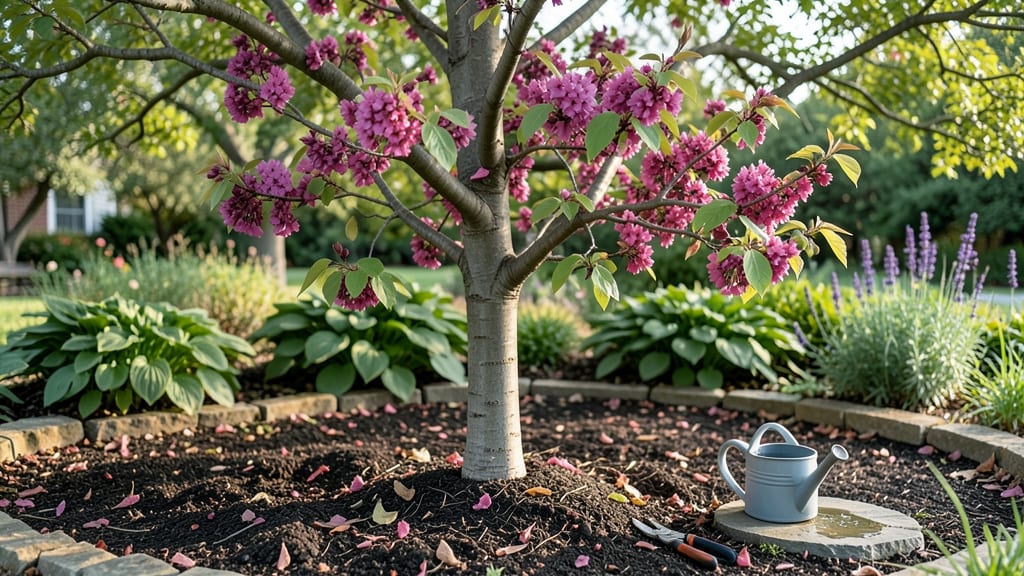
The moment my redbud tree flowering transforms bare branches into a dreamy pink haze is the magic I live for—especially after a long winter. ✨ I’ve watched my own redbuds go from bare branches to a riot of color in just three weeks, and the secret starts with late-winter pruning when the tree’s still dormant but before buds tighten.
That timing makes all the difference between a few scattered blooms and a full, showy canopy.
The magic happens when you prune in late winter (February to early March in most zones), removing dead wood and shaping the tree to encourage strong new growth.
Redbuds bloom on last year’s growth, so you’re not cutting off next year’s flowers—just clearing the way for the tree to focus its energy. A quick pass with clean shears also prevents disease and keeps the tree’s structure open for sunlight, which those delicate pink blossoms crave.
What you’ll end up with is a tree that flowers earlier, more densely, and with brighter color than unpruned neighbors. The blooms arrive weeks before tulips even think about popping up, turning your yard into a springtime spectacle.
Plus, the tree’s health improves, so those vibrant pink clusters keep coming back year after year—no matter how many late frosts your region throws at you.
Works for all redbud varieties, whether you’ve got the classic Eastern redbud or a smaller cultivar like ‘Royal Purple.’ Just adjust your timing by a week or two based on your local last frost date. Here’s how to do it right without overcomplicating things.
📚 In This Guide
- What you need
- Instructions
- Tips and common mistakes
- Wrapping up and next steps
What you need
- ● Pruning shears: Bypass pruners (for small branches, 4–6 inches in diameter) – 1 pair (look for sharp, stainless-steel blades for clean cuts).
- ● Loppers: Long-handled bypass loppers (for branches ¾–2 inches thick) – 1 pair (choose ergonomic handles for comfort).
- ● Pruning saw: Folding handsaw or bow saw (for branches 2+ inches thick) – 1 saw (with a fine-tooth blade for clean cuts).
- ● Disinfectant: Rubbing alcohol (70%+) or household bleach (1 part bleach to 9 parts water) – small bottle or spray (to sterilize tools between cuts).
- ● Gloves: Heavy-duty gardening gloves (cut-resistant, like mechanics’ gloves) – 1 pair (protects hands from thorns and rough bark).
- ● Safety gear: Safety goggles (to shield eyes from debris).
- ● Long sleeves/pants (to avoid scratches or thorns).
- ● Cleanup supplies: Heavy-duty trash bags (for collecting pruned branches).
- ● Garden twine or bungee cords (to bundle large branches for easy disposal).
- ● Pruning sealant: Tree wound paint or pruning sealant (for large cuts > ½ inch; small jar). Note: Only use if your redbud is in a high-disease-risk area.
- ● Ladder: Sturdy step ladder or extension pole pruner (if your tree is taller than 6–8 feet).
- ● Marking twine or flags: (to tag branches for removal if planning a complex pruning design).
- ● Notebook & pen: (to jot down notes on branch locations or pruning decisions).
- ● ✅ Timing: Prune on a dry, calm day during late winter (just as buds swell but before flowers appear). Ideal temps: 40–60°F.
- ● ✅ Weather check: Avoid pruning if rain or wind is forecasted within 24 hours (wet wood can harbor disease).
- ● ✅ Tree health: Inspect the tree for diseased, dead, or pest-infested branches before starting. Remove these first.
- ● ✅ Tool sharpening: Sharpen blades before pruning for clean cuts (use a file or sharpening stone).
Step-by-Step guide for pruning redbud trees for maximum spring flowers
Here's my go-to method for coaxing those stunning pink blooms from your redbud.
✂️ Step 1: Time Your Pruning Precisely
Prune your redbud tree late winter to early spring, right after the worst cold snaps but before buds begin swelling. This is typically February through March in most climates, but watch for your tree's cues—when the ground thaws and new growth feels imminent, that's your window. I always prune after a frost-free week when temperatures stay above 35°F at night.
Real talk: Don't prune too early. If you cut back when the tree's still dormant, you risk removing next year's flower buds. And don't wait too late—once those pink buds appear, you've missed your chance for shaping the tree. The ideal moment is when the tree's still asleep but the ground is workable.
🌿 Step 2: Remove Dead, Diseased, or Crossing Branches First
Start by inspecting your tree for dead wood—branches that snap when bent or have no bark. Use clean, sharp pruners to make a smooth cut just outside the branch collar (that swollen area where the branch meets the trunk). Next, remove any branches that rub against each other or grow inward—they'll compete for energy and create entry points for disease.
I make these cuts first because they're the easiest to spot and the most critical. A redbud's energy budget is precious—every unnecessary branch you remove means more resources for the remaining structure and those show-stopping flowers. If you see any branches with cankers, mushrooms, or odd growths, those go too—dispose of them in the trash, not your compost.
☀️ Step 3: Thin the Canopy for Better Airflow and Light
Step back and look at your tree's overall shape. Redbuds naturally grow with an open, airy habit, but years of neglect can create a dense tangle. Your goal is to open the center by removing about 20-30% of the smallest branches—start from the inside and work outward. This lets sunlight penetrate to the inner branches, which is where next year's flowers will form.
Here's the thing—redbuds bloom on one-year-old wood, so you're not just pruning for shape, you're pruning for next spring's show. When thinning, make cuts at the branch collar and avoid leaving stubs. If a branch is thicker than your wrist, you'll need a pruning saw. Always cut on the underside of the branch to avoid tearing the bark.
⏰ Step 4: Shape the Outer Branches for Balance
Now focus on the tree's silhouette. Redbuds have a naturally graceful, vase-like shape, so aim to maintain that. Remove any branches that grow straight up or downward—they'll create a weak structure. Instead, encourage a more horizontal branching pattern by cutting back branches that grow too vertically. You can also lightly trim the tips of outer branches to encourage bushier growth.
Don't overthink this step—redbuds are forgiving. If you accidentally remove too much, the tree will still produce flowers, though the display might be smaller that season. The key is to avoid cutting back more than one-third of any branch's length in a single year. And never remove more than 25% of the tree's total foliage—that's how you stress a redbud.
💧 Step 5: Clean Up and Monitor Recovery
After pruning, rake up all the debris and dispose of it properly—don't leave it under the tree. This prevents disease and keeps your yard tidy. Water the tree deeply right after pruning to help it recover, especially if your winter was particularly dry. A 10-gallon bucket's worth of water should reach the root zone for a mature tree.
Watch your tree closely over the next few weeks. Healthy new growth should appear within 2-3 weeks if conditions are right. If you see yellowing leaves or oozing sap at pruning cuts, that's a sign of stress—give the tree some time to heal. And here's a pro tip: If you pruned in late winter, you'll see next year's flower buds forming by late summer. That's your reward for a job well done!
Tips & tricks for perfect redbud tree flowering
Here's what nobody tells you about maximizing those show-stopping pink blooms.
Timing Secret: The February-through-March window is critical because redbuds bloom on one-year-old wood. Pruning too early removes next spring's flower buds, while waiting too late means you'll miss the shaping opportunity entirely. I always check for that "ground-thawed-but-still-dormant" moment—when the soil is workable but no buds have swollen yet. This timing ensures you're not cutting back potential blooms while still having enough time for new growth to develop before winter.
Branch Inspection Technique: When identifying dead wood in Step 2, look for branches that snap easily when bent—they're dead. For diseased branches, check for cankers (sunken, discolored areas) or mushrooms growing at branch junctions. Here's what I learned the hard way: Don't leave any suspicious branches behind. Even small cankers can spread, and those mushrooms are a sure sign of rot. I've seen redbuds recover from heavy pruning, but never from neglected disease. Always dispose of infected branches in the trash, not your compost.
Canopy Thinning Strategy: That 20-30% guideline in Step 3 might seem arbitrary, but it's based on redbuds' natural growth habit. Start from the center and work outward—this opens the tree's core to sunlight, which is where next year's flower buds will form. I use a simple trick: Step back and imagine sunlight coming from all directions. If you can't see through the center, you need to thin more. And remember, those tiny branches you're removing might look insignificant, but they're competing with your future blooms for energy.
Recovery Monitoring: Those 2-3 weeks after pruning are crucial for watching your tree's response. Healthy new growth should appear within that window if conditions are right. If you see yellowing leaves, it's a sign of stress—likely from removing too much foliage or pruning at the wrong time. I've seen redbuds bounce back from heavy pruning, but they need time. That 10-gallon watering after pruning helps immensely, especially if your winter was dry. The goal is to give your tree the best possible start for next year's spectacular display.
Pro Tips for Redbud Tree Flowering
- Here's what nobody tells you about maximizing those show-stopping pink blooms.
- Timing Secret: The February-through-March window is critical because redbuds bloom on one-year-old wood.
- Branch Inspection Technique: When identifying dead wood in Step 2, look for branches that snap easily when bent—they're dead.
Frequently asked questions
Got questions about redbud tree flowering?
Here are answers to the most common ones—so you can prune with confidence and enjoy those stunning blooms!
When is the best time to prune a redbud tree for flowering?
The ideal window is late winter to early spring, before buds swell but after the worst cold snaps (typically February–March in most U.S. zones). Pruning too early risks frost damage to fresh cuts, while waiting too late may trim off next year’s flowers. Pro tip: Check your local frost dates for precision!
Can I prune a redbud tree in fall or winter?
Fall pruning is risky—it can stimulate new growth that’s vulnerable to winter dieback. Winter pruning (without leaves) is fine, but avoid heavy cuts in extreme cold. Late winter (after dormancy but before buds break) is the safest bet for both health and flowering. If you must prune earlier, wait until temps stay above freezing for 3–5 days.
How much can I trim back a redbud tree without hurting flowering?
Redbuds are tough but not invincible—you can remove up to 25–30% of the canopy per year without stressing the tree. Focus on dead, diseased, or crossing branches first, then thin selectively. Never top the tree (cutting back the main stem)—this reduces flowering and weakens structure. For mature trees, spread pruning over 2–3 years if needed.
What if my redbud isn’t flowering? Could pruning be the issue?
Several factors can stunt blooms, but pruning isn’t usually the culprit. Check for:
- Age: Young trees (under 3–5 years) may not flower yet.
- Light: Shady spots reduce blooms—redbuds thrive in full sun (6+ hours/day).
- Nutrients: Poor soil or over-fertilizing (especially nitrogen) can delay flowers.
- Disease/pests: Look for holes, wilting, or unusual spots on leaves.
Are there redbud alternatives that flower earlier or later?
If timing is key, consider these bloom-time alternatives:
Tree
Flowering Time
Notes
Eastern Redbud (Cercis canadensis)
Late winter/early spring
Classic choice; cold-hardy to Zone 4.
Western Redbud (Cercis occidentalis)
Early spring
Drought-tolerant; thrives in Zones 5–9.
Japanese Redbud (Cercis canadensis var. ‘Lavender Twist’)
Late winter
Compact; purple foliage; Zone 5–8.
Serviceberry (Amelanchier)
Early spring (before redbud)
Edible berries; white/pink flowers.
Dogwood (Cornus florida)
Late spring
Showy bracts; prefers shade.
For year-round interest, pair redbuds with magnolias (early spring) or crabapples (late spring).
Wrapping up and next steps
The redbud tree’s stunning spring blooms are well worth the effort of late-winter pruning! By following the right techniques—removing dead wood, thinning branches, and shaping for airflow—you’ll set the stage for a dazzling floral display. Don’t wait until spring; act now to unlock that vibrant pink magic!
Ready to transform your yard? Grab your pruners and start today! Watch as your redbud tree rewards you with show-stopping flowers and lush foliage. Happy pruning! 🌸✂️