
Pruning
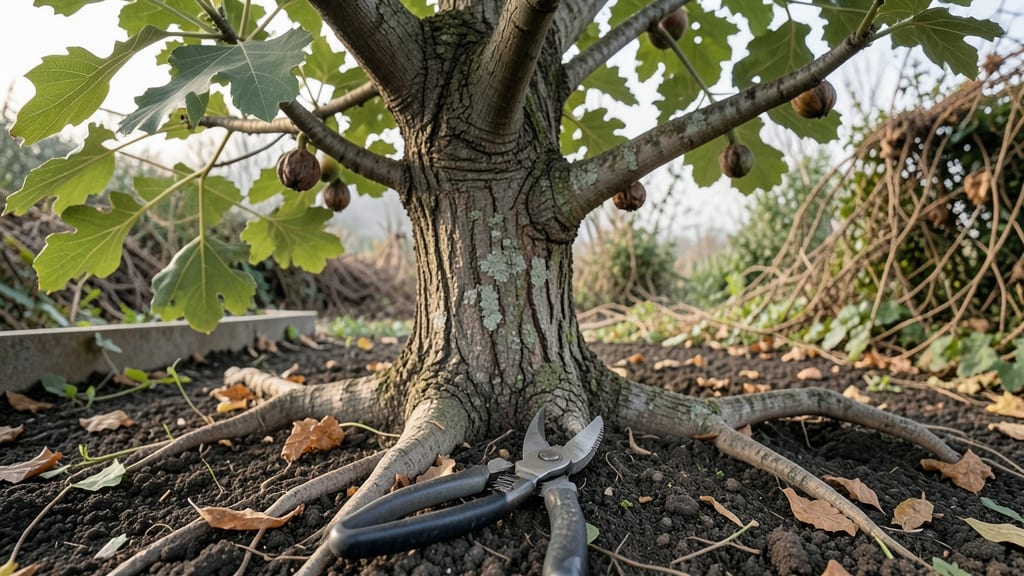
Trimming fig trees for winter isn't just about cleanup—it's about setting them up to survive Pacific Northwest frosts and bounce back stronger in spring.
I learned the hard way when my first fig tree suffered frost damage because I pruned too late; now, I time it just right to protect those tender branches while encouraging new growth.
You’ll need sharp pruning shears, rubbing alcohol for sterilizing cuts, and a clear day when temperatures hover above freezing. Focus on removing dead, diseased, or crossing branches first—they’re the weak points that invite pests and rot.
Then, shape the tree by cutting back any leggy growth by about a third, always making clean cuts just above outward-facing buds.
What you’ll end up with is a fig tree that looks like a well-behaved shrub, not a tangled mess. The right cuts mean fewer frost-damaged limbs in winter and more fruit in summer.
Plus, the tree will put its energy into new, sturdy branches instead of struggling with old wood. Here’s how to do it without overcomplicating things.
This method works for both Mediterranean and temperate climates, though PNW gardeners should wait until late winter or early spring for the safest results. The key is patience—fig trees reward careful pruning with years of reliable harvests. Let’s get those branches trimmed the right way.
📚 In This Guide
- What you need
- Instructions
- Tips and common mistakes
- Wrapping up and next steps
What you need
- ● Pruning shears: Bypass pruners (for small branches, 4–6 inches in diameter). Choose sharp, stainless steel blades to avoid crushing stems.
- ● Loppers: Long-handled (24–36 inches) for thicker branches (up to 2 inches in diameter). Look for ratcheting or bypass models for ease of use.
- ● Pruning saw: Curved or folding saw for branches larger than 2 inches. A fine-tooth blade (10–14 teeth per inch) works best for clean cuts.
- ● Gloves: Heavy-duty, cut-resistant (e.g., leather or Kevlar) to protect hands from thorns and rough bark.
- ● Disinfectant: Rubbing alcohol (70%+) or bleach solution (1 part bleach to 9 parts water) to sterilize tools between cuts and prevent disease spread.
- ● Rake or broom: For clearing fallen leaves, debris, and small branches post-pruning.
- ● Bucket or tarp: To collect pruned branches and debris for composting or disposal.
- ● Pruning sealant: Tree wound dressing (e.g., Tanglefoot or pruning paste) to seal larger cuts and reduce disease risk. Note: Only use on cuts larger than ½ inch.
- ● Step stool or ladder: For reaching higher branches safely. Ensure it’s stable and rated for your weight.
- ● Marking spray or tape: To tag branches for removal or highlight cuts needing sealant.
- ● Safety glasses: Protect your eyes from debris, especially when using a pruning saw.
- ● Notebook & pen: To jot down notes on your fig tree’s structure or track pruning progress over time.
- ● Check the weather forecast—prune on a dry, overcast day (avoid pruning in freezing temps or during wet conditions).
- ● Identify your fig tree’s variety and growth habit (e.g., standard, dwarf, or container-grown). Some varieties (like Brown Turkey or Desert King) handle pruning better than others.
- ● Review your tree’s current health—look for signs of disease (e.g., oozing sap, fungal spots) or dead wood before pruning.
- ● Have a clear plan for where to make cuts (refer to your notes or a sketch if needed).
Step-by-Step guide to trimming fig trees for winter hardiness
Here’s how to prepare your fig trees for Pacific Northwest winters—keeping them healthy and frost-resistant.
Identify and Remove Dead or Diseased Branches
Start by inspecting your fig tree for branches that are brown, brittle, or showing signs of disease. These are easy to spot—they’ll lack leaves, have blackened bark, or ooze sap. Use sharp pruning shears to cut these branches back to the main trunk or a healthy lateral branch. This step is critical because dead wood can harbor pests and diseases that weaken the tree during winter.
Make your cuts at a 45-degree angle, about ¼ inch above a bud or lateral branch. This encourages new growth in the right direction. If you’re unsure whether a branch is dead, scratch the bark with your fingernail—if it’s green underneath, it’s still alive and should stay.
Thin Out Crowded or Crossing Branches
Next, focus on thinning the canopy to improve airflow and sunlight penetration. Look for branches that are rubbing against each other or growing inward—they’ll compete for resources and create weak spots. Remove one-third of the thinnest, smallest branches to open up the tree. This reduces stress on the tree and helps it recover faster in colder months.
Cut these branches back to the main trunk or a strong lateral branch, always making clean cuts just outside the branch collar. Avoid leaving stubs, as they can invite disease. If you’re unsure which branches to remove, prioritize those that are growing toward the center of the tree or blocking light from reaching the inner foliage.
Prune for Frost Resistance and Shape
Now, shape the tree to promote frost resistance. Figs in the Pacific Northwest benefit from a more compact, rounded shape, which allows snow to slide off easily and reduces damage from heavy winter winds. Start by cutting back any overly long or leggy branches to one-third of their length, focusing on those that are growing outward and upward.
For frost-sensitive varieties, avoid heavy pruning in late winter—wait until early spring to finish shaping. If you’re unsure about your fig’s hardiness, err on the side of caution and leave more foliage. The goal is to balance airflow with protection, so don’t over-prune. A well-shaped tree will bounce back stronger after winter.
Clean Up and Apply Protective Measures
After pruning, gather all the cut branches and dispose of them in a sealed bag or burn pile to prevent disease spread. Sterilize your pruning tools with rubbing alcohol or a 10% bleach solution to kill any lingering pathogens. This step is often overlooked but crucial for keeping your tree healthy in the coming seasons.
Finally, apply a 2-3 inch layer of mulch around the base of the tree (but not touching the trunk) to insulate the roots. Use organic mulch like wood chips or straw. This helps regulate soil temperature and retains moisture, which is especially important in the Pacific Northwest’s wet winters. Water the tree deeply before applying mulch to encourage root growth.
Tips & tricks for perfect winter fig tree trimming
Here's how to avoid common mistakes and get the most out of your Pacific Northwest fig tree prep.
Branch Inspection Tip: When checking for dead branches in Step 1, look for another telltale sign besides color—tap the branch with your pruning shears. Dead wood makes a hollow sound while live branches produce a solid thunk. This simple test works even when bark color is misleading after wet winters. The ¼-inch cut above the bud is crucial because it creates space for new growth to emerge without competing with the old branch.
Thinning Strategy: In Step 2, focus on removing branches that grow directly opposite each other—they create natural weak points where limbs can split during winter storms. When you remove one-third of the thinnest branches, prioritize those growing toward the center first. This creates an open vase shape that lets snow slide off easily while maintaining structural integrity. Remember, you're not just pruning for aesthetics but for survival in our wet, windy climate.
Frost-Resistant Shaping: For Step 3, aim to create a dome shape rather than a flat top. This allows snow to accumulate and insulate the tree while preventing wind damage. When cutting back leggy branches to one-third their length, make your cuts just above an outward-facing bud. This encourages new growth that continues the dome shape naturally. If your fig variety is particularly frost-sensitive, you might want to delay some shaping until early spring when new growth is less vulnerable to late frosts.
Cleanup Essentials: After pruning in Step 4, don't just toss cut branches in the yard—they can harbor diseases that might reinfect your tree. Seal them in a heavy-duty trash bag and remove from your property immediately. For the 10% bleach solution, mix one part bleach with nine parts water and soak your tools for 10 minutes between uses. This kills pathogens that could survive on your tools and spread to healthy branches during your next pruning session.
Pro Tips for Trimming Fig Trees For Winter
- Here's how to avoid common mistakes and get the most out of your Pacific Northwest fig tree prep.
- Branch Inspection Tip: When checking for dead branches in Step 1, look for another telltale sign besides color—tap the branch with your pruning shears.
- Thinning Strategy: In Step 2, focus on removing branches that grow directly opposite each other—they create natural weak points where limbs can split during winter storms.
Frequently asked questions
Got questions about trimming your fig trees for winter in the Pacific Northwest? You’re not alone!
Here are answers to the most common concerns—from timing to troubleshooting—to help you keep your trees healthy and thriving through frost.
When is the best time to trim fig trees in the PNW?
The ideal window is late fall to early winter (November–February), after leaf drop but before hard freezes. For frost-sensitive varieties, wait until after the first frost to avoid stressing the tree. In milder PNW winters, you can trim as late as February—just avoid pruning during active growth or extreme cold.
Should I remove all the leaves before winter?
No—leave the leaves! They act as natural insulation, protecting branches from cold snaps. Only remove diseased or dead leaves (clean them up to prevent fungal spread). If your fig tree is in a windy area, lightly prune to reduce leaf mass, but avoid heavy defoliation.
What if I accidentally trim too much? Can I fix it?
Don’t panic! Fig trees are resilient. If you’ve over-pruned, focus on reducing stress:
- Water deeply but sparingly (avoid soggy soil).
- Apply a 2–3 inch mulch layer around the base to retain moisture.
- Wait until spring to assess regrowth—new shoots will tell you if the tree is recovering.
Do I need to protect my fig tree from frost if it’s already trimmed?
Yes! Even trimmed trees need frost protection. For young or tender varieties:
- Wrap the trunk with burlap or tree wrap to shield from cracking.
- Use frost cloth on branches if temps drop below 15°F.
- Plant in a south-facing spot against a wall for passive heat.
Can I trim fig trees in containers differently?
Container figs need more aggressive pruning to fit their space and improve air circulation:
- Trim 1/3 of the canopy to encourage bushier growth.
- Remove crossing branches and dead wood first.
- Move pots to a garage or insulated shed if temps drop below 20°F.
What if my fig tree doesn’t bloom after trimming?
Fig trees often skip blooming the first year after pruning—it’s normal! Focus on:
- Ensuring full sun (6+ hours/day)
- Fertilizing in early spring with citrus-specific fertilizer.
- Patience—some varieties (like ‘Desert King’) take 2–3 years to rebound.
Wrapping up and next steps
Trimming your fig trees for winter in the Pacific Northwest doesn’t have to be intimidating—it’s all about strategic cuts and a little seasonal care! 🌿 By removing dead branches, thinning crowded growth, and protecting vulnerable varieties, you’ll set your trees up for a healthier, frost-resilient spring.
Think of it as a winter spa day for your figs—they’ll thank you with sweeter, more abundant fruit next year.
Ready to roll up your sleeves? Grab your pruners and start small. Tackle one tree at a time, celebrate your progress, and soon, your garden will be a thriving hub of fig-filled joy. Happy pruning! 🌟