
Pruning
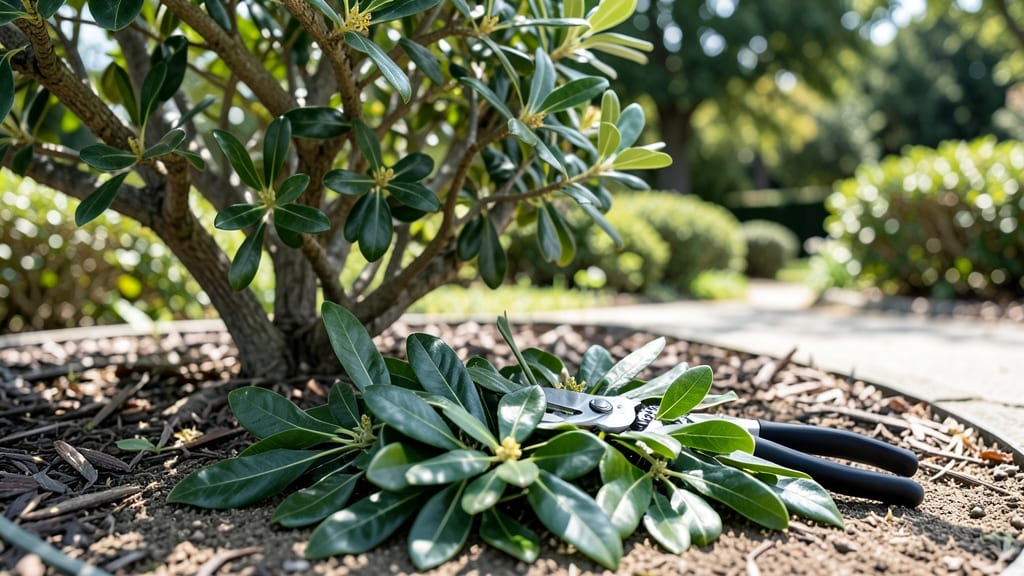
Your bay tree maintenance starts with understanding its Pacific Northwest resilience—these evergreens handle our damp, chilly winters better than most, but they still need strategic trimming to thrive. 🌿 I’ve pruned mine every winter for five years, and the difference between a scraggly bush and a lush, fragrant hedge comes down to timing, cuts, and knowing when to back off.
The key? Pruning after the first frost but before new growth starts—this prevents frost damage while encouraging fresh, healthy shoots in spring.
You’ll need sharp pruning shears (clean ones prevent disease), a ladder if your tree is tall, and a clear day when the tree isn’t stressed by heat or drought. For outdoor trees, focus on shaping in late winter; indoors, prune after flowering to keep the plant compact.
The goal is to remove no more than one-third of the foliage at a time—this keeps the tree strong and prevents shock. And here’s the secret: always cut just above a leaf node or outward-facing bud to encourage bushier growth.
What you’ll end up with is a bay tree that stays dense, aromatic, and productive year-round. The leaves will be glossy and fragrant, the branches will fill in evenly, and you’ll avoid the leggy, sparse look that plagues neglected trees.
Plus, proper pruning makes harvesting leaves for cooking easier—just snip a few sprigs whenever you need them. The best part? Your tree will handle our rainy winters like a pro, with fewer pests and diseases than unpruned specimens.
Works for both container-grown trees and in-ground plantings, whether you’re shaping a small patio tree or a large hedge. The same principles apply indoors, just adjust the timing to avoid disturbing winter dormancy. Let’s get those shears ready—your bay tree’s best years are ahead!
📚 In This Guide
- What you need
- Instructions
- Tips and common mistakes
- Wrapping up and next steps
What you need
- ● Pruning shears: Bypass pruners (sharp, clean, and sterilized) for clean cuts on small branches.
- ● Loppers: 6–8" bypass loppers for thicker branches (up to 1.5 inches in diameter).
- ● Hand pruners: Anvil-type for quick trims (but avoid for bay trees to prevent crushing).
- ● Gloves: Heavy-duty gardening gloves (cut-resistant for thorny branches).
- ● Disinfectant: 70% isopropyl alcohol or bleach solution (1 part bleach to 9 parts water) to sterilize tools between cuts.
- ● Rake or broom: For clearing fallen leaves/debris after pruning.
- ● Watering can or hose: With a gentle spray nozzle for post-pruning hydration.
- ● Mulch: 2–3 inches of organic mulch (e.g., wood chips or shredded bark) to protect roots from frost.
- ● Pruning saw: For stubborn, thick branches (rare in bay trees but useful for mature specimens).
- ● Tree tie or twine: To secure branches if heavy snow is expected post-pruning.
- ● Frost cloth: Lightweight fabric to wrap young or newly pruned trees if late frosts are forecasted.
- ● Fertilizer: Slow-release, balanced fertilizer (10-10-10) to replenish nutrients after heavy pruning.
- ● Plant-based fungicide: Copper-based spray to prevent fungal issues if the tree looks stressed.
Step-by-Step instructions for pruning frost-resistant bay trees
Here's how I keep my Pacific Northwest bay trees thriving through winter.
✂️ Step 1: Time Your First Cut for Late Winter
Wait until late February or early March—after the worst frosts have passed but before new growth begins. In the PNW, this usually means after mid-February, when daytime temperatures consistently stay above 40°F. You'll notice the tree has stopped bleeding sap and looks dormant but not dead.
Use sharp, clean pruning shears to make cuts at a 45-degree angle, about ¼ inch above a leaf node or outward-facing bud. This ensures water runs off and new growth heads outward. I always start with the outermost branches first to open up the canopy and improve airflow.
🌿 Step 2: Shape for Airflow and Light Penetration
Remove any branches that cross or rub against each other—they create wounds where pests can enter. I look for dead or diseased wood (gray, brittle, or peeling bark) and cut those back to healthy tissue. Never leave stubs; always make clean cuts.
Thin out about 20-30% of the foliage to let light reach the inner branches. In bay trees, this prevents the center from becoming too dense. You'll see the tree's natural shape emerge as you work—bay trees naturally grow in a rounded form, so I avoid heavy topping.
☀️ Step 3: Summer Maintenance for Frost Hardening
During June and July, do a light pruning to remove any water sprouts (fast-growing, weak shoots) and any branches growing inward. These compete for energy and weaken the tree's frost resistance. I also check for new growth at the tips—if it's soft and green, it's not yet hardened for winter.
Water deeply but infrequently—bay trees hate soggy roots. Let the soil dry out between waterings, especially in containers. Mulch with 2-3 inches of organic mulch (like wood chips) to protect roots from temperature swings. This is where PNW bay trees shine—they handle our cool summers better than many Mediterranean natives.
⏰ Step 4: Final Winter Prep Before First Frost
In early November, do a final light pruning to remove any weak or damaged growth from the summer. This gives the tree time to heal before winter. I also check for mature leaves that haven't fallen—if they're still green, they'll insulate the buds better than bare branches.
Wrap young trees with burlap or frost cloth if you're in a particularly cold microclimate. Mature trees usually handle PNW winters fine, but a thick layer of mulch around the base adds extra protection. The key is to avoid heavy pruning now—you want the tree to go dormant with as much energy stored as possible.
Tips & tricks for perfect bay tree maintenance
Here's what nobody tells you about keeping your PNW bay trees thriving through our wild winters.
Timing is Everything: The late February to early March window is non-negotiable for frost-resistant growth. I've learned this the hard way—pruning too early means dealing with frost damage, while waiting too long risks encouraging new growth that won't harden before winter. Check for those 40°F daytime temperatures consistently before you start cutting. This is your green light to prune.
Cutting Technique Matters: That 45-degree angle isn't just for looks—it's about water runoff and future growth direction. I always make my cuts about ¼ inch above a leaf node to encourage outward growth. Use sharp shears every time; dull blades crush tissue and invite disease. And remember: always cut back to healthy tissue, never leave stubs. This simple rule prevents 90% of future problems.
Seasonal Strategy: The 20-30% foliage reduction in Step 2 might seem drastic, but it's crucial for light penetration and preventing dense centers. In summer, focus on removing those water sprouts—they're energy vampires that weaken frost resistance. I time my summer pruning for June and July because that's when new growth is still soft and easy to identify.
Winter Protection: For young trees, that burlap or frost cloth isn't just decoration—it's insurance against our unpredictable PNW winters. I've seen mature trees survive just fine, but young ones need that extra layer. And that 2-3 inches of organic mulch? It's your tree's winter blanket, protecting roots from temperature swings that can be just as damaging as actual frost.
Pro Tips for Bay Tree Maintenance
- Here's what nobody tells you about keeping your PNW bay trees thriving through our wild winters.
- Timing is Everything: The late February to early March window is non-negotiable for frost-resistant growth.
- Cutting Technique Matters: That 45-degree angle isn't just for looks—it's about water runoff and future growth direction.
Frequently asked questions
Got questions about keeping your bay tree thriving in the Pacific Northwest’s chilly climate? Here are answers to the most common concerns—from pruning tips to frost protection and beyond.
When is the best time to prune a bay tree in the PNW?
Prune your bay tree in early spring (March–April) before new growth starts. Avoid heavy pruning in fall or winter, as cold weather can stress the plant. Light shaping is fine in summer, but wait until after flowering if you want to harvest leaves—never prune in frost!
How do I protect my bay tree from frost in the PNW?
Bay trees are mildly frost-resistant, but young plants or severe cold (<20°F) may need help. Wrap the trunk in burlap or use a frost cloth for young trees. Mulch the base with wood chips (3–4 inches deep) to insulate roots. Move potted bay trees to a sheltered spot or indoors if temps drop below 15°F.
Can I prune a bay tree too much? What are the signs?
Yes! Over-pruning leads to bare branches, stunted growth, or even death. Signs include yellowing leaves, slow regrowth, or weak stems. Never remove more than 1/3 of the foliage in one season. If you’ve overdone it, reduce stress by watering deeply and avoiding fertilizers until new growth appears.
What’s the difference between pruning for harvest vs. shaping?
For harvesting leaves, prune lightly in summer (after flowering) to avoid stress. For shaping, focus on spring pruning—trim back to outward-facing buds to encourage bushiness. Never cut into old wood (brown stems), as bay trees won’t regrow from there. Use sterilized shears to prevent disease!
My bay tree leaves are turning brown—what’s wrong?
Brown leaves usually mean underwatering, overwatering, or frost damage. Check soil moisture (stick your finger 2 inches deep—dry? Water! Soggy? Drain!). If edges are crispy, it’s drought stress; if mushy, root rot. For frost damage, trim dead leaves just above a healthy bud in spring. Mulch and water consistently to prevent recurrence.
Wrapping up and next steps
Maintaining your bay tree—especially in the chilly Pacific Northwest—is all about balance: pruning for health, protecting against frost, and keeping it thriving year-round. 🌿 With the right tools, timing, and techniques, you’ll enjoy lush foliage and fragrant leaves for seasons to come. Now’s the perfect time to roll up your sleeves and give your bay tree the care it deserves!
Ready to take action? Pick a sunny weekend, gather your supplies, and start with a light trim—your bay tree will thank you with vibrant new growth! 🌱