Pruning
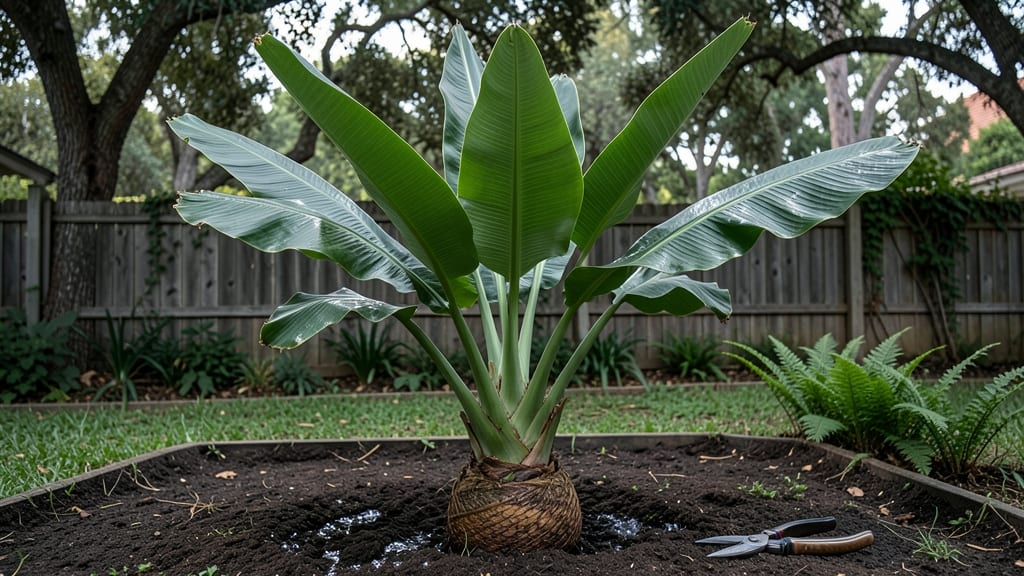
Pruning your ensete banana tree isn’t just about shaping—it’s about reviving its frost-resistant resilience after Pacific Northwest winters. 🌿 I’ve watched mine bounce back from near-frozen stems to produce new growth by spring, and the secret lies in strategic cuts that encourage regeneration, not stress.
The key is timing and technique: prune back damaged leaves in late winter before new shoots emerge, but never cut into the thick, woody pseudostem—the heart of the plant’s survival.
A sharp pair of pruners and a 5-gallon bucket for composting clippings are all you’ll need. This isn’t about perfection; it’s about giving the plant a fresh start.
What you’ll end up with is a lush, multi-stemmed specimen by summer, its broad leaves catching the light like a tropical canopy. The edible corms (yes, you can harvest them!) and striking foliage make it a standout in any garden.
Plus, the more you prune correctly, the more the plant rewards you with new growth.
Works just as well in containers as in the ground, making it perfect for urban gardens or patios. The only real mistake? Waiting too late in spring to prune—so don’t skip this step if you want that shockingly lush revival every year.
📚 In This Guide
- What you need
- Instructions
- Tips and common mistakes
- Wrapping up and next steps
What you need
- ● Pruning shears or loppers: Sharp, bypass-style (for clean cuts) or anvil-style (for thicker stems). Choose 8- to 10-inch handles for leverage.
- ● Heavy-duty pruning saw: For thick pseudostems (3+ inches in diameter). Opt for a bow saw or pruning saw with a 10-12" blade.
- ● Gloves: Cut-resistant (e.g., mechanics’ gloves) to protect against jagged edges and sap.
- ● Disinfectant (70% isopropyl alcohol or bleach solution): 1 part bleach to 9 parts water to sterilize tools between cuts and prevent disease.
- ● Compost or mulch: 2–3 cubic yards (for a mature tree) to replenish nutrients after pruning.
- ● Rake and broom: To clear debris and keep the base area tidy.
- ● Plant wound sealant (e.g., Tanglefoot Tree Wound Pruning Seal) – Use sparingly if pruning large wounds.
- ● Frost cloth or row covers: For post-pruning protection if frost is forecasted within 2 weeks.
- ● Pruning paint (e.g., copper-based) – Only needed for large cuts >2 inches in diameter.
- ● Garden twine or stakes: To temporarily support leaning pseudostems if needed.
Step-by-Step pruning for your ensete banana tree
Here's how to revive your frost-hardy ensete and keep it thriving through Pacific Northwest winters.
🌿 Step 1: Assess Winter Damage After Frost
Wait until spring when new growth begins—usually late March or April in the PNW—before pruning. Look for dead or blackened leaves and stems. These will be crispy to the touch and won't bend when you gently squeeze them. Healthy tissue feels firm and slightly springy, even after frost.
I always start by removing the worst damage first. Use clean, sharp pruners to cut back dead fronds at their base. Don't worry about making perfect cuts—just remove anything that looks completely lifeless. You'll often find the plant's true resilience emerges from the base once you clear away the dead material.
✂️ Step 2: Trim Back Healthy but Weakened Fronds
After removing the dead growth, focus on fronds that survived but look weakened. These will have some green tissue but may be yellowed or browned at the tips. Cut these back to where you see fresh green growth emerging—about 6-12 inches above the ground, depending on how vigorous the new shoots appear.
Here's the thing—your ensete stores energy in its corm (the thick underground stem). By removing damaged fronds, you're allowing the plant to redirect its energy into producing new, stronger leaves. I like to leave 2-3 healthy-looking fronds if possible, as they'll provide shade for the emerging growth.
🌱 Step 3: Encourage New Growth with Strategic Cuts
Once you've removed all dead and damaged fronds, look for any remaining healthy leaves that are smaller than others. These are often the first to emerge in spring. Make a clean cut about 1 inch above a visible bud or growth node—these look like small bumps along the stem.
Don't be afraid to cut back aggressively if needed. Your ensete can regrow from its corm even if you remove most of the above-ground growth. The key is to leave at least one healthy frond to protect the new shoots from harsh sunlight. You'll see new growth appear within 4-6 weeks if conditions are right.
☀️ Step 4: Provide Post-Pruning Care for Revival
After pruning, give your ensete a good drink of water—about 1-2 gallons spread evenly around the base. The soil should be moist but not soggy. Mulch the area with 2-3 inches of organic mulch (like shredded bark or straw) to protect the corm and retain moisture.
Place the plant in a spot with partial shade for the first 2-3 weeks after pruning. This gives the new growth time to establish without being stressed by full sun. You'll notice the first signs of revival when you see tiny new leaves unfurling from the center of the plant—this is your signal that everything is working.
Tips & tricks for perfect ensete banana tree revival
Here's what nobody tells you about bringing your frost-bitten ensete back to life—these tricks make all the difference.
Timing is Everything: Don't rush into pruning too early! The late March or April window is critical because that's when your ensete's corm has already stored enough energy to support new growth. If you prune too soon, you risk stressing the plant before it's ready to rebound. I've seen ensetes that were pruned in February struggle to recover, while those pruned in April thrived.
Cutting Technique Matters: When you're making those strategic cuts in Step 3, use a clean cut about 1 inch above a growth node—this is where new leaves will emerge. I like to make these cuts at a slight angle to prevent water from pooling on the cut surface, which could lead to rot. And here's a pro move: sterilize your pruners with rubbing alcohol between cuts to prevent spreading any potential plant diseases.
Post-Pruning Care Secrets: That 1-2 gallons of water after pruning is more important than you might think. The corm needs moisture to kickstart new growth, but don't overdo it—soggy soil can be just as harmful as dry soil. I've found that watering deeply once, then adding the 2-3 inches of mulch, creates the perfect moisture-retaining environment while protecting the corm from temperature swings.
Pro Tips for Ensete Banana Tree
- Here's what nobody tells you about bringing your frost-bitten ensete back to life—these tricks make all the difference.
- Timing is Everything: Don't rush into pruning too early!
- Cutting Technique Matters: When you're making those strategic cuts in Step 3, use a clean cut about 1 inch above a growth node—this is where new leaves will emerge.
Frequently asked questions
Got questions about pruning your ensete banana tree (Ensete ventricosum) in the Pacific Northwest? You’re not alone! Here are some of the most common queries—and their straightforward answers—to keep your frost-hardy stunner thriving.
When is the best time to prune my ensete banana tree?
Prune your ensete banana tree in late winter or early spring (February–March) before new growth begins. This timing helps avoid frost damage to fresh cuts and gives the plant energy to rebound. If you’re dealing with dead or damaged fronds after winter, prune those immediately to prevent pests or disease.
How do I protect my ensete banana tree from frost?
Ensete banana trees are mildly frost-tolerant (down to ~20°F), but young plants or severe cold can cause damage. Mulch heavily with straw or leaves, wrap the trunk with burlap, and use frost cloths for extra protection. Avoid pruning during frost events—wait until temperatures stabilize.
What parts of the ensete banana tree should I cut back?
Remove only dead, yellowed, or broken fronds at the base. Avoid cutting into healthy green leaves or the pseudostem (the "trunk"). If the center becomes hollow or mushy, prune it out to encourage new growth. Never trim more than ⅓ of the fronds at once.
Can I propagate my ensete banana tree from cuttings?
Yes! After pruning, you can propagate from the base suckers (pups) or the lower 1–2 feet of the pseudostem. Dip cuttings in rooting hormone, plant in well-draining soil, and keep them warm and humid (70–75°F). Success rates improve with patience—new growth may take 4–8 weeks!
Why are my ensete banana tree’s leaves turning brown after pruning?
Brown leaves post-pruning are usually normal if they were already damaged. However, if new leaves yellow or brown, check for:
- Over-pruning (give it time to recover!)
- Fungal issues (like leaf spot)—treat with neem oil or copper fungicide.
- Underwatering (ensete loves moisture but hates soggy roots).
Are there frost-resistant alternatives to ensete banana trees?
If you love the look but want even more cold-hardy options, consider:
- Dwarf banana (Musa acuminata ‘Dwarf Cavendish’)—tolerates brief dips to 28°F.
- Hardy banana (Musa basjoo)—survives to 15°F with protection.
- Strelitzia nicolai (giant bird-of-paradise)—frost-tolerant to 25°F.
Wrapping up and next steps
The Ensete banana tree thrives with the right pruning care—especially in the chilly Pacific Northwest!
By following these steps, you’ll keep your plant healthy, frost-resistant, and ready to flourish year after year. 🌱 Whether you’re trimming for growth, protecting against cold, or simply maintaining its beauty, your efforts will pay off with a lush, vibrant tree.
Ready to give your Ensete banana tree the love it deserves? Roll up your sleeves, grab your tools, and start pruning today! Your future harvest of edible pseudostems (or stunning foliage!) will thank you. 🌟