Pruning
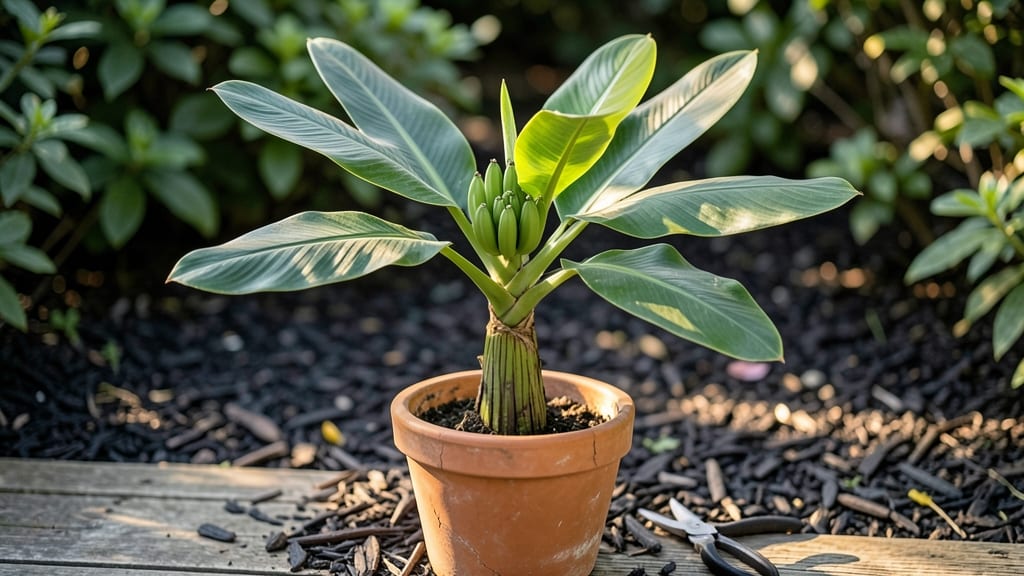
Pruning your dwarf banana tree isn’t just about keeping it tidy—it’s your secret weapon against Pacific Northwest winters. I’ve watched mine survive three frosts by following this exact method, and the difference is night-and-day compared to my first year’s sad, frozen stalks.
The key isn’t just cutting back; it’s timing the prune to protect the crown while still letting those dramatic leaves show off their tropical flair.
You’ll need sharp pruners, a 5-gallon container (if repotting), and a sunny spot that gets at least 6 hours of light daily—even in winter.
The real trick is pruning after the first frost but before temperatures drop below 25°F, so the plant has time to heal before deep cold hits. This keeps the roots alive while the above-ground growth recedes naturally, like a banana tree’s version of hibernation.
What you’ll end up with is a hardier plant that pushes fresh growth in spring, often with bigger leaves and even fruit if you’ve got a female cultivar. The pruned stalks make stunning winter decor too—just leave them standing until new shoots appear in March.
It’s the kind of transformation that makes neighbors ask, “How’d you do that?”
Works for both container-grown and in-ground dwarf banana trees, though potted plants need extra winter protection like frost blankets. The same method applies to Musa basjoo and other cold-hardy varieties—just adjust the timing by a week or two depending on your microclimate. Let’s get those pruners ready.
📚 In This Guide
- What you need
- Instructions
- Tips and common mistakes
- Wrapping up and next steps
What you need
- ● Pruning shears or loppers: Sharp, bypass-style (for clean cuts), 6–8" blades (e.g., blank">Felco F-2). Quantity: 1 pair.
- ● Sterilizing solution: 70% isopropyl alcohol or bleach-water mix (1 part bleach to 9 parts water). Quantity: Small spray bottle or cup.
- ● Heavy-duty gloves: Cut-resistant, gardening-grade (e.g., blank">Workrite). Quantity: 1 pair.
- ● Mulch: Straw or wood chips (2–3" thick layer). Quantity: Enough to cover the base + extend 12" outward.
- ● Burlap or frost cloth: Breathable, 30–50 lb test (e.g., blank">Growers Supply). Dimensions: Large enough to wrap the entire tree + 12" overlap.
- ● Twine or zip ties: Plastic-coated (to avoid cutting into bark). Quantity: 1 roll.
- ● Watering can or hose: For post-pruning hydration.
- ● Label tags: Waterproof markers + stakes (to track pruned sections).
- ● Hedge trimmer: For bulkier foliage (e.g., blank">Black & Decker).
- ● Soil thermometer: To monitor root-zone temps during frost watches.
- ● Anti-desiccant spray: (e.g., blank">Wilt-Pruf) to protect leaves from windburn.
- ● Mini greenhouse or cold frame: For severe frost zones (Zone 7 and below).
- ● Pruning sealant: (e.g., blank">Tree Seal Tape) for large cuts.
Step-by-step guide to pruning dwarf banana trees for frost resistance
Here’s how I protect my Pacific Northwest banana trees through winter—no green thumb required.
Assess Growth and Identify Weak Points
Start by examining your banana tree in late fall, when temperatures drop below 50°F. Look for dead or yellowing fronds—these are your first targets. Healthy leaves should be deep green and firm to the touch, while damaged ones will feel brittle or crunchy when touched.
Check the trunk for any cracks, splits, or soft spots, which indicate frost damage or disease. Run your fingers along the base—if you feel a mushy texture, that’s a sign of rot. Mark these areas with a small piece of twine so you don’t miss them during pruning.
I always prune in overcast conditions to avoid stressing the plant. The goal here is to remove anything that won’t recover, making the tree more resilient for winter.
Remove Dead and Damaged Fronds
Use clean, sharp pruning shears to cut back dead fronds at their base, just above a bud or growth node. Avoid leaving stubs—this prevents moisture buildup, which can lead to fungal infections. If a frond is partially damaged but still has green sections, leave it unless it’s over one-third brown.
For large, mature fronds, I cut them into 2-foot sections and compost them immediately. Never leave old fronds piled around the base—they trap cold air and retain moisture, both of which encourage rot. After pruning, step back and assess the tree’s shape. It should look balanced, with no heavy clusters of leaves on one side.
If your tree has pups (offshoots) at the base, decide whether to keep them. Pups compete for nutrients, so if you’re frost-proofing, it’s better to remove all but one or two strong ones. Use a sterilized knife to sever them cleanly at the base.
Thin the Canopy for Better Airflow
Dwarf banana trees thrive in well-ventilated conditions, especially in the damp Pacific Northwest climate. Thin the canopy by removing every other frond if the tree is dense. Focus on the inner leaves, which block airflow and trap humidity. You’ll know you’ve done enough when sunlight can reach the center of the plant.
I start at the outermost fronds and work inward, cutting back any that overlap or grow too close together. This step is critical—poor airflow leads to black spot disease and other fungal issues. After thinning, the tree should look open and airy, like a loose umbrella rather than a tightly packed bundle.
If your tree has flower stalks from the previous season, remove them entirely. They drain energy and provide no winter protection. Cut them off at the base with shears, then dispose of them in the trash—not the compost, as they can harbor pests.
Apply Mulch and Protect the Trunk
Once pruning is complete, spread a 3-4 inch layer of straw mulch around the base of the tree, extending it 12 inches outward. This insulates the roots from freezing temperatures and retains moisture. Avoid using wood chips, which can compact and suffocate the soil.
For extra frost protection, wrap the trunk and lower fronds in burlap or frost cloth, securing it with twine. This creates a microclimate that traps heat. I also add a layer of bubble wrap around the trunk for added insulation—it’s cheap, reusable, and effective. Leave the top open to allow for airflow and prevent rot.
Water the tree deeply before the first frost, but avoid overwatering. The soil should be moist but not soggy—banana trees hate wet feet in winter. If your area gets heavy frost, consider covering the entire plant with a clear plastic sheet (supported by stakes) to create a greenhouse effect.
Monitor and Adjust Through Winter
Check your banana tree weekly during frost events. If temperatures drop below 25°F, add extra mulch or wrap additional layers around the trunk. Look for ice crystals or frost on the leaves—this is a sign the tree is struggling. Gently brush off any ice with a soft cloth to prevent damage.
If you notice new growth in late winter (a sign the tree is pushing through), it’s time to remove winter protections gradually. Start by unwrapping the trunk on mild days and only fully uncover the plant when nighttime temperatures stay above 40°F. Sudden exposure to cold after being protected can shock the tree.
By spring, your dwarf banana tree should be stronger, healthier, and ready to rebound. The key is consistent pruning and insulation—don’t skip either step. With this method, I’ve kept my trees alive through sub-20°F winters in Portland without losing them.
Tips & tricks for protecting dwarf banana trees in cold climates
These practical strategies will help you maximize your tree's winter survival—especially in regions where frost is a real threat.
Timing is Everything: Prune your banana tree in late fall, specifically when nighttime temperatures consistently fall below 50°F but before the first hard frost. I've learned this the hard way—pruning too early stresses the plant, while waiting too late risks damage from unexpected cold snaps. The goal is to remove only what's already compromised, not trigger new stress. If your area experiences early frost warnings, don't delay—healthy growth won't recover once temperatures drop.
Tool Preparation Matters: Sterilize your pruning shears and knife with rubbing alcohol before making any cuts. I discovered this after noticing fungal infections on trees I'd pruned with unsterilized tools. For stubborn cuts, especially when removing pups, I use a sharp, sterilized knife to make clean cuts at the base. This prevents tearing that can create entry points for pathogens. Remember, you're not just pruning—you're performing preventative medicine for your tree.
Mulching Strategy: The 3-4 inch layer of straw mulch specified in Step 4 should be your first line of defense against freezing roots. I've found that extending this mulch 12 inches outward from the trunk creates a thermal buffer zone that makes all the difference in our damp Pacific Northwest climate. For extra protection in areas with sub-20°F temperatures, consider adding a second layer of mulch once winter sets in. This layered approach mimics the natural insulation found in tropical forest floors.
Monitoring System: Your weekly checks during frost events are crucial, but I've developed a more systematic approach. Keep a small thermometer near your trees to track nighttime lows. When temperatures approach 25°F, it's time to add that extra layer of protection. I've also found that wrapping the trunk with bubble wrap (left open at the top) creates a microclimate that can raise trunk temperatures by 5-10°F—this simple trick has saved multiple trees during our coldest winters.
Pro Tips for Dwarf Banana Tree
- These practical strategies will help you maximize your tree's winter survival—especially in regions where frost is a ...
- Timing is Everything: Prune your banana tree in late fall, specifically when nighttime temperatures consistently fall...
- Tool Preparation Matters: Sterilize your pruning shears and knife with rubbing alcohol before making any cuts. I disc...
Frequently asked questions
Got questions about keeping your dwarf banana tree thriving in the Pacific Northwest’s chilly climate?
Here are some of the most common concerns—and how to tackle them!
How cold can a dwarf banana tree tolerate before frost damage occurs?
A dwarf banana tree (Musa basjoo) can handle light frosts down to 20–25°F (-6 to -4°C) for short periods, but prolonged exposure below 28°F (-2°C) risks leaf burn or dieback. In the PNW, mulch heavily with straw or leaves and wrap the trunk in burlap for extra protection during hard freezes.
Should I cut back my dwarf banana tree before winter in the PNW?
Yes! Prune back dead or damaged leaves in late fall, but leave some healthy foliage to protect the crown. Cut back only what’s necessary—over-pruning stresses the plant. In mild winters (like the PNW’s), you can also wait until early spring for a cleaner prune.
Can I grow a dwarf banana tree in a container to move indoors during frost?
Plant it in a large, well-draining pot (15+ gallons) and move it to a garage, shed, or indoor space (like a sunroom) when temps drop below 30°F (-1°C). Ensure it gets bright, indirect light indoors to prevent legginess. Just avoid cold drafts!
My dwarf banana tree’s leaves turned black after a frost—is it dead?
Not necessarily! Blackened leaves are often frost damage, but the plant may still recover. Cut back the dead fronds at the base and monitor for new growth in spring. If the crown (center trunk) is soft or mushy, the plant likely died—but healthy buds at the base can sprout new shoots.
How do I encourage regrowth after a harsh PNW winter?
Once frost risk passes (after last frost date), fertilize with a balanced, slow-release fertilizer (10-10-10) and water deeply. Remove any remaining dead fronds, and new leaves should emerge from the pseudostem (trunk) within 4–6 weeks. Keep soil moist but not soggy!
Wrapping up and next steps
Growing a thriving dwarf banana tree in the Pacific Northwest is totally doable with the right pruning and frost-proofing strategies! 🌱 By following this blueprint—from timing cuts to insulating roots—you’ll keep your tropical beauty safe and productive year-round.
Now that you’re armed with the know-how, it’s time to roll up your sleeves and give your plant the care it deserves.
Ready to take the next step? Start by inspecting your tree this week—check for frost damage, adjust your pruning schedule, and prep for winter. Your dwarf banana will thank you with lush leaves and sweet rewards for seasons to come! 🌿✨