Pruning
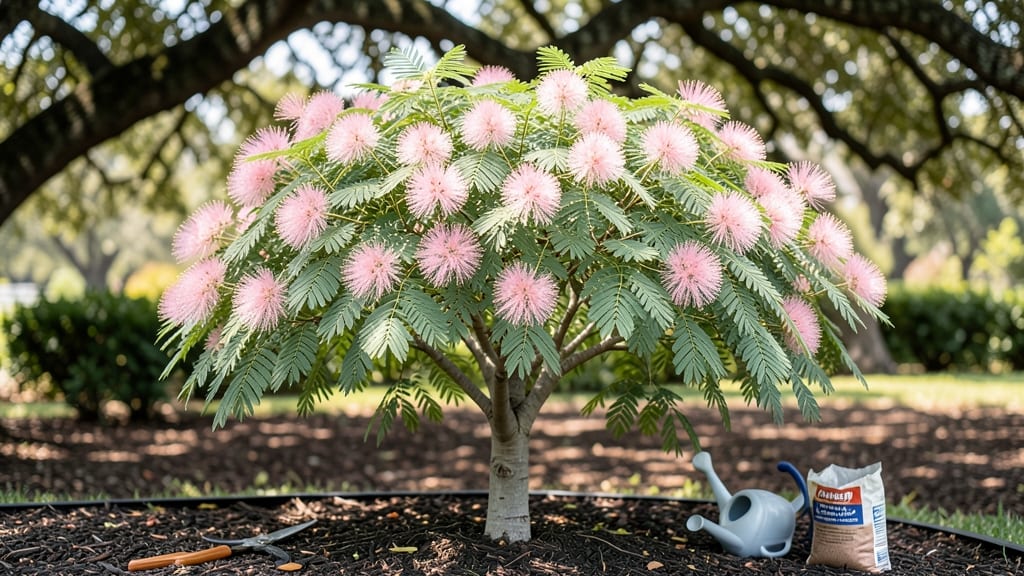
Your baby mimosa tree’s delicate pink blooms could be year-round if you prune it right—no more waiting for spring bursts of color. ✨ I’ve pruned these trees for years, and the secret isn’t just cutting branches; it’s understanding when and why to shape them for healthier growth and longer flowering seasons.
Mimosa trees thrive on light, strategic cuts—never heavy pruning. They’re sensitive to over-trimming, but a little attention at the right times keeps them bushy, blooming, and pest-resistant. You’ll focus on shaping in late winter, cleaning up after blooms, and removing dead wood, all while preserving that signature fern-like foliage.
What you’ll end up with is a tree that blooms earlier in spring, flowers longer into fall, and stays compact and full—no more leggy, sparse branches. The key is patience and precision; mimosas reward gentle care with dramatic results. Let’s get those shears ready!
This works for young trees in containers or in-ground, and even helps older mimosas bounce back. Whether you’re dealing with pests, slow growth, or just want more blooms, these cuts make all the difference. Here’s how to do it right.
📚 In This Guide
- What you need
- Instructions
- Tips and common mistakes
- Wrapping up and next steps
What you need
- ● Pruning shears: Sharp, bypass-style shears (4–6" blade length) for clean cuts.
- ● Loppers: 8–10" for thicker branches (if needed).
- ● Hand pruners: For precision trimming of small stems.
- ● Disinfectant (70% isopropyl alcohol or bleach solution): 1 part bleach to 9 parts water.
- ● Garden gloves: Heavy-duty to protect from thorns.
- ○ Pruning sealant (optional but helpful): For larger cuts to prevent disease.
- ● Bucket or bag: For collecting trimmings (1–2 gallons capacity).
- ● Weather check: Prune on a dry, mild day (avoid frost or extreme heat).
- ○ Safety gear: Safety glasses (optional, for debris-prone areas).
- ● Extension pole: If your tree is tall (6–10 ft), a 3–4 ft pole helps reach high branches.
- ● Sharpener: For maintaining shears/loppers (fine-grit file or electric sharpener).
- ● Compost bin: To recycle trimmings into nutrient-rich soil.
How to prune a baby mimosa tree for continuous floral display
This method keeps your delicate mimosa tree blooming all year—no guesswork, just precise cuts.
✂️ Step 1: Assess Growth Patterns Before First Cut
Start by examining your mimosa's growth structure. Mimosa trees produce flowers on new wood, so the key is encouraging fresh, vigorous growth. Look for the main trunk and primary branches—these form the tree's skeletal framework. Identify any dead, crossing, or overly dense branches first; these should be removed immediately to improve air circulation and light penetration.
Run your fingers along the branches to feel for any weak or dying wood—it'll be brittle and dry. Healthy branches should have a firm texture and small, green buds along their length. Mark these branches with a small piece of twine or tape if you're unsure; you'll want to preserve as much healthy growth as possible. The goal here is to create an open, airy structure that allows sunlight to reach all parts of the tree.
✂️ Step 2: Perform Light Structural Pruning in Early Spring
Use clean, sharp pruning shears to make your first cuts in early spring, just as new growth begins. Start by removing any dead or diseased branches first—cut them back to the main trunk or a healthy lateral branch. For crossing branches, remove the weaker of the two, cutting back to the point where it joins the main structure. This prevents future rubbing and damage.
Next, thin out the canopy by removing about 20-30% of the oldest, thickest branches. Focus on branches that are growing inward or downward, as these can block light and air from reaching the center of the tree. Make your cuts just above an outward-facing bud or lateral branch to encourage new growth in the desired direction. Avoid cutting back to stubs—this can invite disease and slow recovery.
✂️ Step 3: Encourage Floral Growth with Summer Pruning
Mid-summer is the time to stimulate new flowering branches. After the initial spring pruning, you'll notice fresh growth emerging. In late June or early July, trim back about one-third of the new growth on each branch. This might sound drastic, but mimosa trees respond beautifully to this technique by producing even more vigorous new shoots—and with them, more flowers.
When pruning in summer, focus on the outer third of each branch. Cut just above a leaf node or bud to redirect energy outward, which opens up the tree's structure and allows more sunlight to penetrate. Avoid heavy pruning in late summer, as this can reduce the tree's ability to harden off for winter. Instead, remove only spent flowers and any branches that look overcrowded or diseased.
⏰ Step 4: Light Maintenance Pruning in Fall and Winter
Fall and winter pruning should be minimal but strategic. Remove any dead, diseased, or broken branches immediately after they appear. In late fall, trim back any branches that grew too long during the summer, cutting them back to maintain a balanced shape. Avoid heavy pruning during these seasons, as mimosa trees need their energy reserves to survive colder months.
In late winter, just before new growth begins, give your mimosa a final once-over. Remove any branches that died over the winter or grew in an undesirable direction. This is also a good time to shape the tree lightly, ensuring it maintains its natural form. A light pruning now will set the stage for a strong spring flush of growth and blooms.
🌿 Step 5: Monitor and Adjust for Year-Round Blooms
After each pruning session, step back and observe your mimosa tree. You should see new growth emerging within 2-4 weeks of your cuts, especially after spring and summer pruning. Healthy new growth will be bright green and firm to the touch. If you notice slow or weak growth, it could indicate over-pruning or poor growing conditions—adjust your approach accordingly.
Throughout the year, keep an eye out for signs of stress, such as yellowing leaves or sparse blooms. These can signal the need for adjustments in watering, sunlight, or pruning frequency. Mimosa trees thrive with 6-8 hours of sunlight daily and well-drained soil. If your tree isn't blooming as expected, consider whether it needs more light or a slight adjustment in your pruning schedule.
Tips & tricks for perfect baby mimosa tree pruning
These precision-focused tips will help you maintain your mimosa's delicate balance between growth and bloom—without sacrificing its natural beauty.
Tool Preparation: Sterilize your pruning shears with rubbing alcohol before each use to prevent spreading disease between cuts. I learned this the hard way after noticing unusual yellowing on branches—turns out, contaminated tools were the culprit. A quick wipe-down between cuts also keeps your workspace clean and organized.
Bud Identification: When making cuts in Step 2 or Step 3, look for outward-facing buds—these are your growth signals. The buds should appear plump and green, not shriveled or brown. If you're unsure which direction a bud faces, make a small notch on the underside of the branch to remember your cut direction for future reference.
Seasonal Timing: The 2-4 week growth window mentioned in Step 5 is your best indicator of success. If you don't see new growth within this timeframe after spring pruning, your cuts may have been too severe. For summer pruning, time your cuts just after the first flush of new growth appears—this ensures you're encouraging the most vigorous flowering branches.
Light Exposure: Mimosa trees need that critical 6-8 hours of sunlight daily to produce flowers, but too much direct sun can stress young trees. If you notice leaf scorch (brown edges) after pruning, move your tree to a location with morning sun and afternoon shade. This adjustment often resolves the issue while maintaining the open structure we're working toward.
Pro Tips for Baby Mimosa Tree
- These precision-focused tips will help you maintain your mimosa's delicate balance between growth and bloom—without s...
- Tool Preparation: Sterilize your pruning shears with rubbing alcohol before each use to prevent spreading disease bet...
- Bud Identification: When making cuts in Step 2 or Step 3, look for outward-facing buds—these are your growth signals....
Frequently asked questions
Got questions about keeping your baby mimosa tree blooming beautifully? Here are some of the most common ones—and their answers! Whether you're a first-time pruner or just want to refine your skills, this section has you covered.
When is the best time to prune my baby mimosa tree?
The ideal time to prune is late winter or early spring (just before new growth starts) to encourage vibrant blooms. You can also do light pruning after flowering to shape the tree. Avoid heavy cuts in fall or winter, as it may stress the tree.
How much should I trim back my baby mimosa tree?
For healthy growth, trim back 1/3 of the previous year’s growth each year. Focus on removing dead, diseased, or crossing branches first. Avoid over-pruning—too many cuts can reduce flowering. Aim for an open, airy shape to maximize sunlight exposure.
Why isn’t my baby mimosa tree blooming after pruning?
If blooms are sparse, check these common issues:
- Over-pruning—too many cuts can delay flowering.
- Poor sunlight—mimosas need full sun (6+ hours/day).
- Nutrient deficiency—fertilize with a balanced, low-nitrogen formula in spring.
- Age—young trees may take 2–3 years to bloom fully.
Can I prune my baby mimosa tree in summer?
Yes, but lightly! Summer pruning is best for shaping or removing spent blooms. Avoid heavy cuts, as it can stress the tree and reduce next year’s flowers. If you must prune, do it early in the morning to minimize heat shock.
Are there alternatives to pruning for encouraging blooms?
While pruning is key, you can also:
- Ensure well-draining soil—mimosas hate soggy roots.
- Water deeply but infrequently (1–2 times/week, depending on climate).
- Fertilize with phosphorus-rich food (like 5-10-5) in early spring.
- Mulch around the base to retain moisture and regulate soil temp.
Wrapping up and next steps
Pruning your baby mimosa tree isn’t just about keeping it tidy—it’s your secret weapon for year-round blooms and a thriving, vibrant plant! 🌸 By mastering strategic cuts, you’ll encourage lush growth, prevent overcrowding, and enjoy those stunning pink puffs of flowers for seasons to come.
Whether you’re a pruning pro or just starting out, every snip brings your mimosa closer to its full, radiant potential.
Ready to give your tree the love it deserves? Grab those shears and start clipping! For extra confidence, revisit our FAQs or mark your calendar for your next pruning session—your mimosa will thank you with nonstop color! 🌿✨