
Pruning
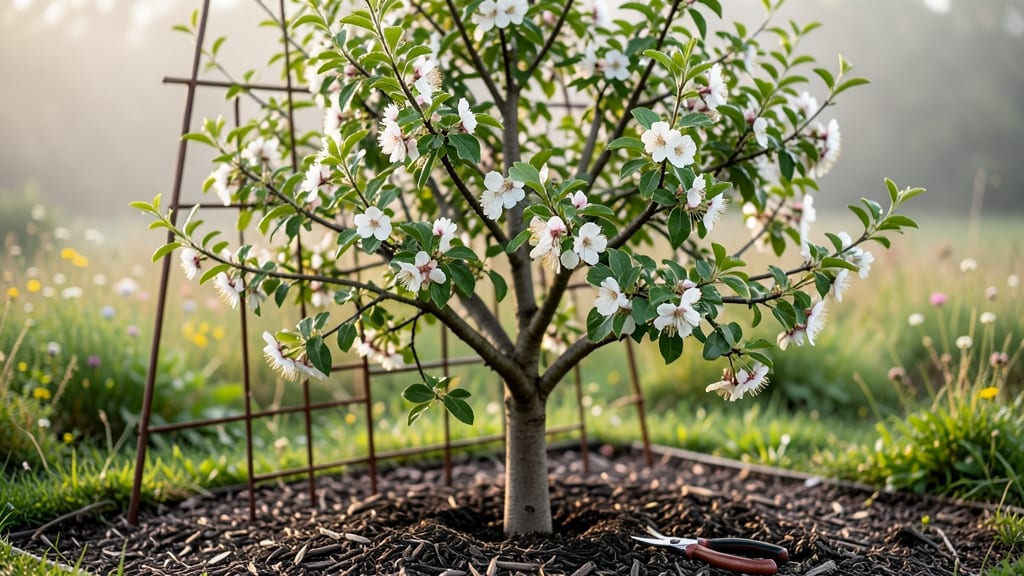
The Tilton apricot tree thrives in the Pacific Northwest's chilly springs, and I've learned its frost-resistant secrets after years of trial and error. 🌱 This reliable variety produces sweet, golden fruit even when late frosts threaten other apricots—if you prune it the right way.
The key isn't just when to cut, but how to shape the tree so cold air doesn't linger in vulnerable spots.
You'll need sharp pruners, a sunny planting site with afternoon shade, and 3-5 gallons of water weekly once established. Tilton apricots prefer well-draining soil with a pH of 6.0-7.0, and they reward proper care with 200-300 pounds of fruit per tree at maturity.
The real magic happens in winter pruning, when you open the canopy to let sunlight warm the center and prevent frost pockets.
By late summer, you'll be harvesting fragrant, deep-orange apricots that taste sweeter than store-bought varieties. The trees live 20+ years with proper care, and their disease resistance means fewer sprays than most fruit trees. We'll cover the exact pruning cuts that keep your tree productive through PNW winters—no guesswork involved.
This method works for both new plantings and established trees, though younger specimens need more aggressive shaping. The same principles apply whether you're growing in a home orchard or a large container. Let's get those branches in shape for next year's harvest!
📚 In This Guide
- What you need
- Instructions
- Tips and common mistakes
- Wrapping up and next steps
What you need
- ● Pruning shears: Sharp, bypass-style shears (for clean cuts on ½-inch branches). Quantity: 1 pair.
- ● Loppers: Heavy-duty, bypass or anvil-style (for branches ¾–1½ inches thick). Quantity: 1 pair.
- ● Pruning saw: Curved-tooth saw for branches >1½ inches thick. Quantity: 1.
- ● Disinfectant (70% isopropyl alcohol or bleach solution): To sterilize tools between cuts and prevent disease.
- ○ Pruning sealant (optional but recommended): Tree wound paint for cuts >½ inch in diameter (½ pint jar).
- ● Work gloves: Heavy-duty, cut-resistant gloves (e.g., Mechanix or leather). Quantity: 1 pair.
- ● Ladder or step stool: Sturdy, non-slip (6–8 ft tall for mature trees). Quantity: 1.
- ● Marking twine or flags: For tagging branches to remove (10–20 ft roll).
- ● Trash bags or bucket: For collecting pruned branches (5–10 gallon capacity).
- ● Handheld leaf blower: Clears debris post-pruning (great for large trees!).
- ● Pruning rope: For lowering heavy branches (10–15 ft length).
- ● Safety goggles: Protects eyes from sawdust or falling debris.
- ● Notebook & pen: To jot down pruning notes or sketch the tree’s structure.
- ○ Tree growth regulator (e.g., Apogee): Optional for post-pruning care (follow label instructions).
Step-by-step pruning guide for Tilton apricot trees in cold climates
Here's the method I've used for years to keep Tilton apricot trees thriving despite PNW winters.
🌿 Step 1: Time Your First Cut for Late Winter Dormancy
Prune your Tilton apricot tree during its dormant season, between mid-February and early March when temperatures consistently stay above 32°F but before buds begin swelling. This timing ensures you remove dead wood while avoiding late frosts that could damage fresh cuts. Look for bare branches with no green tissue - that's your visual cue the tree is fully dormant.
I always wait until we've had at least three consecutive days above freezing to be safe. The Tilton variety is more frost-resistant than other apricots, but it still needs this protection. Use sharp pruning shears to make clean cuts at a 45-degree angle just outside the branch collar - the swollen area where the branch meets the trunk.
✂️ Step 2: Remove Problem Branches Using the "Three D's" Method
Focus on eliminating branches that are dead, diseased, or damaged first. Dead branches will be completely gray or brown with no green underneath when you scrape the bark. Diseased branches often have blackened cankers or oozing sap. Cut these back to healthy wood immediately to prevent pathogen spread to other branches.
Next, remove crossing branches where limbs rub together - these create wounds that invite infection. Also eliminate branches growing straight upward ("water sprouts") as they compete with fruit-bearing branches. Make your cuts just above an outward-facing bud to encourage proper growth direction. The Tilton's natural vigor means it can handle aggressive pruning, but never remove more than one-third of the canopy in a single season.
☀️ Step 3: Open the Canopy for Sunlight and Airflow
Thin out the center of the tree to create an open vase shape that allows sunlight to penetrate to the interior branches. Aim for a structure where you can see light through the canopy from all sides. Start by removing branches that grow inward toward the center of the tree - these create dense shade that prevents fruit development.
Leave the strongest, most vigorous branches that form a natural framework. For Tilton apricots, I typically maintain 5-7 main scaffold branches spaced evenly around the trunk. Each scaffold branch should have its own branch system rather than competing with others. This open structure dramatically improves fruit quality and reduces disease pressure by allowing air to circulate.
⏰ Step 4: Summer Pruning for Fruit Development
After the main harvest in early summer, conduct a light pruning session in late July or August to shape the tree and encourage next year's fruit buds. Remove any suckers growing from the base of the tree and any branches that grew excessively during the season. Look for branches that are growing too vigorously at the expense of fruit production - these often appear as long, whip-like shoots with few leaves.
Also remove any fruit spurs (small clusters of buds) that appear on branches growing at sharp angles. These typically produce poor-quality fruit. Make your cuts just above a leaf bud that faces outward. This summer pruning helps redirect the tree's energy toward developing strong fruit buds for next season rather than excessive vegetative growth.
🌱 Step 5: Winter Protection for Young Trees
For Tilton apricot trees in their first 3-4 years, provide additional winter protection by wrapping the trunk with tree wrap or burlap after your late winter pruning. This protects against sunscald that can occur when winter sun warms the bark followed by freezing nights. Also consider installing tree guards to prevent rodent damage to the trunk.
Mulch the base of the tree with 3-4 inches of wood chips, keeping the mulch 6 inches away from the trunk to prevent rot. This helps insulate roots during winter freezes. For established trees, focus on maintaining good air circulation by keeping grass and weeds trimmed back within a 3-foot radius of the trunk. The Tilton's cold hardiness means it can handle PNW winters better than other apricots, but these simple protections ensure maximum productivity year after year.
Tips & tricks for pruning Tilton apricot trees in cold climates
These essential techniques will help you maintain a healthy, productive Tilton apricot tree year after year—especially in challenging PNW winters.
Timing is Everything: The mid-February to early March window for pruning is critical for Tilton apricots. I've learned the hard way that waiting until buds swell (around late March) can expose fresh cuts to late frosts, which slows healing. Check the forecast for those three consecutive days above 32°F—this is your green light to prune. The tree's natural dormancy makes this the perfect time to remove dead wood without stressing the plant.
Tool Precision Matters: Never use dull pruning shears—they tear bark rather than making clean cuts. I invest in bypass pruners for larger branches and sharp hand pruners for smaller ones. Make your cuts at a 45-degree angle just outside the branch collar (that swollen area where the branch meets the trunk). This technique promotes faster healing and prevents disease entry points. For branches thicker than your wrist, use a pruning saw for clean cuts.
Canopy Structure Secrets: The open vase shape you create in Step 3 isn't just about looks—it's about fruit quality. Tilton apricots need sunlight to penetrate all the way to the center branches. When thinning, aim to remove branches that grow inward at angles steeper than 45 degrees. Leave those 5-7 main scaffold branches spaced evenly—they'll form your tree's framework. This structure reduces disease pressure by improving airflow, which is especially important in damp PNW winters.
Summer Pruning Strategy: That late July or August session isn't just about cleanup—it's about fruit development for next year. Look for those whip-like shoots growing at sharp angles; these often produce poor-quality fruit. By removing them, you're telling the tree to focus its energy on developing strong fruit buds. I always make these cuts just above an outward-facing leaf bud to encourage proper growth direction. This timing also prevents summer stress on the tree.
Pro Tips for Tilton Apricot Tree
- These essential techniques will help you maintain a healthy, productive Tilton apricot tree year after year—especially in challenging PNW winters.
- Timing is Everything: The mid-February to early March window for pruning is critical for Tilton apricots.
- Tool Precision Matters: Never use dull pruning shears—they tear bark rather than making clean cuts.
Frequently asked questions
How cold-hardy is the Tilton apricot tree compared to other varieties?
The Tilton apricot tree is one of the most frost-resistant apricot varieties, tolerating temperatures as low as -15°F (-26°C). Unlike traditional apricots, which struggle below 10°F (-12°C), Tilton thrives in the Pacific Northwest’s chilly winters. Its cold hardiness is due to its Prunus armeniaca lineage, bred specifically for Zone 5-8 climates.
When is the best time to prune a Tilton apricot tree for maximum fruit yield?
Prune your Tilton apricot tree late winter or early spring (February–March), just before buds swell but before new growth starts. Avoid pruning in fall or winter when the tree is dormant, as this can invite disease. Light summer pruning (after harvest) can remove water sprouts, but avoid heavy cuts—this stresses the tree.
How much should I prune a young Tilton apricot tree in its first few years?
For young trees (1–3 years old), aim to remove 20–30% of the canopy to encourage strong branch structure. Focus on:
- Dead, crossing, or diseased branches
- Suckers growing from the base
- Weak, inward-growing branches
Can I grow a Tilton apricot tree in a container, or does it need to be planted in the ground?
The Tilton apricot tree prefers permanent in-ground planting because its root system grows large over time. However, if you’re in a small space, a 5-gallon container may work for 1–2 years—just ensure it’s at least 18 inches deep and use well-draining soil. Containers limit root growth, which can reduce cold hardiness and fruit production long-term.
What pests or diseases should I watch for in my Tilton apricot tree, and how do I prevent them?
Common issues include:
- Peach leaf curl (fungal): Prune infected leaves in late winter and apply copper fungicide before buds swell.
- Aphids/mites: Spray with neem oil or introduce ladybugs for natural control.
- Borers: Keep the tree healthy with proper watering and pruning to deter infestations.
Will Tilton apricots ripen fully if planted in a very cold microclimate (e.g., Zone 5)?
Yes! Tilton apricots are self-pollinating and can ripen in cooler climates, but fruit may develop earlier than in warmer zones (late July–early August vs. August–September). To extend the season, plant near a south-facing wall or use frost cloth on blossoms during late frosts. Harvest when fruit is soft, golden-orange, and easily detaches.
Wrapping up and next steps
Growing a Tilton apricot tree in the Pacific Northwest is absolutely doable—especially with its frost-resistant charm! By following the right pruning blueprint, you’ll encourage a healthier tree, better fruit production, and that sweet, golden harvest you’ve been dreaming of. 🌱✨
Now that you’re armed with the tools, timing, and techniques, take the next step: schedule your first pruning session this winter or early spring.
Grab your pruners, put on your gardening gloves, and get ready to shape your Tilton apricot tree into a thriving, fruit-bearing powerhouse! Happy pruning! 🌳🍑