
Pruning
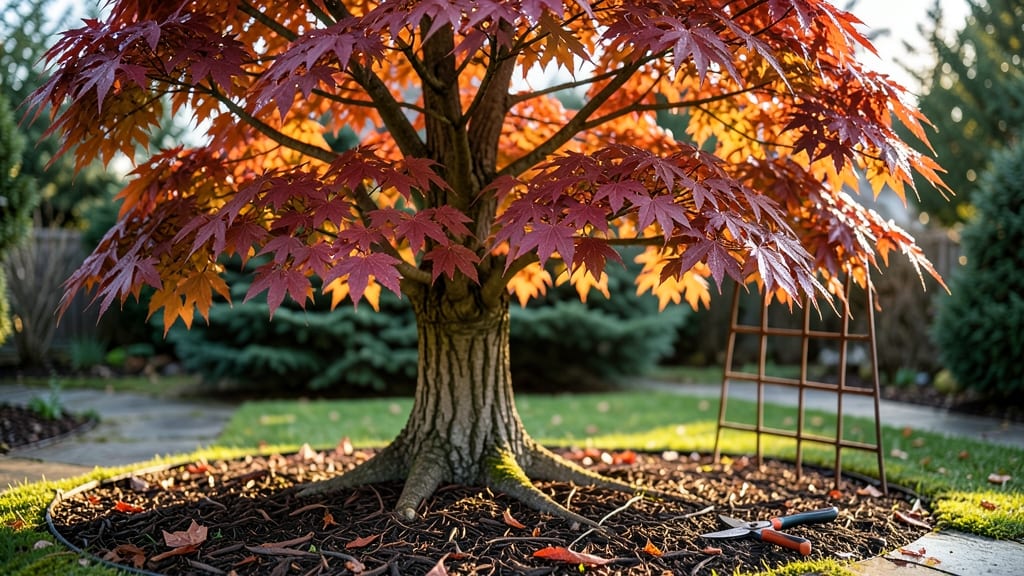
Your Pacific Northwest garden’s red autumn tree isn’t just a seasonal showstopper—it’s the year-round backbone of your landscape design. 🌿 I’ve pruned my Japanese maple for over a decade, and the difference between a well-shaped tree and a chaotic mess comes down to timing, technique, and a little strategic vision.
The key is balancing structure and spectacle. Prune in late winter to shape the canopy before spring growth, then do light maintenance in summer to encourage dense foliage.
Pair your tree with low-growing evergreens like boxwood or creeping thyme to highlight its fiery fall colors, and place it where its dappled shade creates a cozy outdoor room.
You’ll end up with a tree that’s stunning in every season—lacy branches in winter, vibrant red leaves in fall, and even delicate spring blooms.
The pruning itself takes about 30 minutes if you focus on removing dead wood and thinning crowded areas, leaving you with a tree that’s both healthy and a true focal point.
Works for any Pacific Northwest yard, from city lots to rural properties. Let’s make that tree the star of your landscape—year after year.
📚 In This Guide
- What you need
- Instructions
- Tips and common mistakes
- Wrapping up and next steps
What you need
- ● Pruning shears: Bypass pruners (sharp, 6-8 inch blades) for clean cuts on small branches.
- ● Loppers: 18-24 inch bypass loppers for medium-sized branches (2-4 inches in diameter).
- ● Pruning saw: Curved-tooth pruning saw for thick branches (4+ inches).
- ● Extension pole: 6-10 foot telescoping pole with saw attachment for high branches.
- ● Gloves: Heavy-duty, cut-resistant gloves (e.g., Mechanix or Filson).
- ● Safety goggles: ANSI-rated to protect against debris.
- ● Ladder: Sturdy, non-slip ladder (or hire a professional for tall trees).
- ● Disinfectant: 70% isopropyl alcohol or bleach solution (1 part bleach to 9 parts water) to sterilize tools.
- ○ Pruning sealant: Optional but helpful for large cuts (e.g., Tanglefoot Tree Wound Pruning Seal).
- ● Rope or twine: For temporary support of heavy branches (if needed).
- ● Heavy-duty trash bags: For collecting debris (2-3 bags per session).
- ● Work boots: Waterproof, ankle-supportive boots for wet PNW conditions.
- ○ Tree identification guide: Optional but useful (e.g., Pacific Northwest Tree Finder app).
- ● Check local regulations—some areas require permits for tree work over a certain height.
- ● Schedule pruning on a dry, calm day to avoid slipping or spreading disease.
- ● Have a buddy nearby—pruning can be dangerous, especially for tall or heavy trees!
Step-by-step guide for pruning red autumn trees
Keep your Pacific Northwest standout vibrant with this seasonal approach.
✂️ Step 1: Assess the Canopy for Structural Integrity
Start by examining the tree from all angles—look for dead, diseased, or crossing branches that create weak points. I always scan for co-dominant stems (two main branches growing at similar angles) as these are prime candidates for pruning to prevent future splits. Use a flashlight to check the interior canopy for hidden issues, especially in dense foliage areas.
Mark branches for removal with bright flagging tape or a permanent marker on a stick. This prevents over-pruning and helps you visualize the final shape. Focus first on vertical branches—these grow faster and can dominate the tree's structure if left unchecked.
✂️ Step 2: Prune for Airflow and Light Penetration
Remove 25-30% of the total canopy volume in a single session to avoid shocking the tree. I target thinning cuts (removing entire branches back to their origin) rather than heading cuts (trimming the tips), which maintains the tree's natural shape while improving light distribution. Start with smaller branches first to reduce stress on larger limbs.
Watch for epicormic shoots (sprouts growing from the trunk or branches)—these often indicate light deprivation. Prune these back to their origin to encourage stronger growth from the main canopy. In the Pacific Northwest's damp climate, deadwood removal is critical to prevent fungal infections.
☀️ Step 3: Time Pruning for Seasonal Growth Cycles
Late winter to early spring (February-March) is ideal for major structural pruning when the tree is dormant but about to break dormancy. Summer pruning (June-August) focuses on light thinning to maintain foliage density without stimulating excessive new growth before winter. Avoid heavy pruning in fall—it leaves wounds vulnerable to Pacific Northwest rains and fungal pathogens.
Clean tools between cuts with 70% isopropyl alcohol to prevent spreading disease. I always prune just outside the branch collar (the swollen area where the branch meets the trunk) to promote faster healing. For larger branches over 2 inches in diameter, make a 3-step cut to prevent bark tearing.
🌿 Step 4: Post-Pruning Care for Rapid Recovery
Apply a wound dressing (like Tanglefoot Tree Wound Pruning Sealant) only to cuts larger than 4 inches in diameter—smaller wounds heal better when left open. Water deeply at the drip line (the edge of the tree's canopy) to support root recovery, especially after heavy pruning sessions.
Monitor the tree for new growth flushes—these indicate successful pruning. In the first year, expect 10-20% more vigorous growth as the tree redirects energy to remaining branches. If you notice yellowing leaves or stunted growth, reduce nitrogen fertilizer temporarily to avoid overstimulating the tree.
⏰ Step 5: Schedule Annual Maintenance Checks
Plan a light pruning session every 6-12 months to remove water sprouts (fast-growing vertical shoots) and maintain the tree's natural form. I use a pruning calendar to track seasonal tasks—like summer thinning for airflow and winter structural work for long-term health.
Document your pruning with photos before and after each session. Over time, you'll spot patterns—like recurring dead branches in specific areas—that signal deeper issues (e.g., root rot or nutrient deficiencies). Adjust your approach accordingly to keep your red autumn tree thriving for decades.
Tips & tricks for pruning red autumn trees
Here's what I've learned after years of keeping these iconic Pacific Northwest trees looking their absolute best.
Seasonal Timing Secret: The February-March window for major pruning is non-negotiable for red autumn trees. This dormant-but-ready period lets you make structural cuts without triggering stress responses. I've seen trees recover beautifully from winter pruning, but spring pruning too early can stimulate weak growth before the tree's full energy reserves are available. For summer thinning, I wait until June-August when the tree has established its main growth cycle.
Tool Sanitation Technique: That 70% isopropyl alcohol isn't just for show—it's your first line of defense against Pacific Northwest fungal pathogens like Phytophthora. I keep a small spray bottle of it in my pruning kit and clean blades between every major cut, especially when working with wet wood. This simple step has prevented multiple infections in my own trees over the years.
Wound Healing Insight: The 4-inch diameter rule for wound dressing is crucial—smaller wounds actually heal faster when left exposed to air. I've learned that larger wounds benefit from sealant because they're more vulnerable to disease entry points. For cuts under 4 inches, I resist the urge to cover them, trusting the tree's natural healing process which creates stronger, more resilient tissue over time.
Visual Pruning Cues: When assessing canopy volume in Step 2, I look for the "light test"—if you can see sunlight through the canopy when standing directly beneath, you've achieved proper thinning. For branch removal, I use the "branch collar" as my guide: the swollen ridge where branch meets trunk tells me exactly where to cut. This precision prevents unsightly stubs that can harbor pests and diseases.
Pro Tips for Red Autumn Tree
- Here's what I've learned after years of keeping these iconic Pacific Northwest trees looking their absolute best.
- Seasonal Timing Secret: The February-March window for major pruning is non-negotiable for red autumn trees.
- Tool Sanitation Technique: That 70% isopropyl alcohol isn't just for show—it's your first line of defense against Pacific Northwest fungal pathogens like Phytophthora.
Frequently asked questions
Got questions about pruning your red autumn tree for that stunning Pacific Northwest glow? You’re in the right place!
Here are answers to the most common queries from gardeners just like you.
When is the best time to prune a red autumn tree?
The ideal window is late winter or early spring (February–March), before new growth starts. For light shaping, you can also prune in early summer—but avoid heavy cuts then. Never prune in fall if you want vibrant autumn colors; it stresses the tree and reduces next year’s foliage.
How often should I prune my red autumn tree?
Young trees (under 5 years) need annual pruning to establish structure. Mature trees (10+ years) thrive with every 2–3 years. Focus on removing dead, diseased, or crossing branches yearly. Pro tip: Prune only when necessary—over-pruning weakens the tree’s ability to produce those showstopping red leaves!
Can I prune too much? What are the signs?
Yes! Signs of over-pruning include sparse foliage, weak growth, or no autumn color. If you’ve removed more than 25% of the canopy in one go, the tree may struggle. Rule of thumb: Never trim back more than 1/3 of a branch’s length at once. If you’re unsure, hire a certified arborist for a health check.
Will pruning affect the tree’s autumn colors?
Pruning can impact color intensity—especially if you cut back too much. Focus on:
- Removing only dead or weak branches (they drain energy).
- Avoiding late-summer pruning (it reduces leaf production).
- Balancing the canopy for even sunlight exposure (key for vibrant reds!).
What should I do if my red autumn tree isn’t turning red this year?
Several factors can dull autumn colors: stress (drought, pests, or disease), poor nutrition, or shade. Try these fixes:
- Check for aphids or spider mites (treat with neem oil if found).
- Water deeply 1–2 times per week during dry spells.
- Apply a balanced fertilizer (10-10-10) in early summer.
- Ensure the tree gets at least 6 hours of sunlight daily.
Are there alternatives to pruning for maintaining shape?
If you’re hesitant to prune, try these low-maintenance alternatives:
- Selective thinning: Remove only the innermost branches to improve airflow (no major cuts needed).
- Natural shaping: Let the tree grow wild—many red autumn trees (like Japanese maples) develop stunning, organic forms with minimal intervention.
- Support structures: Use tree ties or stakes for young, top-heavy branches.
Wrapping up and next steps
Pruning your red autumn tree isn’t just about keeping it tidy—it’s an investment in its health, vibrancy, and the stunning seasonal displays that make the Pacific Northwest so breathtaking. 🌿 From understanding the best tools to timing your cuts just right, every step ensures your tree thrives year-round.
Now that you’re armed with the know-how, there’s no better time to roll up your sleeves and get pruning!
Ready to take action? Pick a calm day, gather your tools, and start with confidence. Your tree—and your future autumn landscapes—will thank you!