Pruning
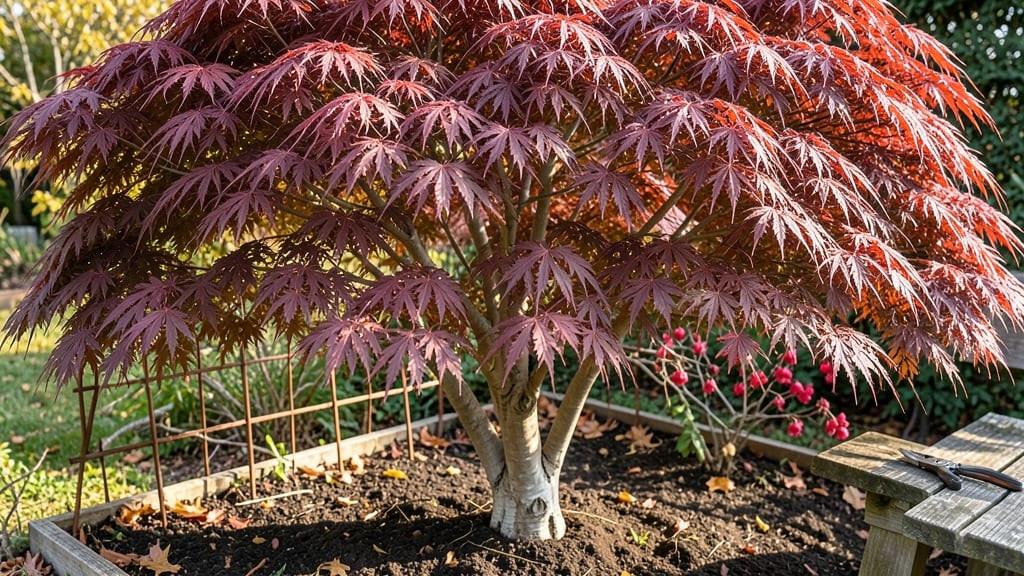
Pruning a crimson Japanese maple tree reveals its true architectural beauty—especially when you protect it from Pacific Northwest winters. The key is understanding how this tree responds to cuts, from late winter's dormant season to summer's lush growth.
I've learned that aggressive pruning can stress these delicate trees, while gentle shaping preserves their signature burgundy foliage and graceful form.
This tree thrives in partial shade with morning sun, where its leaves develop their richest colors. In the PNW's damp climate, proper pruning prevents fungal issues while encouraging dense branching. Start with clean cuts just above leaf nodes, removing no more than 25% of the canopy in any single season.
The goal is to maintain an open center that lets light penetrate to the inner branches.
Your reward comes in late summer when the foliage deepens to almost black-purple, and in autumn when fiery reds emerge. With the right pruning rhythm—light in summer, structural in winter—your tree will develop a sturdy framework that survives our frosty winters.
The secret lies in patience: small, strategic cuts build resilience over time.
For PNW gardeners, timing matters most. Prune lightly after spring flushes, avoid heavy cuts in fall, and always sterilize tools between cuts. This approach keeps your crimson maple looking like a masterpiece year after year, not a stressed specimen struggling to recover.
The results? A tree that becomes the centerpiece of your landscape, season after season.
📚 In This Guide
- What you need
- Instructions
- Tips and common mistakes
- Wrapping up and next steps
What you need
- ● Bypass pruners: Sharp, high-quality pruners (e.g., Felco or Fiskars) for clean cuts on small branches (¼" to ¾" diameter). Quantity: 1 pair.
- ● Loppers: For medium branches (¾" to 1½" diameter). Look for ratcheting loppers for extra leverage. Quantity: 1 pair.
- ● Pruning saw: A curved-tooth saw (e.g., Bahco or Corona) for thick branches (1½" and larger). Quantity: 1.
- ● Extension pole: A 6–10 ft. pole saw or pruner for high branches. Quantity: 1.
- ● Ladder: Sturdy, non-slip ladder (e.g., aluminum extension ladder, 12–16 ft.). Quantity: 1.
- ● Gloves: Heavy-duty, cut-resistant gloves (e.g., Mechanix or garden gloves with reinforced palms). Quantity: 1 pair.
- ● Pruning sealant: Tree wound pruning paste (e.g., Tanglefoot Tree Wound Pruning Sealant) for large cuts. Quantity: Small jar.
- ● Disinfectant: 70% isopropyl alcohol or bleach solution (1 part bleach to 9 parts water) to sterilize tools between cuts. Quantity: Small spray bottle.
- ● Safety gear: Goggles, long sleeves, and closed-toe shoes to protect from sap and debris.
- ● Tarps or drop cloths: To catch fallen branches or debris (especially useful for urban yards!).
- ● String or twine: For marking branches to remove or tying young branches for training.
- ● Tree growth regulator: (e.g., Apogee or Prohibit) to reduce stress if pruning heavily in late summer/fall.
- ● Camera or sketchpad: To document the tree’s structure before pruning—great for planning!
- ● Know your maple: Confirm it’s a crimson Japanese maple (Acer palmatum 'Bloodgood' or similar)—these are sensitive to over-pruning! Research its growth habits and Pacific Northwest-specific needs.
- ● Timing matters: Prune dormant season (late fall/winter) for frost survival, but avoid heavy pruning in spring when sap flows vigorously.
- ● Weather check: Choose a dry, calm day—never prune during wet or windy conditions.
- ● Sterilize tools: Always disinfect between cuts to prevent disease spread (especially important in the PNW’s damp climate!).
Step-by-step guide to pruning your crimson Japanese maple for Pacific Northwest resilience
Here's how I've kept my maples thriving through wet winters and dry summers—no guesswork, just proven techniques.
✂️ Step 1: Time Pruning for Frost Protection and Spring Growth
Late winter is your best window—prune just before buds swell but before new growth starts, usually mid-February to early March in the Pacific Northwest. This timing lets the tree heal before spring rains arrive. I avoid pruning in fall because fresh cuts won't harden before winter frost, making branches more vulnerable to cold damage.
If you must prune in summer, do it after July 15th when temperatures stay above 60°F for at least a week. Summer cuts heal faster in warm conditions, but they won't have the same frost resistance as winter-pruned wood. Always use sterilized pruners—Japanese maples are prone to fungal infections through open wounds.
✂️ Step 2: Remove Dead, Diseased, and Crossing Branches First
Start by eliminating any branches that are dead, diseased, or rubbing against others. These are your priority—healthy wood can't compensate for weak structure. Look for branches with brown, brittle ends or peeling bark, and any that cross at sharp angles (they'll eventually wound each other). Cut these back to the collar, the swollen area where the branch meets the trunk.
Don't leave stubs—this invites decay. Make clean cuts at a 45-degree angle just outside the branch collar. If a branch is larger than 1/3 the trunk diameter, make a second cut from the underside to avoid tearing the bark. I mark these branches with flagging tape first so I don't accidentally prune healthy growth later.
✂️ Step 3: Thin the Canopy for Airflow and Light Penetration
Japanese maples need good airflow to prevent fungal diseases like anthracnose, which thrives in damp, shaded conditions. Remove 10-20% of the canopy by selecting branches that allow light to reach the inner foliage. Focus on branches growing inward or downward—they block sunlight and create a humid microclimate where pests love to hide.
Use the "third cut" method for larger branches: First, make an undercut about 12 inches out from the trunk. Then cut just outside the branch collar from the top. Finally, remove the remaining stub. This prevents bark from tearing. Step back often to check your progress—you want to see light filtering through to the lower branches.
✂️ Step 4: Shape for Balance and Winter Wind Resistance
Crimson Japanese maples have a natural, graceful form, but avoid heavy shaping cuts—these stress the tree and reduce frost hardiness. Instead, make small adjustments to maintain the tree's open, vase-like structure. Remove only the outermost tips of branches that disrupt the silhouette, cutting just above a outward-facing bud.
Pay special attention to the top of the tree—this is where wind damage often starts. If the canopy is too dense, the weight of snow and ice can break branches. I like to leave scaffold branches (major structural limbs) uncut unless they're diseased, as these provide the best support. After pruning, water deeply to help the tree recover.
⏰ Step 5: Post-Pruning Care for Pacific Northwest Conditions
Apply a 2-inch layer of organic mulch (like shredded bark) around the base, keeping it 6 inches away from the trunk. This protects roots from winter frost heaves and retains moisture during our dry summers. Avoid piling mulch against the trunk—this can cause rot.
Monitor the tree for new growth in early spring. If you see vigorous shoots emerging from old cuts, it means the tree is compensating for lost foliage. In the first year after major pruning, I fertilize lightly with balanced 10-10-10 in early spring to support recovery. Avoid heavy fertilizers—they encourage tender growth that's more susceptible to frost damage.
Tips & tricks for perfect crimson Japanese maple pruning
These practical insights will help you prune your maple like a pro—especially when navigating our unpredictable Pacific Northwest climate.
Timing is Everything: The mid-February to early March window is non-negotiable for winter pruning. I've learned this the hard way—pruning too early exposes fresh cuts to late winter frosts, while waiting too long stresses the tree as buds swell. For summer pruning after July 15th, check your local forecast first. If we get an unexpected cold snap below 60°F, delay until temperatures stabilize for at least a week to prevent shock.
Tool Preparation Matters: Sterilize your pruners with rubbing alcohol before each cut—Japanese maples are particularly susceptible to fungal infections through open wounds. I keep a small bottle of 70% isopropyl alcohol in my gardening toolkit and wipe blades before every session. For larger branches, use a sharp bypass pruner rather than anvil pruners, which can crush the wood and create larger entry points for disease.
Visual Cues for Proper Cuts: When making your 45-degree cuts just outside the branch collar, look for the slight swelling where the branch meets the trunk. This collar contains healing compounds that help the wound seal faster. For branches larger than 1/3 the trunk diameter, make your undercut about 12 inches out—this prevents bark tearing when you make your final cut. I always step back after each major cut to check the tree's balance and ensure I'm maintaining that graceful vase shape.
Pacific Northwest-Specific Adjustments: Our region's wet winters and dry summers demand special attention. After pruning, I always check for signs of anthracnose (the telltale brown spots) in spring. If you notice this fungal disease, apply a copper fungicide as a preventative measure. Also, avoid heavy pruning in years with particularly wet springs—the extra moisture gives fungal spores more opportunities to infect fresh cuts.
Pro Tips for Crimson Japanese Maple Tree
- These practical insights will help you prune your maple like a pro—especially when navigating our unpredictable Pacific Northwest climate.
- Timing is Everything: The mid-February to early March window is non-negotiable for winter pruning.
- Tool Preparation Matters: Sterilize your pruners with rubbing alcohol before each cut—Japanese maples are particularly susceptible to fungal infections through open wounds.
Frequently asked questions
about pruning your crimson Japanese maple tree—especially in the chilly Pacific Northwest—can save you time and heartache. Here are answers to the most common queries from gardeners just like you!When is the best time to prune my crimson Japanese maple in the PNW?
The ideal window is late winter to early spring (February–March), just before new growth begins. Avoid pruning in fall or winter, as cold snaps can stress the tree. If you must prune in summer, do so early (June) and keep cuts small to minimize sap loss. Pro tip: Never prune after mid-summer—it encourages tender growth that won’t survive PNW frosts.
Can I prune my crimson Japanese maple in winter?
It’s risky! Winter pruning (December–January) can expose fresh cuts to harsh PNW winds and frost, increasing the chance of dieback or disease. If you must prune in winter, wait until a mild spell (above 40°F) and avoid heavy cuts. Better yet: Wait for spring when the tree’s energy is revving up naturally.
How much can I prune my crimson Japanese maple safely?
Stick to the “rule of thumb”: Never remove more than 15–25% of the canopy in a single year. Japanese maples are sensitive to over-pruning, especially in the PNW’s damp climate. For mature trees, spread pruning over 2–3 years to avoid stress. Watch for: Yellowing leaves or slow regrowth—signs you’ve pruned too much!
What should I do if my crimson Japanese maple’s leaves turn brown after pruning?
Brown leaves post-pruning often signal stress, but don’t panic! If it’s only the new growth, the tree may just need time to recover. If older leaves brown, check for:
- Underwatering (maples hate dry soil—keep it moist but not soggy).
- Fungal issues (prune in dry weather; sterilize tools with rubbing alcohol).
- Sunburn (if you thinned too much, the tree may need shade temporarily).
Fertilize lightly with acidic, iron-rich soil if growth stalls.
Are there alternatives to pruning for shaping my crimson Japanese maple?
If you’re wary of pruning, try these low-impact methods:
- Training young trees: Guide branches with stakes or ties while they’re flexible.
- Selective thinning: Remove only crossing or weak branches to improve airflow.
- Topiary (for experienced gardeners): Use shears for soft, sculpted shapes—but avoid heavy cuts.
Remember: Japanese maples respond best to gentle guidance over time. Patience pays off with stunning, frost-resistant foliage!
Wrapping up and next steps
The crimson Japanese maple tree is a stunning addition to any Pacific Northwest garden, but its beauty thrives on thoughtful care—especially when it comes to pruning. By mastering year-round shaping techniques and protecting it from frost, you’ll ensure vibrant foliage, strong growth, and long-term health.
Whether you’re trimming in winter, summer, or spring, the key is patience and precision.
Ready to elevate your tree’s potential? Start small—pick one season to refine your skills, then gradually expand your approach. With each cut, you’re not just shaping a tree; you’re cultivating a living masterpiece that will reward you (and your neighbors!) for years to come. 🌿✨