
Pruning
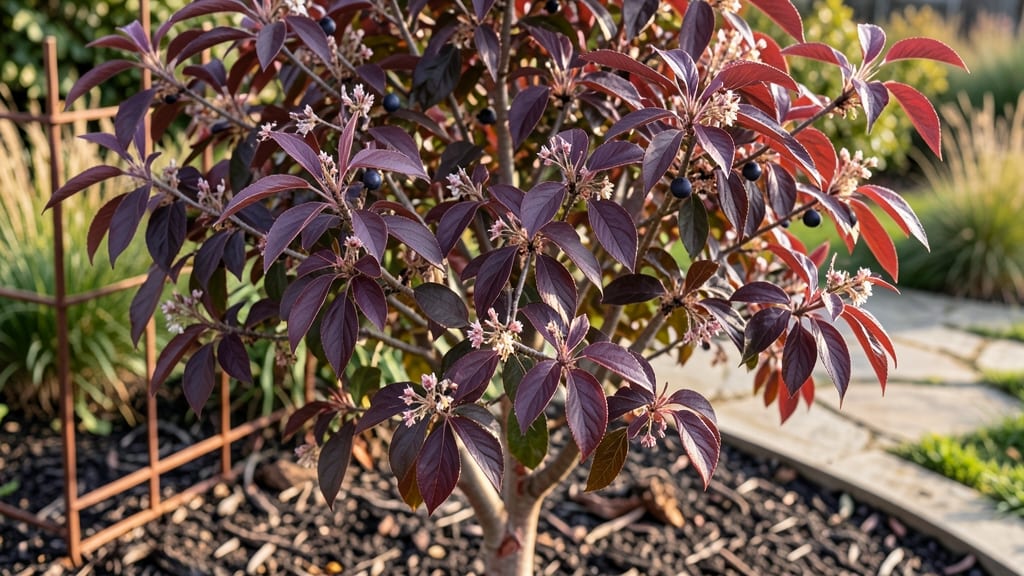
Late-winter pruning transforms your purple leaf peach tree from a tangled mess into a showstopper with vibrant foliage and heavy fruit.
I’ve pruned mine every February for five years now, and the difference is shocking—deep purple leaves emerge earlier, and the branches open up to catch sunlight for better fruit set. The key is timing: wait until the coldest snap has passed but before new growth starts.
You’ll need sharp bypass pruners, a 3-foot ladder (if branches are high), and a bucket for clippings. The goal is to remove one-third of last year’s growth, focusing on crossing branches, dead wood, and inward-growing shoots.
Thin the center out a bit too—this tree hates shade, and open air improves both fruit quality and that stunning purple hue. Think of it as giving your tree a spa day before spring.
What you’ll end up with is a tree that looks like it belongs in a botanical garden, not your backyard. The new growth will be glossy and rich, the branches will spread beautifully, and you’ll see more peaches than ever before.
Plus, the pruning wounds heal faster in late winter, so you avoid the summer diseases that plague over-pruned trees. This is the secret to keeping your purple leaf peach tree looking—and producing—its best.
Works in zones 5-9, though colder climates may need extra winter protection. If you’ve ever looked at your tree in late winter and thought, "This could be better," this is your sign to grab those pruners.
The transformation is worth the 30 minutes of effort—trust me, your neighbors will notice first.
📚 In This Guide
- What you need
- Instructions
- Tips and common mistakes
- Wrapping up and next steps
What you need
- ● Pruning shears: Sharp, bypass-style shears (for cuts under ½ inch thick). Example: Felco F-2 or Corona bypass pruners.
- ● Loppers: For thicker branches (½ to 1½ inches). Look for ratcheting loppers for extra leverage.
- ● Pruning saw: A curved-tooth saw for branches over 1½ inches in diameter.
- ● Disinfectant: 70% isopropyl alcohol or a pruning sealant (like Tanglefoot Tree Wound Pruning Sealer) to prevent disease spread.
- ● Gloves: Heavy-duty, cut-resistant gloves (e.g., Mechanix Wear or gardening-specific gloves).
- ● Safety gear: Safety glasses and long sleeves/pants to protect from thorns and debris.
- ○ Marking twine or flags: For tagging branches to prune (optional but helpful for complex trees).
- ● Bucket or tarp: To collect pruned branches and debris.
- ● Pruning paint: For sealing large cuts (e.g., dormant pruning sealant with copper fungicide).
- ● Step stool or ladder: For reaching higher branches safely.
- ● Tree pruning rope: To stabilize the tree while working.
- ● Notebook & pen: To sketch your pruning plan or track progress.
- ● Compost bin: For repurposing small branches as mulch.
Instructions for pruning your purple leaf peach tree
This is how I restore balance, boost fruit production, and keep those stunning purple leaves vibrant.
Gather Tools and Assess the Tree
First, grab your sharp pruning shears and loppers—dull blades tear bark and invite disease. I always sterilize them with rubbing alcohol before starting, especially if the tree showed signs of infection last season. Wear gloves too; peach trees can have thorns that pack a punch.
Stand back and examine the tree's structure. Look for dead, crossing, or rubbing branches—these are your first targets. You'll also spot where last year's growth created a tangled mess. The goal is to open the canopy to sunlight and air, which prevents fungal issues and improves fruit quality.
Remove Dead and Problem Branches
Start by cutting out any branches that are completely brown, brittle, or devoid of leaves. These are dead and won't produce fruit or foliage. Make your cuts just outside the branch collar—the swollen area where the branch meets the trunk. This ensures the tree seals the wound properly.
Next, remove branches that cross or rub against others. These create wounds that invite pests and disease. If two branches are growing toward each other, cut the weaker one at its base. You'll know it's weaker if it's thinner or grows from a smaller branch. Always cut back to a healthy bud or lateral branch.
Thin Out the Canopy for Airflow
Now focus on thinning the interior branches to let light and air circulate. Aim to remove about 20-30% of the smaller branches inside the tree. You're creating space so sunlight reaches the center, which is where those purple leaves will shine brightest. Start from the bottom and work your way up.
Look for branches that grow straight up or inward. These are called "water sprouts" or "suckers," and they steal energy from fruit production. Cut them back to a lateral branch or bud that faces outward. This encourages the tree to grow stronger, outward-facing branches that produce more fruit and vibrant foliage.
Shape for Balance and Fruit Production
Step back and assess the tree's overall shape. The goal is a balanced, open-centered structure with a slightly rounded top. Remove any branches that disrupt this balance, especially those growing too close to the ground or those that create a dense, shaded interior.
For fruit production, focus on keeping the strongest, most productive branches. These are usually the ones with a history of bearing fruit or those that grow at a 45-degree angle or less from the trunk. Cut back any overly vigorous branches by about one-third to encourage bushier growth and more fruit clusters.
Clean Up and Apply Wound Treatment
Once you've finished pruning, clean up all the debris. Rake up the clippings and dispose of them away from the tree to prevent disease. Wipe down your tools again with rubbing alcohol to sterilize them for next time.
For larger cuts—those bigger than ½ inch in diameter—apply a thin layer of pruning sealant to protect the wound. This isn't always necessary, but it can help prevent disease entry, especially in humid climates. Smaller cuts will seal naturally over time, so skip the sealant for those.
Tips & tricks for pruning your purple leaf peach tree
Here's what I've learned after years of pruning these stunning trees—these tricks will keep your purple foliage vibrant and fruit production strong.
Tool Preparation: Before you start, take 5 minutes to sharpen your pruning shears and loppers. A dull blade crushes rather than cuts cleanly, which damages the tree's bark and invites disease. I keep a small file in my toolkit specifically for this purpose—it makes all the difference in clean cuts. Also, remember to sterilize your tools with rubbing alcohol between cuts on different branches to prevent spreading any potential infections.
Branch Identification: In Step 2, when removing dead branches, look for a few key signs beyond just brown color. Tap the branch with your knuckles—if it sounds hollow or crumbles easily, it's definitely dead. Healthy branches should feel firm and spring back slightly when bent. For crossing branches, I like to use a small piece of tape to mark the weaker one before cutting so I don't accidentally remove the stronger branch by mistake.
Canopy Thinning Strategy: When you're thinning the canopy in Step 3, focus on removing branches that grow inward at less than a 45-degree angle. These are the ones that will block sunlight from reaching the center of your tree. I find it helpful to work in layers—start with the lowest branches and work my way up. This creates a natural light funnel that highlights those gorgeous purple leaves while improving air circulation throughout the entire tree.
Pruning Sealant Wisdom: For cuts larger than ½ inch, I've found that pruning sealant works best when applied immediately after cutting while the wound is still fresh. Use a thin layer—thick applications can actually trap moisture and create ideal conditions for fungal growth. In drier climates, you might skip the sealant entirely for smaller cuts, as the tree's natural healing process works perfectly fine with just proper air circulation.
Pro Tips for Purple Leaf Peach Tree
- Here's what I've learned after years of pruning these stunning trees—these tricks will keep your purple foliage vibrant and fruit production strong.
- Tool Preparation: Before you start, take 5 minutes to sharpen your pruning shears and loppers.
- Branch Identification: In Step 2, when removing dead branches, look for a few key signs beyond just brown color.
Frequently asked questions
Got questions about pruning your purple leaf peach tree? You’re not alone! Here are answers to the most common concerns—from timing to troubleshooting—to help you keep your tree thriving with stunning foliage and sweet fruit.
When is the best time to prune a purple leaf peach tree?
The ideal window is late winter (just before buds swell) or early spring. Avoid pruning in fall or winter when the tree is dormant—it can leave wounds vulnerable to disease. Pro tip: If you missed late winter, prune in early spring, but avoid heavy cuts after blooming to protect fruit set.
How much can I prune off without harming the tree?
Remove no more than 25-30% of the canopy in a single session to avoid stress. Focus on:
- Dead, diseased, or crossing branches
- Suckers at the base
- Overcrowded growth
Will pruning reduce my peach harvest?
Pruning improves fruit quality by increasing airflow and sunlight—just avoid over-pruning during fruit-bearing years. Thin out excess branches to redirect energy to larger, sweeter peaches. Fun fact: Purple leaf peaches are less productive than standard varieties, so pruning helps maximize what you do get!
What if I prune at the wrong time?
Pruning too late (after buds break) can stunt growth or invite pests. If you’ve already pruned in fall/winter, monitor for signs of stress (yellowing leaves, weak branches). Water deeply and avoid fertilizing until spring. Pro tip: Seal large cuts with pruning sealant if pruned in wet conditions.
Can I prune a purple leaf peach tree the same way as a regular peach tree?
Mostly yes, but purple leaf varieties are more sensitive to heavy cuts. Prioritize structural shaping over aggressive thinning. Their vibrant foliage comes from dense growth—balance openness for fruit with preserving their signature color. Think “less is more” for these showstoppers!
Wrapping up and next steps
Pruning your purple leaf peach tree in late winter isn’t just about shaping—it’s about unlocking its full potential for vibrant foliage and juicy fruit. With the right tools, timing, and techniques, you’ll set the stage for a stunning spring and summer display. 🌸✂️
Now that you’re armed with knowledge, roll up your sleeves and get pruning! Start small if you’re new, but don’t hesitate to dive in—your tree (and future peach harvests) will thank you. Ready to see the transformation? Grab your pruners and make it happen!