
Pruning
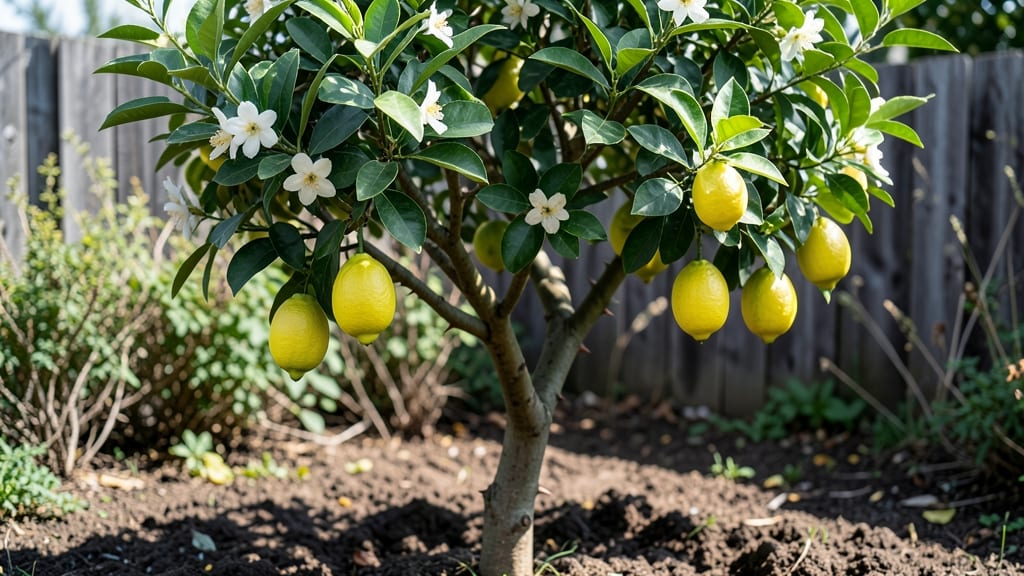
Winter pruning your orange and lemon trees unlocks their spring fruit potential. ✨ I’ve seen dormant branches transform into lush canopies bursting with blossoms—it’s like giving your trees a fresh start before the growing season even begins. The key is timing and technique, not brute force with the shears.
You’ll need sharp pruning shears, a clean bucket for clippings, and about 30 minutes for a medium-sized tree. Focus on removing dead wood first, then thin out crowded branches to let sunlight reach the center.
This isn’t about making your tree look perfect—it’s about setting it up for heavy fruit production come summer.
After pruning, you’ll notice new green shoots within 2-3 weeks, followed by fragrant white blossoms that eventually turn into your harvest. The air around the tree will smell sweeter, and the structure will look balanced—no more leggy, sparse branches.
Just don’t overdo it; too many cuts can stress the tree.
Works for both outdoor citrus in warm climates and container-grown trees in cooler zones. The same principles apply whether you’re shaping a Meyer lemon or a Valencia orange. Let’s get those branches trimmed right!
📚 In This Guide
- What you need
- Instructions
- Tips and common mistakes
- Wrapping up and next steps
What you need
- ○ Pruning shears: Bypass pruners (sharp, clean, and disinfected with rubbing alcohol or bleach solution). Optional: Small handheld saw for thicker branches.
- ● Loppers: For branches ½–1½ inches thick (extendable loppers for taller trees).
- ● Pruning saw: Curved-tooth saw for branches 1½+ inches thick.
- ● Gloves: Heavy-duty, cut-resistant gloves (citrus sap can be irritating!).
- ● Disinfectant: 1-part bleach to 9 parts water (for sterilizing tools between cuts).
- ○ Pruning sealant: Optional but helpful for large cuts (e.g., Tanglefoot Tree Wound Pruning Seal).
- ● Ladder or step stool: For reaching higher branches (ensure it’s stable and rated for your weight).
- ● Bucket or trash bag: To collect pruned branches and debris.
- ● Sharpie or tape: For marking branches to prune (if needed).
- ● Safety gear: Long sleeves/pants and closed-toe shoes (citrus thorns are no joke!).
- ● Extension pole pruners: For high branches without a ladder.
- ● Hose or spray bottle: To rinse tools and clean sap off hands.
- ● Tree pruning guide: A printed checklist or app (e.g., GrowVeg) for reference.
- ● Compost bin: For repurposing small branches as mulch.
- ● First-aid kit: Just in case of minor scrapes or thorn pricks!
Step-by-step guide to pruning citrus trees in winter
Here's how to shape your trees for maximum spring fruit production.
✂️ Step 1: Assess the Tree Structure and Identify Dead Wood
Start by examining the entire tree from all angles. Look for branches that are completely dry, brown, or brittle to the touch—these are dead and must be removed immediately. I grab each branch and give it a gentle shake; if no leaves or buds fall, it's dead. Healthy branches will have some green beneath the bark when you scrape with your fingernail.
Next, identify any branches growing inward toward the center of the tree. These compete for light and air circulation, creating a dense canopy that invites disease. Mark these with a small piece of twine or tape so you don't accidentally cut the wrong branches. I like to step back every few minutes to visualize the tree's overall shape—this helps me spot problem areas I might miss up close.
✂️ Step 2: Remove Problem Branches Using the Right Cuts
Use sharp, clean pruning shears to make cuts just outside the branch collar—the swollen area where the branch meets the trunk. Cut at a 45-degree angle to prevent water from pooling on the wound. If you're removing a large branch, make the first cut about 6-12 inches from the trunk on the underside of the branch to reduce weight, then make the final cut outside the collar.
For smaller branches, simply cut back to a healthy bud or lateral branch. Never leave stubs—these invite rot and disease. I always step back after each cut to check the balance of the tree. If one side looks too bare, I hold up a mirror to see how it appears from the opposite side. This ensures your tree stays symmetrical and evenly exposed to sunlight.
✂️ Step 3: Thin the Canopy for Airflow and Light
Focus on opening up the center of the tree by removing 20-30% of the total branches. This creates space for air to circulate and sunlight to penetrate. Start at the bottom and work your way up, removing smaller branches first. I target branches that cross or rub against others—these create wounds that weaken the tree over time.
Leave 3-4 main scaffold branches evenly spaced around the trunk. These should be sturdy and angled outward to support the tree's weight. If a branch is growing straight up, cut it back to a lateral branch to encourage outward growth. You'll see the tree's natural shape emerge as you thin—this is your guide for where to stop.
✂️ Step 4: Shape the Tree for Fruit Production
Encourage fruit production by pruning to create an open, vase-like shape. Cut back any branches that are growing too close together or competing for the same space. Aim to leave 6-12 inches between branches to allow airflow. I like to visualize the tree as a 5-tiered vase, with branches spaced evenly up the trunk.
For young trees, focus on establishing a strong framework. For mature trees, prune to remove older wood—citrus trees produce best on new growth. After pruning, spray the cuts with a fungicide to prevent infection. Water the tree deeply to help it recover from the stress of pruning. You'll notice new buds forming within 2-3 weeks—this is your sign that the tree is responding well.
Tips & tricks for perfect orange and lemon tree pruning
Winter pruning transforms your citrus trees into fruit-producing powerhouses—here’s how to avoid common mistakes and maximize results.
Visualize First: Before making any cuts in Step 1, sketch a rough outline of your tree’s ideal shape. I find it helps to hold a mirror up to the tree to spot asymmetries—this ensures you don’t accidentally over-prune one side. Think of your tree like a five-tiered vase, with branches spaced evenly to catch sunlight. This visualization prevents that "lopsided" look many gardeners regret.
Tool Prep Matters: Sharpen your pruning shears before starting—dull blades tear wood instead of making clean cuts. I like to wipe them down with rubbing alcohol between cuts in Step 2 to prevent spreading disease. For larger branches, use a pruning saw with a fine-tooth blade to avoid splintering. Remember, clean cuts heal faster than jagged ones.
Timing is Everything: The 2-3 week window mentioned for new buds to appear is your reward for patience. Prune when temperatures are above freezing but below 70°F—this prevents shock. I’ve learned the hard way that pruning too early in winter can expose trees to cold damage, while waiting too long delays spring growth. Aim for late winter when buds begin to swell but haven’t yet broken dormancy.
Pro Tips for Orange And Lemon Tree
- Winter pruning transforms your citrus trees into fruit-producing powerhouses—here’s how to avoid common mistakes and maximize results.
- Visualize First: Before making any cuts in Step 1, sketch a rough outline of your tree’s ideal shape.
- Tool Prep Matters: Sharpen your pruning shears before starting—dull blades tear wood instead of making clean cuts.
Frequently asked questions
Got questions about pruning your orange and lemon trees during winter dormancy? You’re not alone! Here are some of the most common concerns—and their straightforward answers—to help you prep for a fruit-filled spring.
Why should I prune my citrus tree in winter instead of other times of year?
Winter (late fall to early spring) is ideal because citrus trees are dormant, reducing stress and disease risk. Pruning now removes dead wood, improves airflow, and encourages stronger growth for spring blooms. Avoid pruning in extreme heat or cold, which can shock the tree. Pro tip: Aim for late January to February in most climates!
How much can I safely prune off my orange or lemon tree?
Never remove more than 25-30% of the tree’s canopy in one session. Over-pruning stresses the tree and can reduce fruit production. Focus on thinning out crowded branches, crossing limbs, and deadwood. For young trees, light pruning (10-15%) is enough to shape growth. Pro tip: Use a sharp bypass pruner for clean cuts!
Can I prune my citrus tree too late in the season?
Yes, but timing matters! Pruning after late winter (March+) risks removing flower buds or new growth. If you miss winter, wait until after harvest season (summer/fall) for minimal impact. However, late pruning may delay spring blooms and fruit set. Pro tip: Mark your calendar for January–February pruning to stay on track!
What should I do if my tree has no leaves or looks dead after pruning?
Don’t panic! Citrus trees drop leaves naturally in winter or after heavy pruning. If the branches are still firm and green underneath, the tree is likely fine. Water deeply and avoid fertilizing until new growth appears (usually in 4–6 weeks). If branches are brown and brittle, they’re dead—remove them completely. Pro tip: Mulch around the base to retain moisture!
Are there any citrus tree varieties that don’t need pruning?
All citrus trees benefit from some pruning, but dwarf varieties (like ‘Calamondin’ or ‘Meyer Lemon’) need less aggressive cuts. Mature, well-established trees with open canopies may only require light shaping every 2–3 years. However, even low-maintenance trees should have deadwood and crowded branches removed. Pro tip: Observe your tree’s natural shape—prune to enhance it!
How do I tell the difference between healthy and dead branches?
Use this quick check:
- Healthy: Green or yellowish-green under bark, firm wood, slight flexibility.
- Dead: Dry, brittle, or snaps easily; bark is dark brown/black and peels away.
- Diseased: Oozing sap, fungal growth (white/pink mold), or unusual spots.
When in doubt, make a small cut—if it’s moist and green inside, it’s alive! Pro tip: Sterilize tools with rubbing alcohol between cuts to prevent spreading disease.
Wrapping up and next steps
Giving your orange and lemon trees a little winter TLC through careful pruning sets the stage for a bountiful spring harvest! 🌱 By removing dead wood, shaping growth, and boosting airflow, you’re not just tidying up—you’re investing in healthier, more productive trees.
Now that you’re armed with the right tools, techniques, and answers, it’s time to roll up your sleeves and transform your grove.
💡 Next step: Mark your calendar for late winter (just before buds swell) and grab those pruners—your future citrus feast starts with today’s cuts! Refresh your guide and get pruning.