
Pruning
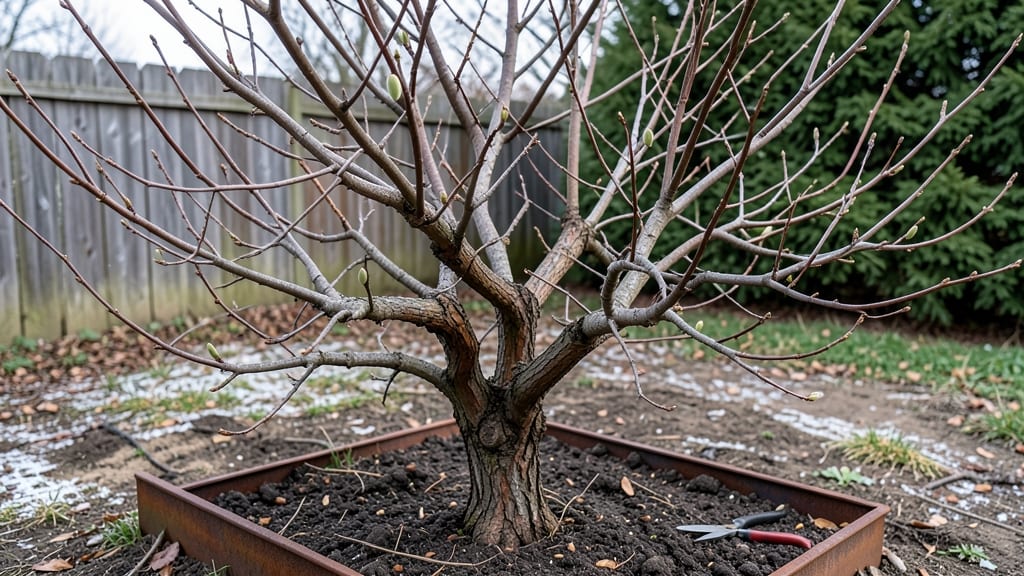
Winter pruning your almond tree isn’t just about shaping branches—it’s about setting the stage for next year’s harvest. 🌿 In the Pacific Northwest, where frosts linger and microclimates shift, the right cuts now mean a stronger, frost-resistant canopy by spring.
I’ve seen trees go from scraggly to showstopping in just one season with the right approach.
The key is timing: prune after the first hard frost but before the ground freezes solid—usually December through early February here. You’ll focus on removing dead wood, crossing branches, and thinning the canopy to let light and air circulate.
A sharp pair of pruners and a ladder (for mature trees) are your only tools, but the payoff is huge: fewer frost cracks, better fruit set, and a tree that bounces back from winter stress.
What you’ll end up with is a tree that looks like it’s been pampered, not neglected. New growth in spring will be vigorous, and those telltale frost splits on bark? They’ll be a distant memory.
Plus, you’ll spot rodent damage early—those pesky gnaw marks are easier to fix before they become a bigger problem. The best part? This method works for both young saplings and century-old trees.
Works in any Pacific Northwest microclimate, from coastal mildness to inland cold snaps. Ready to give your tree the winter care it deserves? Let’s get started with the right cuts for your variety.
📚 In This Guide
- What you need
- Instructions
- Tips and common mistakes
- Wrapping up and next steps
What you need
- ● Bypass pruning shears – Sharp, 6-8" blades (for small branches up to ½ inch thick). 1 pair is sufficient.
- ● Loppers – Long-handled, 18-24" with bypass blades (for branches ½ to 2 inches thick). 1 pair recommended.
- ● Pruning saw – Curved-tooth or bow saw (for branches thicker than 2 inches). 1 saw with a comfortable grip.
- ● Gloves – Heavy-duty, cut-resistant (to protect hands from thorns and rough bark). 1 pair.
- ● Disinfectant (70% isopropyl alcohol or pruning sealant) – Small spray bottle (to sterilize tools between cuts and seal larger wounds).
- ● Ladder or step stool – Sturdy, 6-10 ft tall (if your tree exceeds 6 feet). 1 unit with non-slip feet.
- ● Heavy-duty trash bags or bucket – For collecting pruned branches. 2-3 bags or 1 bucket.
- ● Safety gear – Safety glasses and long sleeves (to protect from debris and thorns).
- ○ Pruning paint or wound dressing – For sealing large cuts (optional but reduces disease risk).
- ● Extension pole saw – For high branches (if you don’t want to climb).
- ● Notebook & pen – To sketch pruning plans (great for beginners!).
- ● Tree pruning guide or app – For reference (e.g., iTree or PruneTime).
Step-by-step guide to winter pruning for Pacific Northwest almond trees
Here's how to shape your almond tree for resilience—just when it needs it most.
✂️ Step 1: Time Your Pruning for Dormancy
Prune your almond tree during its dormant season, between late winter and early spring—specifically when temperatures consistently stay above 32°F but before buds begin to swell. In the Pacific Northwest, this typically falls in February or early March. Pruning too early risks frost damage to fresh cuts, while waiting too late removes protective winter growth.
I always check the weather forecast for a 3-day stretch of dry, calm conditions before grabbing my tools. Wet or windy days make cuts heal poorly and increase disease risk. Look for bare branches with no visible buds—this is your signal the tree is fully dormant and ready for pruning.
🌿 Step 2: Remove Dead, Diseased, and Crossing Branches
Start by scanning the entire canopy for dead wood—branches that are brittle, dark, or show no signs of life when scratched. Use sharp pruning shears to make clean cuts just outside the branch collar (the swollen area where the branch meets the trunk). Avoid leaving stubs, as they invite rot and pests.
Next, identify crossing or rubbing branches—these create wounds that weaken the tree. Remove the smaller of the two branches at its point of origin. I also look for suckers (vigorous shoots growing from the base or trunk) and cut them back to the ground. These compete with the main canopy for nutrients, leaving your tree vulnerable to winter stress.
☀️ Step 3: Thin the Canopy for Light and Airflow
Almond trees need open, airy canopies to prevent fungal diseases like peach leaf curl, which thrives in the damp Pacific Northwest winters. Aim to remove 20-30% of the total foliage by selectively thinning branches. Focus on the interior of the tree, where light struggles to penetrate, and remove branches that grow inward or downward.
Make cuts just above an outward-facing bud or lateral branch to encourage future growth in the right direction. Avoid "heading back" (cutting back to a lateral branch) unless you're training a young tree—this creates dense, weak growth. Step back frequently to visualize the tree’s shape; you’re sculpting a balanced, frost-resistant framework that lets sunlight and air circulate freely.
⏰ Step 4: Shape for Frost Resistance and Future Growth
Pacific Northwest winters demand a strong, upright structure to support heavy snow loads and cold winds. Use the "open-center vase" shape for mature trees—this allows snow to slide off easily while keeping the center open for airflow. For younger trees, maintain a central leader (main upright stem) with well-spaced scaffold branches (major limbs) emerging at 45-degree angles.
I always prune to encourage upward growth—cut back any branches growing straight up or down, as these are prone to breakage under ice or snow. Leave 3-5 main scaffold branches evenly spaced around the trunk, and remove any branches that grow too close together. This creates a sturdy, frost-hardy skeleton that will produce better nuts and recover faster from winter stress.
💧 Step 5: Clean Up and Protect the Tree
After pruning, sterilize your tools with rubbing alcohol to prevent spreading disease between cuts. Rake up and dispose of all fallen branches and debris—these can harbor pests and fungi over winter. Seal any large cuts (over ½ inch in diameter) with pruning sealant to protect against bark borers and moisture loss.
Finally, apply a 2-3 inch layer of mulch around the base of the tree (but keep it 6 inches away from the trunk) to insulate roots from freezing temperatures. I use wood chips or straw, as they break down slowly and retain moisture. Water the tree deeply before the first hard frost to ensure roots are hydrated and can withstand winter dormancy.
Tips & tricks for perfect almond tree winter pruning
Here's what I've learned after years of pruning almond trees in the Pacific Northwest—these tricks make all the difference for a resilient, frost-hardy tree.
Timing is Everything: The 32°F temperature threshold is your golden rule—wait until nights stay above this mark consistently, but don't delay until buds swell. I check the forecast for that 3-day dry window—it's the difference between clean cuts and messy, disease-prone wounds. Watch for bare branches with no visible buds; that's your confirmation the tree is fully dormant and ready.
Tool Prep Makes All the Difference: Sharpen your pruning shears before you start—dull blades tear bark instead of making clean cuts. I also sterilize my tools between each cut with rubbing alcohol to prevent spreading any hidden pathogens. For larger branches, use a pruning saw with a fine-tooth blade to avoid splintering the wood. Remember, clean cuts heal faster and look better!
Visualize the Final Shape: Step back every 10-15 minutes to visualize your tree's structure. You're not just removing branches—you're sculpting a frost-resistant framework. For mature trees, aim for that open-center vase shape where snow can slide off easily. For younger trees, maintain that central leader with scaffold branches at 45-degree angles—they'll become your tree's strong support system through winter storms.
Mulch Like a Pro: That 2-3 inch layer of mulch isn't just decorative—it's insulation for your tree's roots. I use wood chips because they break down slowly and retain moisture better than straw. The key is keeping it 6 inches away from the trunk to prevent rot. After pruning, give your tree one last deep watering before the first hard frost to ensure those roots stay hydrated through dormancy.
Pro Tips for Almond Tree Winter
- Here's what I've learned after years of pruning almond trees in the Pacific Northwest—these tricks make all the difference for a resilient, frost-hardy tree.
- Timing is Everything: The 32°F temperature threshold is your golden rule—wait until nights stay above this mark consistently, but don't delay until buds swell.
- Tool Prep Makes All the Difference: Sharpen your pruning shears before you start—dull blades tear bark instead of making clean cuts.
Frequently asked questions
Got questions about winter pruning your almond tree? You’re not alone!
Here are answers to the most common concerns—from timing to frost protection—so you can confidently prep your Pacific Northwest orchard for spring.
When is the best time to prune almond trees in winter?
Prune your almond tree after dormancy but before bud break, typically between late winter and early spring (January–February in the PNW). Avoid pruning in extreme cold or frost—aim for days above 40°F (4°C) when the tree is fully dormant but still resilient.
How do I protect my almond tree from frost after pruning?
After pruning, wrap young trees with frost cloth or use tree guards to shield buds from late frosts. Mulch the base with straw or wood chips (3–4 inches deep) to insulate roots. Mature trees benefit from anti-transpirant sprays to reduce moisture loss.
Can I prune an almond tree too much in winter?
Yes! Prune no more than 25–30% of the canopy in a single session to avoid stress. Over-pruning weakens the tree’s frost resistance and delays spring recovery. Focus on removing dead, diseased, or crossing branches first, then shape lightly.
What if my almond tree doesn’t have buds after winter pruning?
Check for frost damage (blackened buds) or dormancy issues (lack of chill hours). If buds are healthy but dormant, wait until late winter/early spring—almond trees often bloom sporadically. If no buds appear by March, consult a local extension office for soil/pest tests.
Are there alternatives to winter pruning for almond trees?
While winter pruning is ideal, you can lightly prune in late summer (after harvest) to remove suckers or water sprouts. However, avoid heavy pruning—it reduces the tree’s ability to harden off for winter. Summer pruning is riskier for frost-sensitive varieties.
| Quick Tip | Do This |
|---|---|
| Tool Sharpness | Use sterilized, sharp pruners to prevent disease entry. |
| Frost Watch | Monitor local frost alerts—PNW microclimates vary! |
Wrapping up and next steps
Winter is the perfect time to revitalize your almond tree—and with the right pruning techniques, you’re setting the stage for a bountiful harvest in the Pacific Northwest’s unique climate.
Remember, precision and patience are key: focus on removing dead wood, thinning branches, and shaping for airflow while protecting against frost. Your efforts now will reward you with stronger growth, better yields, and a healthier tree for years to come!
Ready to take action? Grab your tools and schedule your pruning session on a dry, frost-free day—your almond tree will thank you! 🌿✂️