
Pruning
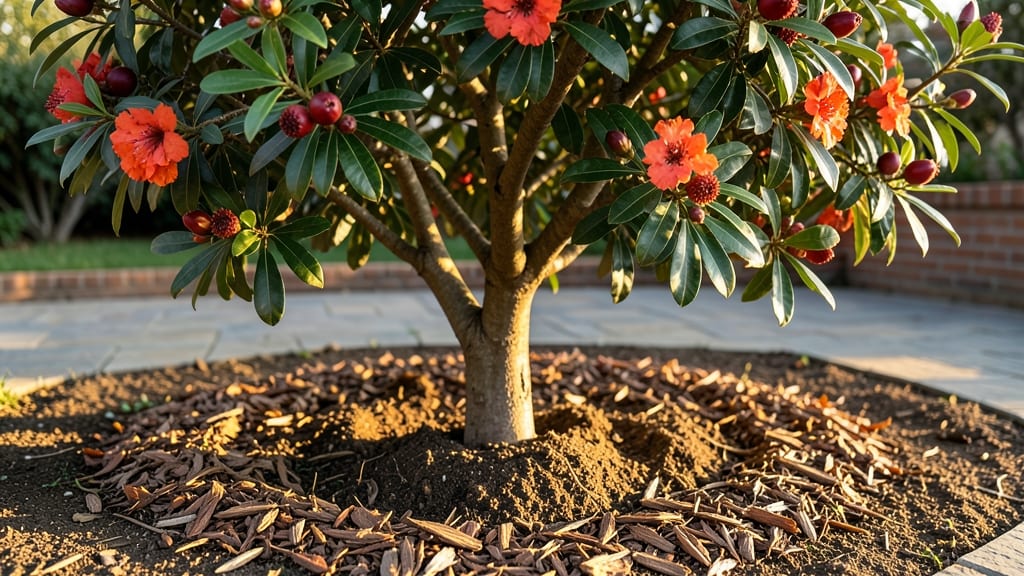
The perfect pomegranate tree soil mix starts with well-draining, slightly acidic soil—the kind that lets roots breathe while holding just enough moisture to fuel those ruby-red fruits. I learned this the hard way after my first tree struggled in heavy clay, its roots drowning before it even set fruit.
The fix? A simple blend that mimics its Mediterranean homeland, where pomegranates thrive in rocky, sun-baked hillsides.
You’ll need equal parts loam, coarse sand, and compost, adjusted for your region—sandy soils need more organic matter, while clay benefits from extra perlite or grit. The goal is a crumbly texture that prevents root rot while keeping nutrients available.
Test your soil’s pH first; pomegranates prefer 6.0 to 7.0, and you can tweak it with sulfur (to lower) or lime (to raise) if needed.
With the right mix, your tree will reward you with deep green foliage and abundant blooms by early summer, followed by fruit that bursts with flavor by fall. The key is consistency—amend the soil at planting and top-dress annually with compost to maintain fertility.
Soon, you’ll be harvesting enough pomegranates to share (or make jam—though that’s a different story).
This approach works for container-grown trees too—just use a fast-draining potting mix with added perlite. Whether you’re in the Southwest or a cooler climate, the principles stay the same: drainage first, nutrients second. Let’s get that tree growing strong!
📚 In This Guide
- What you need
- Instructions
- Tips and common mistakes
- Wrapping up and next steps
What you need
- ● 60% Well-Draining Soil: Use a mix of loamy soil (sandy + clay) or pre-made cactus/succulent soil (10-15 lbs).
- ● 20% Organic Matter: Compost or aged manure (5 lbs) for nutrients.
- ● 10% Perlite or Pumice: (2-3 lbs) for aeration and drainage.
- ● 10% Coarse Sand: (2 lbs) to prevent compaction (avoid fine sand!).
- ● Garden Gloves (1 pair) – Protect your hands from sharp soil particles.
- ● Trowel or Spade – For mixing and amending soil (1 medium-sized).
- ● Wheelbarrow or Large Bucket (5+ gallons) – To blend ingredients.
- ○ pH Test Kit (optional but helpful) – Pomegranates prefer 6.0–7.5 pH.
- ● Drip Irrigation or Watering Can – For post-planting hydration.
- ● 1 tbsp Epsom Salt – Boosts magnesium for fruit development.
- ● Slow-Release Fertilizer (e.g., 10-10-10, 1 lb) – For extra nutrients.
- ● Biochar or Coconut Coir (1 cup) – Enhances moisture retention.
Step-by-Step guide for crafting the ideal pomegranate soil mix
This blend ensures your pomegranate thrives with proper drainage and nutrient balance.
Combine Base Materials for Optimal Structure
Start by mixing 50% native soil with 30% coarse sand—this creates the foundational drainage your pomegranate roots crave. The sand prevents compaction, which is critical since pomegranates despise soggy feet. I use a wheelbarrow or large bin for this, spreading the native soil evenly before sifting in the sand.
Work the materials together with a garden fork until you achieve a uniform texture. You’ll know it’s right when the mix feels gritty yet retains some moisture when squeezed—not clumping like clay but not falling apart like pure sand. This balance mimics the arid conditions pomegranates prefer.
Incorporate Organic Matter for Nutrient Retention
Add 20% compost or well-aged manure to the mix—this boosts fertility without overwhelming the soil. Pomegranates need nutrients, but too much nitrogen can delay fruiting. I like to use a 5-10-10 fertilizer mixed into the compost layer first, then blend it in thoroughly.
Turn the mixture again, breaking up any clumps and ensuring the organic matter distributes evenly. The goal is a loamy texture—light enough to drain but rich enough to support root growth. If the mix feels too dense, add another 10% perlite to improve aeration.
Adjust pH and Finalize the Blend
Pomegranates thrive in slightly acidic to neutral soil (pH 6.0–7.0). Test your mix with a pH meter—if it’s too alkaline, add sulfur sparingly to lower the pH. I’ve found that a 1/2 cup of sulfur per cubic yard does the trick for most soil types.
Once the pH is ideal, give the mix a final pass with a rake to even out the texture. The finished blend should resemble a well-draining, crumbly loam—similar to what you’d find in a Mediterranean garden. This structure prevents root rot while keeping moisture accessible during dry spells.
Layer and Plant for Maximum Drainage
When planting, mound the soil mix 2–3 inches above the surrounding ground level to encourage runoff. Pomegranates hate waterlogged roots, so this elevation is key. Dig a hole twice as wide as the root ball but only as deep as the container it came in.
Fill the hole with the mix, gently pressing it around the roots to eliminate air pockets. Water deeply after planting to settle the soil, but avoid overwatering—pomegranates establish best in slightly dry conditions. Mulch with 2–3 inches of wood chips to retain moisture without suffocating the roots.
Tips & tricks for perfect pomegranate tree soil mix
Creating the ideal pomegranate soil mix is all about precision—small adjustments make a big difference in fruit production and plant health.
Texture Test: When mixing the 50% native soil and 30% coarse sand in Step 1, squeeze a handful of the blend—it should hold its shape when pressed but crumble easily. This gritty yet cohesive texture mimics the Mediterranean climate pomegranates thrive in. If it feels too sandy, add a little more native soil; if it clumps like clay, incorporate extra sand. The goal is a balance that prevents compaction while retaining just enough moisture.
Organic Matter Strategy: In Step 2, don't overlook the 10% perlite option if your mix feels dense. Perlite improves aeration without altering the overall composition, which is especially helpful in heavy clay soils. I've found that adding perlite after the compost reduces the chance of overwatering—pomegranates despise soggy roots. Spread the perlite evenly before the final raking in Step 3 to ensure even distribution throughout the mix.
pH Precision: The ½ cup of sulfur per cubic yard in Step 3 is a game-changer for alkaline soils. Test your mix before adding sulfur—if your pH is already in the 6.0-7.0 range, you can skip this step entirely. For dramatic adjustments, divide the sulfur into two applications, testing the pH between each. Remember, sulfur works slowly, so patience is key when amending alkaline soils.
Planting Elevation: The 2–3 inch mound in Step 4 isn't just about drainage—it's about creating a microclimate. This elevation prevents water from pooling around the base, which can lead to root rot. After planting, I like to create a shallow trench around the base of the mound to direct any excess water away from the root zone. This simple technique has saved several of my pomegranate trees from waterlogging issues.
Pro Tips for Pomegranate Tree Soil
- Creating the ideal pomegranate soil mix is all about precision—small adjustments make a big difference in fruit production and plant health.
- Texture Test: When mixing the 50% native soil and 30% coarse sand in Step 1, squeeze a handful of the blend—it should hold its shape when pressed but crumble easily.
- Organic Matter Strategy: In Step 2, don't overlook the 10% perlite option if your mix feels dense.
Frequently asked questions
Got questions about the perfect pomegranate tree soil? You’re not alone! Here are answers to the most common concerns—so you can grow a thriving tree with ease.
What’s the ideal pH for pomegranate tree soil?
Pomegranates love slightly acidic to neutral soil with a pH between 5.5 and 7.0. Test your soil with a kit—if it’s too alkaline (above 7.5), amend with sulfur or peat moss. Pro tip: Avoid extreme acidity (below 5.0), as it locks out essential nutrients like phosphorus!
How often should I water a pomegranate tree in well-draining soil?
Water deeply 1–2 times per week in dry climates, but let the top 2–3 inches of soil dry out between waterings. Overwatering in heavy soil causes root rot—so always check drainage! Pro tip: Mulch around the base to retain moisture without soggy roots.
Can I grow a pomegranate tree in containers with this soil mix?
Yes! Use a 50/50 blend of your drainage-perfect mix and perlite for containers. Ensure pots have drainage holes and repot every 2–3 years to refresh nutrients. Dwarf varieties thrive in containers—just avoid overcrowding!
Does pomegranate soil need winter protection in cold climates?
If your area drops below 15°F (-9°C), mulch heavily (4–6 inches) with straw or wood chips. Young trees benefit from a burlap wrap to shield roots. Native soil mixes with added compost help insulate naturally.
What if my pomegranate tree’s leaves turn yellow despite good soil?
Yellowing leaves often signal iron deficiency or poor drainage. Test soil for iron (add chelated iron if needed) and ensure your mix isn’t compacting. Pro tip: Avoid over-fertilizing with nitrogen—it worsens iron uptake!
Wrapping up and next steps
Choosing the right pomegranate tree soil mix is your secret weapon for a thriving, fruit-laden tree! 🌱 A well-draining, nutrient-rich blend—like sandy loam with compost—sets the stage for strong roots and vibrant blooms.
Don’t overcomplicate it: focus on balance, consistency, and a little TLC, and you’ll be rewarded with juicy, ruby-red pomegranates in no time.
Ready to take the next step? Test your soil’s drainage with a simple DIY check (just grab a shovel and a bucket!) or invest in a soil kit for precision. Then, roll up your sleeves—your pomegranate’s future starts with the ground beneath it! 💪