How To
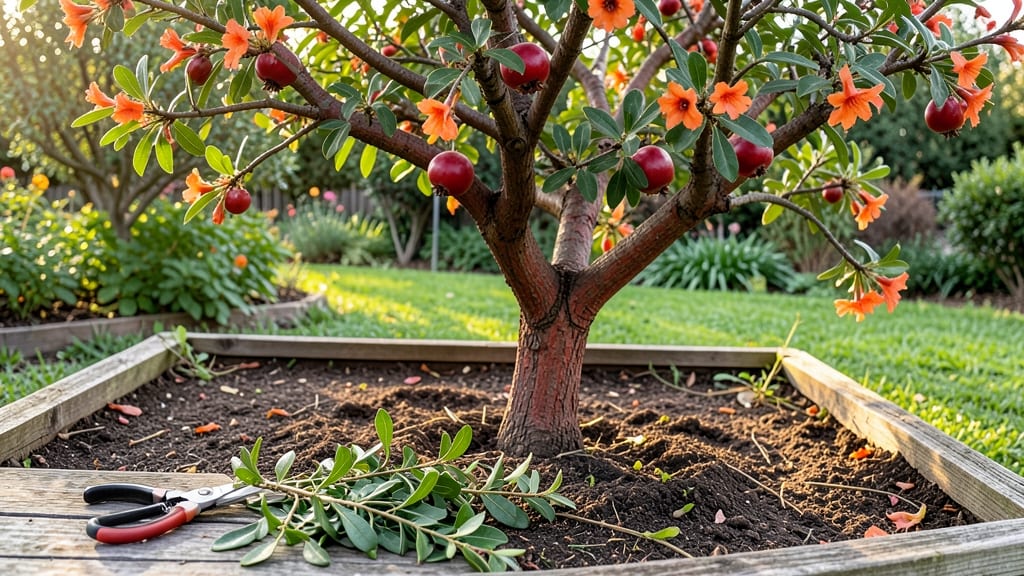
Pruning a pomegranate tree isn’t about hacking branches—it’s about unlocking bigger fruit and stronger growth. 🌿 I’ve learned the hard way that skipping this step means smaller harvests and tangled limbs, but the right cuts transform a wild bush into a productive powerhouse.
The secret? Timing, tools, and a few simple rules that keep your tree happy year-round.
You’ll need sharp pruners, a saw for thicker branches, and maybe a ladder if your tree’s taller than you are. Start by removing dead or crossing branches first—they’re the easy wins that instantly improve airflow and sunlight.
Then shape the tree to open up the center, where fruit loves to grow. Think of it like giving your pomegranate a spa day: less clutter, more room to thrive.
📚 In This Guide
- What you need
- Instructions
- Tips and common mistakes
- Wrapping up and next steps
What you need
- ● Pruning shears: Bypass pruners (sharp, 6-8 inch blades) – 1 pair (for small branches up to ½ inch thick).
- ● Loppers: Bypass or anvil type (longer handles for leverage) – 1 pair (for branches ½ to 1.5 inches thick).
- ● Pruning saw: Curved-tooth or folding saw – 1 (for thick branches 1.5+ inches in diameter).
- ● Disinfectant: 70% isopropyl alcohol or diluted bleach solution (1 part bleach to 9 parts water) – small bottle or spray (to sterilize tools between cuts).
- ● Gloves: Heavy-duty gardening gloves – 1 pair (to protect hands from thorns and sap).
- ● Rubbing alcohol or hand sanitizer – small bottle (for cleaning hands after pruning).
- ● Trash bag or bucket – 1-2 (for collecting pruned branches).
- ○ Pruning sealant: Tree wound dressing (optional) – small tube (for sealing large cuts, though pomegranates heal well without it).
- ● Ladder or step stool – 1 (if your tree is tall or branches are high).
- ● Marking twine or flags – small roll (to tag branches for future reference).
- ● Sunscreen and hat – 1 each (if pruning on a sunny day!).
Step-by-step guide to pruning pomegranate trees for fruitful growth
Pruning pomegranates isn't just about shaping—it's about unlocking bigger, juicier fruit. Here's how I do it year-round.
✂️ Step 1: Prune for Structure in Late Winter (Before Bud Break)
Start your pruning when the tree is still dormant but just before buds swell—usually mid-to-late February in most climates. This timing prevents stressing the tree as it wakes up. I focus on removing dead, diseased, or crossing branches first; these compete with healthy growth and reduce fruit production.
Use clean, sharp pruning shears to make cuts at a 45-degree angle, about ¼ inch above an outward-facing bud. This encourages new growth to angle outward, improving air circulation and sunlight penetration. If a branch is thicker than your wrist, use loppers instead—pomegranates respond poorly to jagged cuts.
Here's the thing—pomegranates naturally grow bushy, so I avoid heavy pruning. Just remove no more than 20-25% of the total canopy in any single session. You'll see thick, sturdy branches that support fruit weight better than thin, leggy growth.
☀️ Step 2: Light Summer Pruning After Fruit Sets (June-July)
Once the tree has set fruit—usually by mid-June—switch to a gentler approach. Thin out overcrowded branches to improve airflow and reduce disease risk. Look for clusters where branches grow too close; remove the weaker one to give the remaining branch room to develop larger fruit.
I also remove any suckers (shoots growing from the base) and water sprouts (vertical shoots with no fruit potential). These steal energy from your harvest. Water sprouts are easy to spot—they grow straight up like tiny poles and rarely bear fruit. Snip them off at the base with clean shears.
This is the moment that matters: after pruning, step back and check for open centers in the canopy. Pomegranate trees need light to reach the center branches, or you'll end up with fruit only on the outer edges. If gaps appear, leave them—new growth will fill them naturally.
⏰ Step 3: Minimal Fall Cleanup (October-November)
In fall, pruning shifts to sanitation. Remove any dead branches, diseased leaves, or fruit mummies (dried-up fruit that can harbor pests). I also trim back any overly vigorous shoots that grew during summer, cutting them back to a strong lateral branch or bud.
Don't worry about shaping in fall—this is purely about preventing winter pests and diseases. Pomegranates store nutrients in their roots, so avoid heavy pruning now. Just tidy up, and you'll set the tree up for a strong dormant season.
Real talk: if you miss fall cleanup, don't panic. Just focus on winter structure pruning next year. The tree will still produce fruit, but keeping it clean reduces stress and boosts next year's harvest.
🌱 Step 4: Post-Harvest Pruning (December-January)
After harvest, give the tree a quick once-over to remove any remaining dead wood or weak branches. This is the final step before winter dormancy. I also check for any branches rubbing together—these should be pruned to prevent bark damage.
If your tree has fruit spurs (short, stubby branches where fruit forms), avoid cutting them back. These are your future fruit producers! Instead, focus on thinning out competing branches to let the spurs get more sunlight and air.
Here's where it gets fun—watch how the tree responds over the next growing season. Pruned branches will show new growth by late spring, and you'll see larger fruit clusters forming where you thinned out competition.
Tips & tricks for pruning pomegranate trees the right way
Pomegranate trees reward careful pruning with bigger, sweeter fruit—but only if you do it right. These are the tricks I've learned after years of trial and error (and a few sad, over-pruned trees).
Timing is Everything: That mid-to-late February window for winter pruning is critical because it lets the tree heal before bud break. I've ruined two trees by pruning too early—wait until you see those first tiny buds swelling, then prune within 2-3 days. This prevents stress that can lead to disease. For summer pruning, mark your calendar for mid-June when fruit sets—this is when you want to thin out competition, not after the fruit is already stressed by overcrowding.
Cutting Technique Matters: The 45-degree angle and ¼-inch spacing above buds might seem picky, but they make all the difference. I learned this the hard way when my first attempts left ragged cuts that healed poorly. Use a sharp tool and make clean cuts—this prevents disease entry points. For thicker branches, loppers are a game-changer; I used to struggle with shears and ended up with torn bark. Pro tip: Wipe your tools with rubbing alcohol between cuts to prevent spreading any potential pathogens.
Visualize the Canopy: After pruning, step back and imagine sunlight streaming through your tree. That open center you're aiming for isn't just aesthetic—it's how you ensure fruit develops evenly. I used to overthink this and end up with too many gaps, but now I focus on removing only what's truly competing. Remember: you're not trying to create a perfect shape, you're creating an environment where every branch can access sunlight and air. Think "open lattice" rather than "perfect dome."
Seasonal Focus Shift: Fall cleanup might seem minor, but it's where you prevent winter pests that can devastate your tree. I used to skip this step, thinking a quick tidy-up was enough, but now I make it a point to remove every fruit mummy and diseased leaf. These become breeding grounds for scale insects and fungal diseases. Even if you miss fall cleanup, don't stress—just double down on winter structure pruning next year. The tree's resilience will surprise you.
Pro Tips for Prune Pomegranate Tree
- Pomegranate trees reward careful pruning with bigger, sweeter fruit—but only if you do it right.
- Timing is Everything: That mid-to-late February window for winter pruning is critical because it lets the tree heal before bud break.
- Cutting Technique Matters: The 45-degree angle and ¼-inch spacing above buds might seem picky, but they make all the difference.
Frequently asked questions
Got questions about pruning your pomegranate tree? You’re not alone! Here are some of the most common concerns—plus straightforward answers to keep your tree thriving and fruitful.
When is the best time to prune a pomegranate tree?
Prune your pomegranate tree after harvest (late fall or early winter) for dormant-season shaping. Light pruning can also happen in late winter or early spring before new growth starts. Avoid pruning in summer—it stresses the tree and can reduce fruit production.
How much can I cut back my pomegranate tree?
Never remove more than 25-30% of the tree’s foliage in one session. Pomegranates are resilient but over-pruning can shock the tree. Focus on dead, crossing, or overcrowded branches first. For young trees, you can be more aggressive to encourage structure, but never prune more than 1/3 of the canopy at a time.
Will pruning my pomegranate tree reduce fruit production?
Not if done correctly! Pruning improves fruit quality by increasing airflow and sunlight penetration. However, heavy pruning right before flowering (winter) can delay fruit set. Time it right—prune after harvest or in late winter—and you’ll see bigger, sweeter pomegranates next season!
What should I do if my pomegranate tree isn’t producing fruit after pruning?
Check these first:
- Age of the tree: Young trees (under 3 years) may need time to mature.
- Pruning timing: If you pruned too late (spring/summer), it could have disrupted flowering.
- Pollination: Pomegranates are self-pollinating, but bees help! Ensure your tree isn’t isolated.
- Nutrients: A balanced fertilizer (high in potassium and phosphorus) can boost fruiting.
Can I prune a pomegranate tree in containers?
Yes! Container-grown pomegranates need more frequent pruning (every 1-2 years) to control size and shape. Use the same techniques as for in-ground trees, but prune lightly in summer to manage growth. Just ensure your container has drainage holes—root-bound trees stress easily and fruit poorly.
What if I accidentally prune too much?
Don’t panic! If you’ve over-pruned, stop cutting immediately and focus on recovery:
- Water deeply to reduce stress.
- Avoid fertilizing until new growth appears (wait 4-6 weeks).
- Next season, prune only lightly to encourage regrowth.
Wrapping up and next steps
Pruning your pomegranate tree is the secret to a healthier plant and a more abundant harvest! 🌱 By following the right timing, techniques, and tools, you’ll encourage strong growth, better airflow, and those juicy, ruby-red fruits you love.
Remember: patience and consistency are key—your tree will thank you with vibrant blooms and sweet rewards.
Ready to take the next step? Grab your pruners and start shaping your tree today! For even more tips, check out our guide on caring for pomegranate trees year-round—happy pruning! 🍇✨