
Pruning
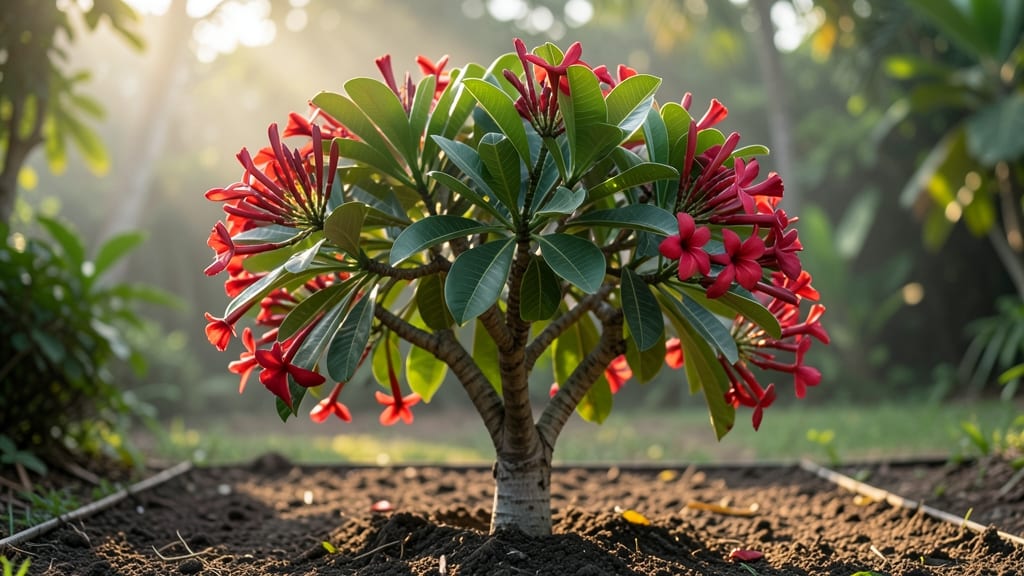
Plumeria rubra trees thrive in Pacific Northwest summers but need your help surviving winter frosts. 🌿 I've learned the hard way that standard pruning advice doesn't work here—these tropical beauties need a different approach to make it through our damp, chilly winters.
The key is strategic pruning that balances frost protection with next year's blooms.
Start by selecting a sunny, sheltered spot where winter winds won't scorch your tree. Pacific Northwest gardeners swear by well-draining soil mixed with sand or gravel—this prevents root rot during our rainy winters.
Your plumeria will reward you with fragrant blooms if you mimic its tropical roots by keeping it slightly drier than most plants.
After the last frost, you'll see new growth emerge from the base. This is where the magic happens—your tree is telling you it survived. With proper pruning timing and technique, you'll get heavier blooms than store-bought varieties, and the fragrance will fill your garden from June through September.
This method works for both container-grown and in-ground plumeria. Container plants are easier to move indoors during hard freezes, while in-ground trees develop stronger root systems. The same pruning principles apply to both—just adjust the timing based on your microclimate.
📚 In This Guide
- What you need
- Instructions
- Tips and common mistakes
- Wrapping up and next steps
What you need
- ● Pruning shears – Bypass-style, sharp (1 pair). Avoid dull tools—clean cuts heal faster!
- ● Loppers – For thicker branches (24"–36" reach, bypass or anvil-type with a 10"+ cutting blade).
- ● Hand pruners – For small stems (anvil-type for quick cuts, sterilized with rubbing alcohol).
- ● Pruning saw – Curved-tooth for branches >1" thick (1 saw).
- ● Disinfectant – 70% isopropyl alcohol or bleach solution (1:9 ratio) (small spray bottle or cloth).
- ● Garden gloves – Cut-resistant (1 pair) to protect from thorns and sap.
- ● Heavy-duty trash bags – 5-gallon size (2–3 bags) for debris.
- ○ Marking twine or flags – For tagging branches to remove later (optional but helpful!).
- ● Burlap or frost cloth – Lightweight (1–2 rolls) to wrap vulnerable branches if frost is forecasted.
- ● Anti-desiccant spray – Wax-based (e.g., Dormant Oil) to protect cut surfaces (1 spray bottle).
- ● Mulch – Straw or wood chips (2–3 inches deep) to insulate roots.
- ● Extension pole – 3–6 ft for high branches (1 pole).
- ● Ladder – Sturdy, non-slip (if tree is >8 ft tall).
- ● Camera or phone – To document pruning progress (because before/after shots are satisfying!).
- ● Compost bin – For chipping pruned branches into mulch (eco-friendly!).
Step-by-step pruning guide for Pacific Northwest Plumeria rubra trees
Here's how to shape your frost-hardy Plumeria Rubra for stunning blooms—without sacrificing resilience.
✂️ Step 1: Time Your Pruning for Optimal Growth
Prune your Plumeria Rubra after the last frost date in your zone, typically late May to early June for the Pacific Northwest. This timing ensures new growth has time to harden before winter. I wait until all frost risk has passed—check your local frost-free date to avoid cutting too early.
Look for new leaf buds along the stems before pruning. These indicate the tree has recovered from winter dormancy and is ready for shaping. If you prune too soon, you risk encouraging tender growth that won't survive even light frosts.
✂️ Step 2: Sterilize Tools and Assess the Tree
Clean your pruning shears with 70% isopropyl alcohol to prevent bacterial spread. Diseased branches can weaken your tree, so I always sanitize tools between cuts. Examine the tree for dead, diseased, or crossing branches—these are your first targets.
Use sharp tools to make clean cuts at a 45-degree angle, about ¼ inch above a leaf node or bud. Avoid leaving stubs, as they invite rot. If a branch is thicker than your shears can handle, use a pruning saw instead—never rip branches, which tears the bark and invites pests.
✂️ Step 3: Shape for Airflow and Light Penetration
Open the tree's center by removing up to 30% of the canopy to improve airflow and sunlight exposure. Pacific Northwest summers are humid, and dense foliage traps moisture, promoting fungal issues. Focus on removing branches that grow inward or rub against each other.
Thin out branches to create a balanced, vase-like shape—this encourages stronger blooms. Cut back overgrown branches to half their length, but never remove more than one-third of the tree's foliage in a single session. You'll see new growth emerge within 4-6 weeks, signaling successful pruning.
💧 Step 4: Post-Pruning Care for Resilience
Water deeply immediately after pruning to help the tree recover. Use 1-2 gallons of water per inch of trunk diameter, applied at the base. Avoid wetting the leaves to prevent fungal diseases like powdery mildew, which thrives in the damp Pacific Northwest climate.
Apply a balanced, slow-release fertilizer (10-10-10 ratio) 4-6 weeks after pruning to support new growth. I use about ¼ cup per foot of tree height, spread evenly around the root zone. Monitor the tree closely for signs of stress—yellowing leaves may indicate over-fertilization or root damage.
⏰ Step 5: Prepare for Winter Dormancy
By late September, reduce watering to every 10-14 days to encourage dormancy. Pacific Northwest winters are mild but can still drop below freezing, so I wrap the base of the tree with burlap to protect it from cold winds. Avoid heavy mulching, as excess moisture can rot roots.
Prune lightly again in early spring to remove any frost-damaged branches. Healthy Plumeria Rubra trees will reward you with fragrant blooms by mid-summer, proving your frost-resilient pruning paid off. Keep an eye out for pests like scale insects—treat them early with neem oil to avoid infestations.
Tips & tricks for frost-resilient Plumeria rubra pruning
Common pruning mistakes can turn your Pacific Northwest Plumeria Rubra into a winter casualty—here's how to avoid them.
Timing is Everything: The late May to early June window isn't just about avoiding frost—it's about catching that first flush of new leaf buds. I learned this the hard way after pruning too early and watching tender shoots get nipped by a late frost. Use your local frost-free date as your guide, but also check for those tiny leaf buds along the stems as your final green light. They're your tree's way of saying "I'm ready!"
Tool Precision Matters: That 45-degree angle cut isn't arbitrary—it's about directing water away from the branch collar. I've seen too many pruning jobs where stubs left behind became perfect entry points for rot. For branches thicker than your shears can handle, invest in a good pruning saw. The clean cut you make now will prevent years of potential problems down the road. Remember, sharp tools make clean cuts, and clean cuts heal better.
Canopy Balance Creates Blooms: When you're removing up to 30% of that canopy, think of it as creating a breathing space for your tree. Pacific Northwest humidity loves to turn dense foliage into a fungal buffet. I like to visualize the tree's natural vase shape—open at the center, gradually tapering toward the top. This isn't just about looks; it's about letting sunlight and air circulate where they're needed most. You'll know you've done it right when you see new growth emerging within those 4-6 weeks.
Post-Pruning Recovery is Critical: That immediate deep watering after pruning isn't just about hydration—it's about helping your tree close those fresh wounds. I've found that 1-2 gallons per inch of trunk diameter is the sweet spot for most Pacific Northwest trees. The key is to water at the base, not overhead, to prevent fungal spores from hitching a ride onto fresh cuts. Think of it as giving your tree a drink of water while also protecting its skin.
Pro Tips for Plumeria Rubra Tree
- Common pruning mistakes can turn your Pacific Northwest Plumeria Rubra into a winter casualty—here's how to avoid them.
- Timing is Everything: The late May to early June window isn't just about avoiding frost—it's about catching that first flush of new leaf buds.
- Tool Precision Matters: That 45-degree angle cut isn't arbitrary—it's about directing water away from the branch collar.
Frequently asked questions
Can Plumeria rubra survive frost in the PNW?
The Plumeria rubra is not naturally frost-hardy, but with smart strategies, it can survive mild PNW winters (USDA Zones 9-11). Use frost cloth, move potted plants indoors before temps drop below 30°F (-1°C), or grow it as an annual. For outdoor plants, mulch heavily and prune back dead growth in spring. Pro tip: Choose Plumeria rubra cultivars like ‘Ice Cream’—they tolerate cooler temps slightly better!
When is the best time to prune Plumeria rubra for blooms?
Prune your Plumeria rubra right after flowering (late summer to early fall) to encourage new growth and next year’s blooms. Avoid heavy pruning in winter—focus on shaping and removing dead wood. Key rule: Never prune into frost; wait until temps stabilize above 50°F (10°C). For PNW growers, a light trim in March (before buds swell) can also boost airflow and reduce disease risk.
How do I revive a Plumeria rubra that’s lost all its leaves?
Don’t panic! Leaf drop is normal after frost or dormancy. Water sparingly (let soil dry between waterings) and place the plant in bright, indirect light. If the wood is still firm, it’s alive—new leaves will return in spring. For severe damage, trim back dead stems just above a leaf node (where buds form). Red flag: If the wood is mushy or black, the plant may be beyond saving—start fresh with a cutting!
What tools do I need for pruning Plumeria rubra safely?
You’ll need:
- Bypass pruners (for clean cuts on stems <½” thick)
- Loppers (for thicker branches)
- Sterilized rubbing alcohol (wipe tools between cuts to prevent disease)
- Sharp knife (for precise trimming near buds)
- Garden gloves (latex or nitrile—Plumeria sap can irritate skin!)
Are there frost-resistant alternatives to Plumeria rubra?
If you love Plumeria rubra but want a tougher PNW option, consider:
- Plumeria ‘Hawaiian Snow’ (more cold-tolerant cultivar)
- Plumeria ‘White Queen’ (handles light frost better)
- Frangipani hybrids (some newer varieties claim 25°F (-4°C) tolerance)
- Jasminum polyanthum (winter-jasmine—fragrant, hardy to 15°F (-9°C))
Wrapping up and next steps
The Plumeria rubra tree is a stunning addition to Pacific Northwest gardens, offering fragrant blooms and resilience—when pruned with care. By mastering frost-resistant techniques, you’ll encourage healthier growth and abundant flowers while protecting your tree from winter’s chill.
Now that you’re equipped with the right tools, timing, and tips, it’s time to roll up your sleeves and give your plumeria the TLC it deserves!
🌿 Next step: Schedule your first pruning session this fall, and watch your Plumeria rubra thrive with vibrant blooms year after year. Happy pruning! 🌸