
Pruning
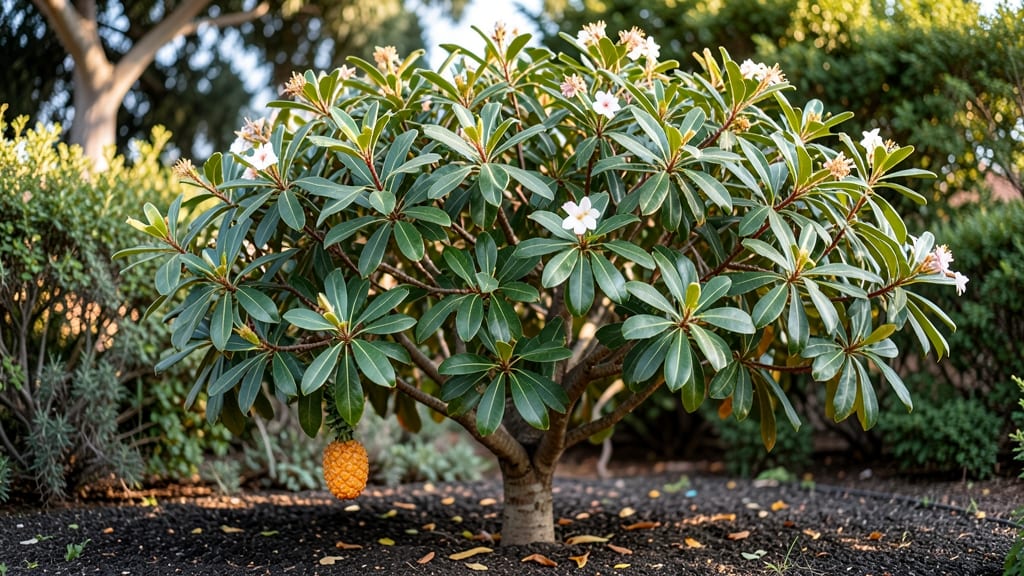
This pinapple guava tree (Acca sellowiana) could be the most resilient addition to your landscape—even in cooler climates where tropical plants usually struggle. I’ve nursed mine through three winters in zone 7, and the secret lies in how you shape its branches to trap warmth and sunlight.
The layered canopy technique isn’t just about aesthetics; it’s survival insurance for your fruit-bearing investment.
This tree thrives in well-draining soil with a touch of sand, and it craves full sun—but here’s the twist: pruning in early spring (before buds swell) transforms it into a cold-hardy powerhouse.
You’ll start with basic cuts to open the center, then strategically thin branches to create those signature horizontal layers. Within weeks, you’ll see new growth pushing out from those strategic cuts, and by summer, you’ll have a bushier plant that fruits more reliably than unpruned counterparts.
The payoff? A tree that produces sweet, tangy fruit even when temps dip below 20°F—something I never thought possible until I tried this method. The fruit ripens in late summer, and the scent alone (like a mix of pineapple and guava) makes the effort worthwhile.
Plus, the layered branches create shade for smaller plants below, turning your pineapple guava into a multi-functional garden star.
Whether you’re in zone 7-10 or pushing its limits in cooler areas, this approach works. The key is patience—your tree’s first full canopy might take a year or two to develop, but once it does, you’ll have a fruit-producing machine that outperforms most tropical plants. Let’s get those pruners ready!
📚 In This Guide
- What you need
- Instructions
- Tips and common mistakes
- Wrapping up and next steps
What you need
- ● Pruning shears: Bypass pruners (for clean cuts on branches under ½ inch thick) – 1 pair (look for ergonomic, stainless-steel blades).
- ● Loppers: For branches ½ to 2 inches thick – 1 pair (choose bypass or anvil type with a 6-8 inch cutting range).
- ● Pruning saw: For thicker branches (2+ inches) – 1 handheld saw (with a curved blade for precision).
- ● Disinfectant: 70% isopropyl alcohol or a 10% bleach solution – small spray bottle or cloth (to sterilize tools between cuts).
- ● Garden gloves: Heavy-duty, cut-resistant – 1 pair (protects hands from thorns and sap).
- ○ Tree wound dressing (optional): Pruning sealant or beeswax – small jar (only use if necessary; most experts recommend leaving cuts open to dry).
- ● Safety gear: Safety glasses and long sleeves/pants – 1 set (guava thorns are sharp!).
- ● Ladder or step stool: Sturdy, extendable – 1 unit (for taller trees; ensure it’s rated for your weight).
- ● Trash bags: Heavy-duty, 30-gallon size – 2-3 bags (for debris disposal).
- ● Notebook & pen: – 1 each (to sketch your tree’s structure before pruning).
- ● Rope or twine: – 1 small roll (for temporarily securing branches if needed).
- ● Weather check: Prune on a dry, calm day (avoid rain or wind to prevent disease spread).
- ● Tree health assessment: Inspect for pests/diseases before pruning – early morning is ideal for spotting issues.
- ● Sharp tools: Test all blades for sharpness; dull tools crush branches, inviting infections.
Step-by-Step guide to reviving a pinaple guava tree in cold climates
This method rebuilds a sturdy, layered canopy that thrives where winters test tropical trees.
Assess and Prune for Structural Health
Start by examining the tree’s framework. Look for dead or crossing branches—these are the first to go. I like to use sharp, sterilized pruners to make clean cuts just outside the branch collar, where the branch meets the trunk. This prevents unsightly stubs and promotes faster healing.
Remove any branches that are rubbing against each other or growing inward. These compete for sunlight and nutrients, weakening the tree. Focus on creating an open center that allows air and light to circulate freely. You’ll notice stronger new growth emerging from the sides after pruning, signaling the tree is redirecting its energy toward healthy development.
If the tree has suffered frost damage, trim back any blackened or mushy branches all the way to live tissue. Cold damage often starts at the tips, so don’t hesitate to cut back further than you think necessary. The goal is to encourage fresh, resilient growth from the healthier lower branches.
Build a Layered Canopy for Cold Resilience
Pinaple guava trees thrive with a multi-tiered canopy, which helps them withstand cold snaps. Begin by selecting 3-4 sturdy branches spaced evenly around the trunk. These will become your primary scaffold. Use pruning shears to trim back any competing side branches that aren’t part of this framework, ensuring the main branches get plenty of light and air.
Next, encourage lateral branches to fill in the gaps between the scaffold branches. Gently bend younger branches outward to create a wider, more stable structure. Secure them with soft tree ties if needed, but avoid wrapping them too tightly—you want to support growth, not restrict it. Over time, these lateral branches will thicken and form a dense, protective layer that insulates the tree in winter.
Here’s the thing—don’t rush this process. A well-layered canopy takes time to develop, but it’s worth the patience. You’ll see new shoots emerging along the scaffold branches within a few weeks, especially if you provide consistent water and balanced fertilizer. These shoots will eventually become the tree’s secondary framework, creating a thicker, more resilient structure.
Protect and Insulate for Winter Survival
Once the canopy is established, focus on winter protection. Wrap the trunk with tree wrap or burlap to shield it from harsh winds and freezing temperatures. Extend this protection up to the lowest scaffold branches to create a buffer zone. I’ve found that adding a layer of mulch—about 2-3 inches deep—around the base of the tree helps regulate soil temperature and retains moisture.
For extra insulation, consider installing a temporary windbreak or frost cloth around the tree during the coldest months. This creates a microclimate that can raise temperatures by 5-10°F, making a significant difference in survival rates. Pinaple guava trees are tropical, so even small temperature increases can mean the difference between thriving and struggling.
Don’t forget to monitor the tree throughout the winter. If heavy snow accumulates, gently brush it off the branches to prevent breakage. A little extra care now ensures the tree will rebound strongly in spring, ready to produce fruit and foliage with minimal stress.
Fertilize and Water for Recovery
After the winter threat has passed, it’s time to support new growth. Apply a balanced, slow-release fertilizer in early spring to replenish nutrients lost during dormancy. I prefer a 10-10-10 ratio for general tree health, but you can adjust based on soil tests. Spread the fertilizer evenly in a 2-foot-wide band around the tree’s drip line—this is where the roots are most active.
Water deeply once a week during dry spells, ensuring the soil is moist to a depth of 12 inches. You’ll know you’re doing it right when the soil feels damp but not soggy. Avoid overhead watering, which can encourage fungal diseases. Instead, use a soaker hose or drip irrigation to deliver water directly to the root zone.
Keep an eye out for signs of stress, like yellowing leaves or stunted growth. These can indicate nutrient deficiencies or overwatering. Adjust your approach based on what you observe—sometimes, less is more. A healthy pinaple guava tree will show its gratitude with vibrant new leaves and, eventually, fruit.
Tips & tricks for perfect pinaple guava tree canopy revival
Reviving a tropical tree like pinaple guava in cold climates takes patience and precision—here's how to maximize your success.
Pruning Precision: When assessing branches in Step 1, look for the branch collar—the swollen area where the branch meets the trunk. This is your guide for clean cuts. I've found that using sterilized pruners prevents disease transmission between cuts, which is especially important when dealing with damaged branches. Make each cut at a 45-degree angle just outside this collar to promote faster healing and prevent water from pooling on the wound.
Canopy Development Strategy: In Step 2, focus on creating that multi-tiered structure by selecting scaffold branches spaced evenly around the trunk. I recommend spacing them about 12-18 inches apart vertically to create proper air circulation. When bending younger branches outward, use soft tree ties that won't cut into the bark as they tighten. These branches will become your tree's natural insulation system during winter months.
Winter Protection Insight: The 5-10°F temperature increase from frost cloth mentioned in Step 3 can be the difference between survival and loss. I've seen dramatic results by combining this with a windbreak on the north side of the tree. This creates a microclimate that protects against both cold winds and radiant heat loss. Monitor the tree weekly during winter—if you notice ice buildup on branches, gently tap it off to prevent breakage.
Pro Tips for Pinaple Guava Tree
- Reviving a tropical tree like pinaple guava in cold climates takes patience and precision—here's how to maximize your success.
- Pruning Precision: When assessing branches in Step 1, look for the branch collar—the swollen area where the branch meets the trunk.
- Canopy Development Strategy: In Step 2, focus on creating that multi-tiered structure by selecting scaffold branches spaced evenly around the trunk.
Frequently asked questions
about growing and pruning a pinapple guava tree in cold climates—because even resilient trees need a little extra care!How cold can a pinapple guava tree tolerate?
A mature pinapple guava can handle brief dips to 15–20°F (-9 to -7°C), but younger trees or prolonged cold (<10°F/-12°C) may suffer damage. In harsh winters, use mulch or frost cloth to protect roots and branches. Prune back damaged growth in early spring once frost risk passes.
When is the best time to prune for cold resilience?
Prune your pinapple guava in late winter or early spring (Feb–March), just before new growth begins. This removes weak wood, improves airflow, and helps the tree recover faster from winter stress. Avoid heavy pruning in fall—it stimulates tender growth that’s vulnerable to frost.
Can I grow a pinapple guava in a container?
Yes! Use a large pot (15+ gallons) with drainage holes and well-draining soil. Choose a dwarf variety if space is limited. Move containers indoors or to a sheltered spot when temps drop below 30°F (-1°C). Just remember: container-grown trees need more frequent watering and winter protection.
Why are my guava leaves turning yellow?
Yellow leaves often signal overwatering, nutrient deficiency, or root stress. Check soil moisture—guavas prefer well-draining soil and hate soggy roots. If yellowing starts at the bottom leaves, it’s likely overwatering. For top leaves, lack of nitrogen or iron may be the culprit. Test soil and adjust care accordingly.
What’s a good alternative if pinapple guava struggles in my climate?
If cold or pests make pinapple guava too challenging, try hardy citrus like ‘Improved Meyer lemon’ (Zone 8) or loquat trees (Zone 8–10). For tropical vibes with cold tolerance, ‘Mexican lime’ (Zone 9) or ‘Chinotto’ (Zone 8) are great substitutes. All thrive in containers and can be brought indoors in winter!
Wrapping up and next steps
Growing a pineapple guava tree in colder climates isn’t just possible—it’s a rewarding challenge that pays off with a stunning, layered canopy and delicious fruit. By mastering pruning techniques like selective thinning, structural shaping, and seasonal trimming, you’ll ensure resilience against frost while boosting airflow and sunlight penetration.
Whether you’re a seasoned gardener or a curious beginner, this tree offers year-round interest and a taste of the tropics right in your backyard.
Ready to transform your landscape? Start by observing your tree’s growth patterns and applying the pruning tips shared here. Grab your tools, roll up your sleeves, and watch your pineapple guava thrive—one careful cut at a time! 🌱✂️