
Pruning
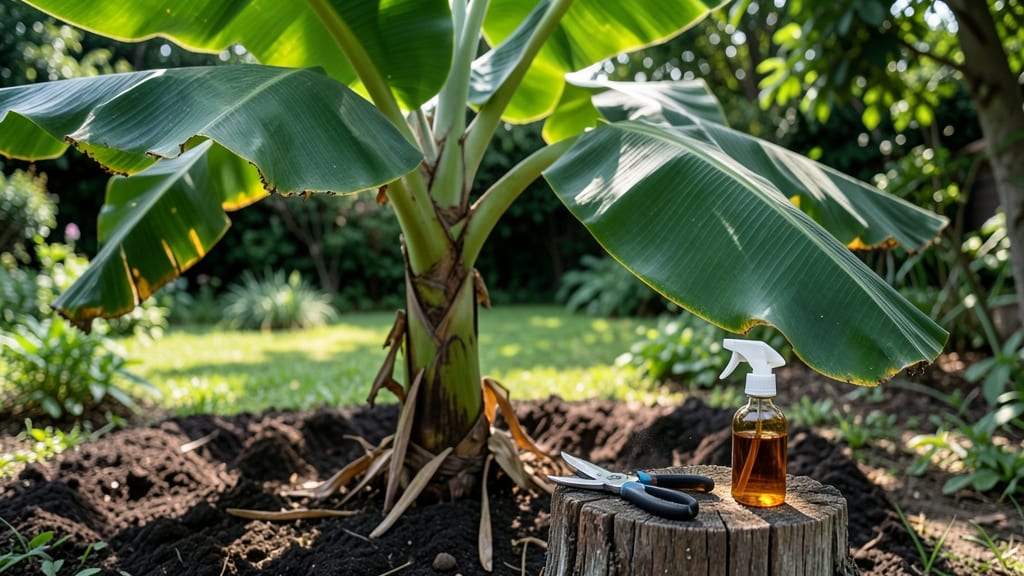
Cutting back a banana tree isn’t just about tidying up—it’s the secret to bountiful regrowth and healthier fruit production next season. I’ve pruned mine twice now, and each time, the plant rebounds with thicker pseudostems and more vigorous fronds.
The key is timing: wait until after harvest when the tree’s energy shifts from fruit to recovery, or during dormancy in colder climates.
You’ll need just three tools: sharp pruners for clean cuts, a disinfectant spray to prevent disease, and gloves to handle the jagged edges of dried fronds. Most mistakes happen when people rush—over-pruning leaves the tree vulnerable, while leaving too much dead growth slows down new shoots.
I learned that the hard way after my first attempt left a stubbly mess that took months to heal.
What you’ll end up with is a neater, stronger banana tree that recovers faster after cuts. Air circulation improves, reducing rot and pests, while the plant directs energy toward new growth instead of maintaining dead fronds. Within weeks, you’ll spot fresh shoots emerging from the base—proof the pruning worked.
This method works for both tropical and subtropical climates, though timing adjusts slightly. In warmer zones, prune after harvest; in cooler ones, wait until late winter. The goal is always the same: stimulate regrowth without stressing the plant. Ready to transform your banana tree’s future?
📚 In This Guide
- What you need
- Instructions
- Tips and common mistakes
- Wrapping up and next steps
What you need
- ● Pruning shears or loppers: Sharp, bypass-style pruners (or loppers for thicker stems) to make clean cuts. Size: 6-8 inch blades for most banana tree trimming.
- ● Heavy-duty gloves: Thick, cut-resistant gloves (e.g., mechanics’ or gardening gloves) to protect your hands from jagged edges and sap.
- ● Disinfectant (rubbing alcohol or bleach solution): 70% isopropyl alcohol or a 1:10 bleach-water mix to sterilize tools and prevent disease spread.
- ○ Compost bin or heavy-duty trash bags: For disposing of pruned fronds and debris. Optional: A tarp to collect large clippings easily.
- ● Hose with nozzle or bucket of water: To clean tools and rinse sap off your hands post-pruning.
- ● Sturdy ladder (if needed): For reaching taller banana trees. Safety tip: Use a 3-sided ladder for stability and never stand on the top rung.
- ● Hand saw: For very thick pseudostems (trunks) that pruners can’t handle.
- ● Pruning sealant: A tree wound sealant (like Tanglefoot) to coat large cuts and reduce disease risk.
- ● Work boots: Closed-toe shoes with grip to protect your feet and provide stability.
- ● Safety glasses: To shield your eyes from sap splashes or debris.
- ● Notebook or camera: To document the tree’s structure before/after pruning for future reference.
Step-by-step guide for pruning a banana tree
This is how I revive my banana plants after harvest—simple cuts lead to stronger regrowth.
✂️ Step 1: Identify and Mark Healthy Pseudostems
Wait until your banana plant has completely fruited and the bunch has turned yellow and dried out. This tells me the plant has finished its energy cycle and is ready for pruning. Look for the next inner pseudostem—this is your new growth center. It should feel firm and show signs of new leaf emergence at the top.
Use a permanent marker to circle the base of the current pseudostem about 6 inches above the ground. This marks where I’ll make my first cut. I avoid cutting too close to the ground because the plant stores nutrients there, and I want to preserve as much as possible for regrowth. If you see any signs of rot or disease at the base, cut higher to remove the affected area completely.
✂️ Step 2: Cut the Old Pseudostem at the Marked Spot
Grab a sharp pruning saw or handsaw—dull blades tear the fibers and slow healing. Position the blade at the marked circle and make a clean, straight cut. Sawing too fast can cause the blade to bind, so take your time. The pseudostem is fibrous, so I apply steady pressure without forcing it.
After cutting, step back and observe the stump. It should stand upright and expose clean tissue without jagged edges. If the cut looks uneven, trim again until it’s smooth. This clean cut prevents rot from setting in and allows the plant to redirect energy to the new pseudostem more efficiently. Don’t worry about leaving a small stub—banana trees handle it well.
✂️ Step 3: Remove Any Remaining Debris and Disinfect Tools
Pull or cut away any remaining dried leaves or fruit stalks still attached to the pseudostem. These can harbor pests or diseases that might infect the new growth. I use a pair of pruning shears for smaller debris and my hands to tug off larger, brittle pieces. Wear gloves—banana plant fibers can irritate skin.
Wipe down your pruning tools with a 70% isopropyl alcohol solution or a 10% bleach-water mix (1 part bleach to 9 parts water) to kill any lingering bacteria or fungi. This step is critical if you’ve pruned multiple plants in sequence, as diseases can spread easily through contaminated tools. Let the tools dry completely before storing them.
☀️ Step 4: Monitor and Support New Growth
After pruning, water the base of the plant deeply to help it recover. I use about 2 gallons of water, soaking the soil around the new pseudostem. Avoid getting water on the cut surface itself, as excess moisture can promote rot. In the days following pruning, keep an eye out for new shoots emerging from the center of the plant—this is your banana tree’s way of telling you it’s ready to grow again.
If your climate is hot and dry, consider applying a 2-inch layer of mulch around the base of the plant to retain moisture and regulate soil temperature. Mulch also helps suppress weeds, which can compete with your banana tree for nutrients. Avoid piling mulch directly against the pseudostem, as this can trap moisture and cause rot. Instead, create a 3-inch-wide gap around the base.
⏰ Step 5: Fertilize for Strong Regrowth
About 4-6 weeks after pruning, when you see 2-3 new leaves unfurling from the center, it’s time to fertilize. Use a balanced, slow-release fertilizer with equal parts nitrogen, phosphorus, and potassium (like a 10-10-10 formula). Apply it according to the package instructions, usually every 2-3 months during the growing season.
Banana trees are heavy feeders, so don’t skimp on nutrients. I mix the fertilizer into the top 2-3 inches of soil around the base of the plant, then water it in thoroughly. This ensures the roots can access the nutrients without burning the plant. If your soil is sandy or drains quickly, you might need to apply fertilizer more frequently, but always follow the package guidelines to avoid over-fertilizing.
Tips & tricks for pruning a banana tree
Here's what nobody tells you about cutting back banana trees that'll make all the difference for your plant's health.
Timing is Everything: Wait until the fruit bunch has completely turned yellow and dried out before pruning. This signals the plant has finished its energy cycle and is ready for regrowth. I've learned the hard way that cutting too early can stress the plant, while waiting too late might miss the optimal window for new growth. The plant's natural cycle is your best guide here.
Clean Cuts Prevent Rot: When you make your cut at the marked 6-inch spot, focus on creating a smooth, clean surface. Uneven cuts can trap moisture and lead to rot. I use a sharp pruning saw and take my time to avoid tearing the fibrous tissue. A clean cut also helps the plant heal faster and redirect energy to the new pseudostem more efficiently.
Tool Sanitation Matters: After pruning, it's critical to disinfect your tools with either 70% isopropyl alcohol or a 10% bleach-water mix. I can't stress this enough—contaminated tools spread diseases between plants. Always let your tools dry completely before storing them to prevent rust and maintain sharpness for your next pruning session.
Post-Pruning Care: After cutting, water the base deeply with about 2 gallons of water, but avoid wetting the cut surface itself. This helps the plant recover without promoting rot. In hot climates, apply a 2-inch layer of mulch around the base, keeping a 3-inch gap from the pseudostem to prevent moisture buildup. This simple step can make all the difference in your plant's recovery.
Pro Tips for Cut Back A Banana Tree
- Here's what nobody tells you about cutting back banana trees that'll make all the difference for your plant's health.
- Timing is Everything: Wait until the fruit bunch has completely turned yellow and dried out before pruning.
- Clean Cuts Prevent Rot: When you make your cut at the marked 6-inch spot, focus on creating a smooth, clean surface.
Frequently asked questions
Got questions about cutting back your banana tree? You’re not alone! Here are some of the most common concerns—and their answers—to help you prune with confidence.
When is the best time to cut back a banana tree?
The ideal time is after harvest or during late winter/early spring (before new growth starts). Avoid pruning during heavy fruit production or extreme heat. For tropical climates, timing matters less, but always cut when the tree is dormant or post-harvest for optimal regrowth.
What if I cut too much? Will my banana tree die?
Don’t panic! Banana trees are hardy and can regrow from the corm (base) even if you remove most of the pseudostem. However, never cut below the corm—this is the tree’s lifeline. If you’ve already over-pruned, focus on soil care (mulch, fertilizer) and watering to encourage recovery.
Can I reuse the cut pseudostem for anything?
The fibrous pseudostem is highly compostable—chop it into smaller pieces and mix it into your compost bin. You can also use it as mulch around other plants or even repurpose it for craft projects (like weaving or erosion control). Just avoid burning it, as it releases harmful gases.
Do I need to sterilize my pruning tools before cutting?
Yes!
Sterilizing tools (with rubbing alcohol or a 10% bleach solution) prevents disease spread, especially if your tree has signs of fungal issues (like black spots). Wipe blades between cuts on different trees to keep everything healthy. Think of it like sanitizing a knife before cooking—precision matters!
What if my banana tree isn’t producing fruit after pruning?
Patience is key! Banana trees often take 12–18 months to recover and flower after heavy pruning. Ensure your tree gets full sun (6+ hours/day), rich soil, and balanced fertilizer (high in potassium and phosphorus). If it’s still sluggish, check for pests, root rot, or nutrient deficiencies—sometimes the issue isn’t the pruning itself.
Wrapping up and next steps
Cutting back your banana tree might seem daunting, but with the right tools and techniques, you’ve got this! 🌱 By following these steps—like trimming dead fronds, sterilizing tools, and nurturing regrowth—you’ll encourage a healthier, more productive plant.
Remember, patience is key as your banana tree revives and prepares for its next harvest.
Now that you’re ready to prune, take action! Grab your gloves, sharpen that pruner, and give your banana tree the care it deserves. Happy gardening—your future bunches of bananas will thank you! 🍌✨