
Pruning
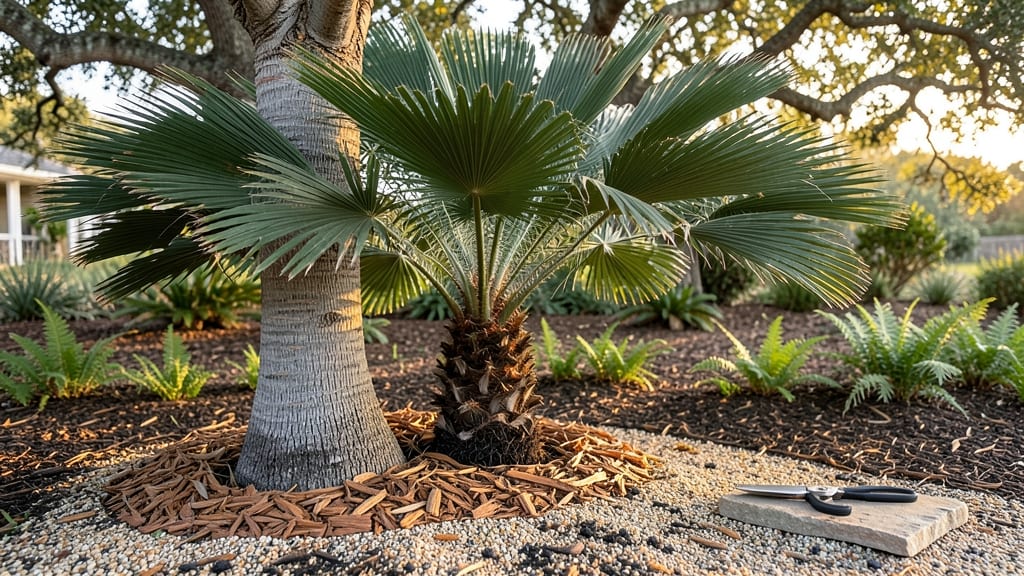
The right palm tree soil mix starts with 60% sand, 30% peat or coconut coir, and 10% compost—this ratio prevents root rot while feeding your tree’s tropical roots. I learned the hard way that store-bought potting soil drowns palms in just weeks, no matter how much you water.
The key is mimicking their native sandy, well-aerated soil where water drains within hours, not days. My first attempt used too much peat and left my pygmy palm wilting by summer’s end.
This mix works in containers or in-ground plantings, but adjust the sand-to-compost ratio based on your climate. In humid zones like Florida, reduce peat to 20% and add perlite for extra airflow. For drier areas, bump compost to 15% to retain moisture without suffocating roots.
The goal is 60% porosity—test it by squeezing a handful: it should crumble easily, not stick together like wet clay.
Once mixed, your palm will show results within 3-6 months—new fronds unfurling with vibrant green edges, no more yellowing leaves from soggy roots. The soil stays loose for years, but refresh the top 2-3 inches annually with fresh compost.
For container palms, repot every 2-3 years to replace compacted mix—this keeps drainage efficient and roots healthy.
Regional tweaks matter: coastal palms thrive with extra sand, while desert-adapted species need more compost to hold moisture. If your soil feels heavy or clumps when wet, it’s time to amend.
The payoff? A palm that grows 2-3 times faster than in standard soil—no more stunted growth or mysterious decline. Ready to give your palm the foundation it deserves?
📚 In This Guide
- What you need
- Instructions
- Tips and common mistakes
- Wrapping up and next steps
What you need
- ● 60% Coarse Sand: Use builder’s sand or coarse horticultural sand (avoid fine sand—it compacts!). 1 part (e.g., 2 gallons for a 4-gallon mix).
- ● 20% Peat Moss or Coconut Coir: Enhances moisture retention and aeration. ½ part (e.g., 1 gallon for a 4-gallon mix).
- ● 20% Perlite or Pumice: Boosts drainage and prevents root rot. ½ part (e.g., 1 gallon for a 4-gallon mix).
- ● Compost or Aged Manure: Adds organic matter for nutrients. 10% of total mix (e.g., ½ gallon for a 5-gallon mix).
- ○ Optional Fertilizer: Slow-release palm fertilizer (follow package rates) to kickstart growth.
- ● Wheelbarrow or Large Bin: For mixing ingredients (5+ gallons capacity).
- ● Garden Gloves & Safety Goggles: Protect your hands and eyes from sand/perlite dust.
- ● Garden Shovel or Trowel: For transferring soil components.
- ○ pH Test Kit (Optional): Palm trees prefer slightly acidic to neutral soil (pH 6.0–7.0).
- ● Spray Bottle with Water: To moisten ingredients before mixing.
- ● Container or Pot: Ensure it has drainage holes (1–2 per 6" of pot diameter).
How to create the perfect soil mix for palm trees
Here's the foolproof blend I swear by for palms—fast-draining yet moisture-retentive, just like their native tropical soil.
Combine Coarse Base Materials for Drainage
Start with 60% coarse sand—I use horticultural-grade sand, not playground sand, because it won’t compact. Mix in 20% perlite to lighten the blend further and prevent clumping. This combo ensures water drains quickly but doesn’t wash away nutrients too fast. Use your hands to distribute the perlite evenly—it should look like a light, airy crumble when squeezed.
If you’re working with 4 cubic feet of mix, that’s 2.4 cubic feet of sand and 0.8 cubic feet of perlite. Spread them out in a wheelbarrow or large bin first so you can see the layers clearly. Here’s the thing—palms rot faster than they yellow if drainage fails, so don’t skip this step.
Add Organic Matter for Nutrient Retention
Now blend in 20% coconut coir—this mimics the fibrous, spongy texture of tropical forest floors. Coconut coir holds moisture while still allowing airflow, which is critical for palm roots. Add 10% peat moss next, but only if your climate stays humid. In dry areas, peat can dry out too quickly, so swap it for composted bark fines instead.
Work the organic materials into the sand-perlite base until it looks uniformly dark and crumbly. You’re aiming for a texture like a damp sponge—not sticky, not gritty. If it feels too dense, add a little more perlite. The goal is a mix that holds water briefly but releases it fast enough to prevent soggy roots.
Incorporate Slow-Release Fertilizer
Sprinkle 1 cup of slow-release palm fertilizer (like 8-3-12 or 16-4-8) per 4 cubic feet of mix. Work it in thoroughly so every shovelful gets equal nutrition. This prevents fertilizer burns while feeding roots steadily. I like to use a fishbone fertilizer—it dissolves slowly and adds beneficial microbes, which palms love.
For extra insurance, add 1 tablespoon of mycorrhizal fungi to the mix. This helps roots absorb water and nutrients more efficiently, especially important for young palms. Mix it in last so it doesn’t get crushed by heavier materials. Now, give the blend a final fluff with your hands—it should feel light but not powdery.
Test and Adjust for Ideal Texture
Fill a 1-gallon container with your mix and pour water until it’s saturated. Let it drain completely, then squeeze a handful. If water drips freely but the mix holds its shape, you’ve nailed it. If it stays soggy, add 10% more perlite. If it crumbles too easily, mix in 5% more coconut coir. This test takes 10 minutes but saves you from root rot later.
Real talk: Your first batch might need tweaking. I once made a mix that was too sandy—my palm’s fronds turned crispy within weeks. Now I always test a small batch first. Once you’ve got the right balance, you’re ready to fill pots or garden beds with confidence.
Tips & tricks for perfect palm tree soil mix
Common pitfalls—and how to sidestep every one when crafting the ideal blend for your tropical plants.
Ingredient Quality Matters: Never use playground sand or regular potting soil in Step 1. Horticultural-grade sand and perlite are non-negotiable—they prevent compaction and maintain that critical air space. I learned this the hard way after my first mix turned into a brick when wet. For the 2.4 cubic feet of sand, sift it first to remove any debris or rocks that could disrupt drainage. This extra 5-minute step prevents future headaches with waterlogged roots.
Mixing Technique Tip: When combining the 4 cubic feet of mix in Step 1, use a shovel or garden fork to layer the materials rather than dumping everything at once. Spread the 2.4 cubic feet of sand first, then sprinkle the 0.8 cubic feet of perlite evenly over the top. This creates better distribution than tossing both ingredients together. After mixing, do the squeeze test—if water beads up on the surface instead of draining, you need more perlite.
Climate-Specific Adjustments: The instructions mention swapping peat moss for composted bark fines in dry climates, but I've found an even better solution: use a 50/50 blend of peat moss and coconut coir. This gives you the moisture retention of peat while adding the airiness of coconut coir. For the 10% organic matter in Step 2, measure carefully—too much peat can suffocate roots in dry conditions, while too little coconut coir reduces moisture retention in humid areas.
Fertilizer Distribution: When adding the 1 cup of slow-release fertilizer in Step 3, don't just sprinkle it on top and mix. Instead, divide the fertilizer into four equal portions and distribute them throughout the mix as you work. This ensures even nutrition distribution. For the mycorrhizal fungi, mix it with a small amount of the coconut coir first before adding to the larger batch—this prevents clumping and helps it disperse more evenly.
Pro Tips for Palm Tree Soil
- Common pitfalls—and how to sidestep every one when crafting the ideal blend for your tropical plants.
- Ingredient Quality Matters: Never use playground sand or regular potting soil in Step 1.
- Mixing Technique Tip: When combining the 4 cubic feet of mix in Step 1, use a shovel or garden fork to layer the materials rather than dumping everything at once.
Frequently asked questions
What’s the best ratio of sand to soil for palm trees?
For optimal drainage, aim for a 50/50 mix of coarse sand (like horticultural or builder’s sand) and well-draining potting soil. If your soil is heavy clay, bump the sand up to 60% to prevent root rot. Pro tip: Avoid fine sand—it compacts and suffocates roots!
How often should I repot a palm tree?
Repot young palms every 2–3 years or when roots crowd the pot (check by gently removing the plant). Mature palms need repotting every 3–5 years or if soil degrades. Spring or early summer is ideal—avoid winter when growth slows.
Can I use regular garden soil for palm trees?
No—regular garden soil won’t drain well and can drown palm roots. Instead, blend it with perlite, pumice, or coconut coir (20–30%) to improve aeration. For container palms, stick to a pre-mixed tropical blend or DIY the recipe above.
Why are my palm fronds turning yellow?
Yellow fronds often signal overwatering, poor drainage, or nutrient deficiency. Check soil moisture (it should dry 2–3 inches deep between waterings) and ensure your mix has adequate grit. Feed with a palm-specific fertilizer (high in potassium) in spring/summer. Act fast—yellowing can spread!
Do palm trees need acidic soil?
Most palms prefer slightly acidic to neutral soil (pH 6.0–7.0). Test your mix with a pH kit—adjust with lime (to raise pH) or sulfur (to lower it) if needed. Exception: Caladium palms thrive in acidic soil (pH 5.5–6.5).
Can I grow palms in-ground with this soil mix?
Yes! For in-ground planting, amend native soil with 1/3 sand or gravel and compost to mimic the drainage of your recipe. Dig a hole twice as wide as the root ball and mix the amendments into the native soil. Mound soil slightly to create a slope for water runoff.
Wrapping up and next steps
Crafting the perfect palm tree soil mix is your ticket to thriving tropical greenery—whether you're nurturing a young sapling or reviving a struggling plant! 🌴 With the right blend of drainage, aeration, and nutrients, you’ve got everything needed to mimic their natural habitat.
Now that you’re equipped with the how-to and answers to common questions, it’s time to roll up your sleeves and get growing!
Start by gathering your supplies, follow the steps with confidence, and watch your palm tree flourish. Need inspiration? Try experimenting with local amendments or container designs to make your mix even more unique. Happy planting! 🌱