
Pruning
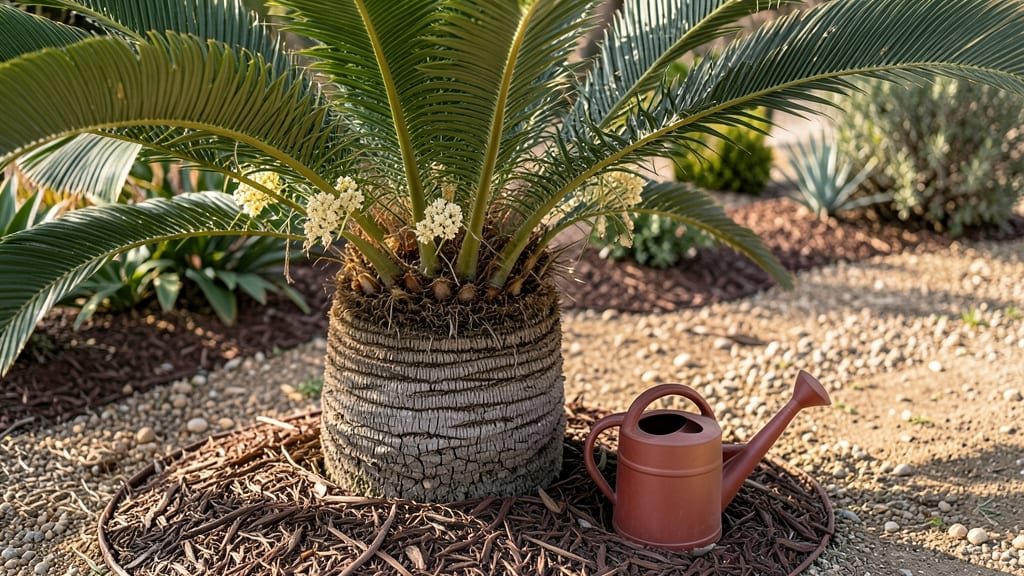
Mastering palm tree care outdoor in the Pacific Northwest means frost-resilient trimming—because these tropical-looking giants need just as much tender love as they do strategic cuts to survive our chilly winters. 🌿 I’ve learned the hard way that skipping pruning... turns lush fronds into brittle, frost-susceptible messes, but doing it right keeps palms standing tall for decades.
The secret lies in timing, technique, and knowing which fronds to sacrifice (spoiler: it’s not the newest ones).
Your toolkit should include sharp pruning shears, a ladder for taller palms, and a pair of gloves—because those serrated edges don’t play nice with bare hands. Start by removing only the brown, dead fronds at the base, cutting cleanly where the frond meets the trunk.
Avoid over-trimming: never remove more than one-third of the fronds at once, or you’ll stress the tree. For frost protection, wrap younger palms in burlap during hard freezes, but mature palms usually bounce back if you’ve kept their centers healthy.
What you’ll end up with is a palm that looks effortlessly elegant year-round, with fresh green fronds unfurling even after winter. The key is consistency: prune once or twice a year (spring and fall), and your palm will reward you with vibrant growth and that coveted Pacific Northwest resilience.
Think of it as giving your palm a haircut—just without the scissors slipping.
This method works for windy coastal gardens, urban sidewalks, or sheltered backyard spots. The same principles apply whether you’ve got a Mexican fan palm or a Windmill palm—just adjust for size and species quirks.
Ready to turn your palm from "maybe it’ll survive" to "wow, it’s thriving"? Let’s get those shears sharpened.
📚 In This Guide
- What you need
- Instructions
- Tips and common mistakes
- Wrapping up and next steps
What you need
- ● Pruning shears: Bypass pruners (sharp, not anvil-type) for clean cuts—2 pairs (one for you, one backup).
- ● Loppers: Heavy-duty (18–24" reach) for thicker fronds—1 pair.
- ○ Pruning saw: Curved-blade for stubborn branches—1 (optional but handy for mature palms).
- ● Disinfectant (70% isopropyl alcohol or bleach solution): To sterilize tools between cuts—small spray bottle.
- ● Heavy-duty gloves: Cut-resistant (e.g., Mechanix or leather)—1 pair.
- ● Safety glasses: Protect your eyes from debris—1 pair.
- ● Ladder or step stool: Sturdy, 6–10 ft tall (extendable if needed)—1.
- ● Trash bags (heavy-duty): For pruned fronds—2–3 large bags.
- ● Hose or bucket with water: To rinse tools and clean cuts—1.
- ● Hand pruners with extendable poles: For high branches without a ladder.
- ● Pruning sealant: (e.g., tree wound dressing) for large cuts—small tub.
- ● Work boots with ankle support: For stability on uneven ground.
- ● Work shirt with long sleeves: Protects from sun and scratches.
- ● Notebook & pen: To sketch your palm’s shape before trimming!
Step-by-step guide for frost-resilient palm tree trimming
Here’s how to prune palms in the Pacific Northwest without risking frost damage.
🌿 Step 1: Identify and Mark Dead or Damaged Fronds
Start by examining your palm closely—look for fronds that are completely brown, dry, or brittle to the touch. These are dead and need removal. I like to use a small flag or piece of twine to mark them first; this keeps me organized and prevents over-trimming healthy growth. In the PNW’s cooler climate, palms often hold onto dead fronds longer than in warmer regions, so don’t rush this step.
Check the underside of each frond for signs of pests or fungal growth. If you spot anything suspicious, note it for later action. Healthy fronds should have a slight green tint at the base, even if the outer edges are yellowing. This is your signal that the frond is still alive and should stay on the tree for now.
✂️ Step 2: Prune Dead Fronds at the Right Angle
Use clean, sharp pruning shears or a pruning saw to cut each dead frond at the base, just above the point where it meets the trunk. I angle the cut slightly downward to prevent water from pooling and causing rot. This is especially important in the PNW’s damp climate. If the frond is very large, I cut it into smaller sections to make handling easier—just be sure to wear gloves to avoid scratches from the sharp edges.
Never leave stubs longer than ½ inch—this invites disease. After cutting, dispose of the dead fronds immediately to reduce pest risks. If your palm has 4-6 dead fronds, it’s time to prune; more than that could signal deeper issues like nutrient deficiency or disease.
☀️ Step 3: Thin Out Overcrowded Fronds for Airflow
Even healthy fronds can become too crowded, especially in younger palms. Look for fronds that are growing too close together or blocking sunlight from reaching the center of the tree. These should be thinned out to improve airflow and reduce humidity-related stress. In the PNW, where mornings can be foggy, good airflow is critical to preventing fungal issues.
When thinning, remove every other frond starting from the outer edges. This creates a natural, open canopy that lets sunlight penetrate to the trunk. Avoid removing more than 25% of the fronds in one session—this can shock the tree. If your palm is small (under 10 feet tall), you might only need to thin 1-2 fronds per year.
⏰ Step 4: Time Pruning for Frost Safety
In the Pacific Northwest, the best time to prune palms is late spring or early summer, after the last frost date in your area. This gives the tree time to heal before winter sets in. If you must prune in fall, do it at least 6 weeks before the first expected frost—this ensures new growth has time to harden off. I always check the local frost forecast before scheduling any major pruning.
After trimming, avoid fertilizing for 4-6 weeks. The tree needs time to recover before taking on extra nutrients. Water deeply once a week during the first month post-pruning to help the palm establish new growth. If your palm is in a container, reduce watering slightly—overwatering can stress a recently pruned tree.
Tips & tricks for frost-resilient palm tree trimming
Real talk: The Pacific Northwest's damp climate makes palm trimming trickier than you'd think. Here's how to avoid common mistakes and keep your palm thriving.
Tool Prep Matters: Before you even touch your palm, make sure your pruning shears are clean and sharp. Dull blades tear fronds instead of cutting cleanly, which can damage the tree and make it more susceptible to disease. I always wipe down my tools with rubbing alcohol between cuts to prevent spreading any potential pathogens from one frond to another. This is especially important in the PNW's humid conditions where fungal spores can spread quickly.
Seasonal Timing Secret: The instructions mention late spring or early summer, but here's what nobody tells you—check your local microclimate. Coastal areas might have milder winters than inland spots, so you could potentially prune a week or two earlier. I always verify by checking the USDA Plant Hardiness Zone map for my specific location and adding a 2-week buffer before the last frost date. This gives me extra peace of mind knowing my palm has time to recover before winter.
Visual Frond Assessment: When examining fronds in Step 1, look for the "V-sign" at the base—the healthy green V-shaped area where the frond meets the trunk. This is your best indicator of life. In the PNW's cooler climate, fronds might stay attached longer but still be dead inside. Gently scratch the underside with your fingernail—if it's dry and papery, it's dead. If it's moist and greenish, leave it alone. This simple test saves me from over-pruning healthy growth.
Post-Pruning Care: After you've finished trimming, don't just walk away—give your palm some TLC. I always apply a thin layer of horticultural oil to any exposed cuts to create a protective barrier against fungal infections. Then I water deeply but not excessively, focusing on the root zone rather than the fronds. This mimics natural rainfall patterns and helps the tree recover without stressing it with too much moisture on fresh cuts.
Pro Tips for Palm Tree Care Outdoor
- Real talk: The Pacific Northwest's damp climate makes palm trimming trickier than you'd think.
- Tool Prep Matters: Before you even touch your palm, make sure your pruning shears are clean and sharp.
- Seasonal Timing Secret: The instructions mention late spring or early summer, but here's what nobody tells you—check your local microclimate.
Frequently asked questions
Got questions about keeping your Pacific Northwest palm trees thriving—especially during frost?
Here are some of the most common concerns and straightforward answers to help you care for your outdoor palm trees like a pro.
How do I protect my palm tree from frost in the PNW?
Wrap the trunk with burlap or frost cloth, and cover the fronds with blankets or plastic sheeting (secured loosely). Avoid heavy mulch around the base—it can trap moisture and harm roots. Water deeply before frost hits, but avoid soggy soil. For young palms, consider moving potted varieties to a sheltered spot.
When is the best time to trim palm trees in the PNW?
Trim dead or brown fronds year-round, but avoid heavy pruning in late fall or winter. The ideal time is late spring or early summer when new growth is active. Never remove more than ⅓ of the fronds at once—this stresses the tree. For frost-prone areas, wait until after the last frost date to prune new fronds.
Can I trim palm trees too much? What are the signs?
Yes! Over-trimming weakens the tree, making it vulnerable to pests and disease. Signs include yellowing fronds, slow growth, or exposed trunk. Always leave healthy green fronds—these photosynthesize and feed the tree. If you’re unsure, hire a certified arborist familiar with Trachycarpus or Chamaerops palms, common PNW frost-tolerant varieties.
What’s a good frost-resistant palm tree for the Pacific Northwest?
Look for cold-hardy species like the Windmill Palm (Trachycarpus fortunei) (tolerates temps down to 10°F) or Dwarf Fan Palm (Chamaerops humilis) (survives to 15°F). These thrive in USDA Zones 7-10. Avoid tropical palms like coconut or royal palms—they’re frost-sensitive and won’t recover easily.
Why are my palm tree fronds turning brown after frost? Is it salvageable?
Brown fronds after frost are often dead and should be trimmed at the base (where they meet the trunk). If the trunk is soft or oozing sap, the tree may be dying—consult a local nursery or arborist. Healthy palms will sprout new fronds from the center. Pro tip: Disinfect pruners with rubbing alcohol between cuts to prevent disease spread.
How often should I water my palm tree in the PNW’s rainy climate?
Overwatering is riskier than underwatering! Water deeply once a week (or less in winter) unless the soil is bone-dry. Check moisture 2–3 inches below the surface—if it’s damp, skip watering. Well-draining soil is critical; amend heavy clay with compost or sand. Mulch lightly (2–3 inches) to retain moisture without suffocating roots.
Wrapping up and next steps
Caring for your palm trees in the Pacific Northwest doesn’t have to be a challenge—especially with frost-resilient trimming! By choosing the right tools, timing your cuts thoughtfully, and protecting your trees from cold snaps, you’ll keep them thriving year-round. 🌿❄️
Now that you’re armed with expert tips, roll up your sleeves and give your palms the love they deserve. Start with a single tree or branch this weekend—your future tropical oasis will thank you! For extra confidence, review the FAQs or consult a local arborist before diving in.