
Pruning
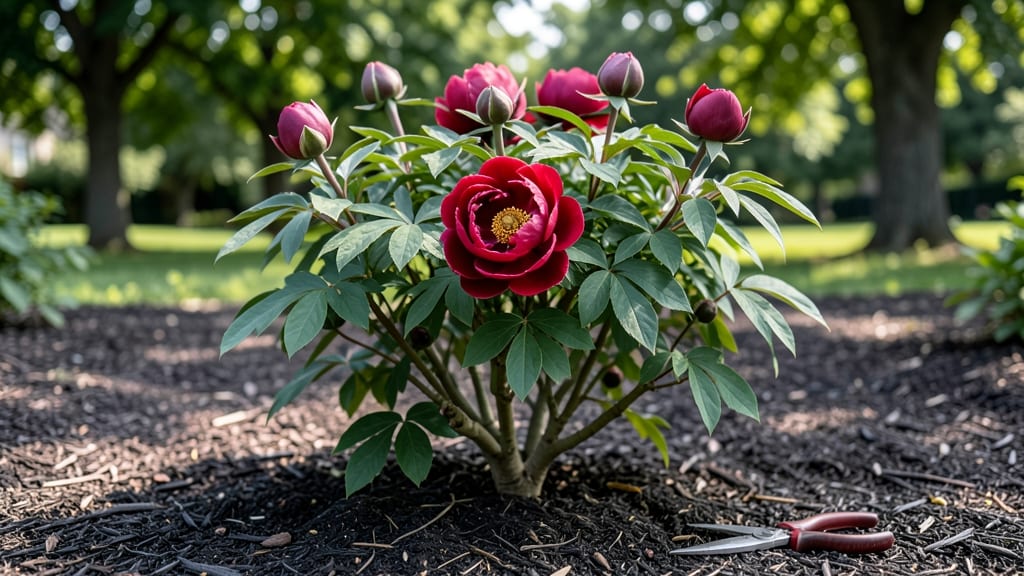
Tree peonies (Paeonia suffruticosa) demand late-winter pruning to unleash their legendary spring blooms—thick, fragrant, and show-stopping. I’ve watched mine transform from tangled branches to a bold, velvety display of pink, red, or white after just two cuts a year. The secret isn’t aggressive trimming but strategic shaping to encourage strong new growth.
Timing is everything: prune right after dormancy (late February to early March in most zones) before buds swell. Grab sharp bypass pruners and focus on removing dead, crossing, or weak branches—never cut more than a third of the plant at once.
Tree peonies bloom on old wood, so avoid heavy pruning that removes last year’s flower buds.
You’ll end up with a neat, airy framework that directs energy into fewer, larger blooms than overgrown plants. The flowers arrive weeks earlier than herbaceous peonies and last for months, their petals thick enough to withstand rain. Plus, the scent? Intoxicating—like a garden’s secret perfume.
Works for new and established plants, though young trees need minimal pruning. Skip this step, and you’ll get smaller blooms and more foliage. Here’s how to do it right the first time—no guesswork, just bold results.
📚 In This Guide
- What you need
- Instructions
- Tips and common mistakes
- Wrapping up and next steps
What you need
- ● Pruning shears: Sharp, bypass-style shears (avoid anvil shears—they crush stems). Size: 6–8 inches for medium branches.
- ● Loppers: For thicker branches (up to 2 inches in diameter). Look for: Long handles (24+ inches) and a smooth pivot.
- ● Gloves: Heavy-duty gardening gloves (thick leather or reinforced) to protect against thorns.
- ● Disinfectant (70% isopropyl alcohol or bleach solution): 1 part bleach to 9 parts water—sterilize tools between cuts to prevent disease.
- ○ Pruning sealant (optional but helpful): For large cuts (1+ inch diameter) to reduce sap loss and pest entry.
- ● Timing: Prune in late winter (just before new growth starts, typically February–March in most climates). Avoid pruning in fall or early spring.
- ● Weather: Choose a dry, calm day (no rain in the forecast for 24 hours).
- ● Safety gear: Safety glasses (to shield from debris) and long sleeves/pants (tree peonies are thorny!).
- ● Cleanup supplies: A bucket or tarp to collect debris (compost or dispose of diseased material).
Step-by-step instructions for pruning tree peonies in late winter
Here's how to revive your tree peony's vigor—timing and technique matter most.
Assess the Plant Structure and Identify Dead or Weak Growth
Start by examining the entire plant for branches that show no signs of life. Look for stems that are brittle, cracked, or completely devoid of buds—these are dead and should be removed immediately. Healthy branches will have swollen buds along their length, which is where your spring blooms will emerge. I always begin at the outer edges of the plant and work my way inward, making it easier to spot hidden issues.
Use your fingers to gently test the firmness of the stems. A healthy stem feels solid and slightly flexible, while a dead or diseased one will crumble or feel hollow when pressed. This tactile check is crucial because visual cues alone can be misleading, especially in early winter when buds haven't yet plumped up.
Remove Dead, Diseased, or Crossing Branches
Using sharp, clean pruning shears, make your first cuts to eliminate any dead or diseased wood. Always cut just outside the branch collar—the swollen area where the branch meets the trunk—to promote proper healing. I angle my cuts slightly away from the trunk to prevent water from pooling and causing rot. This is also the time to remove any branches that cross or rub against each other, as these create wounds that can invite pests and diseases.
For thicker branches, make a small undercut first to control the branch's fall, then follow with your main cut just outside the collar. This two-step process prevents the bark from tearing, which can leave the plant vulnerable. After each cut, wipe your shears with rubbing alcohol to keep them sterile—cross-contamination between cuts can spread disease throughout the plant.
Thin Out Overcrowded Branches for Better Airflow
Tree peonies naturally develop dense canopies, but too much crowding reduces airflow and increases humidity around the foliage. This is prime territory for fungal diseases like powdery mildew. Select branches that are growing inward or directly toward the center of the plant and remove them entirely. Aim to create an open, vase-like shape that allows light and air to circulate freely through the plant.
I target branches that are less than half the diameter of the main trunk, as these are easier to remove without causing significant stress. If you're unsure which to cut, imagine the plant from above—your goal is to create a balanced silhouette where no single branch dominates the structure. This thinning step is where the magic happens for future blooms, as it redirects the plant's energy toward stronger, healthier growth.
Shape the Plant for Optimal Bloom Display
Now it's time to refine the plant's shape. Tree peonies bloom on old wood, so avoid cutting back into last year's growth unless absolutely necessary. Instead, focus on shortening branches that have become too long or leggy. Cut just above a outward-facing bud to encourage new growth in the desired direction. This is where your artistic eye comes into play—you're sculpting the plant to maximize both beauty and bloom production.
Step back frequently to assess your progress. The ideal shape should allow you to see light reaching the center of the plant while maintaining a natural, balanced appearance. Avoid the temptation to over-prune—tree peonies are resilient, but drastic cuts can reduce next year's flower count. Remember, you're not just pruning for aesthetics; you're setting the stage for a spectacular spring display.
Clean Up and Protect the Plant
After all your cuts, gather up the pruned branches and dispose of them properly. Never leave them on the ground beneath the plant, as they can harbor pests and diseases that will reinfect your peony. I either burn them or place them in sealed bags for yard waste pickup. Next, apply a 2-3 inch layer of organic mulch around the base of the plant, keeping it several inches away from the trunk to prevent rot.
This is also the perfect time to check for any signs of pests or early disease. Look closely at the buds and stems for webbing, holes, or unusual discoloration. If you spot anything suspicious, treat immediately with a horticultural oil or fungicide according to the product's instructions. Finish by giving the plant a deep watering to help it recover from the pruning stress and prepare for new growth.
Tips & tricks for perfect tree peony pruning
Late-winter pruning transforms your tree peony from a dormant skeleton into a spring-blooming powerhouse—here's how to get it right.
Timing is Everything: Prune during late winter, just as buds begin to swell but before new growth starts. This timing ensures you're cutting only dead wood while preserving next year's flower buds. I've seen gardeners prune too early in winter and miss signs of life in branches, or too late in early spring when buds are already forming. Aim for that narrow window when days are still chilly but growth is on the horizon.
Tool Selection Matters: Invest in high-quality pruning shears with sharp, bypassing blades—these make cleaner cuts that heal faster. I've ruined several cuts with dull shears that crushed stems instead of making precise cuts. For thicker branches, use loppers with long handles to maintain leverage. Always clean your tools between cuts with rubbing alcohol to prevent disease spread, especially when dealing with multiple branches.
Visualize the Final Shape: Before making any cuts, step back and mentally rearrange the branches. Imagine how light will filter through the plant in spring. Tree peonies thrive with an open, vase-like structure that allows sunlight to reach all buds. I sketch a rough outline on paper first—this prevents over-pruning and helps me visualize the plant's future silhouette. Remember, you're creating a framework for next year's blooms, not just tidying up.
Mulch Application Technique: When applying that 2-3 inch layer of organic mulch, create a slight depression around the base to prevent water pooling. I've seen many gardeners pile mulch directly against the trunk, which leads to rot. Keep the mulch several inches away from the trunk while maintaining the full coverage around the root zone. This technique improves water absorption while protecting against temperature fluctuations.
Pro Tips for Paeonia Tree Peony
- Late-winter pruning transforms your tree peony from a dormant skeleton into a spring-blooming powerhouse—here's how to get it right.
- Timing is Everything: Prune during late winter, just as buds begin to swell but before new growth starts.
- Tool Selection Matters: Invest in high-quality pruning shears with sharp, bypassing blades—these make cleaner cuts that heal faster.
Frequently asked questions
Got questions about pruning your Paeonia tree peony? You’re not alone! Here are some of the most common concerns—plus straightforward answers to keep your plant thriving.
When is the exact best time to prune tree peonies?
The golden window is late winter to early spring, right after the last frost but before new growth starts (typically February–March in most climates). Pruning too early risks frost damage; waiting too late stunts spring blooms. Pro tip: Check your local frost dates—patience pays off!
How much can I cut back my tree peony without harming it?
Tree peonies are tough! You can safely prune up to ⅓ of the plant’s height—focus on dead, crossing, or weak branches first. Never cut into old wood (the thick, woody stems) unless it’s diseased. Thin out crowded stems to improve airflow and bigger blooms next year.
Will pruning my tree peony reduce next year’s flowers?
Not if done correctly! Pruning stimulates new growth and often increases flower production by removing spent blooms and encouraging stronger stems. Just avoid heavy cuts in the first year after planting—let it establish first. Less is more for young plants!
My tree peony leaves are yellowing after pruning—is it dying?
Probably not! Yellowing can happen if you pruned too late (new growth was already starting) or if the plant was stressed by winter. Check for pests (like aphids) or fungal spots too. Water deeply and avoid fertilizing until new growth appears—your peony’s tougher than it looks!
Can I prune tree peonies the same way as herbaceous peonies?
Nope—tree peonies and herbaceous peonies prune differently! Tree peonies bloom on old wood, so you only trim dead/crossing branches. Herbaceous peonies (like Paeonia lactiflora) bloom on new growth and get cut back to the ground in fall. Label your plants to avoid mix-ups!
Wrapping up and next steps
Pruning your Paeonia tree peony in late winter isn’t just about tidying up—it’s your secret to stunning, healthy blooms all season!
With the right tools, timing, and technique, you’ll encourage vibrant growth and protect your plant’s longevity. Now’s the perfect time to act! Grab those shears, follow the steps, and watch your garden transform into a riot of color. 🌸
Ready to level up your gardening game? Start by marking your calendar for late winter—just as the first buds peek through—and give your tree peony the care it deserves. Your future spring blooms will thank you!
- 📅 Plan ahead: Schedule your pruning session for late winter (just before new growth starts).
- 🌱 Observe & prune: Inspect your plant, then trim with confidence using the steps above.
- 💐 Celebrate the results: Enjoy your showstopping peony display and share your success with fellow gardeners!