Pruning
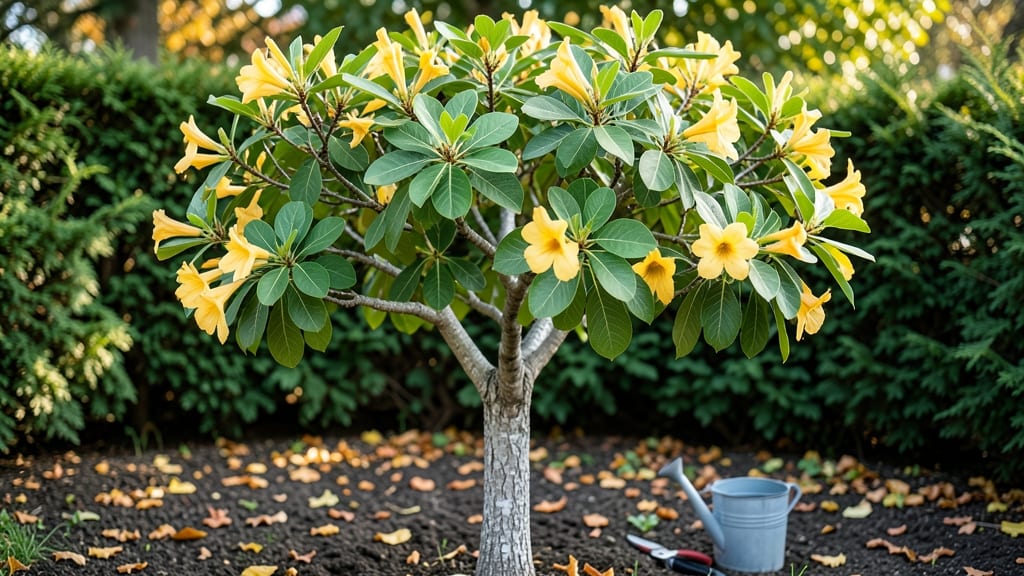
When your Tabebuia chrysotricha (Golden Trumpet Tree) starts bursting with fiery orange blooms in late winter, you’ll know the late-winter pruning paid off. 🌟 I’ve pruned mine for five years now, and each year, the difference between a modest show and a jaw-dropping display comes down to timing and technique.
The key? Pruning before new growth begins—when the tree is still dormant but the buds are already dreaming of spring.
This isn’t just about shaping the tree—it’s about waking up its blooming potential. You’ll need sharp pruners, a ladder (for taller trees), and about 30 minutes of focused work.
The goal is to remove dead wood, thin out crowded branches, and encourage an open canopy that lets sunlight reach every bud. I’ve seen trees that looked half-dead in winter transform into blooming superstars just by following this simple routine.
What you’ll end up with is a tree that looks like a living flame in late winter, with clusters of trumpet-shaped blooms that hummingbirds can’t resist. The flowers last for weeks, and the tree’s glossy green foliage fills in beautifully once the blooms fade.
It’s the kind of transformation that makes neighbors stop and ask, “What’d you do to that tree?”
Works for trees in containers too—just scale back the pruning to avoid stressing smaller roots. And don’t worry if you miss the perfect window; you can still prune in early spring, though you might sacrifice some of that bold early bloom. Let’s get those branches trimmed!
📚 In This Guide
- What you need
- Instructions
- Tips and common mistakes
- Wrapping up and next steps
What you need
- ● Pruning shears: Bypass pruners (sharp, clean, and sterilized with rubbing alcohol to prevent disease). Choose 7- to 10-inch blades for medium branches.
- ● Loppers: 18- to 24-inch loppers for thicker branches (up to 2 inches in diameter). Look for ratcheting models for ease.
- ● Pruning saw: A curved-tooth handsaw for branches over 2 inches thick.
- ● Gloves: Heavy-duty, cut-resistant gloves (e.g., Mechanix Wear or similar) to protect hands from thorns.
- ● Disinfectant: 70% isopropyl alcohol or a pruning sealant (like Tanglefoot Tree Wound Pruning Sealer) to sterilize tools between cuts.
- ● Ladder: Sturdy, extendable ladder (e.g., 24+ feet) if your tree is tall. Safety first! Use stabilizers or a helper.
- ● Trash bags: Heavy-duty bags (20+ gallon) for debris cleanup.
- ● Notebook & pen: To jot down pruning notes (e.g., branch locations, cuts made).
- ● Pruning paint: For sealing large cuts (1+ inch) to prevent disease (e.g., Tree Seal or copper-based paint).
- ● Safety glasses: To shield eyes from debris.
- ● Work gloves with grip: For better control if your tree is thorny.
- ● Tree growth regulator: (e.g., Bonide Fruit & Flower) to encourage bushier growth post-pruning.
- ● Camera: Snap photos before/after for a pruning journal!
Step-by-Step guide for pruning your tabebuia chrysotricha
Late-winter pruning unlocks the golden trumpet tree's showiest spring blooms—here's how to do it right.
✂️ Step 1: Time It Perfectly for Dormancy
Prune your tabebuia chrysotricha in late winter, just as buds begin to swell but before new growth starts. This is typically 4-6 weeks before your last frost date—usually February to early March in most climates. You'll know it's time when you see the first tiny green buds forming along the branches. Pruning too early risks damaging tender new growth, while waiting too long removes next season's flower buds.
I always check the weather forecast first. Avoid pruning if freezing temperatures are expected within 48 hours—cold snaps can stress the tree. A clear, dry day with temperatures above 45°F is ideal. Grab your tools and get started while the tree is still dormant but ready to wake up.
🌿 Step 2: Select Branches to Remove
Focus on three types of cuts: dead, crossing, and weak growth. Start by removing any dead or diseased branches—these are easy to spot as they're brown, brittle, or lack leaves. Cut them back to the main trunk or a healthy lateral branch using clean, sharp pruners. Next, look for branches that cross or rub against each other—these create wounds and reduce airflow, inviting pests and disease.
For weak or spindly growth, prioritize branches that are thinner than a pencil or growing inward toward the center of the tree. These branches compete with stronger growth and rarely produce flowers. I like to step back and visualize the tree's shape—aim for an open, vase-like form that allows sunlight to reach all branches. This encourages more blooms and better air circulation.
🌱 Step 3: Make Clean, Precise Cuts
Use bypass pruners for branches up to ½ inch thick and a pruning saw for thicker branches. Always cut just outside the branch collar—the swollen area where the branch meets the trunk or larger branch. This ensures the tree can seal the wound naturally. Angle your cut slightly downward to prevent water from pooling and rotting the wound.
If you're pruning a branch larger than 1 inch in diameter, make a three-cut method to avoid tearing the bark. First, cut about 12 inches out from the branch collar on the underside of the branch. Then, cut about 2 inches farther out on the top side. Finally, cut just outside the branch collar on the top side, allowing the branch to fall away cleanly. This protects the tree's structure and promotes faster healing.
⏰ Step 4: Shape for Maximum Blooms
After removing dead, crossing, and weak growth, it's time to shape the tree for bold spring blooms. Tabebuia chrysotricha flowers on old wood, so avoid heavy pruning of last year's branches—they're where next year's blooms will appear. Instead, focus on lightening the canopy by thinning out dense areas and opening up the center.
Step back and look for natural branch layers. Aim to create a tiered effect with the lowest branches about 3-4 feet from the ground, the next layer about 6-8 feet, and the top layer forming a rounded canopy. This shape allows sunlight to penetrate deeply, encouraging more flowers. Avoid cutting more than 25% of the tree's foliage in one season—this keeps the tree healthy and ensures a strong bloom display.
💧 Step 5: Clean Up and Fertilize
Once pruning is complete, remove all clippings from the area to prevent disease and pests. I like to use a heavy-duty trash bag to collect the debris and dispose of it in the green waste bin. Next, sterilize your tools with a 10% bleach solution (1 part bleach to 9 parts water) or rubbing alcohol to prevent spreading pathogens between cuts.
After pruning, apply a balanced, slow-release fertilizer (like a 10-10-10 or 20-20-20) around the drip line of the tree. Water the area deeply to help the fertilizer absorb into the soil. This gives your tabebuia chrysotricha a nutrient boost as it prepares for the growing season. Avoid over-fertilizing—too much nitrogen can promote leafy growth at the expense of flowers. A light application is all you need.
Tips & tricks for pruning your tabebuia chrysotricha
Real talk: The difference between a few scattered blooms and a jaw-dropping spring display often comes down to these small details.
Timing Secret: The 4-6 week window before your last frost is your golden opportunity—literally. Look for those first tiny green buds forming along the branches as your cue. I've learned the hard way that pruning too early can damage tender new growth, while waiting too long removes next season's flower buds. Pro tip: Set a reminder for 4-6 weeks before your frost date, then check daily for those first buds.
Branch Selection Strategy: When you're deciding what to cut in Step 2, remember this: dead branches are easy to spot, but crossing branches often hide in plain sight. Step back and look for branches that create a "V" shape where they meet—they're the ones creating wounds. For weak growth, run your fingers along the branch—if it feels thinner than a pencil, it's competing with stronger branches and should go. This open, vase-like form lets sunlight reach all branches, which is key for those vibrant golden trumpets.
Cutting Precision: The three-cut method for branches over 1 inch thick isn't just a suggestion—it's essential. I've seen too many people tear the bark trying to cut large branches in one go. That first cut on the underside creates a hinge, the second cut prevents bark tearing, and the final cut cleans up the branch collar perfectly. This protects the tree's structure and helps it heal faster. Think of it as the difference between a clean surgical cut and a messy tear.
Bloom-Boosting Shape: That tiered effect in Step 4—with lowest branches at 3-4 feet, middle at 6-8 feet, and rounded canopy on top—isn't arbitrary. It's how sunlight naturally filters through the tree, encouraging more blooms. I like to visualize the tree as a wedding cake with each layer getting slightly smaller as it rises. This shape also improves air circulation, which reduces disease risk and lets you enjoy those flowers for years to come.
Pro Tips for Tabebuia Chrysotricha Golden Trumpet Tree
- Real talk: The difference between a few scattered blooms and a jaw-dropping spring display often comes down to these small details.
- Timing Secret: The 4-6 week window before your last frost is your golden opportunity—literally.
- Branch Selection Strategy: When you're deciding what to cut in Step 2, remember this: dead branches are easy to spot, but crossing branches often hide in plain sight.
Frequently asked questions
about pruning your Tabebuia chrysotricha (Golden Trumpet Tree) to encourage vibrant spring blooms:When is the absolute latest I can prune my Golden Trumpet Tree?
The sweet spot for late-winter pruning is just as buds swell but before new growth begins—typically February to early March in most U.S. climates (zones 9–11). Pruning too late risks cutting off next year’s flowers, which form on old wood. Pro tip: If you miss the window, wait until after blooming (spring) to avoid sacrificing spring color.
How much can I trim without hurting my tree?
Golden Trumpet Trees are tough but respond best to moderate pruning—never remove more than 20–30% of the canopy in one session. Focus on:
- Dead/diseased branches (cut to the collar)
- Crossing or rubbing branches (thin to improve airflow)
- Overly leggy growth (shorten by ⅓ to encourage bushiness)
What if my tree isn’t flowering after pruning?
Lack of blooms often stems from over-pruning or improper timing. Double-check:
- Did you prune after blooming last year? (Golden Trumpet Trees bloom on old wood.)
- Are you in the right hardiness zone? (Zones 9–11; colder climates may need winter protection.)
- Is the tree well-fed? Fertilize lightly in early spring with a balanced 10-10-10 formula.
Can I prune in cold weather, or will it shock the tree?
Pruning in freezing temps (below 40°F/4°C) can damage the tree by causing sap bleeding or stress. Aim for mild, dry days (50–70°F/10–21°C) to minimize shock. If you must prune in winter, do it on a warm afternoon and avoid heavy cuts. Pro tip: Prune early morning to let wounds dry out overnight.
Are there alternatives if my Golden Trumpet Tree is too large to prune easily?
If your tree is tall or sprawling, consider:
- Hiring a professional with extension poles for hard-to-reach branches.
- Using a pruning saw or pole pruner** for high branches (safety first!)
- Training young trees with a central leader to maintain shape early.
Wrapping up and next steps
The Tabebuia chrysotricha, or Golden Trumpet Tree, rewards your late-winter pruning efforts with stunning spring blooms that brighten any landscape. By following the right techniques—timing, tools, and aftercare—you’ll encourage healthier growth and a spectacular floral display.
Now that you’re armed with the know-how, grab those shears and get pruning! 🌸✂️
For extra confidence, watch a short tutorial or join a local gardening group to share your progress. Happy pruning—your Golden Trumpet Tree will thank you with a dazzling show! 🌿💛