
Pruning
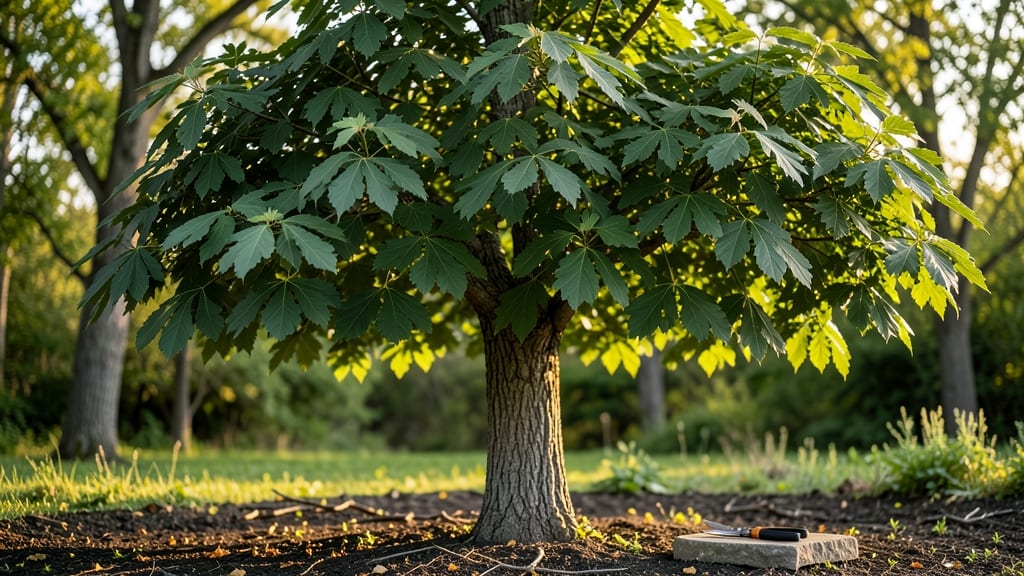
The Pacific ash tree's frost-resistant branches make it a standout choice for Pacific Northwest gardens. I’ve pruned mine every winter for years, and the difference in its sturdy structure and lush foliage is dramatic—it thrives when others struggle.
The key lies in understanding when to trim and how to shape its natural resilience, especially after those brutal coastal winters.
This tree doesn’t just survive the cold—it bounces back. When pruning, focus on removing dead wood first, then thin out crowded branches to improve airflow. I’ve found that late winter, just before buds swell, is the perfect time to work.
A sharp pair of loppers and a sturdy ladder are all you’ll need, along with a clear plan for maintaining its iconic vase-like shape.
By spring, you’ll see the results: vibrant green leaves unfurling earlier than neighbors’ trees, and branches that hold their weight even after heavy snow. The Pacific ash doesn’t just fill your yard—it becomes the backbone of your landscape, year after year. Ready to give it the care it deserves?
Whether you’re dealing with storm damage or just routine maintenance, these techniques work for both young saplings and mature specimens. The Pacific Northwest’s unpredictable weather makes this tree a reliable investment—one that pays off in both beauty and durability.
📚 In This Guide
- What you need
- Instructions
- Tips and common mistakes
- Wrapping up and next steps
What you need
- ● Pruning saw: A sharp, bypass pruning saw (18–24 inches) for thicker branches (1–4 inches in diameter). Look for one with a comfort grip for extended use.
- ● Loppers: Bypass loppers (20–24 inches) for medium branches (½–2 inches thick). Opt for ratcheting loppers if you have many cuts to make.
- ● Hand pruners: Bypass pruners (for branches ergonomic handles to reduce hand fatigue.
- ● Gloves: Heavy-duty gardening gloves (leather or reinforced) to protect against thorns and rough bark.
- ● Safety gear: Safety goggles (to shield eyes from debris).
- ● Work boots with ankle support (for stability on uneven ground).
- ● Long sleeves and pants (to prevent scratches and sun exposure).
- ○ Extension pole: A 3–6 foot telescoping pole saw for high branches (optional but helpful for taller trees).
- ● Cleaning supplies: Rubbing alcohol (70% isopropyl) or bleach solution (1:10 ratio) to sterilize tools between cuts.
- ● Paper towels or rags for wiping tools.
- ● Disposal bag: A sturdy contractor bag (30–50 gallon) for collecting pruned branches and debris.
- ● Ladder: A stable, extendable ladder (rated for your weight + tools) if the tree exceeds 10 feet in height.
- ● Tree wound dressing: Pruning sealant (controversial but useful for large cuts to prevent disease entry).
- ● Marking twine or spray paint: For tagging branches slated for removal (great for complex pruning plans).
- ● First-aid kit: Just in case—small cuts or scrapes happen during pruning!
- ● Work vest or belt pouch: To organize tools and keep them handy while working.
Step-by-step guide for pruning Pacific ash trees
Here's how I maintain healthy, frost-resistant Pacific ash branches year after year.
✂️ Step 1: Time Your Pruning for Winter Dormancy
Prune Pacific ash trees in late winter or early spring, just before buds swell but before new growth begins. This timing prevents disease spread and promotes vigorous spring regrowth. I aim for February or March in the Pacific Northwest, when temperatures consistently stay above 32°F during the day. Avoid pruning in fall—wounds take longer to heal before winter, inviting pests and disease.
Look for the first signs of bud swelling as your cue. The bark will feel slightly softer, and you'll notice tiny green tips peeking through the brown scales. If you see fresh sap oozing from cuts, you've waited too long—this means the tree is already actively growing. Prune at this stage only if you spot dead or diseased branches that need immediate removal.
🌿 Step 2: Remove Dead, Diseased, or Weak Branches First
Start by identifying branches that are dead, diseased, or crossing—these take priority. Dead branches snap when bent; diseased ones may have discolored bark, fungal growth, or oozing sap. Use sharp pruning shears to make clean cuts just outside the branch collar (the swollen area where the branch meets the trunk). I always cut at a 45-degree angle to prevent water pooling on the wound.
If a branch is larger than 2 inches in diameter, use a pruning saw instead. Saw cuts should be smooth and avoid tearing the bark. After removing the branch, sterilize your tools with rubbing alcohol to prevent spreading any potential pathogens. This step ensures your tree stays healthy and focuses its energy on strong new growth rather than fighting infections.
✂️ Step 3: Thin the Canopy for Better Airflow
Pacific ash trees benefit from an open canopy that allows sunlight to reach all branches. Focus on removing branches that grow inward or rub against others—these create weak points and invite disease. I target branches that are less than half the diameter of the trunk at the point of attachment, as these are easier for the tree to heal. Start from the outer edges of the tree and work inward.
Thinning also improves frost resilience by reducing dense clusters where ice can accumulate. Aim to remove no more than 25% of the tree's foliage in one season to avoid stressing the tree. After thinning, step back and visualize the tree's shape—you should see light filtering through the branches evenly. If gaps remain uneven, adjust by removing a few more branches from the densest areas.
⏰ Step 4: Shape the Tree for Structural Integrity
Next, refine the tree's shape by pruning branches that grow at sharp angles or are too close to the trunk. These often become weak points and can snap in storms or under heavy snow. Use hand pruners to trim back branches to a strong lateral branch or bud, cutting just above it. For larger branches, follow the same 45-degree angle rule to encourage smooth healing.
Pay special attention to the tree's central leader—the main vertical trunk. If competing leaders emerge, remove all but the strongest one to maintain a single, sturdy structure. You'll know you've done this right when the tree has a clear, dominant trunk with well-spaced branches. Avoid over-pruning the top; leave enough foliage to support photosynthesis and energy storage for the next growing season.
🌱 Step 5: Clean Up and Monitor for Recovery
After pruning, gather all debris and dispose of it away from the tree to prevent pests or diseases from taking hold. Seal larger wounds (over 4 inches in diameter) with a tree wound sealant to protect against decay. For smaller cuts, let the tree heal naturally—its own bark will seal the wound over time. I avoid sealing small cuts, as they heal faster without interference.
Monitor the tree over the next few weeks for signs of stress, such as wilting leaves or oozing sap. If you notice any unusual symptoms, like yellowing leaves or fungal growth, address them promptly with appropriate treatments. Healthy Pacific ash trees should show new growth within 4-6 weeks of pruning. If growth is slow or weak, consider adjusting your pruning approach for the following year—sometimes less aggressive pruning yields better results.
Tips & tricks for perfect Pacific ash tree pruning
These practical tips will help you maintain a healthy, frost-resistant Pacific ash tree that thrives in Pacific Northwest conditions.
Timing is Everything: The February or March window is ideal because the tree is still dormant, but the buds haven't yet begun to swell. If you're unsure about the exact timing, check for the first signs of bud swelling—this is your cue. I've learned the hard way that pruning too early (in winter) or too late (when sap starts flowing) can stress the tree. The goal is to catch that sweet spot when the tree is ready to bounce back quickly.
Tool Preparation Matters: Always sterilize your pruning tools with rubbing alcohol between cuts, especially when dealing with diseased branches. I keep a small bottle of 70% isopropyl alcohol in my tool bag for quick cleanups. Sharp tools make clean cuts that heal faster, so take a few minutes to sharpen your pruning shears before you start. Dull tools crush the bark, creating larger wounds that take longer to heal and invite infections.
Visual Cues for Healthy Cuts: When making cuts, aim for a smooth, clean slice just outside the branch collar. The branch collar is that swollen area where the branch meets the trunk—it's nature's way of sealing the wound. For branches larger than 2 inches, use a pruning saw and make the cut at a 45-degree angle to prevent water from pooling on the wound. I always visualize a slight slope facing away from the trunk to encourage proper healing.
Monitoring Recovery: After pruning, keep an eye out for signs of stress like wilting leaves or oozing sap. Healthy Pacific ash trees typically show new growth within 4-6 weeks. If you notice yellowing leaves or fungal growth, address it promptly with appropriate treatments. I've found that less aggressive pruning sometimes yields better results if the tree seems particularly stressed—sometimes doing a little less is better than overdoing it.
Pro Tips for Pa Ash Tree
- These practical tips will help you maintain a healthy, frost-resistant Pacific ash tree that thrives in Pacific Northwest conditions.
- Timing is Everything: The February or March window is ideal because the tree is still dormant, but the buds haven't yet begun to swell.
- Tool Preparation Matters: Always sterilize your pruning tools with rubbing alcohol between cuts, especially when dealing with diseased branches.
Frequently asked questions
Got questions about pruning your Pacific ash tree (PA ash) in the Pacific Northwest?
Here are some common concerns—and practical answers—to help you care for your frost-resistant branches like a pro.
When is the best time to prune my Pacific ash tree?
The ideal window is late winter to early spring (February–March in the PNW), when the tree is dormant but before buds swell. Avoid pruning in fall, as new growth may not harden off before frost. Pro tip: If you must prune in summer, do it in early morning to reduce stress on the tree.
How do I know if a branch is dead and needs removal?
Dead branches are brittle, lack bark, or snap when bent. Tap them—if they sound hollow, they’re gone. Also check for no leaves or buds in spring. Use a pruning saw or loppers to remove them at the branch collar (the swollen area where the branch meets the trunk). Never leave stubs!
Can I prune a Pacific ash tree to control its size?
Pacific ash trees respond well to structural pruning to shape them or keep them smaller. Focus on removing crossing or rubbing branches first, then thin the canopy by up to 25% max to avoid stress. Avoid heavy pruning in one session—space it out over 2–3 years for healthier regrowth.
What should I do if my ash tree has signs of disease after pruning?
Watch for fungal spots, oozing sap, or wilting leaves—common after pruning. If you spot issues, sterilize tools with rubbing alcohol, remove infected branches below the damage, and avoid wound dressings (they trap moisture). Pacific ash trees are resistant to emerald ash borer but can still get ash anthracnose—prune in dry weather to prevent spread.
Are there alternatives to Pacific ash trees for PNW gardens?
If you love ash trees but want even more frost resilience, consider Oregon ash or green ash (though green ash is less drought-tolerant). For low-maintenance options, try Douglas fir or bigleaf maple, which thrive in PNW climates. Always check local soil and sunlight conditions before swapping!
Wrapping up and next steps
Pruning your Pacific ash tree isn’t just about aesthetics—it’s a vital step in keeping your PNW garden thriving, especially with frost in the forecast. By following the right techniques, you’ll promote healthier growth, stronger branches, and a tree that stands resilient against winter’s chill. 🌲❄️
Now that you’re armed with the know-how, roll up your sleeves and get pruning! Start with a quick inspection of your tree’s branches, then take action before winter sets in. Your Pacific ash—and your garden—will thank you for it.
- Pro Tip: Mark your calendar for early spring pruning to catch any frost-damaged branches before they become a bigger issue. ⏳