
Propagation
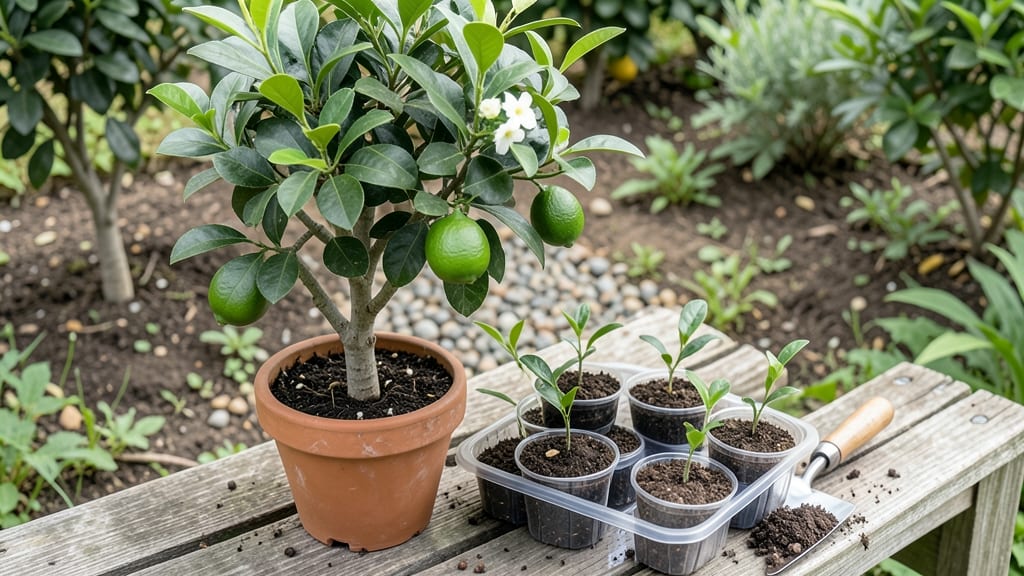
Growing a lime tree from seed unlocks a perfect slice of the tropics right in your backyard—if you're willing to play the long game. 🌱 The first year is all about watching a stubborn little seedling push through soil, not about harvesting fruit.
I still remember the thrill of my first true leaves, knowing that somewhere down the line, this scrappy sapling would become a towering tree heavy with fragrant limes.
The secret to success starts with the right seed—preferably from a fresh, organic lime (like a Persian or Meyer) that you've saved from a grocery store fruit.
Most people skip the cold stratification step, but chilling the seed for 2-4 weeks in a damp paper towel mimics winter conditions and breaks dormancy. Once sprouted, those seedlings need warmth, humidity, and bright indirect light—not the harsh afternoon sun that will scorch tender leaves.
By year three, you'll have a sturdy 3-4 foot tree that still looks more like a shrub than a fruit-bearing giant. But here's the magic: with proper care—regular pruning, winter protection in colder zones, and patience—that same tree could produce its first limes by year seven or eight.
The payoff isn't just the fruit, but the glossy green canopy that makes your patio feel like a Caribbean getaway.
This isn't a quick harvest—it's a decade-long romance with gardening. The challenges (slow growth, dormancy, pest pressure) are real, but so is the reward of a tree that's truly yours, from seed to harvest. Let's get those seeds sprouting and start the journey together.
📚 In This Guide
- What you need
- Instructions
- Tips and common mistakes
- Wrapping up and next steps
What you need
- ● Lime seeds: 3–5 fresh, plump seeds (harvested from ripe limes—avoid seedless varieties!)
- ● Small pots or seed trays: 4–6 inches deep (biodegradable pots work great for transplanting later)
- ● Well-draining potting mix: A blend of cactus/succulent mix (or regular potting soil + perlite/sand, 50/50 ratio)
- ● Spray bottle: For gentle watering (avoid soaking seeds)
- ● Plastic wrap or humidity dome: To create a mini greenhouse effect
- ○ Heat mat (optional but helpful): Keeps soil warm (70–85°F) for faster germination
- ● Sunny windowsill or grow lights: Bright, indirect light (6+ hours/day)
- ● Fertilizer: Balanced liquid fertilizer (diluted to half-strength) for seedlings after 4–6 weeks
- ● Pruning shears: For trimming leggy growth later on
- ● Larger container (1+ gallon): For transplanting once seedlings are 6+ inches tall
- ● pH test kit: Ensures soil pH is slightly acidic (6.0–7.0), ideal for lime trees
- ● Label markers: To track seed varieties (if growing multiple types)
Step-by-step instructions for growing a lime tree from seed
Here's how to turn a single lime seed into a thriving tropical tree.
🌱 Step 1: Extract and Prepare the Seed
Start with fresh lime seeds—older seeds lose viability quickly. Cut a lime in half, scoop out the pulp with a spoon, and rinse the seeds under cool water to remove excess fruit. I like to soak them in a bowl of water for 24 hours—this softens the outer coating and speeds up germination.
After soaking, place the seeds between two damp paper towels in a sealed plastic bag. Store them in a warm spot (75-80°F) where they'll stay consistently moist. Check daily and mist with water if the towels dry out. You'll see the first signs of sprouting in 7-14 days—tiny white roots breaking through the seed coat.
🪴 Step 2: Plant in a Moist, Well-Draining Mix
Once the seed sprouts a 1-inch root, it's ready for soil. Fill a 4-inch pot with a mix of 50% potting soil and 50% perlite—this ensures good drainage while keeping moisture. I like to pre-moisten the mix so it's damp but not soggy when the seedling goes in.
Plant the seed ½ inch deep, root-side down, and cover lightly with more mix. Water gently until the soil is evenly moist, then place the pot in a warm, bright spot with indirect light. Avoid direct sun at this stage—young seedlings can scorch easily. Keep the soil consistently moist but never waterlogged.
☀️ Step 3: Provide Gradual Sunlight and Care
After 4-6 weeks, when the seedling reaches 3-4 inches tall, it's ready for more sunlight. Move it to a south-facing window or under a grow light for 12-14 hours of light daily. You'll notice the leaves darken and the stem thicken as it strengthens.
Water when the top inch of soil feels dry, but avoid overwatering—lime trees hate soggy roots. Once the seedling has 6-8 leaves, it's time to transplant into a 6-inch pot with fresh potting mix. This gives it room to grow without becoming root-bound.
⏰ Step 4: Transition to Outdoor Conditions
When temperatures stay above 50°F at night, it's safe to move the young lime tree outside. Start by placing it in a sheltered spot for 2-3 hours the first day, gradually increasing exposure over 10-14 days. Watch for signs of stress—yellowing leaves or wilting mean it needs more time to adjust.
After 2-3 months outdoors, if the tree shows no signs of shock, you can plant it in the ground or a 12-inch pot. Choose a location with full sun and well-draining soil. Lime trees thrive in USDA Zones 9-11, but with proper care, you can keep them in containers and bring them inside during winter.
Tips & tricks for perfect lime tree growth
Real talk: Growing a lime tree from seed takes patience, but these little details make all the difference between a thriving plant and a sad seedling.
Seed Selection: Don't grab seeds from any old lime—pick the freshest, plumpest ones you can find. The riper the lime, the better the seeds, but avoid ones that feel mushy or overly soft. I've had the best luck with seeds from organic limes, which tend to be more vigorous. If you're using store-bought limes, choose ones that are firm and heavy for their size—these usually have the best seeds.
Germination Environment: That 75-80°F temperature range is non-negotiable for consistent germination. If your home runs cooler, place the sealed bag near a sunny window or use a seedling heat mat. I've found that a clear plastic bag creates a mini greenhouse effect—just make sure to open it daily to prevent mold. The key is keeping those towels damp but not soggy; squeeze them gently to test—if water drips out, they're too wet.
Transplant Timing: Wait until you see that 1-inch root before planting—rushing this step often leads to fragile seedlings that struggle. When transplanting into your 4-inch pot, gently tease apart the paper towels to avoid damaging those delicate roots. I like to use my finger to make a small hole in the soil mix before placing the seedling, which helps prevent root circling as it grows.
Light Transition Strategy: The move from indirect to direct sunlight after 4-6 weeks is where most people see problems. Start by placing your seedling near an east-facing window where it gets gentle morning sun, then gradually shift it to full sun over a week. I've had success using a grow light on a timer for 12-14 hours daily—this mimics natural daylight cycles perfectly and prevents leggy growth.
Pro Tips for Lime Tree From Seed
- Real talk: Growing a lime tree from seed takes patience, but these little details make all the difference between a thriving plant and a sad seedling.
- Seed Selection: Don't grab seeds from any old lime—pick the freshest, plumpest ones you can find.
- Germination Environment: That 75-80°F temperature range is non-negotiable for consistent germination.
Frequently asked questions
Growing a lime tree from seed is exciting, but it’s natural to have questions along the way! Here are some of the most common queries—and their answers—to help you succeed.
How long does it take for a lime seed to sprout?
A lime seed typically sprouts within 2 to 4 weeks if kept in warm, moist conditions. Patience is key—some seeds may take longer, especially if they’re not fully ripe when harvested. Keep the soil consistently damp (not soggy) and place the pot in a warm spot, like near a sunny window or under a grow light.
Will my lime tree from seed produce fruit?
Most lime trees grown from seed are not true to type, meaning they may produce fruit that’s different in size, shape, or flavor from the parent tree. For reliable fruit production, consider grafting a known variety onto your seedling once it’s established. Even if it doesn’t bear fruit, the tree will still be a stunning ornamental with fragrant leaves!
How cold can a lime tree from seed tolerate?
Young lime trees are tropical plants and are sensitive to cold. Seedlings can handle brief dips to 30–35°F (1–2°C), but prolonged exposure to frost will kill them. If you live in a colder climate, grow your lime tree in a large container so you can move it indoors during winter or grow it under a protective cover.
Can I grow a lime tree indoors from seed?
Yes! Lime trees thrive indoors with bright, indirect light and proper care. Place your seedling near a south- or west-facing window or supplement with a grow light. Keep the soil moist, fertilize lightly every 2–3 months, and prune to maintain shape. Just be prepared for slower growth compared to outdoor conditions.
What if my lime seed doesn’t sprout?
If your seed hasn’t sprouted after 6–8 weeks, it may be dormant or non-viable. Try these troubleshooting steps:
- Check for moisture—soil should feel like a damp sponge.
- Ensure warmth—use a seedling heat mat if needed.
- Test seed viability by soaking it in water for 24 hours; if it sinks, it’s likely still alive.
- Consider scarification—lightly sanding the seed’s tough outer layer can help.
Wrapping up and next steps
Growing a lime tree from seed is a rewarding journey that brings a taste of the tropics right to your backyard! 🌱 With patience, the right care, and a little green thumb, you’ll soon enjoy fresh limes straight from your own tree.
Whether you’re a beginner or an experienced gardener, every step—from seed selection to nurturing—is a chance to connect with nature and savor the sweet victory of homegrown fruit.
Ready to take the next step? Start small: plant your seed today and watch it grow into a thriving lime tree! 🌿 For even better results, research local climate tips or companion plants to maximize your tree’s success. Happy gardening!