
Propagation
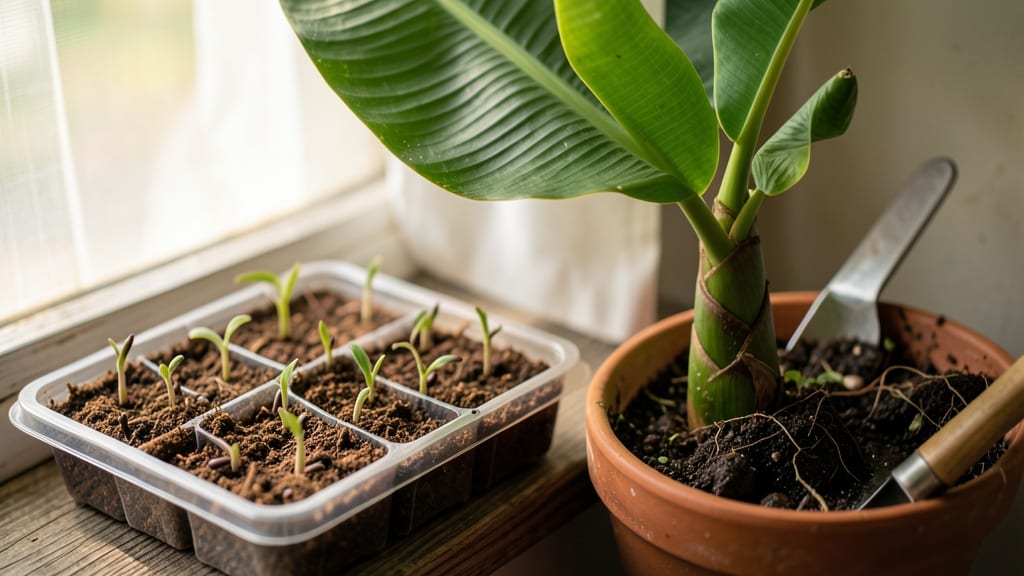
Growing a banana tree from seed feels like nurturing a tiny tropical dream in your kitchen window. 🌱 My first attempt sprouted in just 14 days—faster than I expected—when I mimicked the warm, moist conditions of its native rainforest.
The key isn’t just patience; it’s recreating those exact conditions right in your home.
You’ll need a warm spot (70°F+), a plastic bag to trap humidity, and a seed that’s been soaked overnight. Most people overlook the stratification step, but those few days of moisture prep make all the difference. Within weeks, you’ll watch a thick, glossy leaf unfurl—proof you’re on the right track.
By month three, your seedling will reach 2 feet tall, though it’ll look more like a dramatic houseplant than a fruit-bearing giant. That’s normal—banana trees take 3-5 years to mature indoors, but every leaf you grow is progress toward that first cluster of bananas.
Even in cooler climates, this method works—just move your pot outside during summer months. The real magic happens when you see those massive leaves shimmering in sunlight, knowing you grew it from something no bigger than a coffee bean.
📚 In This Guide
- What you need
- Instructions
- Tips and common mistakes
- Wrapping up and next steps
What you need
- ● Banana seeds – 1–3 (harvested from a ripe banana or purchased online). Pro tip: 💡 Store seeds in a cool, dry place until ready to plant!
- ● Well-draining potting mix – 1 small bag (look for a blend labeled "cactus/succulent" or "seed-starting mix" for best results).
- ● Small pots or seed trays – 2–3 (3–4 inches in diameter) with drainage holes.
- ● Plastic wrap or clear lid – 1 (to create a mini greenhouse effect).
- ● Spray bottle – 1 (for gentle watering).
- ● Grow lights or sunny windowsill – Access to bright, indirect light (6+ hours/day).
- ● Fertilizer (balanced, water-soluble) – 1 small bottle (e.g., 10-10-10 or 20-20-20, diluted to half-strength).
- ● Humidity dome or clear plastic bag – 1 (alternative to plastic wrap for moisture retention).
- ○ Heating mat – 1 (optional for faster germination if temps dip below 70°F/21°C).
- ● Tongs or tweezers – 1 pair (for delicate seed handling).
- ● Larger pot (1+ gallon) – 1 (for transplanting once the seedling grows 6+ inches).
- ● Mulch or pebbles – Small amount (to retain moisture in the soil).
Step-by-step guide to germinating banana seeds indoors
Here’s how to turn a tiny banana seed into a thriving indoor plant with just a few key supplies.
🌱 Step 1: Extract and Prep the Seed
Start with a fresh banana seed—save one from an organic banana (conventional bananas are treated to prevent sprouting). Peel away the fruit’s outer layer to expose the seed, which looks like a small, hard bean. Rinse it under cool water to remove any residual pulp, then pat dry with a paper towel.
I like to soak the seed in lukewarm water for 12-24 hours before planting. This softens the outer shell slightly and kickstarts germination. Place it in a small container of water and let it sit—you’ll see tiny roots or a slight crack in the shell after a day or two. That’s your signal it’s ready for soil.
🪴 Step 2: Plant in Moist, Well-Draining Soil
Fill a 4-inch pot with a mix of 50% potting soil and 50% perlite (or coconut coir) to ensure drainage—banana seeds rot easily if soggy. Gently press the prepped seed ½ inch deep into the soil, leaving the pointed end facing up. Lightly cover it with a thin layer of soil, then water until the top inch feels damp but not wet.
Place the pot in a warm, humid spot—think 75-85°F—like a seedling heat mat or on top of a refrigerator. Cover the pot loosely with plastic wrap to retain moisture, but prop it open slightly to allow airflow. Check daily for condensation; mist the soil if it dries out. Germination can take 2-4 weeks, so patience is key.
☀️ Step 3: Provide Bright, Indirect Light
Once the seedling emerges, remove the plastic wrap immediately to prevent fungal growth. Move it to a bright, indirect light spot—a south- or east-facing window works well. Avoid direct sun at first; young banana leaves burn easily. You’ll know it’s getting enough light when the leaves stay a vibrant green and grow upright.
After 4-6 weeks, when the seedling reaches 4-6 inches tall, you can introduce 2-3 hours of morning sun to strengthen it. Rotate the pot weekly so the plant grows straight, not leaning toward the light. Overwatering is the biggest risk now—wait until the top inch of soil feels dry before watering again.
🌿 Step 4: Transplant and Encourage Growth
When the seedling has 3-4 true leaves (not the initial seed leaves), transplant it into a 6-inch pot with fresh potting mix. Gently loosen the roots and place it deeper this time—banana trees need stability. Water thoroughly after transplanting to help the roots settle.
Here’s the thing—banana trees grow fast once established. Keep the soil consistently moist but never waterlogged, and fertilize lightly with a balanced liquid fertilizer (10-10-10) every 4-6 weeks in spring and summer. You’ll see new leaves unfurling every few weeks, and within a year, you might spot a flower bud if conditions are right.
Tips & tricks for growing a banana tree from seed
Here's what I've learned from watching my own banana tree grow from a tiny seed to a thriving plant.
Seed Prep Secret: The 12-24 hour soak isn't just about softening the shell—it's also a test. If your seed starts sprouting roots in water, it's ready for soil. But if it stays dormant, don't force it. Some seeds need that extra day to wake up, and pushing them can actually damage the delicate sprouts. I've seen seeds that needed the full 24 hours versus others that were ready in 12.
Soil Mix Matters: That 50/50 potting soil to perlite ratio is crucial for preventing rot. I've learned the hard way that banana seeds hate soggy conditions—they'll rot before they sprout. If you don't have perlite, coconut coir works too, but make sure it's well-draining. I've had success using a mix of 40% soil, 30% perlite, and 30% vermiculite for even better drainage.
Germination Patience: The 2-4 week germination window can feel like forever, but here's the thing: don't give up at 2 weeks if you don't see anything. Some seeds take the full 4 weeks, especially if your space isn't perfectly warm. I keep mine on top of my fridge (around 80°F) and check daily for condensation under the plastic wrap. If you see mold, remove the plastic immediately and let it air out.
Light Transition: When you're ready to introduce that 2-3 hours of morning sun after 4-6 weeks, start with just 30 minutes on the first day. Banana leaves are delicate and can scorch easily. I've seen seedlings get sunburnt when moved too quickly—look for pale patches or crispy edges as warning signs. Gradually increase sun exposure over a week or two.
Pro Tips for Grow A Banana Tree From Seed
- Here's what I've learned from watching my own banana tree grow from a tiny seed to a thriving plant.
- Seed Prep Secret: The 12-24 hour soak isn't just about softening the shell—it's also a test.
- Soil Mix Matters: That 50/50 potting soil to perlite ratio is crucial for preventing rot.
Frequently asked questions
Got questions about growing a banana tree from seed? You’re not alone! Here are some of the most common queries—and clear, actionable answers to help you succeed.
How long does it take for a banana seed to germinate?
A banana seed typically takes 2–4 weeks to germinate, depending on warmth (70–85°F) and moisture. If you don’t see sprouts in 4–6 weeks, check for rot or low humidity—patience is key! Some seeds take longer, especially if stored or dried.
Will a banana tree grown from seed actually produce fruit?
Most banana trees grown from seed (Musa spp.) are sterile and won’t bear edible fruit. However, they make stunning ornamental plants with large leaves! For fruit, you’ll need to propagate via rhizome division or tissue culture from a known fruiting cultivar.
Can I grow a banana tree indoors year-round?
Yes! With the right setup—bright, indirect light, a humid environment (60%+), and a grow light in winter—you can keep a banana tree indoors. Just ensure it gets plenty of space (6+ feet tall) and regular watering to mimic tropical conditions.
Why is my banana seed sprouting mold or turning black?
Mold or blackening usually means overwatering or poor drainage. Let the soil stay slightly moist (not soggy) and use a well-draining mix (e.g., perlite + peat). If mold appears, remove the seed, sterilize the pot, and repot with fresh, dry medium.
What’s the fastest way to grow a banana tree from seed?
For speed, use a heat mat (75–85°F) to speed germination, keep humidity high with a plastic dome, and transplant seedlings into larger pots every 3–4 months. With ideal conditions, you might see leaf growth in 3–6 months—though fruit (if any) takes years!
Still curious? Drop your question below—we’re happy to help troubleshoot your banana-growing journey!
Wrapping up and next steps
Growing a banana tree from seed is a rewarding journey that blends patience with the joy of nurturing life! 🌱 You’ve learned how to select the right seeds, create the perfect growing environment, and care for your young plant—now it’s time to watch your efforts bloom (literally).
While fruiting may take years, every leaf unfurling is a victory worth celebrating.
Ready to take the next step? Start small:
- Share your progress with fellow plant lovers online.
- Experiment with repotting or pruning as your tree grows.
- Dream big—imagine the tropical vibes your banana tree will bring indoors!