
How To
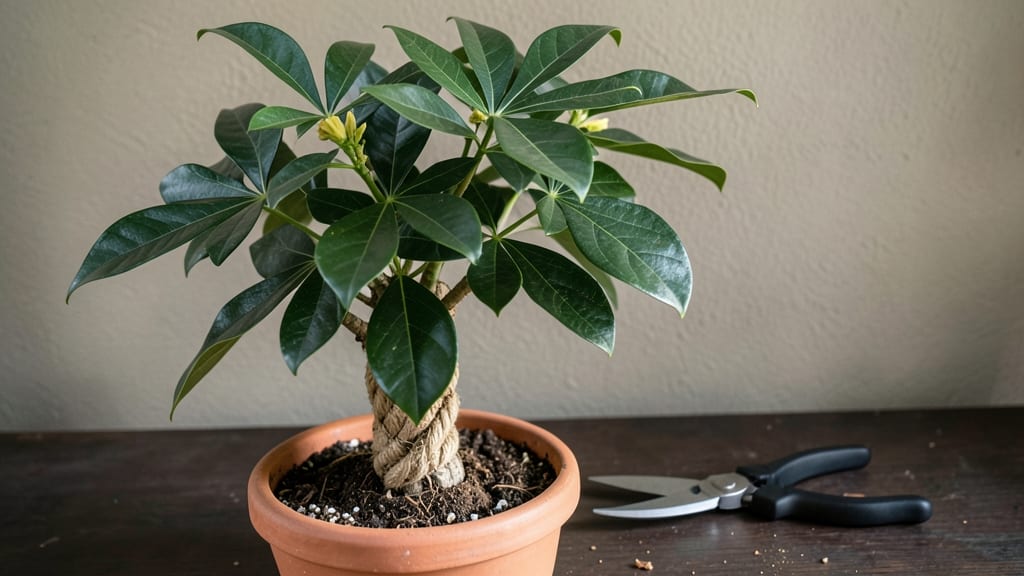
Pruning your money tree isn’t just about trimming—it’s the secret to unlocking that bushier, fuller look that makes this plant look like a thriving jungle instead of a sad, leggy stick. 🌿 I’ve pruned mine every spring for three years now, and each time, the difference is shocking: denser foliage, more branches, and a plant that actually lives up to its "money tree" name.
The key? Timing, technique, and knowing exactly where to cut.
You’ll need just three tools: sharp pruning shears (sterilized with rubbing alcohol), a small bowl of water for cuttings you want to propagate, and a clean cloth to wipe away sap.
Spring and early summer are the best times—when your plant is actively growing—but you can do light shaping anytime. The goal is to encourage new growth at the base by cutting back leggy stems and shaping the canopy so light reaches all those hidden leaves.
📚 In This Guide
- What you need
- Instructions
- Tips and common mistakes
- Wrapping up and next steps
What you need
- ● Sharp pruning shears or bypass pruners – Choose sterilized, bypass-style shears (not anvil-type) to make clean cuts. Size: 5-7 inches for medium branches.
- ● Rubbing alcohol (70% or higher) or hydrogen peroxide – Quantity: Small bottle (4 oz) for sterilizing tools.
- ● Small container or tray – Size: 8x8 inches or larger to collect cuttings for propagation.
- ○ Rooting hormone (optional but recommended) – Type: Gel or powder (e.g., Clonex or Hormex). Quantity: Small jar (2 oz).
- ● Well-draining potting mix – Type: Cactus/succulent mix or Money Tree-specific soil. Quantity: 1-2 small pots (4-6 inches) if propagating.
- ● Paper towels or clean cloth – For wiping tools and hands.
- ○ Gloves (optional but handy) – Type: Lightweight gardening gloves to protect from sap or thorns.
- ● Disinfectant spray (e.g., 10% bleach solution) – To clean pots or tools if reusing.
- ● Plant tie or soft twine – For securing large branches post-pruning.
- ● Clear plastic bag or humidity dome – To create a mini greenhouse for cuttings.
- ● Pruning sealant (e.g., tree wound dressing) – For sealing larger cuts (though Money Trees heal well without it).
- ● Spray bottle with water – To mist cuttings or the plant after trimming.
Step-by-Step instructions for pruning your money tree
Here's how I shape mine for fuller growth—no guesswork, just clear cuts.
🌿 Step 1: Identify Healthy Growth Points
Start by examining your money tree for new growth—look for the thickest, healthiest branches with at least 3-4 leaves. These are your pruning targets. Avoid cutting back branches with yellowing leaves or bare stems, as they won’t regrow as vigorously.
Run your fingers along the branches to feel for buds or nodes—these are the spots where new leaves will sprout. The closer you cut to a node, the bushier the regrowth. If you’re unsure, err on the side of leaving a little extra stem; your tree will forgive minor mistakes.
✂️ Step 2: Make Clean Cuts at the Right Angle
Use sharp pruning shears (sterilized with rubbing alcohol) to make cuts just above a leaf node at a 45-degree angle. This prevents water from pooling on the wound, which can cause rot. If you’re trimming a branch that’s thicker than your thumb, use bypass pruners for a cleaner cut.
Never tear or rip branches—this damages the plant and invites disease. For thicker branches, make a small notch under the branch first, then cut through the top to control the fall. This also helps the tree heal faster. Wipe your shears with rubbing alcohol between cuts to keep them sterile.
🌱 Step 3: Shape for Balance and Airflow
Step back and assess your tree’s shape. Aim for a fuller, rounded silhouette by trimming branches that grow inward or cross over others. This improves airflow, reducing humidity-related issues like fungal growth. Focus on outer branches first—they’ll fill in faster and give your tree a lush, natural look.
If your money tree is leggy, prune the topmost leaves to encourage bushier growth below. You’ll see new shoots emerge from the nodes within 4-6 weeks. Avoid over-pruning—never remove more than one-third of the foliage in a single session, or you’ll stress the plant.
💧 Step 4: Post-Pruning Care for Recovery
Water your money tree deeply after pruning to help it recover. Stick your finger 1 inch into the soil—if it’s dry, give it a thorough drink until water runs out the drainage hole. Avoid fertilizing immediately; wait 2-3 weeks to let the cuts heal before feeding with a balanced liquid fertilizer (like 20-20-20).
Place your tree in bright, indirect light for the next few weeks. If you notice yellowing leaves or dropping buds, it’s a sign of stress—adjust to a slightly shadier spot until new growth appears. Most money trees bounce back within 4-6 weeks, but be patient if your climate is cooler.
Tips & tricks for pruning money tree like a pro
Here's what nobody tells you about shaping your money tree—these tricks make all the difference between a stressed plant and one that thrives.
Tool Prep Matters: Sterilizing your pruning shears between cuts is non-negotiable. I learned this the hard way after noticing dark spots on my tree's leaves—turns out, old cuts can harbor bacteria. Wipe them with rubbing alcohol between every 3-4 cuts, especially if you're working with multiple branches. This simple step prevents fungal infections that can weaken your tree over time.
Visual Cues for Perfect Cuts: In Step 2, when making that 45-degree angle above the leaf node, think of a slice of pizza—you want the cut to be diagonal but not too steep. If you're unsure, hold your shears at a slight downward angle while cutting. The goal is to create a sloped surface that sheds water naturally, which keeps the wound from rotting. This small detail makes a huge difference in recovery time.
Seasonal Timing Insight: While the instructions don't specify seasons, I've found that pruning in late winter or early spring (just before new growth begins) gives the best results. This timing aligns with your tree's natural growth cycle. If you must prune in summer, do it early in the morning to reduce stress from heat and sunlight. The 4-6 week regrowth window mentioned in Step 3 works best when you give the tree time to recover before summer's peak heat.
Stress Signs to Watch For: After pruning, keep an eye out for these subtle stress signals: new leaves that appear smaller than normal, or buds that drop before opening. These are your tree's way of saying it's struggling. If you see either, move your tree to a slightly shadier spot for a week or two. Most money trees bounce back within 4-6 weeks, but cooler climates may need extra patience—sometimes up to 8 weeks for full recovery.
Pro Tips for Prune Money Tree
- Here's what nobody tells you about shaping your money tree—these tricks make all the difference between a stressed plant and one that thrives.
- Tool Prep Matters: Sterilizing your pruning shears between cuts is non-negotiable.
- Visual Cues for Perfect Cuts: In Step 2, when making that 45-degree angle above the leaf node, think of a slice of pizza—you want the cut to be diagonal but not too steep.
Frequently asked questions
When is the best time to prune my money tree?
The ideal time to prune your money tree is during its active growing season—spring and early summer (March to June). Light pruning can also be done in fall, but avoid heavy cuts in winter when growth slows. Prune after repotting for best results, as the plant recovers more easily from stress.
How much should I trim off at once?
Never remove more than one-third of the plant’s foliage in a single session. For shaping, trim small branches (1-2 inches) at a time. If you’re pruning for size control, focus on removing leggy or overgrown stems. Over-pruning can stress the plant, so take it slow!
Can I prune a money tree in winter?
Light maintenance (like removing dead leaves) is fine in winter, but avoid heavy pruning. The plant is dormant and healing takes longer. If you must prune, do so sparingly in late winter (February) to encourage spring growth. Skip it entirely if your money tree is in a cold draft.
What if my money tree looks bare after pruning?
If your money tree seems sparse, it’s likely due to over-pruning or poor light. To fix it:
- Move it to bright, indirect light (east or north-facing windows).
- Reduce watering slightly—overwatering stresses new growth.
- Fertilize lightly with a diluted balanced houseplant fertilizer every 4-6 weeks.
Do I need special tools to prune my money tree?
Nope! Basic tools like clean, sharp scissors or pruning shears work perfectly. Disinfect tools with rubbing alcohol before and after use to prevent disease. For larger branches, use a sterilized knife. Avoid tearing stems—always cut at a 45-degree angle just above a leaf node.
Wrapping up and next steps
Pruning your money tree (Pachira aquatica) isn’t just about keeping it tidy—it’s a love language for your plant! By following the right techniques, you’ll encourage healthier growth, fuller foliage, and even those coveted braided stems.
Whether you’re trimming for shape, size, or propagation, remember: confidence comes with practice—start small, observe your plant’s response, and adjust as you go.
Ready to see your money tree thrive? Grab those shears and get pruning! 🌱✨ For extra inspiration, check out care guides or join plant communities to share your progress. Your green thumb is growing stronger every day!