
Pruning
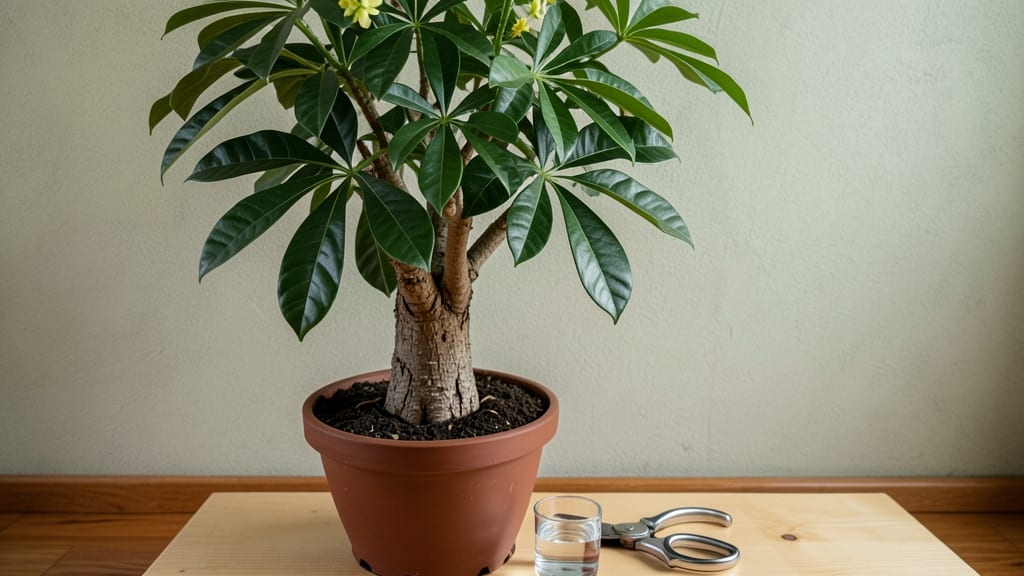
Learning how to prune a tall money tree can transform your jungle vines into a sleek, ceiling-fan-friendly centerpiece—here’s the strategic trick. 🌿 cuts that encourage bushier growth instead of bare stems. The key? Cutting above leaf nodes and timing your prune just right.
You'll need sharp pruning shears, rubbing alcohol for sterilization, and a clean spray bottle for post-pruning care. Most people panic and hack away at the top, but that creates leggy stems. Instead, we're targeting the uppermost leaves and making angled cuts just above nodes to spark new branches.
This method keeps your tree healthy while transforming it from a vertical pole into a lush, compact statement piece.
After pruning, you'll notice fresh green growth within weeks—new leaves at the cut points and a fuller shape overall. The tree might drop a few leaves at first, but that's normal as it adjusts.
Keep it in bright, indirect light and water when the top inch of soil feels dry. With the right cuts, you can maintain a manageable height without sacrificing that signature tropical vibe.
Spring and early summer are ideal times to prune, but you can do light maintenance anytime. Just avoid heavy cuts in winter when the plant's energy is low.
The goal is to shape it gradually, so don't try to reduce height by more than a third in one go—that's how you end up with a sad, sparse tree. Think of it as a slow transformation, not a drastic makeover.
📚 In This Guide
- What you need
- Instructions
- Tips and common mistakes
- Wrapping up and next steps
What you need
- ● Sharp pruning shears – Choose bypass pruners (6-8 inches) for clean cuts on stems up to ½-inch thick.
- ● Sterilized cutting tool – A disinfected knife or pruning saw (for thicker branches over ½-inch).
- ● Rubbing alcohol (70% or higher) – 1 small bottle (4 oz) to sterilize tools between cuts.
- ○ Pruning sealant – Optional but recommended (e.g., tree wound dressing) to prevent sap loss or disease on larger cuts.
- ● Gloves – A pair of gardening gloves (nitrile or leather) to protect hands from sap and thorns.
- ● Newspaper or drop cloth – 1-2 sheets to catch fallen leaves/debris.
- ● Small container or bucket – For collecting cuttings (if propagating new plants).
- ● Ladder or step stool – Only if needed (ensure it’s stable and 4+ feet tall).
- ● Rooting hormone – To boost success if propagating cuttings.
- ● Spray bottle with water – To mist cuttings before rooting.
- ● Plant tie or zip ties – For supporting the tree post-pruning if needed.
- ● Disposable gloves – Extra pair for sap cleanup.
Step-by-step guide for pruning a money tree to control height
Here's how to trim your towering money tree without harming its lush foliage.
✂️ Step 1: Assess the Tree's Structure and Growth Points
Start by examining your money tree (Pachira aquatica) for its natural branching pattern. Look for the thick, woody trunk and the clusters of leaves at the nodes—these are where new growth emerges. The key is to identify the highest node with at least 3-4 healthy leaves. This will be your pruning point to maintain a balanced shape.
Run your fingers along the trunk to feel the raised nodes where leaves grow. Avoid cutting just above a bare section of trunk—this can leave your tree looking bare. If you're unsure, mark the spot with a pencil before making any cuts. The goal is to keep the tree sturdy while encouraging fuller growth lower down.
✂️ Step 2: Sterilize Tools and Make Clean Cuts
Before you begin, wipe down your pruning shears or sharp scissors with rubbing alcohol to prevent introducing bacteria or fungus. A clean cut heals faster and reduces the risk of disease. I always sterilize my tools between plants—it's a small step that saves a lot of heartache later.
Make your cut just above a leaf node at a 45-degree angle. This angled cut helps water run off the wound instead of pooling, which can rot the trunk. Avoid leaving stubs—cutting too close to the node can damage the growing point. If you're cutting a long stem, you can also make a second cut parallel to the first to create a clean, slanted surface.
🌿 Step 3: Encourage Bushier Growth with Strategic Trimming
After your main height cut, look for any leggy stems or branches that are growing too long or thin. These can be trimmed back to encourage the tree to branch out more. Focus on cutting back stems that are growing outward rather than upward—this redirects energy into filling out the tree's shape.
Here's the thing—money trees respond well to pruning because they naturally grow in a multi-stemmed bush form in the wild. By trimming the top and some of the taller stems, you're essentially mimicking their natural growth habit. Within a few weeks, you'll see new shoots emerging from the nodes below your cuts, creating a fuller, more compact tree.
💧 Step 4: Post-Pruning Care for Healthy Regrowth
After pruning, give your money tree a light misting with water to reduce stress on the plant. Place it in a spot with bright, indirect light for the first week—this helps it recover without the added stress of direct sunlight. Avoid fertilizing immediately after pruning, as the tree needs time to focus on healing and regrowing.
Watch for new growth emerging from the nodes below your cuts. You'll see small buds forming within 2-4 weeks, and these will eventually grow into new branches. If you notice any yellowing leaves after pruning, it's usually a sign of stress, but don't panic—just keep the soil lightly moist and maintain good air circulation around the plant.
⏰ Step 5: Monitor and Maintain the New Shape
Over the next few months, keep an eye on how your money tree fills out. If any new growth starts to look leggy again, you can do a light trim to maintain its shape. The key is to prune just enough to control height without removing too many leaves at once—this keeps the tree healthy and encourages steady growth.
Real talk: Pruning a money tree is more about shaping than drastic cuts. Think of it like giving your tree a haircut—you want to keep it looking neat without shaving it too short. With regular, gentle trims, your money tree will stay at a manageable height while staying lush and full.
Tips & tricks for pruning a money tree
Here's what nobody tells you—these tricks will help you prune your money tree like a pro without stressing the plant.
Node Selection: When choosing your pruning point in Step 1, count up from the base to ensure you're cutting just above a node with at least 3-4 healthy leaves. I've made the mistake of cutting too close to a bare section—this creates an ugly gap that takes forever to fill in. Always run your fingers along the trunk to feel those raised nodes before marking your cut. The goal is to maintain that sturdy trunk while encouraging new growth from the nodes below.
Tool Preparation: Don't skip the sterilization step in Step 2—this is where most plant diseases start. I've seen pruning shears spread fungus between plants before, and it's a nightmare to fix. Keep rubbing alcohol handy and wipe down your tools after each cut. For a cleaner cut, make your initial incision just above the node at a 45-degree angle, then follow with a second cut parallel to the first to create a smooth surface that heals better. This two-step method prevents jagged edges that can trap moisture.
Strategic Pruning: After your main height cut, focus on the leggy stems in Step 3—these are the ones growing straight up rather than outward. Cutting these back encourages the tree to branch out naturally. I've found that money trees respond best when you mimic their wild growth habit of multiple stems. Within 2-4 weeks, you'll see those buds forming at the nodes below your cuts, creating that fuller, bushier look we're after.
Recovery Care: The post-pruning care in Step 4 is just as important as the cuts themselves. After trimming, give your tree a light misting to reduce stress, then move it to bright, indirect light for the first week. I've noticed that yellowing leaves often appear during this recovery period, but don't panic—it's just the tree adjusting. Keep the soil lightly moist and maintain good air circulation to help it heal properly. The key is patience; new growth will emerge from those nodes below your cuts within weeks.
Pro Tips for Prune A Money Tree That Is Too Tall
- Here's what nobody tells you—these tricks will help you prune your money tree like a pro without stressing the plant.
- Node Selection: When choosing your pruning point in Step 1, count up from the base to ensure you're cutting just above a node with at least 3-4 healthy leaves.
- Tool Preparation: Don't skip the sterilization step in Step 2—this is where most plant diseases start.
Frequently asked questions
Got questions about pruning your towering money tree? You’re not alone! Here are answers to the most common concerns—so you can trim with confidence and keep your plant thriving.
When is the best time to prune a money tree?
Prune your money tree (Pachira aquatica) during its active growing season—typically spring or early summer. Avoid heavy pruning in fall or winter, as the plant slows growth and may struggle to recover. Light trimming for shape can happen anytime, but major cuts should wait for warmer months.
Can I prune a money tree too much?
Yes! Over-pruning—especially cutting back more than 1/3 of the plant’s height or foliage at once—can stress your money tree. Stick to strategic cuts (like removing leggy stems or overgrown branches) and avoid shearing. If you’ve already pruned too much, reduce watering slightly and give it time to bounce back.
Will pruning make my money tree bushier?
Pruning just above a leaf node (where leaves grow) encourages branching. For a bushier look, focus on cutting back the topmost stems or leggy growth. Avoid pruning too close to the base, as this can stunt new growth. Patience is key—new branches may take a few weeks to emerge.
Do I need special tools to prune a money tree?
Not necessarily! While sterilized pruning shears or small hands pruners work best, you can use clean, sharp scissors in a pinch. Just ensure your tools are disinfected with rubbing alcohol to prevent disease. For tall stems, a step stool or ladder (with caution!) helps reach safely without damaging the plant.
What if my money tree doesn’t grow back after pruning?
If your money tree refuses to regrow or develops yellow leaves post-pruning, it may be due to over-trimming, root stress, or poor light. Check its location—ensure it gets bright, indirect light (like an east or west window). Reduce watering slightly and fertilize lightly with a balanced houseplant food to encourage recovery.
Wrapping up and next steps
Pruning your money tree doesn’t have to be intimidating—with the right tools, techniques, and timing, you can tame its height while keeping it lush and thriving! 🌿 Remember, the key is patience and precision: focus on selective cuts, prioritize healthy growth, and always sanitize your tools to avoid stressing the plant.
Your money tree will reward you with balanced beauty and continued vitality.
Now that you’re armed with knowledge, why not take the next step? Experiment with shaping your tree into a stunning bonsai or a fuller bush—your green thumb is ready! 🌱 Check out our guide on maintaining your pruned money tree for long-term care tips.