
Pruning
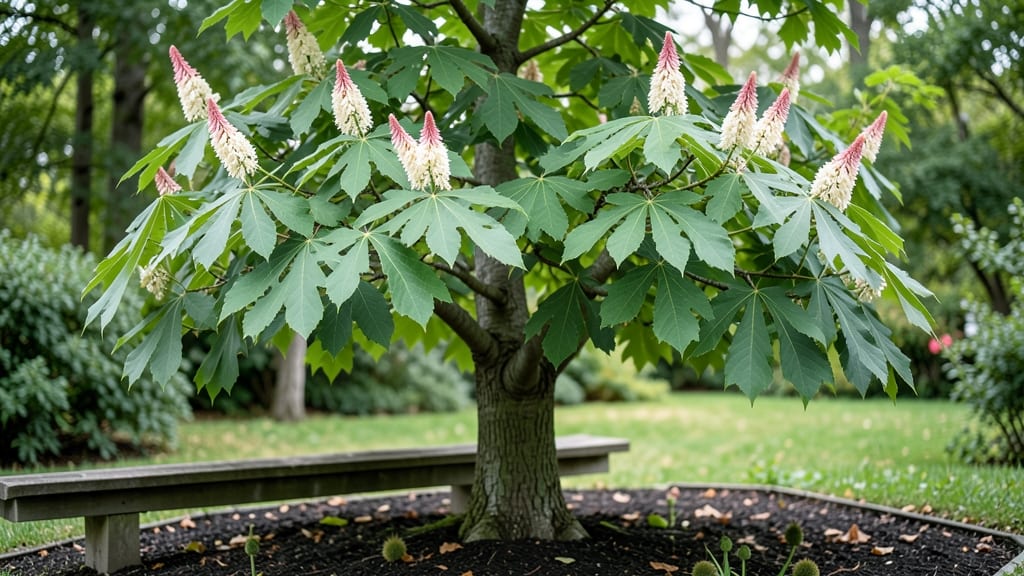
The horse nut tree thrives in Pacific Northwest winters with its striking foliage and sturdy branches. 🌿 I planted mine five years ago, and it’s now the centerpiece of my shade garden—its glossy leaves and candelabra-shaped flowers make it impossible to ignore.
The real magic happens in fall when the spiky seed pods turn golden, adding texture and color to the landscape.
This tree needs full sun to partial shade and tolerates most soil types, though it prefers well-draining, slightly acidic conditions. Watering is simple: deep soaks once a week during the first growing season, then less as it establishes.
Prune in late winter to remove dead branches and shape it early—this keeps it healthy and encourages those iconic blooms.
By summer, your horse nut tree will reward you with a canopy of lush green leaves and fragrant white flowers that attract pollinators. The seeds, while not edible for humans, are a conversation starter and add architectural interest.
It’s a low-maintenance tree that grows 40-60 feet tall, perfect for large gardens or as a street tree in urban areas.
In the PNW’s wet climate, this tree handles frost like a champ, making it a reliable choice for year-round beauty. Just watch for leaf miner pests and keep an eye out for fungal issues in damp conditions. With the right care, it’ll outlive you—and become a neighborhood landmark.
📚 In This Guide
- What you need
- Instructions
- Tips and common mistakes
- Wrapping up and next steps
What you need
- ● Pruning shears: Bypass-style (for clean cuts), 7–10" blade length (for small to medium branches). Sterilize with rubbing alcohol between cuts to prevent disease.
- ● Loppers: 18–24" with bypass blades (for thicker branches, ½"–1" diameter). Look for ratcheting or spring-assisted models for ease.
- ● Pruning saw: Curved-tooth (for branches >1" diameter). A folding bow saw (20–24" blade) works best for horse nut’s dense wood.
- ● Safety gear: Work gloves (cut-resistant, like Mechanix or leather)
- ● Safety goggles (rated for debris impact)
- ● Ear protection (if using a chainsaw for large limbs)
- ● Non-slip boots or steel-toe shoes
- ● Ladder: Extension ladder (20–30 ft, Dual-wheel for stability). Ensure it’s rated for your weight + tools.
- ● Cleaning supplies: Rubbing alcohol (70% isopropyl) or bleach solution (1 part bleach : 9 parts water)
- ● Paper towels or rags
- ● Disposal bags: Heavy-duty contractor bags (30–50 gallon) for debris. Horse nuts are toxic—never compost them!
- ● Pole saw: 12–16 ft with a curved blade for high branches (saves ladder time!).
- ● Chainsaw: Lightweight (14–16" bar) for large-diameter limbs only. Only use if experienced!
- ● Tree wound dressing: Pruning sealant (controversial, but some swear by it for large cuts).
- ● Tagging system: Color-coded flags or tape to mark branches for removal (helpful for complex pruning plans).
- ● First-aid kit: Include antiseptic wipes and bandages for minor cuts.
- ● Know your tree: Horse nut trees thrive in USDA Zones 7–9. Prune in late winter/early spring (Feb–March) before buds swell.
- ● Check local regulations: Some areas require permits for large tree removals or pruning near power lines.
- ● Weather watch: Avoid pruning if rain is forecasted within 24 hours—wet wood is harder to sterilize.
- ● Safety first: Never work alone on tall trees. Have a spotter or use a tree harness for heights >20 ft.
Step-by-step instructions for planting and caring for horse nut trees in the Pacific Northwest
Here's how to establish a sturdy, frost-tolerant canopy that thrives in PNW's cooler climate.
🌱 Step 1: Choose the Right Location and Plant in Early Spring
Select a site with full sun exposure (at least 6-8 hours daily) and well-draining soil. Horse nut trees tolerate some shade but produce fewer nuts in low-light conditions. The Pacific Northwest's cooler summers mean you can plant in early spring (March-April) or fall (September-October), but spring gives roots time to establish before winter.
Dig a hole twice as wide as the tree's root ball but only as deep—planting too deep suffocates roots. Loosen the sides of the hole to encourage root spread. I always mix the native soil with 2 inches of compost at the bottom to improve drainage and fertility. This helps prevent root rot, which is a common issue in PNW's damp climate.
☀️ Step 2: Provide Seasonal Care for Frost Resistance
Water deeply once a week during the first growing season, ensuring the soil stays moist but not soggy to a depth of 12 inches. In the Pacific Northwest, where summers can be dry but winters are wet, mulch with 3-4 inches of wood chips around the base (keeping it 6 inches away from the trunk) to retain moisture and regulate soil temperature. This mulch layer also protects roots from freezing temperatures.
Young trees benefit from light pruning in late winter to remove dead or crossing branches. Avoid heavy pruning—the horse nut tree's natural shape provides excellent wind resistance, which is crucial in PNW's stormy conditions. I always check for signs of fungal diseases (like brown spots on leaves) and treat with copper fungicide if needed, as the damp climate can encourage these issues.
💧 Step 3: Maintain Through Maturity for Long-Term Canopy Strength
Once established, horse nut trees are drought-tolerant but still need deep watering every 2-3 weeks during dry spells. The Pacific Northwest's microclimates mean your tree might need more or less depending on whether you're in a coastal rain shadow or a wetter inland area. Always water at the base, not overhead, to prevent fungal diseases like powdery mildew.
Fertilize lightly in early spring with a balanced 10-10-10 formula—horse nut trees don't need heavy feeding. Over-fertilizing leads to weak wood, which can snap in winter storms. I also monitor for pests like aphids (common in PNW) and spray with neem oil if infestations appear. A healthy tree will develop a strong canopy within 5-7 years, providing shade and nuts for decades.
Tips & tricks for thriving horse nut trees in the Pacific Northwest
Between us, establishing a hardy horse nut tree in the PNW takes more than just planting—it's about working with the climate's quirks. Here's what I've learned after watching these trees weather everything from coastal fog to inland heatwaves.
Site Selection Secret: While the instructions mention full sun, I've found that in coastal areas, partial sun (4-6 hours) can still work if you're prioritizing shade over nut production. The key is avoiding low-lying spots where cold air pools—horse nut trees hate sitting in frost pockets. Test your site by observing how sunlight moves across it throughout the day, especially in winter when days are shortest.
Soil Preparation Hack: The 2 inches of compost recommendation is perfect, but for clay-heavy PNW soils, I add an extra 1 inch of coarse sand to improve drainage. This prevents that dreaded root rot while still keeping moisture. Mix it thoroughly with the native soil—don't just layer it at the bottom. Think of it like creating a sponge that holds water but lets excess drain away.
Winter Protection Strategy: For your first two winters, wrap the trunk with tree guard (available at garden centers) to prevent rodent damage and frost cracks. I've also seen dramatic results from piling an extra 6 inches of mulch around the base in late fall—this creates an insulating blanket that moderates soil temperature swings. Just remember to pull it back 2 inches from the trunk to prevent rot.
Pruning Timing Tip: That late winter pruning window is critical, but I've learned to be even more precise: aim for the first week of March when buds are just starting to swell. This timing gives the tree time to heal before the growing season kicks in. And here's what nobody tells you—always sterilize your pruning tools with rubbing alcohol between cuts to prevent spreading fungal spores between branches.
Pro Tips for Horse Nut Tree
- Between us, establishing a hardy horse nut tree in the PNW takes more than just planting—it's about working with the climate's quirks.
- Site Selection Secret: While the instructions mention full sun, I've found that in coastal areas, partial sun (4-6 hours) can still work if you're prioritizing shade over nut production.
- Soil Preparation Hack: The 2 inches of compost recommendation is perfect, but for clay-heavy PNW soils, I add an extra 1 inch of coarse sand to improve drainage.
Frequently asked questions
Got questions about the horse nut tree (Aesculus californica)? You’re not alone!
This Pacific Northwest native is tough, beautiful, and full of surprises—especially when it comes to pruning and care. Here are the answers to the most common queries to help you grow a thriving canopy.
Is the horse nut tree really frost-resistant?
The horse nut tree is one of the few frost-resistant canopy trees native to the PNW, handling temperatures down to -15°F (-26°C) once established. Young trees may need winter mulch in extreme cold snaps, but mature specimens are highly resilient. Its glossy leaves and sturdy branches also make it a winner in windy coastal climates.
How fast does it grow, and when is the best time to prune?
Expect 1–2 feet per year under ideal conditions, though growth slows in dense shade. The best time to prune is late winter or early spring (February–March), before new buds swell. Avoid heavy pruning in fall—it can stimulate late-season growth vulnerable to frost. Pro tip: Use sharp bypass pruners to make clean cuts just above a bud or branch collar.
Can I grow a horse nut tree in a container? Or is it strictly a landscape plant?
While horse nut trees thrive as specimen landscape plants (reaching 20–30 feet tall), they can be grown in large containers (20+ gallons) for 3–5 years. Use a well-draining potting mix and upgrade pots annually. However, they’re not long-term container candidates—their deep root systems need soil to shine. Consider a dwarf cultivar (like ‘Canyon’ maple) if space is limited.
Why are my horse nut tree leaves turning yellow or brown?
Yellowing leaves often signal overwatering or compacted soil, while brown edges or curling can mean underwatering or fungal issues (like powdery mildew). Check these first:
- Water deeply 1–2x/week in dry spells (PNW summers can fool you!).
- Aerate the soil if it’s clay-heavy (they hate soggy feet!).
- Prune for airflow—thin dense branches to reduce humidity traps.
Are there non-toxic alternatives to horse nut trees for homes with pets?
While horse nut trees are mildly toxic to pets (containing saponins), safer PNW canopy options include:
Tree
Height
Key Traits
Oregon white oak (Quercus garryana)
30–50 ft
Drought-tolerant, acorns (non-toxic in moderation), slow-growing.
Pacific dogwood (Cornus nuttallii)
15–25 ft
Stunning blooms, non-toxic, thrives in shade.
Bigleaf maple (Acer macrophyllum)
40–60 ft
Vibrant fall color, pet-safe, but needs space.
Wrapping up and next steps
The horse nut tree is a stunning, frost-resistant gem for the Pacific Northwest, offering year-round beauty with minimal fuss. Whether you're a seasoned gardener or just starting out, its resilience and adaptability make it a fantastic addition to your landscape—just remember to prune strategically for optimal growth. 🌿
Ready to transform your yard? Start by sketching your vision—mark where the tree will thrive, then gather your tools and dive in! With a little patience and care, you’ll have a thriving, picturesque centerpiece that keeps giving back for decades.