
Pruning
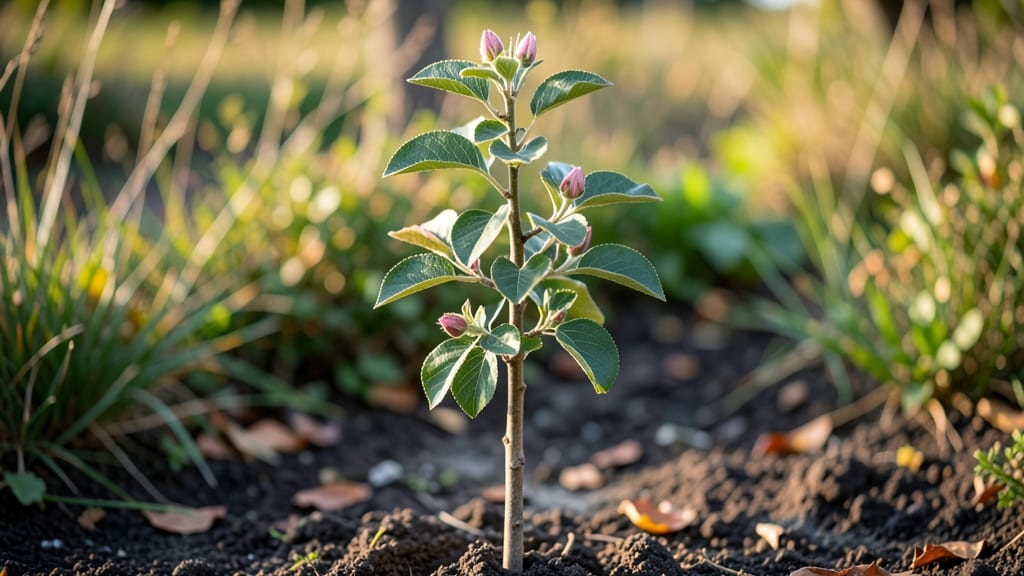
Planting a Honeycrisp apple tree sapling in the Pacific Northwest means you're setting up a fruit-bearing powerhouse that thrives in your climate. 🌳 The secret lies in matching its needs—cool nights, well-drained soil, and full sun—with the region's natural advantages.
I learned this the hard way when my first sapling struggled in heavy clay soil until I amended it with compost and sand.
You'll need a sunny spot with at least 6 hours of direct light daily, well-draining soil (mix in compost and sand if your native soil is heavy), and a pollinator partner like a Granny Smith or Fuji tree within 50 feet.
The planting itself takes about 30 minutes once you've got your hole dug and amendments ready.
Within 2-3 years, you'll see your first blossoms, and with proper care—regular watering, annual pruning, and seasonal fertilization—you'll harvest crisp, sweet Honeycrisp apples by year 4 or 5. The key is patience; these trees reward long-term investment with fruit that's worth the wait.
This guide covers everything from planting to long-term care, including how to handle Pacific Northwest's frost cycles and common pests like codling moths. Let's get that sapling growing strong!
📚 In This Guide
- What you need
- Instructions
- Tips and common mistakes
- Wrapping up and next steps
What you need
- ● Honeycrisp apple tree sapling: 1–2 bare-root or container-grown saplings (5–6 ft tall, 1–2 inches in diameter)
- ● Certified disease-resistant variety (ask your local nursery!)
- ● Planting site: Full sun (6+ hours/day)
- ● Well-draining soil (pH 6.0–7.0)
- ● Space: 15–20 ft apart (or 25+ ft for dwarf varieties)
- ○ Soil amendments (optional but recommended for PNW clay/acidic soil): 5–10 lbs of compost or aged manure
- ● 1–2 lbs of lime (if soil pH is <6.0)
- ● 1 cup of 10-10-10 fertilizer (for nutrient boost)
- ● Pruning shears: Bypass pruners (sharp, 6–8 inch blades)
- ● Loppers: 1 pair (for thicker branches, 18–24 inch reach)
- ● Pruning saw: 1 (for branches >1 inch thick)
- ● Gloves: Heavy-duty leather or nitrile-coated (to protect from thorns)
- ● Disinfectant: 70% isopropyl alcohol or bleach solution (1:9 ratio) for tools
- ● Tree wrap: 1 roll (to protect young bark from sun/scratches)
- ● Mulch: 2–3 inches of wood chips or straw (keep 6 inches from trunk)
- ● Frost cloth: 1–2 rolls (30–50% shade cloth for young trees)
- ● Drip irrigation kit: 1 (for consistent moisture in dry summers)
- ● Staking system: 2–3 stakes + tree ties (if planting in windy areas)
- ● Pest deterrents: Neem oil spray (organic)
- ● Pheromone traps (for codling moths)
Step-by-step instructions for planting and establishing a Honeycrisp apple sapling
Here’s how to get your frost-hardy Honeycrisp sapling thriving in Pacific Northwest conditions.
🌱 Step 1: Choose the Perfect Planting Site
Honeycrisp apples need full sun—at least 6-8 hours daily—to produce sweet, flavorful fruit. In the Pacific Northwest, where winters can be damp and cool, pick a spot with south-facing exposure to maximize sunlight. Avoid low areas where cold air settles, as Honeycrisp saplings are sensitive to late spring frosts that can damage blossoms.
Test the soil by digging a 12-inch hole—ideal soil should drain well but retain moisture. If your soil feels heavy or stays soggy, amend it with 2-3 inches of compost mixed into the top 12 inches of soil. Honeycrisp trees prefer slightly acidic to neutral soil (pH 6.0-7.0), so a simple soil test kit will help you adjust if needed.
🪴 Step 2: Plant at the Right Time and Depth
Plant your bare-root sapling in early spring, just as buds begin to swell but before leaves emerge. This timing ensures roots establish before summer heat arrives. If your sapling arrives with a container, plant it as soon as possible—root-bound trees struggle to adapt.
Dig a hole twice as wide as the root ball but no deeper. Gently loosen any circling roots and position the sapling so the graft union (the bump near the base) sits 2-3 inches above soil level. This prevents water from pooling around the graft, which can cause rot. Backfill with native soil, tamping lightly to remove air pockets.
☀️ Step 3: Water Deeply and Mulch for Frost Protection
Water the sapling deeply right after planting—soak the soil until it’s 6 inches wet—to encourage roots to spread. In the Pacific Northwest, where winters are wet but summers can be dry, deep watering once a week (or more in heatwaves) keeps roots healthy. Avoid shallow watering, which encourages weak, surface roots.
Spread 3-4 inches of organic mulch (like wood chips or straw) around the base, keeping it 6 inches away from the trunk to prevent rot. Mulch insulates roots in winter and retains moisture in summer. In early spring, add a thin layer of mulch to protect young trees from late frosts that can damage blossoms.
✂️ Step 4: Prune for Structure and Frost Resistance
Prune your sapling in late winter or early spring before buds swell. Remove any dead, crossing, or inward-growing branches to improve airflow and reduce disease risk. Cut just above an outward-facing bud to encourage strong growth. Avoid heavy pruning—remove no more than 25% of the canopy in the first year.
In the Pacific Northwest, where spring frosts can linger, prune after the last frost date for your region. This ensures new growth isn’t damaged by late cold snaps. Thin out crowded branches to reduce competition for sunlight and improve fruit quality.
🌿 Step 5: Monitor for Pests and Frost Damage
Keep an eye out for apple maggots, codling moths, and aphids, common pests in the Pacific Northwest. Use row covers in early spring to protect blossoms from pests and late frosts. If you notice yellowing leaves or stunted growth, check for fire blight (a bacterial disease) and prune infected branches immediately.
In winter, wrap the trunk of young saplings with tree wrap to prevent sunscald (damage from winter sun on bare bark). In early spring, apply a balanced fertilizer (like 10-10-10) to encourage strong growth, but avoid over-fertilizing—too much nitrogen can make trees vulnerable to frost damage.
Tips & tricks for perfect Honeycrisp sapling establishment
Here's what I've learned after helping Pacific Northwest gardeners get their fruit trees off to the strongest start.
Site Selection Secret: That 6-8 hours of sunlight isn't just about quantity—it's about quality. In the PNW, morning sun is crucial for drying dew quickly, which prevents fungal diseases. I always check for at least 4 hours of direct morning sunlight before committing to a spot. The south-facing rule is non-negotiable because it maximizes winter sun exposure when trees are dormant.
Planting Depth Caution: The 2-3 inches above soil level for the graft union is critical—any lower and you risk rot, any higher and the tree struggles to establish properly. I use a small stake marked at the correct height as a reference when planting multiple saplings. This small detail makes all the difference in long-term survival rates.
Watering Wisdom: That 6-inch deep watering right after planting isn't just about initial hydration—it's about encouraging roots to grow downward. I've seen too many new growers water lightly, which creates shallow root systems that can't support the tree during summer droughts. Use a soil probe to verify moisture depth after watering.
Pro Tips for Honeycrisp Apple Tree Sapling
- Here's what I've learned after helping Pacific Northwest gardeners get their fruit trees off to the strongest start.
- Site Selection Secret: That 6-8 hours of sunlight isn't just about quantity—it's about quality.
- Planting Depth Caution: The 2-3 inches above soil level for the graft union is critical—any lower and you risk rot, any higher and the tree struggles to establish properly.
Frequently asked questions
How cold-hardy is a Honeycrisp sapling, and can it survive PNW winters?
A Honeycrisp apple tree is zoned 3–8, making it perfect for the PNW’s frosty winters. Young saplings (under 3 years) need extra mulch (4–6 inches) and winter wraps to protect tender bark. Once established, they’ll handle 20°F dips like a champ—just avoid late spring frosts by pruning early!
When’s the best time to plant my Honeycrisp sapling in Washington or Oregon?
Plant in early spring (March–April) or fall (October–November) for optimal root growth. Avoid summer heat or winter freezes. Pro tip: Soak roots in water for 1–2 hours before planting to reduce transplant shock. Choose a sunny, well-drained spot—Honeycrisp loves 6+ hours of sunlight daily.
How fast does a Honeycrisp sapling grow, and when will it bear fruit?
Saplings grow 12–24 inches per year, reaching maturity (15–20 ft tall) in 5–7 years. Fruit production starts at 4–6 years, but cross-pollination with another variety (like Fuji or Gala) is key for sweet Honeycrisp apples. Patience pays off!
Should I prune my Honeycrisp sapling the first year, and how?
Yes! Prune in late winter (before buds swell) to shape the tree and remove dead/diseased branches. Focus on:
- Opening the center for airflow
- Trimming suckers (shoots from the base)
- Keeping the main trunk 4–6 feet tall initially
What pests or diseases should I watch for in PNW Honeycrisp trees?
Common threats include:
- Apple maggots: Use row covers or pheromone traps in summer.
- Cedar apple rust: Remove nearby juniper trees or spray with copper fungicide.
- Fire blight: Prune infected branches 6 inches below the damage and sterilize tools.
Wrapping up and next steps
Growing a Honeycrisp apple tree sapling in the Pacific Northwest is a rewarding journey—one that blends resilience with sweet rewards! 🌱 With the right pruning techniques, frost-resistant care, and a little patience, you’ll soon enjoy crisp, flavorful apples straight from your backyard.
Remember, healthy growth starts with confident pruning, so don’t hesitate to roll up your sleeves and get hands-on!
Ready to take the next step? Start small—whether it’s pruning your first branch or planning your orchard layout. The best time to begin is now—your future Honeycrisp harvest will thank you!