
Pruning
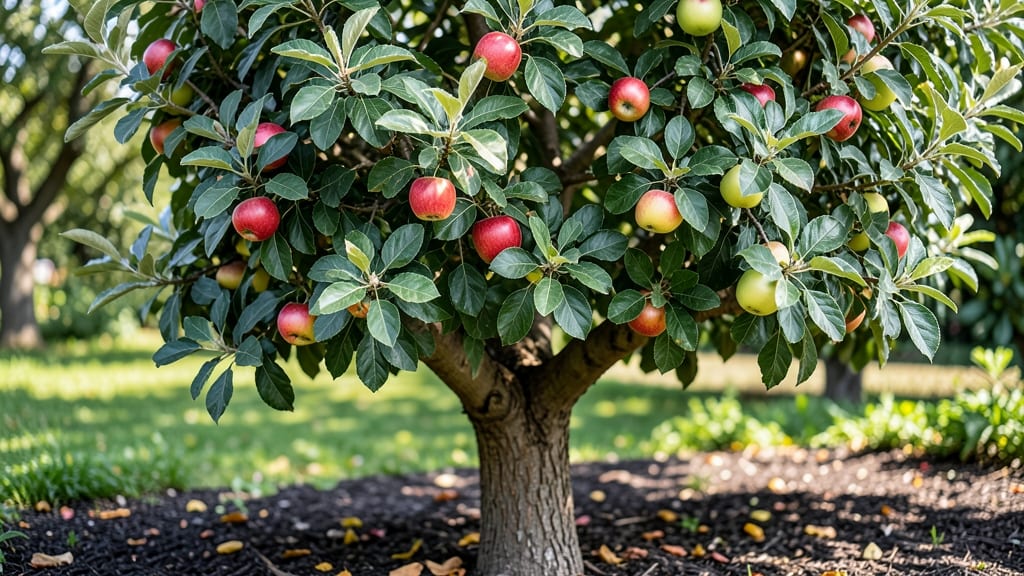
This guide to apple tree identification reveals how leaf shape and bark hold the key to unraveling each variety’s secrets—like a botanical treasure hunt. 🌳 I’ve spent years comparing trees in my orchard, and the differences become obvious once you know what to look for. for.
A single glance at the leaf serrations or bark texture can tell you if that tree is a crisp Honeycrisp or a tart Granny Smith.
Start with the leaves: some varieties have jagged edges, others smooth or lobed. Then check the bark—young trees show their age in the way it peels or cracks.
I keep a small notebook with sketches of the most common types, and it’s saved me from buying the wrong tree at the nursery twice. The right identification means choosing trees that thrive in your climate and pollinate each other.
You’ll quickly spot the differences between ornamental crabapples (tiny fruit, showy blooms) and fruit-bearing varieties (larger leaves, thicker branches). Once you master these visual cues, you’ll pick trees that fit your space, produce the flavors you love, and even resist common diseases like fire blight.
This works for backyard orchards, urban lots, or even identifying wild apples in the woods. Grab a magnifying glass and let’s decode those trees—your future harvest depends on it.
📚 In This Guide
- What you need
- Instructions
- Tips and common mistakes
- Wrapping up and next steps
What you need
- ● Hand Lens or Magnifying Glass – A 10x magnification lens helps examine fine details like leaf texture, bark patterns, and tiny hairs.
- ● Notebook & Pen – For jotting down observations (leaf shape, color, bark color, and any unique features). A ruled or grid notebook works best for sketches.
- ● Measuring Tape or Ruler – To measure leaf length, width, and petiole (leaf stem) length. A 12-inch tape measure is ideal.
- ● Camera or Smartphone – Capture high-resolution images of leaves, bark, flowers, and fruit (if available). Use natural light for accuracy!
- ○ Pruning Shears (Optional but Helpful) – Small, bypass pruners for safely snipping a few leaves or twigs if needed (sterilize with rubbing alcohol first!).
- ● Field Guide or Apple Tree Identification App – Bring a printed guide (like "The Apple Grower") or download apps like "PictureThis" or "iNaturalist" for real-time comparisons.
- ● Gloves – Lightweight gardening gloves protect your hands from thorns or rough bark.
- ● Plastic Bags or Ziploc Bags – Collect fallen leaves or samples for closer inspection at home.
- ● Field Notebook with Waterproof Pages – If you’re identifying trees outdoors in rainy conditions.
- ● Reference Samples – Print or save images of common apple tree varieties (e.g., Granny Smith, Honeycrisp, Fuji) for side-by-side comparisons.
How to identify apple tree varieties using leaves and bark
Master these simple tricks and you'll spot the difference between Granny Smith and Honeycrisp in seconds.
🌿 Step 1: Examine Leaf Shape and Size
Start with the leaves—they're your first clue. Hold a leaf between your fingers and notice how the edges curve. Most apple varieties have serrated (toothed) edges, but the shape varies: some leaves are oval with rounded tips (like Delicious), while others are narrower and more elongated (like Fuji). Measure the length—most mature leaves fall between 3-5 inches long.
Here's the thing—I've found that leaf color also helps. Young leaves often start bright red or purple before turning green. For example, Red Delicious leaves stay reddish longer than Golden Delicious, which turns bright green quickly. Run your thumb along the midrib (the central vein)—some varieties have fine hairs along it, while others are smooth.
🌱 Step 2: Study the Bark Pattern and Texture
Look at the trunk bark closely. Young apple trees have smooth, grayish bark, but as they mature, the bark develops distinctive patterns. Granny Smith bark often has deep, scaly ridges that look almost like alligator skin, while Honeycrisp tends to develop horizontal lenticels (pores) in a lighter color against darker bark. Scratch a small area with your fingernail—some barks are rough to the touch, others surprisingly smooth.
Pay attention to branch patterns too. Some varieties like McIntosh grow with upright branches, while others like Gala develop spreading, horizontal limbs. The angle at which branches grow from the trunk can be a dead giveaway. I always check this first when trying to ID a tree in someone's yard.
☀️ Step 3: Check for Fruit and Flower Clues
If the tree has fruit, examine the fruit stem attachment. Some apples grow with stems that attach at the top of the fruit (like Fuji), while others attach near the middle or bottom (like Pink Lady). The presence of double flowers (two blooms on one stem) often indicates crabapple varieties, not standard eating apples.
Even without fruit, look at the flower clusters if the tree is in bloom. Some varieties have loose, open clusters (like Gala), while others pack flowers tightly together (like Cortland). The flower color can also help—white flowers are common, but some varieties like Redfree have pink-tinged blossoms.
🪴 Step 4: Compare with Known Varieties
Bring your notes (leaf shape, bark texture, branch angle) to a local nursery or orchard. Most have variety cards with photos of leaves, bark, and fruit. I always carry a small notebook when tree hunting—sketch the leaf shape and bark pattern, then compare it to reference photos. Some nurseries even offer leaf rubbings where you can press leaves onto paper to preserve the shape for later comparison.
Don't skip this step. I once thought I had a Jonathan apple tree until I compared my notes to reference photos—turns out it was a Northern Spy! The bark patterns were nearly identical, but the leaf serrations were slightly finer on the Northern Spy. A small detail that made all the difference.
Tips & tricks for mastering apple tree identification
These little-known details will turn you from a curious observer into a confident apple tree detective.
Leaf Texture Insight: The midrib (central vein) of apple leaves can reveal hidden clues. Run your thumb along it—some varieties like McIntosh have smooth midribs, while others like Golden Delicious develop fine hairs. This detail becomes especially useful when comparing similar-looking leaves. I've caught myself overlooking this until I saw two identical-looking leaves from different trees—one had hairy midribs, the other didn't!
Seasonal Leaf Color Clues: Don't just look at mature green leaves—early spring foliage can be your best friend. Young leaves often start vibrant red or purple before turning green. Red Delicious varieties maintain reddish hues longer, while Golden Delicious leaves turn bright green almost immediately. This seasonal color shift happens between 3-5 weeks after bud break, so time your observations accordingly.
Bark Pattern Pro Tip: When examining bark, focus on the transition zones between smooth and rough areas. Young trees have smooth bark, but as they mature, the bark develops characteristic patterns. Granny Smith bark develops deep, scaly ridges that resemble alligator skin, while Honeycrisp bark shows horizontal lenticels (pores) in lighter colors. I've found that using a magnifying glass (or even your phone's camera with 2x zoom) helps spot these subtle patterns that distinguish similar varieties.
Branch Angle Secret: The angle where branches meet the trunk can be a game-changer. McIntosh varieties typically grow with upright branches that angle sharply from the trunk, while Gala trees develop more horizontal limbs. This growth pattern becomes especially noticeable when comparing trees of similar age. I've used this trick to identify backyard trees by simply observing how branches grow from the main trunk—no leaves or fruit needed!
Pro Tips for Guide Apple Tree Identification
- These little-known details will turn you from a curious observer into a confident apple tree detective.
- Leaf Texture Insight: The midrib (central vein) of apple leaves can reveal hidden clues.
- Seasonal Leaf Color Clues: Don't just look at mature green leaves—early spring foliage can be your best friend.
Frequently asked questions
Got questions about spotting apple trees like a pro? Here are some of the most common ones—and their answers!
How can I tell if my tree is an apple tree without seeing fruit?
Look for compound leaves (5-7 leaflets) and serrated edges. Young bark is smooth and grayish, while mature bark develops horizontal lenticels (tiny raised lines). The scent of crushed leaves often smells slightly apple-like too!
When is the best time to identify apple tree varieties?
Spring (when leaves emerge) and fall (before leaf drop) are ideal. Check for flower clusters in spring or fruit characteristics in fall. Avoid winter—dormant trees lack key identifying features.
Can I identify apple trees by their leaves alone?
Yes! Apple leaves are elliptical with jagged edges and a pointed tip. Compare them to other trees like pear or cherry, which have smoother or lobed leaves. For accuracy, combine leaf shape with bark and branch patterns.
What if my tree looks like an apple tree but has no fruit?
It could be a young tree (wait 3-5 years), a non-fruiting variety (like ornamental crabapples), or a pollination issue. Check for flower buds in winter or consult a local nursery for DNA testing if needed.
Are there common look-alikes I should watch out for?
Yes! Crabapple trees (smaller fruit, thorny branches) and hawthorn (spiky leaves, red berries) mimic apples. Pear trees have glossier leaves and a distinctive "pear-shaped" leaf base. Always cross-reference multiple features!
Wrapping up and next steps
Identifying apple tree varieties doesn’t have to be a mystery—just follow the clues in their leaves, bark, and growth patterns! Whether you’re a gardener, homesteader, or simply curious, mastering these visual cues will unlock a world of orchard possibilities.
Now that you’re armed with the know-how, why not put it into action?
🌱 Next steps:
- Visit a local orchard or nursery and test your skills!
- Document your finds with photos—compare them to trusted guides.
- Share your discoveries with fellow plant enthusiasts for feedback.