
Pruning
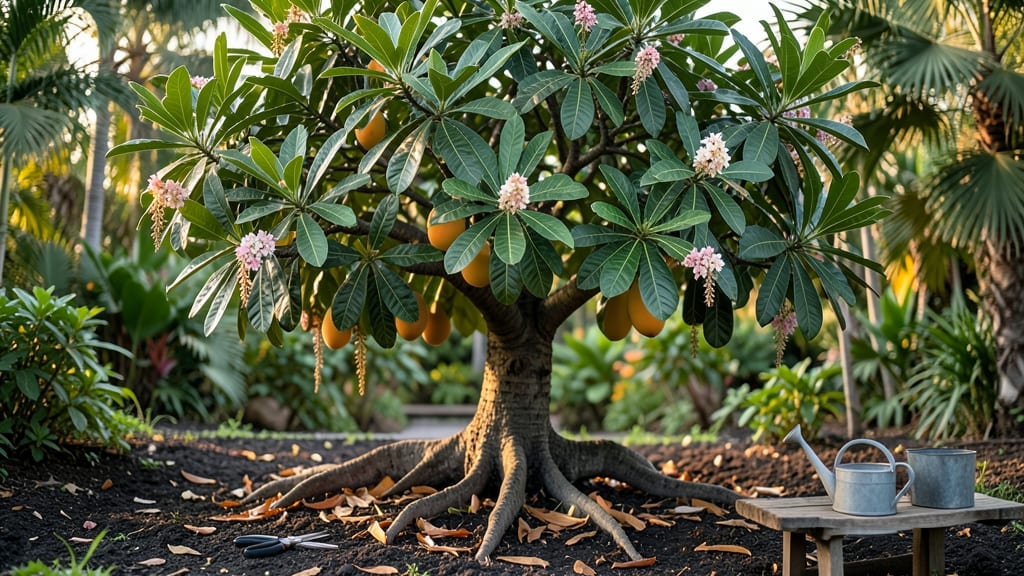
Growing a fruit mango tree from seed or sapling is one of those gardening adventures that rewards patience with tropical sunshine in your backyard—even if you're not in Florida.
I still remember the first time I saw my seedling sprout leaves after what felt like forever, only to realize I was growing something that could actually bear fruit in my zone 9 garden.
The key isn't just the planting; it's the year-round pruning that keeps the canopy strong enough to handle unexpected cold snaps while maximizing fruit production.
Here's the thing—mango trees need more than just good intentions. You'll want well-draining soil, full sun (at least 6-8 hours daily), and consistent moisture without soggy roots. Dwarf varieties like 'Cogshall' or 'Julie' are perfect for smaller spaces, while standard trees can reach 30-40 feet tall.
The real magic happens when you prune strategically: shaping the tree in late winter to open the center for airflow, and light trimming after harvest to encourage next year's growth. It's not rocket science, but it does require regular attention—especially if you want fruit instead of just foliage.
By the end of your first growing season, you'll have a tree with a sturdy framework that can handle light frosts (down to 28°F for brief periods) and produce those sweet, fragrant mangoes you've been dreaming about.
The leaves will be glossy and vibrant, the branches will spread just enough to catch sunlight, and you'll finally understand why neighbors keep asking where you got your "exotic" tree. The best part? Every pruning session after that just gets easier as you learn what your tree responds to best.
Whether you're starting with a seedling or a nursery sapling, the principles stay the same: protect young growth from cold, prune for structure, and never let the tree get too crowded.
Even in cooler climates, with the right care, you can grow a mango tree that outlasts seasonal challenges—and delivers fruit for years to come. Let's get those branches shaped right from the start.
📚 In This Guide
- What you need
- Instructions
- Tips and common mistakes
- Wrapping up and next steps
What you need
- ● Pruning shears: Bypass pruners (sharp, 6–8" blades) for clean cuts on small branches (1/4"–1" diameter). Quantity: 1 pair.
- ○ Loppers: Bypass or anvil-style (for branches 1–2" thick). Quantity: 1 pair (optional but helpful for thicker growth).
- ● Pruning saw: Curved-tooth hand saw for branches 2–4" in diameter. Quantity: 1.
- ● Disinfectant: 70% isopropyl alcohol or bleach solution (1 part bleach to 9 parts water) to sterilize tools between cuts. Quantity: Small spray bottle or wipe.
- ○ Pruning sealant: Tree wound paint (optional but recommended for tropical climates to prevent disease). Quantity: Small container.
- ● Gloves: Heavy-duty, cut-resistant (to protect hands from thorns and sap). Quantity: 1 pair.
- ● Safety gear: Safety goggles and long sleeves/pants (mango thorns are no joke!).
- ● Ladder or extension pole: For reaching higher branches safely.
- ● Work gloves with grip: For better handling of slippery branches.
- ● String or flagging tape: To mark branches for removal (great for planning!).
- ● Sharpening stone: To keep pruning tools in top shape between uses.
- ● Wheelbarrow or tarp: For hauling away pruned branches and debris.
Instructions for pruning a mango tree to survive frost
Here's how to shape your mango tree for resilience—step by step.
Assess the Tree Structure in Early Spring
Start your pruning as soon as the last frost threat has passed, ideally in late March or early April. Look for branches that are dead, crossing, or growing inward—these compete for energy and weaken the tree. I always begin by removing any branches that are thinner than a pencil or show signs of disease, like dark spots or oozing sap. These are the first to go because they drain nutrients the tree needs for fruit production.
Focus on the canopy’s overall shape. A mature mango tree should have an open, vase-like structure to allow sunlight and air to penetrate. If branches are growing too close together, they’ll rub against each other during wind or growth, creating wounds that invite pests. Use sharp, clean pruners to make cuts just outside the branch collar—the swollen area where the branch meets the trunk. This ensures the tree heals properly and doesn’t leave a stub that can rot.
Thin Out the Canopy for Airflow and Light
Next, thin the canopy by removing about 20-30% of the foliage to improve airflow and sunlight exposure. This is critical for frost resilience because dense canopies trap cold air near the center of the tree, where buds and young shoots are most vulnerable. Start at the outer edges and work your way inward, cutting back branches that are growing toward the center or blocking light from reaching the inner branches.
Pay special attention to water sprouts—those fast-growing, vertical shoots that pop up along the trunk and branches. While they might look vigorous, they’re energy vampires, sapping resources from fruit production. Snip them off at the base with clean cuts. You’ll see new, stronger lateral branches emerge in their place, which will contribute to a more robust structure. If you’re unsure which branches to cut, imagine sunlight streaming through the canopy—anything blocking that light should go.
Shape for Frost Hardiness by Summer
By mid-summer, your mango tree will have filled out, and you can do a lighter pruning to refine its shape. This isn’t about removing large branches but rather about encouraging a balanced, open growth habit. Look for branches that are growing too upright or downward—these are more susceptible to frost damage because they hold cold air. Instead, you want to promote horizontal branches, which spread out and allow the tree to "shed" cold air more effectively.
Use hand pruners to trim back the tips of overly vigorous branches by about one-third of their length. This stimulates branching and creates a bushier, more compact tree. Avoid heavy pruning now—you don’t want to stress the tree as it prepares for fall. Instead, focus on shaping and removing any suckers that sprout from the base of the tree. These compete with the main canopy and weaken the tree’s overall resilience. If you’re pruning in summer, always do it on a dry day to reduce the risk of fungal infections.
Light Winter Pruning to Prepare for Cold Snaps
In late winter, just before the first frost warning, do a final light pruning to remove any dead, damaged, or diseased branches. This is your last chance to tidy up before the cold sets in. Focus on branches that were damaged during the previous growing season or show signs of frost injury, like blackened tips or cracked bark. These branches won’t recover and will only drain the tree’s energy reserves.
This is also the time to address any crossing branches that you might have missed earlier. Even if they look healthy now, they’ll become weak points as the tree matures. Make your cuts just outside the branch collar, and be sure to sterilize your pruners between cuts to prevent the spread of disease. After pruning, apply a thin layer of mulch around the base of the tree to insulate the roots and retain moisture. Avoid piling mulch against the trunk, as this can trap moisture and lead to rot.
Monitor and Adjust Throughout the Year
Pruning isn’t a one-time task—it’s an ongoing process. Throughout the year, keep an eye out for new growth that needs redirecting or branches that are growing in unwanted directions. For example, if a branch is growing toward a wall or fence, it’s likely to get damaged by wind or hail. Trim it back early to prevent future issues. Regular monitoring also helps you catch pests or diseases before they become serious problems.
Here’s the thing—mango trees are resilient, but they respond best when you work with their natural growth patterns. If you see a branch that’s clearly struggling, don’t hesitate to remove it. The goal is to create a tree that’s strong, open, and able to bounce back from frost. Over time, you’ll develop an instinct for what looks right, and your mango tree will reward you with healthier growth and better fruit production. Trust the process, and your tree will thank you.
Tips & tricks for perfect mango tree pruning
These game-changing strategies will transform your mango tree into a frost-fighting powerhouse year after year.
Timing is Everything: The late March to early April window for Step 1 is non-negotiable—this gives your tree time to heal before summer heat arrives. I've learned this the hard way: pruning too early can leave fresh cuts vulnerable to late frosts, while waiting too long means you're removing new growth that could have strengthened the tree. Check your local frost dates and mark your calendar—your tree's resilience depends on it.
Branch Selection Strategy: In Step 2, when thinning that 20-30% of foliage, focus on branches that create a "sunlight tunnel" effect through the canopy. Imagine standing under the tree—any branch that blocks light from reaching the center should go. I use a simple test: if I can't see at least 3-4 feet into the canopy from any direction, it's time to thin more aggressively. This open structure is what makes the difference between a tree that survives frost and one that struggles.
Summer Pruning Secrets: That one-third trim in Step 3 isn't just about length—it's about direction. Cutting back upright branches encourages horizontal growth, which naturally sheds cold air. I make my cuts at a slight downward angle to help water run off, preventing fungal infections. And here's a pro move: when you remove those suckers at the base, save a few of the strongest ones to create a natural support system for the main trunk.
Winter Prep Essentials: For Step 4, don't overlook the mulch application—this is your tree's winter blanket. Use 2-3 inches of organic mulch (like wood chips) and keep it 6 inches away from the trunk. I've seen trees with mulch piled against their trunks develop rot within weeks. Also, sterilize your pruners between cuts with rubbing alcohol—this simple step prevents spreading disease when you're working with damaged branches.
Pro Tips for Fruit Mango Tree
- These game-changing strategies will transform your mango tree into a frost-fighting powerhouse year after year.
- Timing is Everything: The late March to early April window for Step 1 is non-negotiable—this gives your tree time to heal before summer heat arrives.
- Branch Selection Strategy: In Step 2, when thinning that 20-30% of foliage, focus on branches that create a "sunlight tunnel" effect through the canopy.
Frequently asked questions
When is the best time to prune a mango tree for frost resistance?
Prune your mango tree during the dormant season (late winter to early spring, before new growth) to harden the wood and improve frost tolerance. Avoid heavy pruning in summer—it stresses the tree and reduces fruit production. Light shaping can happen year-round, but never prune after a frost—wait until the tree recovers!
How do I protect my mango tree from frost damage?
Frost-sensitive mango trees need extra care! Prune to open the canopy for better airflow, mulch heavily (3–4 inches of organic mulch), and wrap the trunk with burlap or frost cloth in cold snaps. Water deeply before a freeze to help roots absorb moisture. For severe frost, consider overhead sprinklers (if allowed in your area) to create a protective ice layer.
Will pruning my mango tree reduce fruit production?
Not if done right! Strategic pruning boosts fruit quality and quantity by improving airflow, sunlight exposure, and energy focus. Remove suckers, dead wood, and crowded branches to redirect growth toward healthier, larger fruit. Avoid over-pruning—aim to remove no more than 20–25% of the canopy per year.
What tools do I need for frost-resilient mango tree pruning?
You’ll need:
- Bypass pruners (for small branches, ¼–¾ inch thick)
- Loppers (for medium branches, ¾–2 inches thick)
- Pruning saw (for thick branches, 2+ inches)
- Disinfectant (rubbing alcohol or bleach solution to prevent disease)
- Gloves and safety glasses (mango thorns are no joke!)
Can I grow a mango tree in a pot for better frost control?
Yes! Potted mango trees are easier to move indoors or to a greenhouse during frost warnings. Choose a large container (at least 15–20 gallons) with drainage holes and use a well-draining potting mix. In winter, bring the pot inside near a sunny window or under grow lights. Note: Mango trees are tropical and may drop leaves in cold stress—but they’ll bounce back with proper care!
Wrapping up and next steps
Growing a thriving, frost-resilient mango tree is all about timing, technique, and tender care—and you’ve got the knowledge to make it happen! 🌱 By mastering year-round pruning, you’re not just shaping your tree; you’re building a stronger, healthier, and more productive fruit-bearing powerhouse.
Whether you’re a seasoned gardener or just starting out, every careful cut brings you closer to that sweet, juicy payoff.
Ready to take the next step? Start small—pick one pruning session this season and refine your skills. Before you know it, your mango tree will be bursting with life (and fruit!) year after year. Happy pruning! 🌿✨