
Pruning
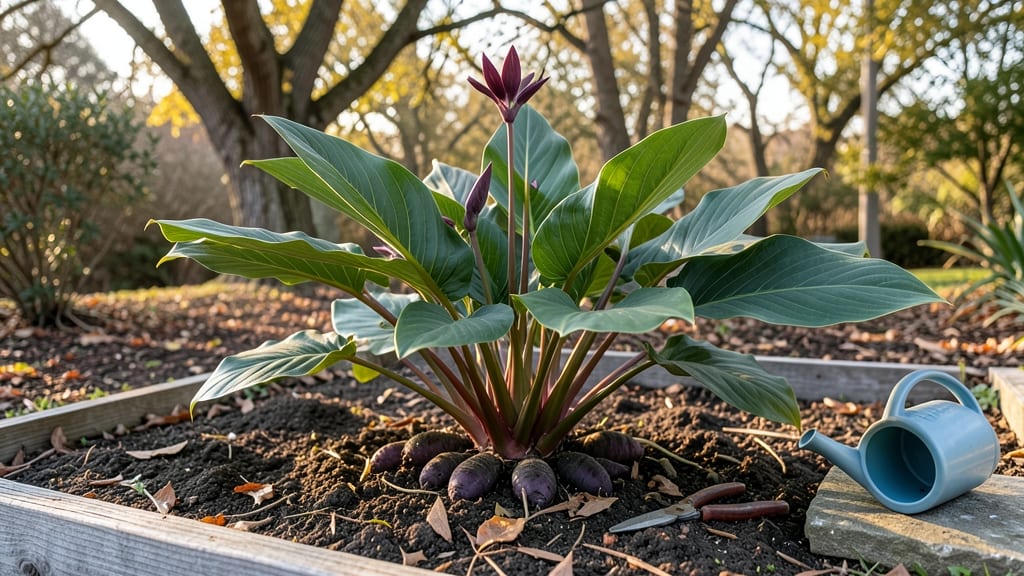
Pruning your black turmeric tree (Curcuma caesia) keeps it lush and frost-hardy—exactly what Pacific Northwest gardens need. 🌿 I’ve watched mine bounce back from winter’s chill with just a few strategic cuts, and the difference in growth is shocking.
The key isn’t just trimming dead branches; it’s shaping the canopy to let light and air circulate, which prevents fungal issues that plague these tropical-looking plants in cooler climates.
Start with sharp pruners and a clear goal: open up the center so sunlight reaches all leaves. Remove any brown or mushy stems first—those are winter’s weak spots. Then, cut back any leggy growth by about a third to encourage bushier regrowth.
The tree handles this surprisingly well, and you’ll see fresh green shoots within weeks, even after our damp, gray winters.
What you’ll end up with is a tree that stays compact, produces more of those striking purple-black rhizomes, and even flowers more reliably. The foliage stays vibrant longer, and the roots—your future harvest—thrive without competition from overcrowded stems.
Plus, the pruned branches make great cuttings for propagation, so you’re not just maintaining, you’re expanding your garden.
Works for both in-ground plantings and large containers, though container-grown trees need slightly more frequent pruning to prevent root-bound stress. The Pacific Northwest’s mild winters mean you can prune anytime after the last frost, but early spring gives the tree the longest growing season to recover.
Let’s get those branches trimmed!
📚 In This Guide
- What you need
- Instructions
- Tips and common mistakes
- Wrapping up and next steps
What you need
- ● Sharp bypass pruners – For clean cuts on small to medium branches (¼"–1" thick).
- ● Loppers – For thicker branches (1"–2" thick).
- ● Pruning saw – For stubborn, woody branches (>2" thick).
- ● Disinfectant (70% isopropyl alcohol or bleach solution) – To sterilize tools between cuts and prevent disease spread.
- ● Garden gloves – Thick, cut-resistant gloves (e.g., 12–14 gauge) to protect hands from thorns or sap.
- ● Heavy-duty trash bags or compost bin – For collecting pruned debris (black turmeric leaves can be composted!).
- ● Ladder or step stool – If your tree exceeds 6 feet tall (safety first!).
- ○ Permanent marker – For marking branches to remove (optional but helpful for planning).
- ● Burlap or frost cloth – For wrapping young or tender shoots if early frost is forecasted (not always needed for mature trees).
- ● Mulch (straw or wood chips) – Apply 2–3 inches around the base to insulate roots (keep 6" away from the trunk).
- ● Handheld leaf blower – For clearing debris from the canopy post-pruning.
- ○ Tree wound dressing (optional) – Only use for large cuts (>2" diameter); skip for small pruning cuts.
- ● Camera or sketchpad – To document your tree’s shape before/after pruning for future reference.
Step-by-step guide for pruning black turmeric trees in the Pacific Northwest
Here's how I keep these frost-hardy beauties thriving with clean cuts and smart timing.
✂️ Step 1: Time Your Pruning for Late Winter or Early Spring
Wait until after the last frost date in your zone—typically late February to early March in the Pacific Northwest. Pruning too early exposes fresh cuts to cold snaps, which can invite disease. You'll know it's time when the tree has lost its winter dormancy but hasn't yet begun active growth—look for swollen buds that haven't yet opened.
If you must prune in summer, do it after flowering but before late July to avoid encouraging new growth that won't harden off before frost. I always mark my calendar with the last frost date and schedule pruning 2-3 weeks after—that gives the tree time to heal before summer heat arrives.
✂️ Step 2: Remove Dead, Diseased, or Crossing Branches First
Start with the easy stuff: any branches that are dead (no green bark when scratched), diseased (mushrooms, oozing sap), or crossing (rubbing against others). Use sharp, clean pruners to make cuts at a 45-degree angle, about ¼ inch above a outward-facing bud or branch collar. This prevents water from pooling on the cut and rotting the branch.
I like to work from the bottom up—this keeps me from accidentally standing on lower branches or dropping tools. If a branch is thicker than 2 inches, use a saw instead of pruners to avoid tearing the bark. Always disinfect your tools between cuts with rubbing alcohol to prevent spreading any hidden pathogens.
✂️ Step 3: Thin the Canopy for Better Airflow and Light
Black turmeric trees develop dense foliage, so thinning is key to preventing fungal issues. Remove 20-30% of the total canopy by selectively cutting back branches that are growing inward or blocking light from reaching the center. Focus on branches that originate from the lower half of the tree first—this opens up the canopy and improves airflow.
You'll see the difference immediately: the center of the tree will brighten, and new growth will appear bushier. Avoid "heading back" (cutting back to a bud) unless you're shaping the tree—this encourages weak, leggy growth. Instead, make cuts just outside the branch collar to maintain the tree's natural structure.
🌿 Step 4: Shape the Tree for Frost Resilience
Pacific Northwest winters bring heavy frost, so I always prune to create a strong, rounded shape that sheds snow easily. Avoid leaving sharp angles or points where ice can accumulate. Cut back any branches that grow straight upward—these are prone to breaking under snow or ice weight.
If your tree has become too tall, you can reduce its height by no more than 25% in one season. Make the final cut just above a lateral branch or bud that faces outward. This ensures the tree maintains its strength and doesn't develop a weak "leader" (central stem) that can snap in storms.
⏰ Step 5: Clean Up and Monitor for Recovery
After pruning, rake up all fallen branches and debris—this prevents pests and diseases from overwintering in the yard. Dispose of diseased wood immediately in the trash (not your compost pile). Once the cuts have sealed over—usually within 2-4 weeks—you can apply a thin layer of mulch around the base to retain moisture and regulate soil temperature.
Watch for new growth in 4-6 weeks—this is your sign that the tree is recovering well. If you see yellowing leaves or oozing sap on any cuts, it could mean the pruning was too aggressive or the tools weren't clean. In that case, prune lightly again in early summer to encourage healing.
Tips & tricks for pruning black turmeric trees
These little-known tricks will help your Pacific Northwest black turmeric trees thrive through winter and beyond.
Timing is Everything: The 2-3 week window after your last frost date is critical—this gives the tree time to heal before summer heat arrives. I mark my calendar with the last frost date and schedule pruning exactly 2 weeks after that. If you're unsure about your frost date, check your local extension office or use a plant hardiness zone map for your area.
Tool Prep Prevents Problems: Sharp, clean tools are non-negotiable. I always disinfect my pruners with rubbing alcohol between cuts, especially when dealing with diseased branches. For branches thicker than 2 inches, switch to a pruning saw to avoid tearing the bark. This single step has saved me from multiple fungal infections over the years.
Canopy Thinning Strategy: When removing 20-30% of the canopy, focus on branches growing inward first. These are the ones blocking light and airflow. I like to visualize the tree as a dome—imagine sunlight streaming through the center. The goal is to create an open, airy structure that lets light penetrate all the way to the trunk.
Frost-Proofing Cuts: Always make cuts just outside the branch collar at a 45-degree angle. This creates a smooth surface that heals better in cold climates. I've seen too many pruning wounds ooze sap in winter—this technique prevents that. For vertical cuts, use a pruning saw with a fine-tooth blade to minimize bark damage.
Pro Tips for Black Turmeric Tree
- These little-known tricks will help your Pacific Northwest black turmeric trees thrive through winter and beyond.
- Timing is Everything: The 2-3 week window after your last frost date is critical—this gives the tree time to heal before summer heat arrives.
- Tool Prep Prevents Problems: Sharp, clean tools are non-negotiable.
Frequently asked questions
When is the best time to prune my black turmeric tree?
The ideal time is late winter or early spring (February–March), just before new growth starts. This helps avoid frost damage while giving the plant time to recover. Skip pruning in fall—it can stress the tree before winter dormancy. Pro tip: If you spot dead or damaged foliage after frost, trim it back immediately to prevent disease.
Can I prune my black turmeric tree in winter?
Yes, but with caution! Prune only if the tree is dormant and temperatures are above freezing (32°F+). Avoid heavy cuts during hard freezes—wait until the ground thaws. If you must prune in winter, do so on a mild, dry day to reduce stress. Pro tip: Use sharp, sterilized tools to prevent sap bleeding.
How much can I trim back my black turmeric tree?
You can safely remove up to 1/3 of the foliage per year, focusing on:
- Dead or yellowing leaves (signs of frost damage or disease).
- Overcrowded branches to improve airflow.
- Leggy or weak stems to encourage bushier growth.
What if my black turmeric tree doesn’t regrow after pruning?
Don’t panic! Black turmeric is slow to recover—wait 4–6 weeks before assessing. If no new growth appears, check for:
- Root rot (overwatering or poor drainage).
- Frost damage (blackened stems or mushy leaves).
- Pests (inspect for chewed leaves or sap oozing).
Are there frost-resistant alternatives to black turmeric?
If your PNW winters are too harsh, consider these cold-hardy tropical-looking plants:
For black turmeric’s look, try ginger lilies (Hedychium spp.)—some varieties tolerate light frost.
Wrapping up and next steps
The black turmeric tree thrives in Pacific Northwest gardens when given the right care—especially strategic pruning to boost frost resilience and health. By following the steps for timing, technique, and tool selection, you’ll keep its canopy vibrant while protecting it from winter’s chill. 🌿❄️
Ready to give your tree the TLC it deserves? Grab your pruners, mark your calendar for late winter/early spring, and start shaping that stunning, frost-hardy canopy! Your black turmeric tree will thank you with lush growth and years of beauty.