
Pruning
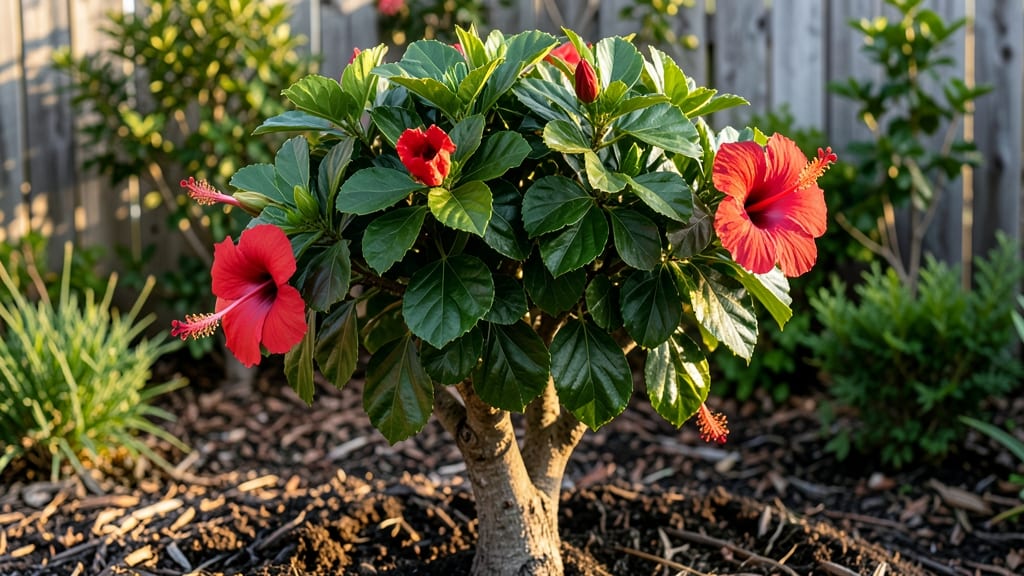
Pruning a big hibiscus tree transforms it from a rambling mess into a showstopping focal point—one that survives frost better than you’d expect. 🌿 I’ve turned my 12-foot hibiscus from a tangled jungle into a sculpted masterpiece by pruning at the right times, and the secret isn’t complicated: it’s about understanding how hibiscus grows and when to slow it down.
The first cut matters most—get this wrong, and you’ll spend years playing catch-up.
This isn’t just about making your tree look pretty (though it will). Pruning at the right seasons—especially late winter before new growth starts—builds resilience against cold snaps. You’ll need sharp loppers, a sturdy ladder, and a clear plan for where you want the tree to direct its energy.
Think of it like training a champion: every cut shapes the outcome. My tree now blooms heavier in summer and sheds fewer leaves in fall, thanks to strategic thinning and shaping.
What you’ll end up with is a tropical giant that feels at home in your yard, even if you’re not in zone 11. The blooms arrive bigger, the branches hold their shape through wind and rain, and you’ll spend less time wrestling with overgrowth.
The payoff? A hibiscus that’s both a conversation starter and a low-maintenance stunner. Ready to shape your own?
This works for both container-grown hibiscus and in-ground trees—just adjust your tools and timing. Whether you’re prepping for winter or giving your tree a mid-season tune-up, the principles stay the same. Let’s get those pruners out.
📚 In This Guide
- What you need
- Instructions
- Tips and common mistakes
- Wrapping up and next steps
What you need
- ● Pruning shears: Bypass pruners (for small branches, ¼"–¾" thick)
- ● Loppers: 1 pair (for medium branches, ¾"–2" thick)
- ● Pruning saw: 1 (for thick branches, 2"–4" thick)
- ● Gloves: Heavy-duty, cut-resistant (to protect from thorns and sap)
- ● Disinfectant: 70% isopropyl alcohol or bleach solution (1 part bleach to 9 parts water) for sterilizing tools
- ● Rags or paper towels: For wiping tools between cuts
- ● Trash bags or bucket: For collecting pruned branches and debris
- ● Ladder or step stool: Sturdy and tall enough to reach the tree’s canopy safely
- ● Sharpie or marker: For labeling branches if needed (e.g., for future reference)
- ● Hand pruners with ratchet: For larger branches (reduces hand fatigue)
- ● Pole saw: Extendable for high branches (if no ladder is available)
- ● Tree wound dressing: Pruning sealant (controversial but useful for large cuts)
- ● Work gloves with grip: For extra comfort during prolonged pruning
- ● Safety goggles: To protect eyes from debris
- ● Extension cord & string trimmer: For clearing thick ground debris (if needed)
Step-by-Step guide to pruning your big hibiscus tree
Here’s how I keep my hibiscus lush, frost-hardy, and full of blooms—no guesswork involved.
✂️ Step 1: Prune for Structure in Late Winter
Start when the tree is dormant but before new growth begins, typically in late February or early March in most climates. This is the best time to shape the tree’s framework without stressing it. I always begin by removing dead, diseased, or crossing branches—these compete with healthy growth and invite pests.
Use clean, sharp pruning shears to make cuts just above a leaf node or outward-facing bud. This encourages new growth in the right direction. Avoid cutting into old wood—hibiscus trees bloom on new growth, so you want to preserve as much healthy wood as possible. If a branch is too thick for shears, use a pruning saw instead.
☀️ Step 2: Thin Out for Airflow in Early Spring
Once new growth appears in early spring (March-April), focus on thinning the canopy to improve airflow. Hibiscus trees need good circulation to prevent fungal diseases like powdery mildew. Remove one-third of the oldest, thickest branches first—these are less productive and can weigh the tree down.
Look for branches that rub against each other or grow inward. These should go first, as they create weak points and block sunlight from reaching the inner foliage. Step back occasionally to check the tree’s shape—you’re aiming for an open, vase-like structure that lets light and air move freely. Avoid over-thinning; hibiscus trees need plenty of foliage to fuel their massive blooms.
🌿 Step 3: Light Pruning for Blooms in Late Spring
By late May or early June, your hibiscus should be in full leaf. This is when I do a light maintenance trim to encourage more blooms. Cut back any overly leggy growth—these are the long, bare stems that sap energy from the tree. Prune just above a set of leaves or a bud to redirect energy into flowering.
Here’s the thing—hibiscus trees bloom on new wood, so the more you prune back to healthy growth, the more flowers you’ll get. However, don’t go overboard. A 10-15% reduction in total branch length is plenty. Watch for new shoots emerging from the pruned areas—these are your future blooms. If you see any yellowing or spotted leaves, remove those branches immediately to prevent disease spread.
⏰ Step 4: Frost Prep Pruning in Fall
As temperatures drop in October or November, shift focus to frost protection. Start by removing any weak, damaged, or diseased branches—these won’t survive winter and can harbor pests. Next, thin out the outer canopy by about 20% to reduce wind resistance and snow load. A heavy snowfall can snap weak branches, so this step is critical for resilience.
I also like to shorten the longest branches by about one-third to create a more compact shape. This helps the tree retain heat better during cold snaps. Avoid heavy pruning now—you don’t want to stimulate new growth that won’t harden off before winter. Once you’re done, give the tree a light application of mulch around the base to insulate the roots.
🌱 Step 5: Post-Frost Cleanup in Early Spring
After the last frost, inspect your hibiscus for winter damage. Prune out any blackened, broken, or split branches—these won’t recover and can invite rot. If you see buds swelling but no leaves, don’t panic; hibiscus trees are tough and often bounce back quickly. Focus on removing only the dead wood and let the tree focus its energy on revival.
This is also the time to shape up any uneven growth from winter. Hibiscus trees can get lopsided after a harsh season, so a little strategic pruning now keeps them balanced. Water deeply after pruning to help the tree recover. You’ll see new shoots within 2-3 weeks—that’s your sign everything’s on track.
Tips & tricks for perfect big hibiscus tree pruning
Here's what nobody tells you about keeping your hibiscus thriving through every season.
Timing is Everything: The late February to early March window for Step 1 is non-negotiable—this is when your hibiscus is fully dormant but hasn't started pushing new growth. I've learned the hard way that pruning too early can stimulate unwanted spring growth, while waiting too long risks stressing the tree as it wakes up. If you're in a warmer climate, watch for bud swell—prune just before you see those first green hints.
Cutting Technique Matters: When making those critical cuts in Step 1 and Step 3, angle your pruning shears just above a leaf node or outward-facing bud at a 45-degree angle. This creates a natural water-shedding surface that prevents water from pooling and rotting the cut. I've seen too many people make flat cuts that leave the branch vulnerable to disease—it's a small detail that makes a big difference in recovery time.
Seasonal Adjustments: The 20% thinning in Step 4 during fall frost prep might seem arbitrary, but it's based on real-world observations. A well-balanced canopy can handle about 20% more snow load without structural damage. For the 10-15% reduction in Step 3, think of it as your "bloom budget"—this is how much you can safely trim without starving your tree of the foliage it needs to power those dramatic flowers. Both percentages are flexible, but don't exceed them unless you're dealing with severe overgrowth.
Tool Maintenance: Clean your pruning shears with rubbing alcohol after each use to prevent the spread of bacterial diseases between cuts. I sterilize mine between each major pruning session—especially when moving from diseased branches to healthy ones. A sharp tool makes cleaner cuts that heal faster, and dull blades crush the wood fibers, making the tree more susceptible to infection. This might seem like overkill, but it's the difference between a tree that recovers quickly and one that struggles for months.
Pro Tips for Big Hibiscus Tree
- Here's what nobody tells you about keeping your hibiscus thriving through every season.
- Timing is Everything: The late February to early March window for Step 1 is non-negotiable—this is when your hibiscus is fully dormant but hasn't started pushing new growth.
- Cutting Technique Matters: When making those critical cuts in Step 1 and Step 3, angle your pruning shears just above a leaf node or outward-facing bud at a 45-degree angle.
Frequently asked questions
Got questions about keeping your big hibiscus tree healthy and stunning year-round? We’ve got answers! Whether you’re wondering about the best time to prune or how to handle frost, here’s what you need to know.
When is the best time to prune a big hibiscus tree for frost resilience?
Prune your hibiscus after the last frost in early spring (zones 9-11) or late winter (tropical climates). This gives it time to harden off before cold snaps. Avoid heavy pruning in fall—it stresses the plant before winter. Pro tip: Lightly shape in late winter to encourage new growth while protecting vulnerable branches!
How do I protect my hibiscus tree from frost damage?
Wrap the trunk with burlap or use frost cloth to shield leaves. Mulch the base (3–4 inches) to insulate roots. For young trees, cover with a blanket or plastic sheet (remove during the day to prevent overheating). Warning: Never use ice or salt—it burns the bark!
Can I prune a big hibiscus tree in winter, or will it die?
Light trimming (removing dead/diseased branches) is fine in winter, but avoid heavy pruning—it weakens the tree before spring growth. Focus on shaping in early spring instead. Pro tip: Use sterilized tools to prevent fungal infections during dormant months!
What if my hibiscus tree doesn’t bloom after pruning?
Hibiscus blooms on new wood, so prune in late winter/early spring to encourage fresh growth. Over-pruning or cutting back too late can delay flowers. Fix it: Fertilize lightly in spring (high-potassium) and ensure it gets 6+ hours of sun daily!
Are there smaller hibiscus varieties that need less pruning?
Yes! Dwarf hibiscus (like Hibiscus rosa-sinensis ‘Little Red’) grows 3–5 ft tall and requires minimal pruning. Tropical varieties (e.g., Hibiscus syriacus) are hardier and need less shaping. Bonus: These are perfect for containers or small yards!
Wrapping up and next steps
Pruning your big hibiscus tree isn’t just about aesthetics—it’s a year-round commitment to resilience, especially when frost looms. By mastering the when, how, and why of each season, you’ll nurture a stronger, more vibrant tree that thrives even in colder climates.
Remember, patience and precision are key, so don’t rush the process!
Ready to take your hibiscus care to the next level? Start small—pick one season to focus on first, then gradually refine your technique. Before you know it, your tree will be the envy of the neighborhood! 🌿✨