
Propagation
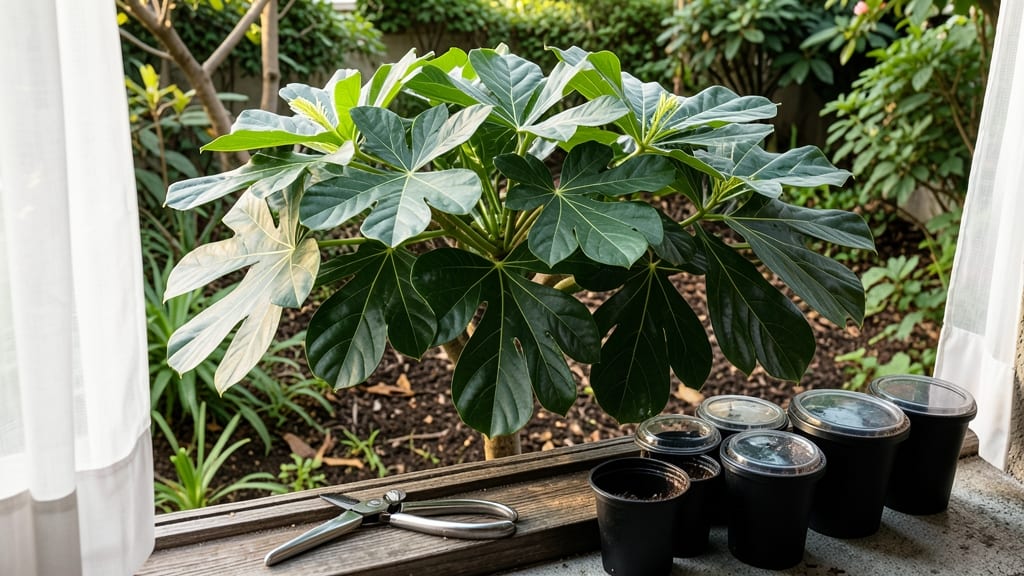
Umbrella tree propagation is easier than you think—just grab a sharp pair of shears and a glass of water. 🌱 I’ve rooted cuttings in my kitchen before, and within 4-6 weeks, you’ll see roots forming right before your eyes.
The key is choosing healthy stems with at least two leaf nodes, which act like growth engines for new roots.
You’ll need minimal supplies: clean pruners, a small container (water or soil), and optional rooting hormone for a little boost. Timing matters too—spring and early summer give the best success rates, but indoor propagation works year-round with a grow light. Even beginners nail this method the first try.
Once rooted, your new umbrella trees will grow 12-24 inches in their first year with proper care. The glossy leaves stay vibrant, and the branching habit makes them perfect for filling empty corners. Just avoid overwatering—soggy soil is the #1 killer of young cuttings.
Whether you’re expanding your collection or sharing plants with friends, this method scales effortlessly. The real magic happens when you see those first roots—proof that propagation doesn’t have to be complicated. Ready to try?
📚 In This Guide
- What you need
- Instructions
- Tips and common mistakes
- Wrapping up and next steps
What you need
- ● Healthy mother plant: A mature umbrella tree with at least 3–5 healthy stems (4–6 inches long) for cuttings.
- ● Sharp pruning shears or knife: Sterilized to prevent disease (rubbing alcohol works!).
- ○ Rooting hormone (optional but recommended): A powder or gel to boost root growth (e.g., Rootone).
- ● Propagation medium: Water method: Clean glass or jar (8–12 oz), filtered or room-temperature water.
- ● Soil method: Well-draining potting mix (e.g., 50% perlite + 50% peat or coco coir).
- ● Small pots or containers: 4–6 inch pots with drainage holes (for soil method).
- ○ Plastic bag or humidity dome: To retain moisture (optional but helpful for soil propagation).
- ● Spray bottle: For misting cuttings (especially in soil).
- ● Twine or rubber bands: To secure humidity domes.
- ○ Heat mat (optional): Speeds up rooting (70–75°F ideal).
- ● Label markers: To track cuttings by date.
Step-by-Step instructions for propagating umbrella trees
Here's how to get those fast-growing roots without stressing the plant.
🌱 Step 1: Select and Prepare the Right Cuttings
Choose a healthy, non-flowering branch from your umbrella tree (Schefflera actinophylla) that's about 4-6 inches long with at least 3-4 leaf nodes. Use clean, sharp pruning shears to make a clean cut just below a leaf node—this is where new roots will form. I always pick branches that are slightly woody but still flexible, not too mature or too green.
Remove the lower leaves, leaving only 2-3 leaves at the top. This reduces water loss while the cutting focuses energy on root growth. If the leaves are large, trim them in half to further minimize moisture loss. Here's the thing—you want the cutting to look like it's shedding some weight, not like it's still carrying its full load.
💧 Step 2: Root in Water for Fast Results
Fill a clean glass or jar with room-temperature water, leaving about 1 inch of space at the top. Place the prepared cutting in the water, ensuring only the bottom 1-2 inches are submerged—never submerge the leaves. I use a small glass so I can monitor root growth daily without disturbing the cutting.
Change the water every 3-4 days to prevent bacterial growth and keep it fresh. Place the jar in bright, indirect light—direct sun can overheat the water and stress the cutting. You'll see tiny white bumps appear at the nodes within 2-3 weeks, and roots will grow ½ inch to 1 inch long in 4-6 weeks. This is the moment that matters: once roots reach 1-2 inches, your cutting is ready to transition to soil.
🪴 Step 3: Transition to Soil for Long-Term Growth
Fill a 4-6 inch pot with a well-draining potting mix—equal parts peat moss, perlite, and coarse sand works perfectly. Moisten the mix until damp but not soggy, then create a small hole in the center with your finger. Gently remove the cutting from water, letting excess moisture drip off, and plant it so the root base sits just below the soil surface. Firm the soil lightly around the base to secure it.
Water lightly to settle the soil, then place the pot in bright, indirect light for the first week. Avoid direct sun or drafts—this is when new plants are most vulnerable. You'll notice the leaves may wilt slightly at first, but they'll perk up within 3-5 days as the roots adjust. Keep the soil evenly moist but never waterlogged—stick your finger in the soil; if the top ½ inch feels dry, it's time to water.
☀️ Step 4: Acclimate and Care for New Growth
After 2-3 weeks, gradually introduce your new umbrella tree to morning sunlight to harden it off. Start with 1-2 hours daily, then increase by 30 minutes every few days until it can handle 4-6 hours of indirect light. This prevents shock and encourages strong, sturdy growth. Real talk: if you rush this step, you'll end up with a leggy, weak plant that struggles to recover.
Fertilize lightly with a balanced liquid fertilizer (10-10-10) diluted to half strength once a month during the growing season (spring and summer). Avoid fertilizing in fall or winter—your new plant needs to focus on establishing roots, not producing leaves. Within 3-4 months, your propagated umbrella tree will look just like its parent, with lush foliage and a sturdy stem.
Tips & tricks for perfect umbrella tree propagation
Took me a while to figure these out, so here goes—these little details make all the difference with umbrella tree cuttings.
Cutting Selection: In Step 1, look for branches that are slightly thicker than a pencil but not too woody—they should bend slightly without snapping. Thinner branches may struggle to root, while overly mature ones take forever. I've found that cuttings with 3-4 leaf nodes produce the fastest root growth because each node has the potential to form roots.
Water Quality: For Step 2, use filtered or distilled water if possible—tap water can contain chlorine or minerals that may slow root development. I've noticed a significant difference when using room-temperature water versus cold water; cold water can shock the cutting and delay root formation. Change that water every 3-4 days religiously—stale water breeds bacteria that can rot your cutting before roots even appear.
Root Growth Milestones: Those 2-3 weeks before you see white bumps at the nodes can feel like forever, but trust me—it's worth the wait. The moment roots reach 1-2 inches, your cutting is ready for soil. I like to use a magnifying glass to check root progress without disturbing the cutting; sometimes roots grow faster than you expect, especially in warm conditions.
Soil Transition: When moving to soil in Step 3, don't bury the roots too deep—they need access to oxygen. Plant so the root base sits just below the soil surface, and keep the soil lightly moist (not soggy) for the first 3-5 days. The initial wilting is normal as roots adjust, but if leaves stay droopy past 5 days, you might need to adjust your watering or light conditions.
Pro Tips for Umbrella Tree Propagation
- Took me a while to figure these out, so here goes—these little details make all the difference with umbrella tree cuttings.
- Cutting Selection: In Step 1, look for branches that are slightly thicker than a pencil but not too woody—they should bend slightly without snapping.
- Water Quality: For Step 2, use filtered or distilled water if possible—tap water can contain chlorine or minerals that may slow root development.
Frequently asked questions
Got questions about propagating your umbrella tree? You’re not alone! Here are some of the most common concerns—and straightforward answers to help you succeed.
When is the best time to propagate an umbrella tree?
The ideal window is early spring or late winter, when the tree is just waking up from dormancy. This gives roots time to establish before summer heat stress. Avoid propagating in winter (too cold) or late summer (too hot).
How do I know if my cutting is healthy enough to root?
Look for green, flexible stems (not woody) with at least 3-4 nodes. Avoid yellowed or mushy cuttings—they’re stressed or diseased. A healthy cutting should snap (not bend) when you test it.
Should I root umbrella tree cuttings in water or soil?
Both work! Water is faster (roots in 2-4 weeks) but requires frequent changes. Soil (like perlite + peat) mimics natural conditions and reduces transplant shock. For beginners, water is easier to monitor.
Why aren’t my cuttings rooting? Troubleshooting tips.
Check these common issues:
- Low humidity: Mist daily or use a plastic bag to trap moisture.
- Poor lighting: Place near bright, indirect light (no harsh sun).
- Overwatering: Let soil dry slightly between waterings to prevent rot.
- Old cuttings: Use fresh stems—they root faster!
Can I propagate an umbrella tree from a leaf or just a stem?
Umbrella trees (Schefflera) need stems (not leaves) to root. A single leaf won’t regrow—always use a 3-6 inch stem with leaves attached. Think of it like a tiny plant-in-waiting!
Wrapping up and next steps
Propagating an umbrella tree is a rewarding journey that brings lush, fast-growing greenery into your space! Whether you choose water or soil propagation, the key is patience, consistency, and a little care.
With the right techniques, you’ll soon enjoy thriving roots and a stunning, shade-loving plant to brighten up your home or garden.
Ready to take the next step? Start with just one cutting—you’ll be amazed at how quickly your umbrella tree can grow! 🌱✨