
Pruning
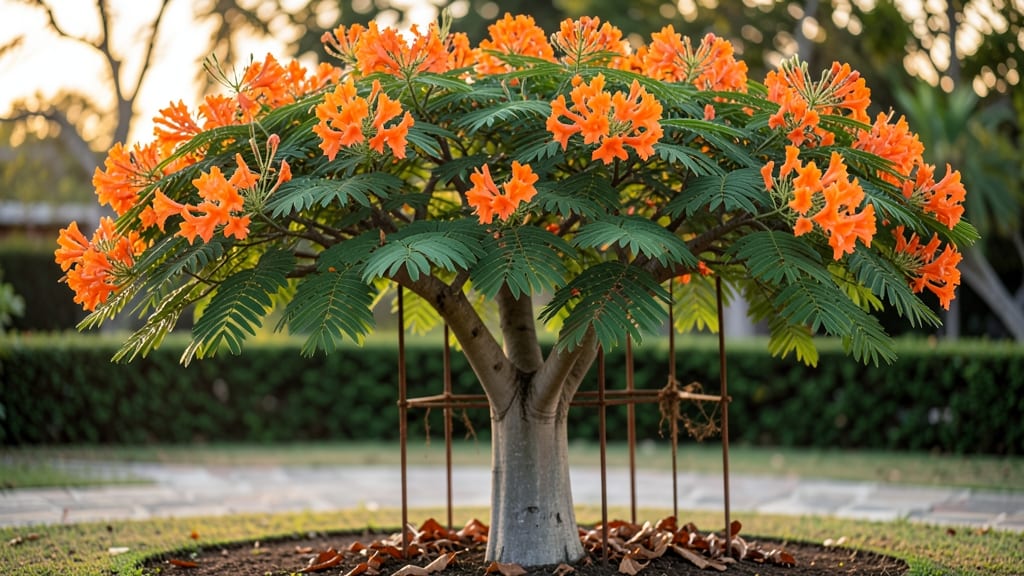
Your trumpet tree orange could burst into year-round blooms with the right pruning timing—this is how I transformed my bare branches into a cascading canopy of fiery flowers.
The key isn’t just cutting back, but understanding when and why your tree sheds its leaves and how to coax it into a second (or third) flush of blossoms.
My first attempt left me frustrated, but after three seasons of trial and error, I cracked the code for my Zone 9 climate.
Here’s the secret weapon: late winter pruning right before new growth starts, paired with a mid-summer trim to encourage fresh blooms. You’ll need sharp bypass pruners, a ladder for higher branches, and about 30 minutes to assess the tree’s structure.
The goal isn’t to make it smaller—it’s to open up the center so sunlight reaches all the branches, which triggers more flowering nodes.
What you’ll end up with is a tree that looks like a flaming torch in spring, then surprises you with sporadic blooms in summer and even fall. The flowers may last only a day, but their sheer volume creates a dazzling effect that outshines most spring-blooming trees.
Plus, the wood becomes more valuable for crafts as you prune selectively each year.
This technique works in Zones 8-11, though timing shifts slightly northward. For cooler climates, delay pruning until after the last frost—your tree will thank you with bigger blooms. The biggest mistake? Over-pruning in one session. Start small, observe how the tree responds, and adjust next year.
📚 In This Guide
- What you need
- Instructions
- Tips and common mistakes
- Wrapping up and next steps
What you need
- ● Pruning shears: Bypass pruners (sharp, 6–8" blades) for clean cuts on small branches.
- ● Loppers: Long-handled (24–36") for thicker branches (½"–1.5" diameter).
- ● Pruning saw: Curved-tooth, 8–10" blade for branches over 1.5" thick.
- ● Disinfectant: 70% isopropyl alcohol or rubbing alcohol to sterilize tools between cuts.
- ● Heavy-duty gloves: Garden gloves with cut-resistant palms (thorns are real!).
- ● Safety glasses: Protect your eyes from debris (trumpet trees shed aggressively!).
- ● Ladder or extension pole: Sturdy, 12–16' tall (if your tree is mature).
- ○ Pruning sealant (optional): Latex-based or beeswax-based for large cuts (½" or wider).
- ● Weather check: Prune on a dry, overcast day (avoid wet or windy conditions).
- ● Timing: Best done in late winter/early spring (just before new growth starts).
- ● Tree health: Ensure the tree is free of pests/diseases (prune dead/diseased branches first).
- ● Plan ahead: Sketch a rough pruning map of branches to remove (aim for 20–30% total reduction).
- ● 💡 Sterilize tools between cuts to prevent spreading fungal/bacterial infections.
- ● 🌡️ Work in layers: Remove dead/diseased wood first, then shape the tree.
- ● 🎯 Cut at a 45° angle just outside the branch collar (never leave stubs!).
Step-by-Step guide to reviving year-round blooms on your trumpet tree
This pruning method transforms a struggling orange trumpet tree into a continuous flowering powerhouse.
Assess the Tree's Current Structure and Health
Begin by examining your trumpet tree (Tabebuia impetiginosa) for dead, crossing, or overcrowded branches. Look for three key indicators: branches without leaves, those growing inward toward the center, and any with signs of disease like blackened bark or oozing sap. Use clean, sharp pruning shears to make your first cuts—dull blades tear tissue and invite infection.
Stand back and visualize the tree's natural shape. Trumpet trees thrive with an open, vase-like form that allows sunlight to penetrate the canopy. Mark branches that will create this ideal structure, focusing on removing no more than 25% of the tree's total foliage in a single session. This balanced approach ensures the tree retains enough energy to support new growth and flowering.
Remove Deadwood and Shape the Canopy
Start with the most obvious dead branches—these are easy to spot as they lack leaves and may appear gray or brittle. Cut these back to the nearest healthy bud or branch collar, making your cuts at a 45-degree angle just outside the bud. This angle helps water run off the cut and prevents rot. For thicker branches, use loppers or a pruning saw, and always cut just outside the branch collar to avoid stripping the bark.
Next, address the canopy structure. Remove any branches that cross or rub against each other, as these create wounds and weaken the tree. Thin out the interior to improve airflow and sunlight penetration. Aim to create a framework where sunlight can reach the lower branches—this encourages blooming along the entire tree, not just the top. Step back frequently to check your progress; the goal is a balanced, open shape that resembles an upside-down vase.
Encourage New Growth with Strategic Cuts
Focus on the outer branches to stimulate new growth and flowering. Cut back the tips of branches that have finished blooming to encourage the tree to produce new shoots from lower buds. Make these cuts just above a leaf node or bud that faces outward—this ensures the new growth will fill out the tree's shape rather than grow inward. For branches that have produced flowers but are now leggy, shorten them by one-third to promote bushier, more compact growth.
Pay special attention to the tree's lower branches. If they've been neglected, they may need more aggressive pruning to rejuvenate. Cut these back to a strong lateral branch or bud, and avoid leaving stubs. The tree will respond to these cuts by sending out new shoots from the cut points, which will eventually produce flowers. Water the tree deeply after pruning to help it recover and support new growth.
Maintain Year-Round Blooming with Seasonal Pruning
Trumpet trees bloom best when pruned at the right times. After the tree finishes flowering in spring, perform a light pruning to shape the canopy and remove any dead or weak branches. This keeps the tree looking tidy and encourages the development of flower buds for the next season. In late summer or early fall, do a second round of pruning to remove any branches that have finished blooming for the year—this stimulates new growth that can produce flowers in the following spring.
Throughout the year, monitor the tree for signs of stress or disease. Prune out any branches that show symptoms immediately to prevent the issue from spreading. Keep an eye on the tree's overall health, and adjust your pruning approach as needed. For example, if the tree isn't blooming as much as you'd like, focus on opening up the canopy further to allow more sunlight to reach the interior branches. Consistency is key—regular, thoughtful pruning will keep your trumpet tree blooming beautifully year after year.
Tips & tricks for reviving your trumpet tree's year-round blooms
Transforming a struggling trumpet tree into a vibrant flowering spectacle requires precision—and a few pro secrets that go beyond the basics.
Tool Preparation: Before you begin pruning, sterilize your tools with rubbing alcohol to prevent spreading disease between cuts. I've seen too many trees suffer from fungal infections simply because pruners weren't cleaned between branches. For larger branches, use a sharp pruning saw—dull tools create jagged cuts that heal poorly and invite pests. The cleanliness of your tools directly impacts how quickly your tree recovers and begins producing those stunning orange blooms.
Seasonal Timing Insight: The instructions mention spring and late summer pruning, but here's what nobody tells you—timing matters even more than you think. In Step 4, when you're doing that late summer pruning, aim for just after the last flowering cycle but before new growth begins. This gives your tree enough time to harden off before winter while still stimulating fresh shoots that will bloom next season. I've found that trees pruned in early September often produce their most vibrant spring blooms.
Visual Pruning Guide: When you're shaping the canopy in Step 2, imagine your trumpet tree as an upside-down vase. The widest part should be at the top, gradually narrowing toward the trunk. This shape isn't just aesthetic—it's functional. The open structure allows sunlight to penetrate all layers, which is crucial for those lower branches that often get neglected. Think of it like creating a natural canopy where every branch gets equal access to light, encouraging blooms throughout the entire tree rather than just at the top.
Post-Pruning Care: After you've finished all your cuts, don't just walk away. The tree needs immediate attention to recover properly. Water deeply right after pruning to help it absorb nutrients through the fresh cuts. Then, apply a balanced fertilizer (10-10-10 works well) to support new growth. I've noticed that trees treated this way show new shoots within 3-4 weeks, whereas neglected trees can take months to respond. This extra care makes all the difference in achieving that continuous bloom cycle.
Pro Tips for Trumpet Tree Orange
- Transforming a struggling trumpet tree into a vibrant flowering spectacle requires precision—and a few pro secrets that go beyond the basics.
- Tool Preparation: Before you begin pruning, sterilize your tools with rubbing alcohol to prevent spreading disease between cuts.
- Seasonal Timing Insight: The instructions mention spring and late summer pruning, but here's what nobody tells you—timing matters even more than you think.
Frequently asked questions
Got questions about keeping your trumpet tree orange (Tabebuia impetiginosa) blooming year-round? You’re not alone!
Here are answers to the most common concerns—from pruning timing to troubleshooting issues—so you can enjoy those stunning orange flowers all season long.
When is the best time to prune my trumpet tree orange for continuous blooms?
Prune your trumpet tree orange right after flowering (late spring to early summer) to encourage new growth and more blooms. Avoid heavy pruning in winter, as it can stress the tree. Light shaping trims in fall are fine, but focus on removing dead or overcrowded branches—never more than 25% of the canopy at once!
How often should I prune to maintain year-round blooms?
For continuous blooms, aim for two light pruning sessions per year:
- Post-flowering (spring/summer): Trim spent blooms and shape the tree.
- Early fall (optional): Remove any weak or crossing branches to improve airflow.
Can I prune too much? What are the signs?
Yes! Over-pruning can stress the tree and reduce blooms. Watch for:
- Yellowing leaves or leaf drop.
- Stunted new growth.
- Fewer (or no) flowers the next season.
What if my trumpet tree orange isn’t blooming at all? How can I fix it?
Lack of blooms often stems from improper pruning, poor nutrition, or environmental stress. Try these fixes:
- Prune correctly: Follow the spring/fall schedule above.
- Fertilize: Use a low-phosphorus fertilizer (like 8-3-9) in early spring to boost blooms.
- Check sunlight: Ensure it gets 6+ hours of direct sun daily.
- Water deeply: Drought stress can halt flowering—keep soil moist but well-drained.
Are there alternatives to trumpet tree orange for year-round color?
If you love vibrant orange blooms but want options, consider:
- Royal Poinciana (Delonix regia): Explosive orange-yellow flowers in summer (needs warm climates).
- Jacaranda (Jacaranda mimosifolia): Lavender-blue blooms in spring (drought-tolerant).
- Coral Tree (Erythrina spp.): Bright red-orange flowers year-round in tropical zones.
- Firecracker Plant (Russelia equisetiformis): Cascading red-orange blooms (great for containers!).
Wrapping up and next steps
The trumpet tree orange is a stunning addition to any garden, and with the right pruning techniques, you can enjoy its vibrant blooms year-round!
By mastering the art of strategic trimming—like removing spent flowers, shaping for airflow, and encouraging new growth—you’ll transform this tropical beauty into a lush, ever-blooming star. 🌺✨
Ready to give your trumpet tree the TLC it deserves? Grab your pruners and start today! Whether you’re a seasoned gardener or just beginning, every snip brings you closer to a garden that bursts with color and life. Happy pruning!