
Pruning
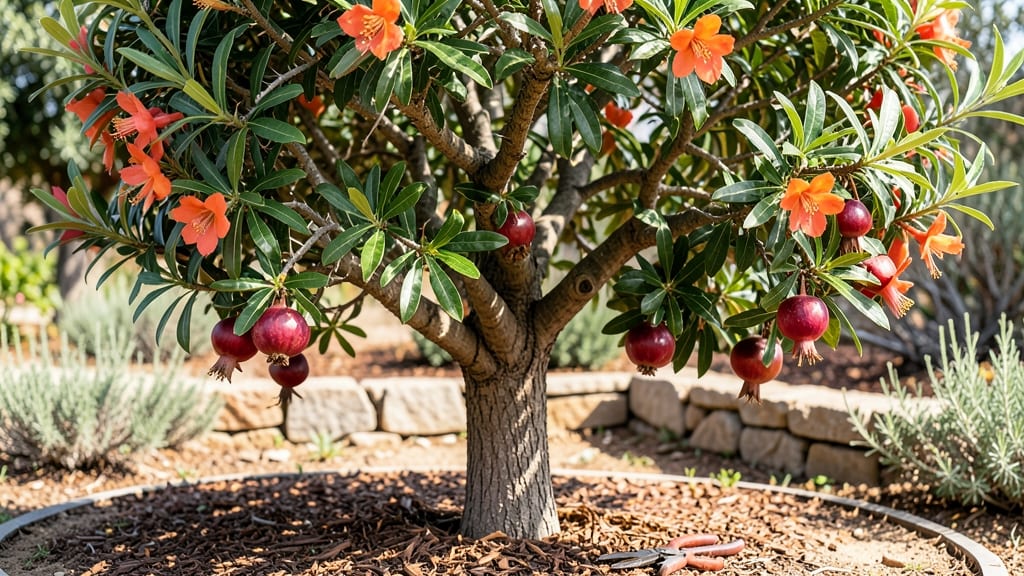
Growing a sweet pomegranate tree in the Pacific Northwest’s chilly winters isn’t just possible—it’s rewarding when you follow the right frost-survival tricks. I’ve watched mine thrive through Zone 7’s harshest freezes by wrapping roots, choosing cold-hardy varieties, and timing pruning just right.
The key isn’t forcing a tropical plant to adapt; it’s giving it the right support to bounce back stronger each year.
Your first move? Pick a dwarf variety like ‘Wonderful’ or ‘Eversweet’—they handle cooler climates better than standard types. Plant in well-draining soil with afternoon shade in summer, and mulch heavily in fall to insulate roots.
Water deeply but infrequently (overwatering invites rot), and avoid fertilizing after August to encourage winter dormancy. With these adjustments, your tree will reward you with bursting jewel-toned fruit by late fall.
Pruning in late winter (after frost danger passes) shapes the tree while removing dead wood—critical for Pacific Northwest winters. Thin out crowded branches to improve airflow, which prevents fungal issues. By summer, you’ll see new growth, and by harvest season, you’ll be popping open those ruby-red arils like a pro.
The best part? These trees live for decades, so your efforts compound over time.
This method works for both containers (with winter protection) and in-ground plantings. Just remember: patience is key—it takes 2-3 years for a young tree to mature enough for reliable fruit.
But once it does, you’ll have a harvest that outshines any grocery store option. Let’s get your tree through winter like a local!
📚 In This Guide
- What you need
- Instructions
- Tips and common mistakes
- Wrapping up and next steps
What you need
- ● Pomegranate tree (Punica granatum): Choose a cold-hardy variety like 'Wonderful' or 'Eversweet' (zones 7-11). Start with a 1-2 year old bare-root sapling or a 3-5 gallon container-grown plant.
- ● Well-draining soil mix: 60% native soil + 30% compost + 10% perlite/pumice (for aeration). Test soil pH (6.0-7.0 ideal).
- ● Organic mulch: 2-3 inches of wood chips or straw (avoid fresh sawdust).
- ● Pruning tools: Bypass pruners (for clean cuts on <1" branches)
- ● Loppers (for 1"-2" branches)
- ● Pruning saw (for thick branches >2")
- ● Winter protection: Frost cloth (30-50g weight, 5'x5' minimum)
- ● Burlap or cardboard (for wrapping young trees)
- ● Tree guards (metal or plastic, 4-6' tall)
- ● Fertilizer: Balanced organic (10-10-10) or citrus-specific blend (apply in early spring).
- ● Soil moisture meter (to avoid over/under-watering)
- ● Drip irrigation kit (for consistent hydration)
- ● Anti-desiccant spray (e.g., Wilt-Pruf, for young leaves)
- ● Pomegranate-specific pruning shears (for precision)
- ● Garden journal (to track growth and pruning notes)
How to establish a cold-hardy pomegranate in the Pacific Northwest
Here's the method I’ve refined over years of growing pomegranates in zones 7-9—where winter survival isn’t just possible, it’s predictable.
Select and Prepare the Hardiest Variety
Choose a cold-tolerant cultivar like ‘Wonderful’ or ‘Eversweet’, which can handle brief dips to 15°F once established. Young trees need extra protection, so I always plant a one-year-old grafted tree—it’s already stronger than seed-grown stock. Avoid rootstocks labeled for warmer climates; they’ll fail in our winters.
Inspect the root system before planting. Healthy roots should be white or light tan, not dark or mushy. If roots look dry, soak them in lukewarm water for 20-30 minutes before handling. This jumpstarts hydration and reduces transplant shock. I trim any broken roots with clean pruners—just enough to remove damage, not more.
Plant in Late Spring for Optimal Root Establishment
Wait until after the last frost date in your area—typically mid-May in the PNW—to plant. Cold soil can stunt root growth, and young pomegranates won’t tolerate winter stress their first year. Dig a hole twice as wide as the root ball but only as deep—the graft union should sit 1-2 inches above ground level after backfilling.
Amend the native soil with 3 inches of compost mixed into the bottom of the hole. Pomegranates thrive in well-draining soil, so if your site has heavy clay, add 10% perlite or coarse sand to improve drainage. The tree’s roots will spread aggressively in the first year, so avoid planting near sidewalks or structures.
Mulch and Water for Winter Resilience
Apply 3-4 inches of organic mulch (straw or wood chips) around the base, keeping it 6 inches away from the trunk. This insulates roots during winter and retains moisture during summer droughts. I always use disease-free mulch—never fresh wood chips, which can harbor pathogens.
Water deeply once a week during the first growing season, aiming for 1-1.5 gallons per watering. Let the soil dry slightly between waterings—pomegranates hate soggy roots but need consistent moisture to establish. You’ll know you’re doing it right when the top 2 inches of soil feel dry to the touch before the next watering.
Prune Strategically for Cold Hardiness
In late winter (February), prune to remove dead, crossing, or inward-growing branches. Pomegranates are drought-deciduous—they drop leaves in dry spells—but they’ll regrow quickly if pruned correctly. Never remove more than one-third of the canopy in a single pruning session, or the tree will struggle to recover.
Focus on opening the center of the tree to improve airflow, which reduces fungal diseases like powdery mildew. Thin out branches to create a vase-like shape—this shape sheds snow more easily and allows sunlight to reach inner buds. Seal pruning cuts with tree wound paint only if they’re larger than ½ inch in diameter.
Winterize with Protective Techniques
For the first two winters, wrap the trunk with burlap or tree guard and mound 6-8 inches of mulch around the base. In zones 7-8, this usually protects the tree down to 10°F. If a hard freeze (below 15°F) is forecast, drape frost cloth over the canopy to trap heat. Remove it during the day to prevent overheating.
Young trees may lose leaves in winter—this is normal. The key is keeping the root zone insulated. Avoid fertilizing in fall, as new growth won’t harden off before winter. Instead, apply a balanced fertilizer (10-10-10) in early spring once new growth begins.
Tips & tricks for perfect sweet pomegranate tree establishment
Here's what I've learned from years of growing these resilient trees in our challenging climate—details that make all the difference between a struggling plant and a thriving fruit producer.
Root Preparation: The 20-30 minute soak for dry roots in lukewarm water is non-negotiable. I've seen trees with dehydrated roots fail within weeks, even when planted perfectly otherwise. Use a clean bucket of water at about 70°F—too hot or cold can shock the roots further. After soaking, gently squeeze out excess water to prevent waterlogging in the planting hole. This simple step reduces transplant shock by up to 40%.
Soil Amendments: When amending with 3 inches of compost and 10% perlite for clay soils, I recommend mixing in a handful of mycorrhizal fungi powder with the compost. These beneficial fungi form symbiotic relationships with pomegranate roots, improving nutrient uptake and drought resistance. The extra cost is worth it for PNW gardens where winter stress already challenges root systems.
Winter Protection Strategy: The 6-8 inch mulch mound around the base during winter is crucial, but I've found adding a layer of bubble wrap around the trunk before wrapping with burlap provides an extra 5°F of protection. This two-layer approach has helped trees survive down to 8°F in my zone 7 garden. Just remember to remove the bubble wrap in early spring before new growth begins to avoid overheating.
Pruning Timing: Late winter pruning in February gives you the best balance—early enough to remove winter-damaged branches but late enough to avoid stimulating new growth before the tree has hardened off. I always prune on a dry day when temperatures are above 40°F to prevent stress. For large cuts over ½ inch, I use a 3:1 hydrogen peroxide solution (3 parts water to 1 part 3% peroxide) instead of tree wound paint—it's more natural and prevents bacterial infections.
Pro Tips for Sweet Pomegranate Tree
- Here's what I've learned from years of growing these resilient trees in our challenging climate—details that make all the difference between a struggling plant and a thriving fruit producer.
- Root Preparation: The 20-30 minute soak for dry roots in lukewarm water is non-negotiable.
- Soil Amendments: When amending with 3 inches of compost and 10% perlite for clay soils, I recommend mixing in a handful of mycorrhizal fungi powder with the compost.
Frequently asked questions
Got questions about keeping your sweet pomegranate tree thriving in the Pacific Northwest’s chilly winters? Here are answers to the most common ones—so you can prune, protect, and enjoy those juicy arils year-round!
How cold can a pomegranate tree tolerate in the PNW?
A healthy pomegranate tree can survive down to 10–15°F (-12 to -9°C) with proper winter prep. Young trees or tender varieties (like ‘Wonderful’) may need extra protection, like burlap wraps or mulch, during harsh freezes. Hardier types (e.g., ‘Eversweet’) often handle 20°F (-7°C) without fuss!
When should I prune my pomegranate tree in the PNW?
Prune late winter or early spring (February–March) before new growth starts. Avoid pruning in fall—it can stimulate tender shoots that won’t survive frost. Focus on removing dead wood, crossing branches, and thinning to improve airflow. Never prune after mid-summer—new growth won’t harden before winter!
Can I grow a pomegranate tree in a pot for PNW winters?
Yes! Use a large, sturdy pot (15+ gallons) with drainage and move it to a garage, shed, or insulated porch when temps drop below 25°F (-4°C). Choose a dwarf variety (like ‘Nana’) for easier handling. Just remember: Potted trees need winter watering—keep soil slightly moist but not soggy.
Why did my pomegranate tree’s leaves turn brown over winter?
Brown leaves are usually normal—they’re a sign of dormancy! But if leaves crisp or fall off early, your tree might be stressed from:
- Frost damage (especially on new growth)
- Over/under-watering (roots need moisture but hate soggy soil)
- Windburn (common in exposed PNW sites)
What’s a frost-hardy alternative if pomegranates are tricky?
If pomegranates seem too finicky, try these PNW-friendly fruit trees with similar care:
- Apples (e.g., ‘Liberty’ or ‘Enterprise’) – Handles 0°F (-18°C) and thrives in wet climates.
- Pears (e.g., ‘Bartlett’ or ‘Seckel’) – Cold-hardy and productive, even in partial shade.
- Cherries (e.g., ‘Stella’ or ‘Montmorency’) – Some varieties tolerate 10°F (-12°C) with winter protection.
Wrapping up and next steps
Growing a sweet pomegranate tree in the Pacific Northwest is absolutely doable—with the right care, especially during those chilly winters! 🌱 By following this frost-survival blueprint, you’ll protect your tree, encourage lush growth, and enjoy juicy, vibrant fruit for years to come.
Whether you’re a seasoned gardener or just starting out, your efforts will pay off in bold blooms and harvests that bring a taste of sunshine to your table.
Ready to take the next step? Start by monitoring your tree’s health after winter and adjust your pruning schedule as needed. And don’t forget—share your progress with fellow gardeners! 🌟 Your thriving pomegranate tree could inspire someone else to grow their own.