
Pruning
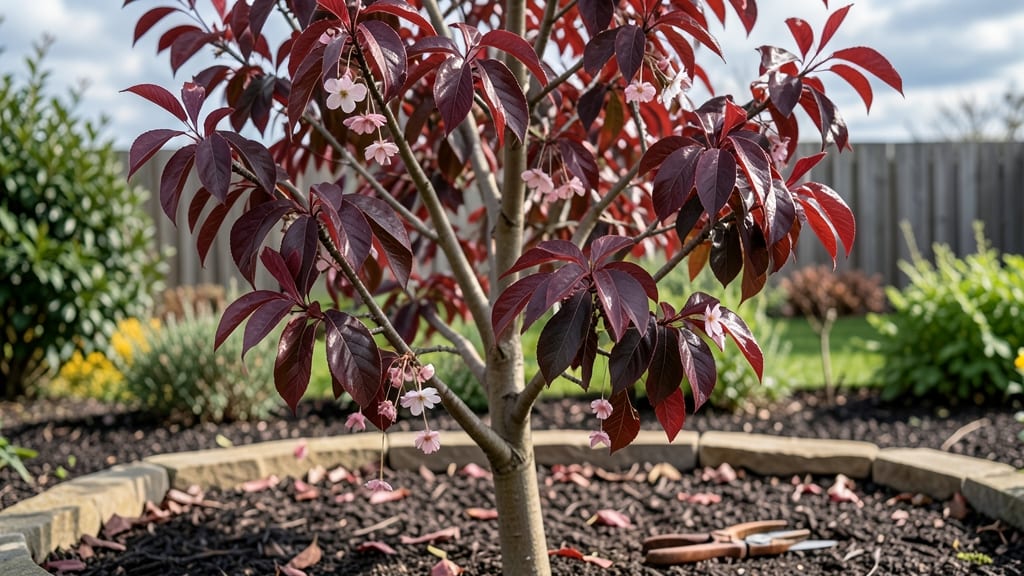
The Royal Red Leaf peach tree thrives where others fail—its frost-resistant leaves and sweet fruit make it a Pacific Northwest standout. 🌿 I planted mine three years ago, and even after a late-spring freeze, it bounced back with vibrant red foliage and juicy peaches.
The secret lies in pruning at the right time and with the right cuts to protect tender wood from cold snaps.
This variety demands well-draining soil and full sun, but its real magic happens in winter. Prune during dormant season (late winter to early spring) to remove dead wood and shape the tree while it’s still protected by its hardy leaves.
A 5-gallon container at planting gives roots room to establish before transplanting to the ground.
By summer, you’ll harvest golden-yellow peaches with deep red blushes—sweeter than store-bought and packed with flavor. The tree’s striking foliage turns fiery red in fall, making it a garden showstopper year-round. Just watch for peach leaf curl and brown rot, which thrive in wet Pacific Northwest winters.
Whether you’re a first-time fruit grower or a seasoned PNW gardener, this tree delivers reliable harvests with minimal fuss. The key is patience—it takes 2-3 years for full production, but the payoff is worth every pruning cut. Ready to grow your own bounty?
📚 In This Guide
- What you need
- Instructions
- Tips and common mistakes
- Wrapping up and next steps
What you need
- ● Pruning shears: Bypass pruners (sharp, clean, and sterilized with rubbing alcohol to prevent disease). Recommended: Felco F-2 or Corona Tools.
- ● Loppers: For thicker branches (1.5”–2” diameter). Opt for bypass loppers (e.g., Felco 202 or Fiskars X27) with a long handle (30”+).
- ● Pruning saw: Curved-tooth saw (e.g., Fiskars X7) for branches >2” in diameter.
- ● Gloves: Heavy-duty, cut-resistant gloves (e.g., Mechanix Wear or Wormingers) to protect hands from thorns and debris.
- ● Disinfectant: 70% isopropyl alcohol or a 10% bleach solution (1 part bleach to 9 parts water) for sterilizing tools between cuts.
- ● Rubbing alcohol wipes: For quick tool clean-ups in the field.
- ○ Pruning sealant: Tree wound paint (e.g., Dynamate or Tanglefoot Tree Seal) to protect large cuts (optional but recommended for PNW’s wet climate).
- ● Ladder or step stool: Sturdy, non-slip (e.g., Little Giant or Werner models) for taller trees (6’+). Safety first!
- ● Buckets or bags: 2–3 5-gallon buckets or heavy-duty trash bags for collecting pruned branches.
- ● Sharpie or marker: For labeling branches if grafting or identifying future cuts.
- ● Pruning rope: 100’ of ¼” parachute cord to support heavy branches temporarily.
- ● Hand saw: For emergency cuts if loppers aren’t up to the task.
- ● Tree pruning guidebook: e.g., “Pruning Made Easy” by Lewis Hill for PNW-specific tips.
- ● Safety goggles: To shield eyes from debris (especially when using a saw).
- ● Hose or spray bottle: For rinsing tools post-pruning to remove sap.
Step-by-step pruning guide for Royal Red Leaf peach trees
Here’s how to keep your Pacific Northwest peach tree healthy and productive through winter.
✂️ Step 1: Time Your Pruning for Dormancy
Prune your Royal Red Leaf peach tree late winter to early spring, just before buds swell but before new growth begins. This timing—typically February to March in the Pacific Northwest—ensures the tree enters dormancy with a strong framework. Cold winters here can stress trees, so pruning too early risks exposing tender wood to frost damage.
Use a sharp bypass pruner to make clean cuts at a 45-degree angle, about ¼ inch above an outward-facing bud. This angle prevents water from pooling on the cut and reduces disease risk. Avoid pruning during wet weather—damp conditions invite fungal infections like brown rot, which peach trees are especially susceptible to.
🌿 Step 2: Remove Dead, Diseased, or Crossing Branches
Start by eliminating dead or diseased wood—look for branches that are brittle, discolored, or oozing sap. These are entry points for pests and pathogens. Next, cut out any branches that cross or rub together, as these wounds weaken the tree and create openings for infection. I always prune these first because they’re the easiest to spot and remove.
Also thin out crowded branches to improve airflow. Aim for an open center with sunlight reaching the inner canopy. You’ll know you’re on the right track when you can see light filtering through the branches—this reduces humidity inside the tree, which is critical in rainy Pacific Northwest winters.
✂️ Step 3: Shape for Airflow and Sun Exposure
Peach trees thrive with open, vase-like shapes that allow sunlight to penetrate the canopy. Start by shortening overly long branches to encourage bushier growth—cut back to a strong lateral branch or bud. Avoid leaving stubs; always make cuts just above a bud or branch collar to promote faster healing.
Focus on reducing height if needed, but never remove more than 25% of the tree’s canopy in one season. This prevents stress. For Royal Red Leaf varieties, which are already compact, light pruning is often enough. Step back occasionally to visualize the tree’s structure—you’re aiming for a balanced silhouette that lets sunlight hit all sides.
💧 Step 4: Clean Up and Apply Protective Measures
After pruning, sterilize your tools with rubbing alcohol to prevent spreading disease. Collect and dispose of all clippings—don’t leave them under the tree, as they can harbor pests and fungi. I like to burn or bag them immediately to minimize risk.
Apply a dormant oil spray (like horticultural oil) to protect against overwintering pests like scale or mites. This is especially important in the Pacific Northwest, where mild winters can leave pests active. Follow up with a layer of mulch around the base (but not touching the trunk) to insulate roots and retain moisture during frost cycles.
⏰ Step 5: Monitor and Adjust Through the Season
Once pruning is done, watch for new growth in early spring—this is your cue that the tree is recovering well. If you notice water sprouts (fast-growing, vertical shoots), remove them promptly, as they divert energy from fruit production. These often appear where light hits the tree unevenly.
By mid-spring, assess the tree’s response. If branches look stressed (yellowing leaves, stunted growth), you may have pruned too aggressively. Next year, adjust by removing less wood. Royal Red Leaf peaches are forgiving, but consistency in light pruning keeps them productive for decades in our climate.
Tips & tricks for frost-resilient peach tree pruning
Here's what nobody tells you about keeping your Royal Red Leaf peach tree thriving in our rainy Pacific Northwest climate.
Timing is Everything: That February-March window is your sweet spot—prune too early and you risk frost damage to tender wood, too late and you stress the tree as it wakes up. I've learned the hard way: check for swollen buds but no green tips before you start cutting. In our region, this usually means waiting until late February when nights stay reliably above freezing.
Cutting Technique Matters: Those 45-degree angles aren't just for show—they create a natural water runoff that prevents fungal infections like brown rot. I always make my cuts just above an outward-facing bud, about a quarter-inch up. This ensures the branch collar can seal properly. Pro tip: use a sharp bypass pruner and make clean cuts through the branch collar, not just the bark.
Airflow is Non-Negotiable: The open vase shape isn't decorative—it's functional. In our damp climate, proper airflow prevents fungal diseases that can devastate peach trees. After pruning, you should be able to see light filtering through the center branches. If you can't, keep thinning until you can. This is especially critical in the rainy Pacific Northwest where humidity lingers.
Post-Pruning Protection: Don't skip the dormant oil spray—our mild winters leave pests active longer than you'd think. I apply horticultural oil in late winter before buds swell, then follow up with mulch (but never touching the trunk). This two-step defense keeps scale and mites at bay while insulating roots. The mulch also helps retain moisture during our unpredictable frost cycles.
Pro Tips for Royal Red Leaf Peach Tree
- Here's what nobody tells you about keeping your Royal Red Leaf peach tree thriving in our rainy Pacific Northwest climate.
- Timing is Everything: That February-March window is your sweet spot—prune too early and you risk frost damage to tender wood, too late and you stress the tree as it wakes up.
- Cutting Technique Matters: Those 45-degree angles aren't just for show—they create a natural water runoff that prevents fungal infections like brown rot.
Frequently asked questions
Got questions about growing and pruning your Royal Red Leaf peach tree in the Pacific Northwest? You’re not alone! Here are some of the most common concerns—and their answers—to help you cultivate a thriving, frost-resistant tree.
How cold can a Royal Red Leaf peach tree tolerate?
The Royal Red Leaf is one of the most frost-hardy peach varieties, surviving down to 10°F (-12°C) without major damage. However, young trees (under 3 years old) benefit from extra protection, like wrapping the trunk or using frost cloth during late spring freezes. In the PNW’s unpredictable climate, proper pruning also boosts resilience by improving airflow.
When’s the best time to prune my Royal Red Leaf peach tree?
Prune during late winter or early spring (February–March), before buds swell but after the worst frosts. This timing encourages strong growth while avoiding disease risks from wet spring conditions. Avoid summer pruning—it stresses the tree and attracts pests. Sharp, clean tools are a must to prevent bacterial infections.
Why are my peaches cracking or splitting?
This is a classic PNW issue! Cracking happens when rapid spring rains follow a dry spell, causing fruit to swell too fast. To minimize it:
- Apply 1–2 inches of mulch around the base to retain moisture evenly.
- Prune to reduce canopy density, improving airflow and drying.
- Consider drip irrigation for consistent watering.
Can I grow Royal Red Leaf peaches in containers?
Yes! Dwarf varieties (like ‘Bonanza’ rootstock) thrive in 15+ gallon containers with well-draining soil. Key tips:
- Use a fast-draining mix (60% soil, 30% compost, 10% perlite).
- Place in full sun (6+ hours/day) and move containers indoors if temps drop below 15°F (-9°C).
- Fertilize lightly in spring with low-nitrogen, high-phosphorus formula.
What should I do if my tree gets fire blight?
Fire blight (blackened, oozing branches) is common in peaches. Act fast:
- Prune infected branches 6–12 inches below damage using sterilized tools (rubbing alcohol between cuts).
- Dispose of clippings in the trash not compost.
- Apply copper fungicide (like Bordeaux mix) as a preventative in early spring.
- Improve airflow with open-center pruning.
Pro Tip for PNW Growers
If your tree struggles with late blooms (common in cool springs), try delayed dormancy pruning: Wait until mid-March to prune lightly, giving buds extra time to harden before frost. Pair this with rootstock selection—‘Lovell’ or ‘Nemaguard’ rootstocks add cold hardiness!
Wrapping up and next steps
Growing a Royal Red Leaf peach tree in the Pacific Northwest is absolutely achievable—especially with the right pruning techniques to boost frost resilience! 🌿 By mastering open-center shaping, winter protection, and seasonal adjustments, you’ll unlock a bountiful harvest of sweet, juicy peaches even in cooler climates.
Your patience and care will pay off with vibrant blooms and fruit that rivals the best of summer.
Ready to take the next step? Start small:
- 📅 Mark your calendar for late winter (February) to begin pruning.
- 🌱 Grab your tools and revisit this guide before you begin.
- 📸 Document progress—your tree’s growth will inspire future gardeners!