
Pruning
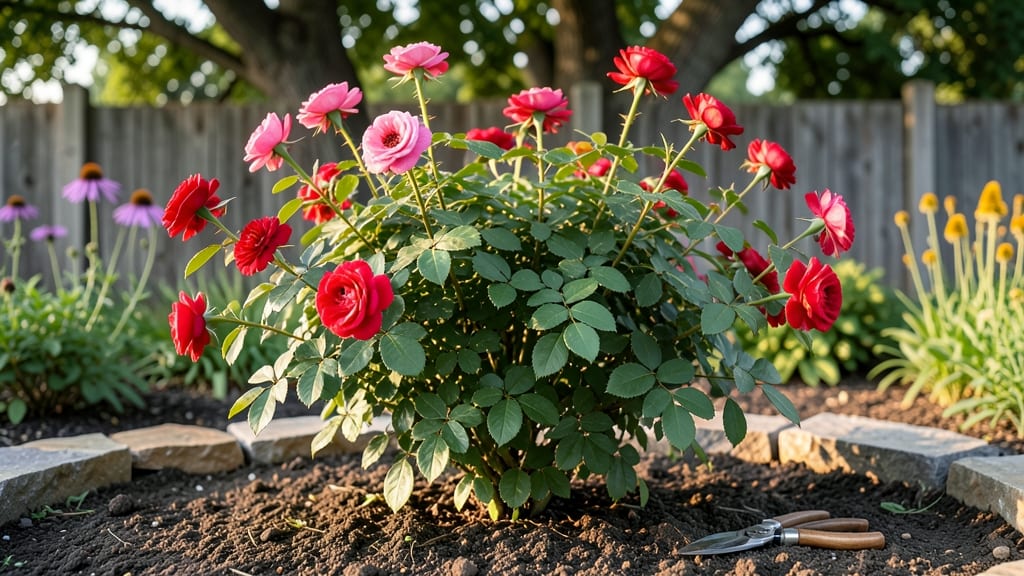
Transforming your Pacific Northwest garden with frost-resistant rose tree shrubs starts with the right pruning approach. I’ve pruned these hardy beauties for years in our damp climate, and the key is timing—wait until late winter when buds swell but before new growth begins.
The right cuts encourage strong, upright canes that handle our wet winters and cool summers better than traditional roses.
Most people overlook the best varieties for our region—look for David Austin English roses or Knock Out roses, which thrive as shrubs or small trees with minimal fuss.
Plant them in well-draining soil with full sun exposure (at least 6 hours daily), and avoid heavy clay spots where water pools. My favorite pruning trick? Cut back one-third of the oldest canes each year to keep the plant vigorous and frost-resistant.
You’ll end up with dramatic, multi-stemmed shrubs that bloom profusely and resist disease better than floppy bush roses. The arching branches create natural arches or focal points, and the dense growth blocks wind—perfect for our stormy winters.
Start with clean, sharp pruners and disinfect them between cuts to prevent spreading fungal spores.
This method works for both new plantings and established roses—just adjust the cuts based on age. For young plants, focus on shaping; for mature shrubs, prioritize removing dead wood first. The payoff? A low-maintenance, show-stopping rose feature that outlasts our chilly seasons with ease.
📚 In This Guide
- What you need
- Instructions
- Tips and common mistakes
- Wrapping up and next steps
What you need
- ● Pruning shears: Bypass pruners (sharp, 6–8" blades) for clean cuts on small stems. Anvil pruners (for thicker branches, but avoid crushing stems).
- ● Pruning saw: 10–12" curved blade for thick branches (1" diameter or larger).
- ● Gloves: Heavy-duty, gardening or rose-specific (thorn-proof!).
- ● Disinfectant: 70% isopropyl alcohol or 10% bleach solution (1 part bleach to 9 parts water) to sterilize tools between cuts.
- ● Rake or broom: For clearing debris after pruning.
- ○ Twine or plant ties: (Optional) To secure heavy branches if needed.
- ● Weather check: Prune on a dry, calm day (avoid frost or rain within 24 hours).
- ● Tool sharpening: Hone blades before starting for precise cuts.
- ● Safety gear: Long sleeves/pants and closed-toe shoes (roses = thorns!).
- ● Pruning plan: Sketch a rough outline of your shrub’s shape before cutting (or snap photos for reference!).
- ○ Compost bin: (Optional) To collect pruned branches for mulch or compost.
Step-by-step pruning guide for Pacific Northwest rose tree shrubs
Here's my battle-tested approach to winterizing and shaping roses for our region's wet, cold winters.
Time Your First Cut for Late Winter Dormancy
Prune your rose tree shrubs between mid-February and early March, when the plant is fully dormant but before new growth begins. This timing ensures you remove dead wood while avoiding the risk of frost damage to fresh cuts. In the Pacific Northwest, our winters linger longer in the mountains, so adjust slightly later in higher elevations.
Look for brown, brittle canes—these are dead and should be cut back to healthy wood. Healthy canes have a smooth, greenish-brown bark when scratched. Use sharp, clean pruners to make cuts just above an outward-facing bud at a 45-degree angle. This encourages strong, upright growth and prevents water from pooling on the cut.
Remove Dead, Diseased, and Crossing Branches
Start by eliminating any canes that are completely dead, diseased, or broken. These provide entry points for pests and fungal infections. Cut these back to the ground or to a healthy bud, whichever comes first. For diseased wood, disinfect your pruners with rubbing alcohol between cuts to prevent spreading pathogens.
Next, remove crossing branches that rub against each other. These create wounds that invite infection and weaken the plant. When branches cross, the one growing inward should be removed—this opens up the center of the shrub for better airflow and sunlight penetration. Aim to create an open, vase-like shape that allows light to reach all parts of the plant.
Shape for Airflow and Frost Resistance
In the Pacific Northwest, our damp winters create ideal conditions for fungal diseases like black spot and powdery mildew. To combat this, shape your rose tree shrub to maximize airflow. Start by thinning out the center, removing up to one-third of the oldest canes to reduce congestion. Older canes produce fewer blooms and are more prone to disease.
Focus on maintaining an open, rounded shape with branches spaced evenly. Leave 3-5 strong, healthy canes as the primary structure, cutting back any that grow inward or downward. For frost resistance, avoid cutting back too aggressively—leave at least half the plant’s height to protect the bud union (the swollen area where the rose graft meets the rootstock). This ensures the plant can regenerate even after severe cold snaps.
Apply a Final Cut to Encourage Strong Growth
After removing dead, crossing, and congested branches, give your rose tree shrub a light structural prune to promote vigorous growth. Cut back the remaining canes by about one-third, making sure each cut is just above an outward-facing bud. This encourages the plant to branch out rather than grow tall and leggy.
Pay special attention to the top of the plant, where branches often grow too close together. Thin out the smallest, weakest canes to redirect the plant’s energy into stronger, healthier growth. Avoid heavy pruning now—save more aggressive cuts for late winter if needed. The goal is to shape the plant while preserving its ability to handle our region’s unpredictable frost cycles.
Clean Up and Protect for Winter
Once pruning is complete, gather all the clippings and remove them from the garden immediately. Leaving pruned material on the ground can harbor pests and diseases over winter. Dispose of it in a sealed trash bag or compost bin (if disease-free). Disinfect your pruners again with rubbing alcohol to prevent contamination.
Apply a 2-3 inch layer of mulch around the base of the plant, keeping it 6 inches away from the stem to prevent rot. Use wood chips or straw, which insulate the roots and retain moisture. In the Pacific Northwest, where soil can stay damp and cold for months, this extra layer helps protect the roots from temperature fluctuations and frost heave. Water the base lightly before mulching to help settle the soil and encourage root growth.
Tips & tricks for Pacific Northwest rose tree shrub pruning
These battle-tested strategies will help you navigate our region's unique climate challenges while keeping your roses thriving year after year.
Timing is Everything: The mid-February to early March window is critical because it balances dormancy with frost risk. In mountain elevations, I've found that waiting until late March prevents frost damage to fresh cuts. Check for bud swell—if you see tiny green buds forming, you've waited too long. This timing ensures you remove dead wood while protecting new growth from late frosts that can still hit our region in March.
Tool Prep Matters: Before you start, sharpen your pruners and disinfect them with rubbing alcohol—this isn't optional. I've seen fungal infections spread rapidly when tools weren't cleaned between cuts, especially with diseased wood. For stubborn cuts, use pruning shears with a bypass blade rather than anvil pruners, which can crush stems and create larger wounds. Keep a small spray bottle of 70% isopropyl alcohol handy for quick disinfection between each cut on diseased branches.
Bud Selection Technique: When making cuts, look for buds that face outward and slightly upward—they'll grow away from the center of the plant. I learned this the hard way after pruning too many buds facing inward, which created dense centers that blocked airflow. For thicker canes, make your cut just above a bud that's about 1/4 inch above a lateral branch. This encourages branching rather than straight upward growth, creating a fuller, more resilient shrub.
Mulching Strategy: That 2-3 inch layer of mulch isn't just decoration—it's your rose's winter insulation. I've seen plants survive our coldest winters with proper mulching, while poorly mulched plants struggled with frost heave. Use wood chips rather than leaves, as leaves can compact and create anaerobic conditions that rot stems. Keep the mulch 6 inches from the stem to prevent moisture buildup that leads to fungal diseases. In particularly wet winters, consider adding a layer of straw on top of the wood chips for extra insulation.
Pro Tips for Rose Tree Shrub
- These battle-tested strategies will help you navigate our region's unique climate challenges while keeping your roses thriving year after year.
- Timing is Everything: The mid-February to early March window is critical because it balances dormancy with frost risk.
- Tool Prep Matters: Before you start, sharpen your pruners and disinfect them with rubbing alcohol—this isn't optional.
Frequently asked questions
Got questions about caring for your rose tree shrub in the Pacific Northwest? You’re not alone! Here are answers to the most common concerns—from pruning to frost prep and everything in between.
How cold can my rose tree shrub handle in the PNW?
Most Rosa varieties (like Knock Out® or Dr. Huey) are hardy to USDA Zones 4-9, meaning they can survive down to -20°F (-29°C) with proper care. However, young shrubs or newly planted roses need extra mulch and winter wraps to protect tender canes.
When is the best time to prune my rose tree shrub in the PNW?
For late-winter pruning (February–March) is ideal—after the worst frost but before new growth starts. Avoid pruning in fall (unless deadheading) to prevent disease. Pro tip: Wait until daytime temps are consistently above 40°F (4°C) to minimize shock.
Can I prune my rose tree shrub too much?
Yes! Over-pruning (cutting back more than 1/3 of the plant) can stress your shrub, reducing blooms and weakening its frost resistance. Focus on removing dead/diseased wood and shaping for airflow. For tree roses, never cut into old wood—leave at least 3-5 strong canes.
What’s the difference between pruning a rose bush vs. a rose tree shrub?
A rose tree shrub (like a grafted Dr. Huey) has a single main trunk with branches, while a bush has multiple stems from the ground. Key difference: Never cut below the graft union (the swollen bump near the base)—this kills the shrub! Prune tree shrubs to open the center for sunlight.
Why are my rose tree shrub’s leaves yellowing or dropping?
Yellow leaves often signal overwatering, nutrient deficiency (like iron chlorosis), or fungal issues. Check soil drainage first—PNW’s wet winters can drown roots. If leaves curl or have black spots, prune affected areas immediately and apply neem oil. Pro tip: Test soil pH (roses prefer 6.0–6.5) and amend with compost.
Are there frost-resistant rose tree shrub alternatives for the PNW?
Try these low-maintenance, cold-hardy options:
- Knock Out® Roses (Zones 4–9): Disease-resistant, repeat-blooming.
- Dr. Huey™ Rose Tree (Zones 4–9): Thornless, drought-tolerant.
- Explosion® Roses (Zones 4–9): Compact, vibrant blooms.
- David Austin English Roses (Zones 5–8): Fragrant, classic varieties.
Wrapping up and next steps
Caring for your rose tree shrub in the Pacific Northwest’s chilly climate is all about timing, technique, and a little patience! 🌸 By mastering frost-resistant pruning—like cutting back in late winter, shaping for airflow, and protecting vulnerable buds—you’ll set your shrub up for vibrant blooms and long-term health.
Remember, consistency is key, but don’t forget to celebrate the small wins, like those first spring shoots!
Ready to level up your green thumb? Grab your pruners and schedule that next pruning session before the next frost hits. Your rose tree shrub will thank you with stunning blooms all season long!